

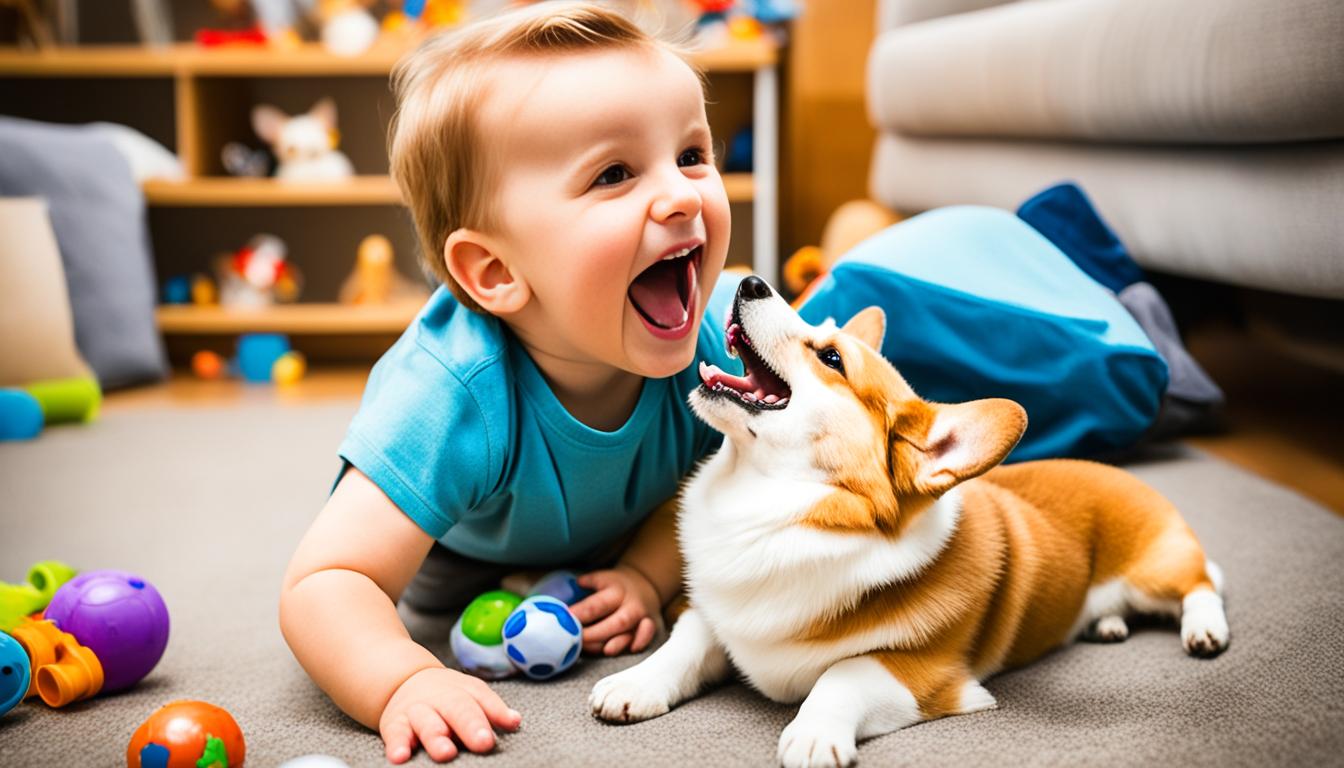

Do you ever wonder why your corgi loves to give you slobbery kisses? Have you ever asked yourself, “Why does my corgi lick me so much?” Corgis are notorious for their licking behavior, but there’s more to it than meets the eye.
Licking is a natural and instinctive behavior in dogs, including corgis. It can have various meanings, such as showing affection, seeking attention, expressing empathy, and even tasting or grooming. But why do they do it so often? Let’s dive deeper into the world of corgi licking behavior and uncover the fascinating reasons behind it.
Key Takeaways:
- Corgis lick to show affection, seek attention, and express empathy.
- Licking is a natural instinct for dogs and is deeply rooted in their nature.
- Excessive licking may indicate anxiety or discomfort, and it’s important to address any concerns with a vet or behaviorist.
- Redirecting the behavior and providing alternative activities can help manage problematic licking.
- Be cautious about letting your corgi lick your face due to potential bacteria and parasites.
The Instinct to Lick
Licking is an instinctive behavior in dogs, deeply ingrained in their nature. It serves various purposes that contribute to their well-being and social interactions.
One primary function of licking is grooming. Dogs use their tongues to clean themselves, removing dirt and debris from their fur. Additionally, they groom their family members, including fellow dogs and their human owners, as a way to express love, affection, and bonding.
Through licking, dogs establish a strong emotional connection with their family members. The act of grooming reinforces the bond between them, promoting trust and companionship. It is a form of communication that signifies closeness and mutual care.
Dogs also use licking as a means of communicating with humans and other animals. It is their way of conveying a message or expressing their needs. For example, puppies lick their mothers’ faces to signal hunger, seeking nourishment and attention.
Furthermore, licking plays a vital role in social interactions among dogs. When dogs meet, they often engage in sniffing and licking each other’s faces and bodies. This behavior helps them gather information about the other dog, including their scent, health, and emotional state.
Overall, licking is a natural and instinctive behavior in dogs, enabling them to groom, bond, and communicate. It is a manifestation of their innate social nature and serves as a vital component of their interactions with both humans and other dogs.
| Purposes of Licking |
|---|
| Grooming |
| Bonding |
| Communication |
Reasons for Licking
Dogs have a special way of greeting and bonding with humans—they lick as a form of affection. When your corgi gives you a few licks, it’s their way of saying “hello” and showing their love. This behavior releases dopamine and endorphins in their brains, creating a sense of relaxation and happiness.
Licking is something that corgis learn from their mothers from a young age. When they are puppies, their mothers lick them as a way to care for and bond with them. So, when your corgi licks you, it’s not only a sign of affection but also a reflection of the strong bond between you.
Moreover, dogs are incredibly intuitive creatures. They have a remarkable ability to sense distress or sadness in their owners. In moments of emotional turmoil, corgis may show their empathy by licking their owners, offering comfort and reassurance. This act of licking is their way of saying, “I’m here for you.”
Licking is a natural behavior for dogs, and it serves as a powerful tool for communication and connection.
Greeting and Bonding
When corgis lick their human companions, it’s not just a random act but a genuine expression of affection and bonding. Whether it’s a few gentle licks on your hand or a full-fledged face lick, your corgi is trying to deepen the connection between you and create a sense of warmth and belonging.
Understanding that licking is an innate behavior rooted in their nature helps us appreciate the significance of this gesture. It’s a beautiful way for your corgi to greet you, build a strong bond, and show their affection.
| Reason | Explanation |
|---|---|
| Greeting | Dogs lick as a way to greet humans and initiate social interaction. |
| Bonding | Licking is a bonding behavior that strengthens the relationship between dogs and their owners. |
| Affection | Licking is a form of showing love and affection towards humans. |
Attention-Seeking Behavior
Dogs are known for their innate ability to captivate our attention and melt our hearts. One way they accomplish this is through their adorable habit of licking us. This behavior often serves as a clever strategy for getting attention from their loving owners. When our furry friends shower us with gentle licks, it’s difficult to resist showing them affection and acknowledging their presence.
But why do dogs resort to licking as a means of obtaining attention? The answer lies in the positive reinforcement they receive for this behavior. When dogs lick their owners, they are often rewarded with pets, praise, and affection. This positive reinforcement creates a powerful association in their minds – the act of licking leads to the desirable outcome of receiving attention and love.
This cycle of positive reinforcement fuels the attention-seeking behavior in dogs. They quickly learn that licking is an effective way to capture our focus and reinforce the bond between human and canine. Through this simple gesture, dogs are able to activate their owners’ nurturing instincts and bask in the warmth of their undivided attention.
“A dog is the only thing on earth that loves you more than he loves himself.” – Josh Billings
It’s important to note that attention-seeking behavior is not limited to licking alone. Dogs may engage in other attention-seeking behaviors such as pawing, nudging, or even barking. However, licking remains a popular and endearing choice for many dogs due to the positive reinforcement it consistently elicits.
So, the next time your furry companion gently licks your hand or face, remember that they are simply seeking your attention and affection. Embrace this opportunity to reinforce the bond you share with them and indulge them with the attention they desire.
| Benefits of Attention-Seeking Behavior | Ways Dogs Seek Attention |
|---|---|
|
|

Positive Reinforcement: A Win-Win Situation
Positive reinforcement plays a vital role in the relationship between dogs and their owners. By rewarding attention-seeking behavior with pets, praise, and other forms of positive reinforcement, we not only fulfill our dogs’ natural desire for attention but also encourage desirable behaviors. This creates a harmonious environment where both dog and owner can thrive and enjoy each other’s company.
Taste Preference
Dogs have an incredible sense of taste and smell, which greatly influences their licking behavior. They are naturally drawn to the taste of their owner’s sweat, especially if it is salty. This may explain why dogs love to give us those wet, slobbering kisses after a workout or when we’re feeling a bit sweaty. The taste of salt on our skin can be quite appealing to them.
In addition to sweat, dogs also lick their owners’ faces and hands to detect residual food particles or the pleasant smells of lotions and creams. Their highly-sensitive noses can pick up on even the faintest scents, and licking is their way of exploring and gathering information about their environment.

Licking as a Hunger Signal
One of the instinctual behaviors ingrained in dogs is licking, which can serve as a hunger signal. In the wild, puppies lick their mother’s lips to indicate their hunger. This behavior may carry over to domestic dogs, who may lick their owners as a way of communicating their need for food.
When a dog licks you in response to hunger, it is important to pay attention and respond accordingly. Just like a puppy depending on its mother for nourishment, your dog is relying on you to fulfill its hunger. It’s a form of communication that is deeply rooted in their nature.
The Implication
When your dog licks you as a hunger signal, it’s essential to evaluate whether their hunger has been adequately addressed. It may be time for a meal or a snack. Providing your dog with the right amount of food and maintaining a regular feeding schedule can help prevent excessive licking as a hunger signal.
Additionally, it’s important to consider your dog’s overall health and nutritional needs. Consult with your veterinarian to ensure that your dog is receiving an appropriate diet for their breed, age, and activity level. Feeding your dog a balanced and nutritious diet is key to keeping them satisfied and reducing excessive hunger-driven licking.
“When your dog licks you to signal hunger, it’s crucial to understand their communication and respond appropriately. By addressing their hunger needs and providing a balanced diet, you can help ensure their well-being and strengthen your bond.”
Common Signs of Hunger in Dogs
| Signs of Hunger | Explanation |
|---|---|
| Excessive licking | Licking their owner is a common way for dogs to indicate their hunger. |
| Restlessness or pacing | Dogs may become restless or pace around when they are hungry. |
| Whining or barking | In an attempt to communicate their hunger, dogs may whine or bark more frequently. |
| Looking at food or food-related items | Dogs may fixate on food or show increased interest in food-related items when they are hungry. |
| Attempting to find food | Dogs may search for food by exploring their surroundings or rummaging through cabinets. |
If you notice your dog displaying any of these signs, it’s important to address their hunger needs promptly. By being attentive to their signals and fulfilling their nutrition requirements, you can ensure that your dog is happy, healthy, and content.

When Licking Becomes a Problem
While licking is a normal behavior for dogs, excessive or compulsive licking can indicate underlying issues such as anxiety, stress, or health problems. It is crucial to recognize when your corgi’s licking becomes problematic and take appropriate action. Consulting with a veterinarian or a qualified behaviorist can provide guidance and support in addressing these concerns.
Excessive licking can be a sign of anxiety in corgis. When they are feeling stressed or fearful, they may resort to excessive licking as a way to cope with their emotions. It is important to identify the underlying causes of anxiety and implement strategies to help your corgi feel more secure and relaxed.
Health issues can also contribute to excessive licking. It’s essential to observe any changes in your corgi’s licking behavior, such as focusing on specific areas of the body or excessive paw licking. These could be indications of skin allergies, infections, or discomfort. Seeking prompt veterinary attention is crucial to address any potential health concerns.
When a dog’s licking becomes obsessive or leads to self-harm, it is a cause for immediate concern. Compulsive licking, also known as acral lick dermatitis, can result in skin damage, infections, and other complications. Professional intervention is necessary to identify the underlying triggers and develop a comprehensive treatment plan.
Managing excessive licking requires a holistic approach, addressing both the underlying causes and the behavior itself. This can include behavior modification techniques, environmental enrichment, and, in some cases, medications prescribed by a veterinarian.

Managing Problematic Licking
To address problematic licking behavior in dogs, it is crucial to redirect their attention and provide alternative activities. By offering chew toys or food puzzles, training them to perform tricks or commands, ensuring regular exercise to reduce stress, and maintaining good hygiene, you can effectively manage excessive licking.
Licking can become problematic when it causes discomfort or leads to unwanted consequences. Redirecting your dog’s behavior and providing appropriate distractions can help break the habit and promote positive reinforcement.
Redirecting Behavior
Redirecting your dog’s attention away from licking can be achieved by offering engaging and stimulating activities. Providing chew toys or food puzzles can keep their focus on more appropriate behaviors and redirect their natural instinct to lick. These enticing alternatives can help satisfy their need for oral stimulation.
Distraction Techniques
Distraction techniques can help redirect your dog’s attention from licking. Engage them in activities they enjoy, such as playing with interactive toys, going for walks, or participating in training sessions. By keeping their minds and bodies occupied, you can help divert their focus and discourage excessive licking.
Positive Reinforcement
Positive reinforcement is key in managing problematic licking. When your dog refrains from excessive licking or engages in alternative behaviors, praise and reward them with treats, pets, or verbal affirmations. This positive reinforcement builds a connection between desirable behaviors and rewards, encouraging your dog to continue engaging in those behaviors instead of excessive licking.
By redirecting behavior, providing distractions, and using positive reinforcement, you can help manage problematic licking in your dog. Consistency and patience are essential throughout the training process to help your furry friend develop healthier habits.
Considerations and Precautions
While dogs are often considered beloved family members, it’s important to be cautious when it comes to letting them lick our faces. A dog’s mouth can contain bacteria and potential parasites that may pose health risks to humans. To minimize the chances of contamination, it is advisable to wash your face with soap and water after being licked by your furry friend.
Furthermore, being aware of any changes in your dog’s licking behavior is crucial. If you notice excessive or unusual licking, it may be indicative of an underlying issue that requires veterinary attention. As responsible pet owners, staying vigilant and seeking professional advice when needed is essential for keeping our dogs and ourselves healthy and safe.
| Potential Risks | Precautions |
|---|---|
| Bacterial contamination | Wash face with soap and water after being licked |
| Parasitic infections | Regularly deworm your dog and consult a veterinarian if necessary |
| Skin irritations or allergies | Monitor for any signs of irritation or allergic reactions |
| Excessive saliva | Keep a towel handy to wipe off excess saliva |
By taking these considerations and precautions, we can enjoy the love and companionship of our dogs while also ensuring the well-being of both parties involved.
Conclusion
Understanding corgi licking behavior is crucial for fostering a strong bond with your furry friend. While licking is a natural behavior, it’s important to be mindful of excessive or problematic licking. By redirecting your corgi’s behavior, providing appropriate stimulation, and seeking professional guidance when needed, you can ensure a happy and healthy relationship.
When managing excessive licking, it’s important to address the root cause of the behavior. Consider whether your corgi is seeking attention, experiencing anxiety, or possibly indicating an underlying health issue. Redirect their behavior through positive reinforcement and provide alternative activities such as chew toys or food puzzles to keep them engaged and stimulated.
Remember, corgis are intelligent and active dogs that require mental and physical stimulation. Regular exercise and training sessions can help reduce stress and boredom, which may contribute to excessive licking. Additionally, maintaining good hygiene by wiping your corgi’s paws after walks and keeping their living environment clean can help minimize their need to lick excessively.
If you’re concerned about your corgi’s licking behavior or if it starts to become problematic, don’t hesitate to seek professional guidance from a veterinarian or behaviorist. They can assess your corgi’s specific situation and provide tailored advice and strategies to help manage the issue effectively. With patience, understanding, and proper management, you can create a harmonious and loving relationship with your corgi, free from excessive licking concerns.
FAQ
Why does my corgi lick me so much?
What is corgi licking behavior all about?
Why is my corgi so obsessed with licking?
How can I understand my corgi’s excessive licking?
What are the reasons behind corgi licking behavior?
How can I manage my corgi’s excessive licking?
Is it safe to let my corgi lick my face?
When should I be concerned about my corgi’s licking behavior?
Can corgis lick as a sign of hunger?
What should I do if my corgi’s licking becomes a problem?
Source Links
- https://www.thekennelclub.org.uk/health-and-dog-care/health/health-and-care/a-z-of-health-and-care-issues/why-does-my-dog-lick-me-so-much/
- https://www.akc.org/expert-advice/training/why-is-my-dog-licking-me/
- https://www.businessinsider.com/guides/pets/why-do-dogs-lick-you

Carlos is the passionate founder and primary author behind “CorgisCorner.com,” a website dedicated to all things related to the beloved Corgi breed. Born and raised in a small town known for its strong sense of community and love for animals, Carlos developed a deep affection for Corgis from a young age. This love was sparked by his childhood companion, a spirited and loyal Corgi named Toby, who was a constant source of joy and friendship.