

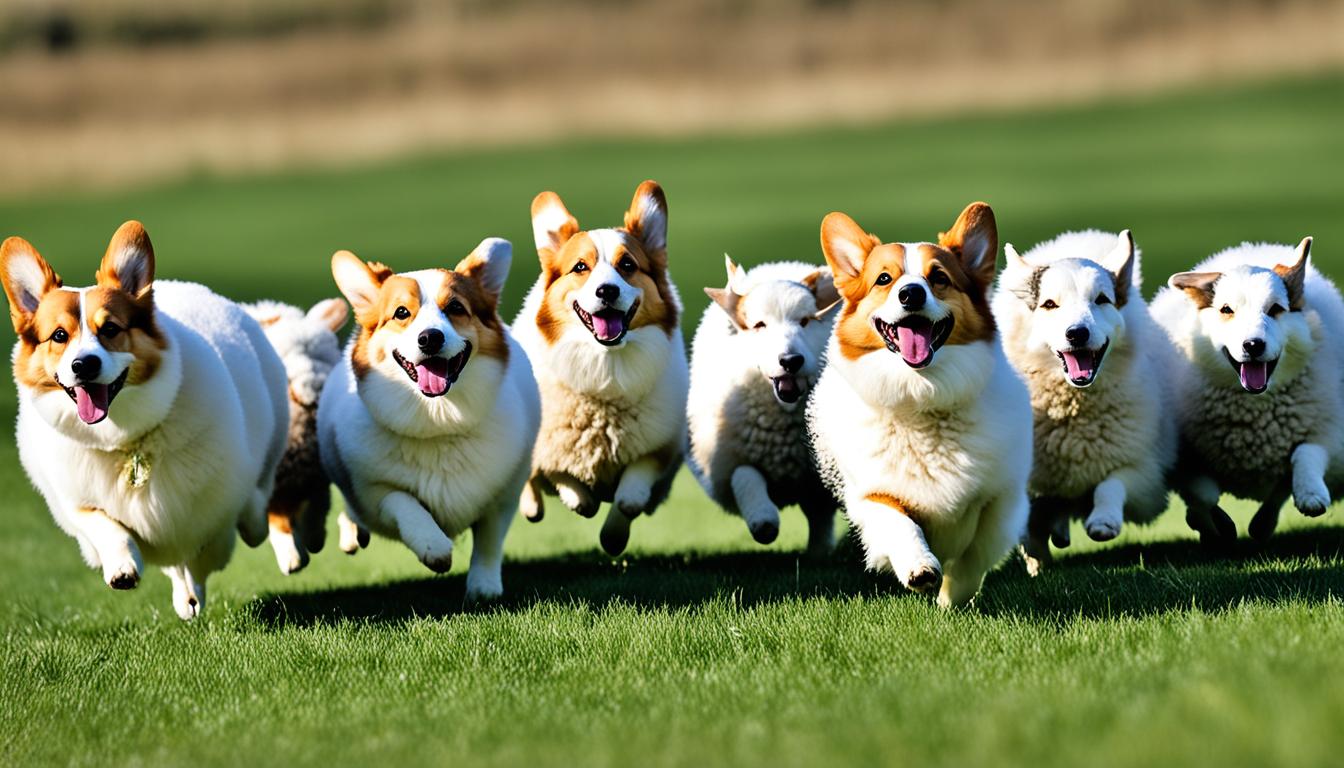

Have you ever wondered why Corgis have such strong herding instincts? Despite their adorable appearance, these compact canines possess a natural drive to herd—a trait deeply rooted in their breed history. But what exactly drives these instincts in Corgis? Let’s explore the fascinating world of Corgi herding behavior and uncover the factors behind their tenacious herding tendencies.
Key Takeaways:
- Corgis have a strong herding drive ingrained in their breed characteristics.
- Understanding Corgi instincts can help in recognizing and harnessing their herding behaviors.
- Corgis’ herding instinct can be tested and evaluated through herding instinct tests.
- Genetics and the environment play a significant role in shaping Corgis’ herding behaviors.
- Proper training and management techniques can help Corgi owners handle their herding instincts effectively.
Understanding Herding Terms and Behaviors in Corgis
To fully understand Corgis’ herding instincts, it is essential to be familiar with common herding terms and behaviors. Terms such as gathering, driving, approach, wide running, close running, wearing, bark, eye, power, heading, heeling, wool-pulling, outrun, lift, fetch, gather, and balance describe the different aspects of herding behavior.
Each term refers to a specific action or quality that a herding dog may exhibit while working with livestock. For example, gathering refers to the dog’s ability to bring the scattered livestock together, while driving involves moving the livestock in a specific direction.
Other terms like wide running and close running describe the dog’s preferred distance from the livestock while herding. Some Corgis may have a tendency to bark or use their eye to exert control over the livestock, while others rely on their power and physical presence to assert dominance.
Heading and heeling are techniques used by herding dogs to position themselves correctly relative to the livestock. Wool-pulling refers to a behavior where the dog may nip at the heels or pull on the wool of the livestock to drive them forward.
“A Corgi’s herding behaviors are guided by a combination of instinct and training. Recognizing and understanding these terms can help in effectively training and managing a Corgi’s herding instincts.”
Other herding terms such as outrun, lift, fetch, gather, and balance describe specific actions involved in the herding process. An outrun is when the dog circles the livestock to gather them, while a lift refers to the dog’s ability to move the livestock away from an obstacle or towards a desired location.
A fetch is when the dog brings the livestock to the handler, and gather involves the dog collecting the scattered livestock into a group. Balance refers to the dog’s ability to position themselves correctly in relation to the livestock to maintain control and prevent them from escaping.
Additional commands such as “Go By,” which indicates the dog should move around the livestock to the opposite side, and “Way To Me,” which directs the dog to return to the handler, are often used in herding training.
By familiarizing themselves with these herding terms and behaviors, Corgi owners can gain a deeper understanding of their dog’s natural instincts and work towards effectively harnessing and training their herding abilities.
Herding Instinct Test for Corgis
Curious about your Corgi’s herding abilities? Participating in a Herding Instinct Test for Corgis can provide valuable insights into their natural herding instincts.
Corgis, with their rich history as farm dogs, still possess a strong herding instinct that can be evaluated through these tests. Typically conducted with sheep or other livestock, the test assesses the dog’s interest and ability to herd without any prior training or experience.
During the test, your Corgi will be observed for natural herding behaviors such as staring, chasing, and nipping, which showcase their innate herding abilities. The evaluation takes place in a controlled environment, and a qualified tester carefully assesses their performance.
Participating in a Herding Instinct Test for Corgis can be an exciting and informative experience for both you and your furry friend. It offers a unique opportunity to witness their herding instincts in action and gain a better understanding of their capabilities.
Ready to put your Corgi’s herding instincts to the test? Check with local breed or performance clubs to find upcoming herding events in your area.

| Benefits of Herding Instinct Test for Corgis | Considerations |
|---|---|
|
|
Herding Instinct Test Frequency and Results
Herding Instinct Tests for Corgis are usually held once a year, organized by breed or performance clubs. These tests give Corgi owners the opportunity to assess their dog’s natural herding instincts and evaluate their potential for herding activities. The tests are designed to observe the dog’s behavior and response to livestock, typically sheep or other farm animals. By participating in these tests, owners can gain valuable insights into their Corgi’s herding abilities and determine the next steps in their training and development.
The success rate of passing the Herding Instinct Test varies each year, with percentages ranging from 54% to 87%. These rates reflect the overall performance of participating Corgis and demonstrate the diverse range of herding instincts among the breed. It is important to note that the test results are not solely based on passing or failing. Instead, they provide a comprehensive evaluation of the dog’s herding behaviors and instincts. Even if a Corgi does not pass the test, it does not indicate a lack of potential or discourage further training efforts.
The Herding Instinct Test frequency is typically limited to once a year per club or organization. This annual frequency allows for a fair and organized assessment of Corgis’ herding instincts within a specific timeframe. Regardless of whether a Corgi passes or fails the test, owners are encouraged to continue participating in subsequent tests to nurture and refine their dog’s herding skills. This recurring opportunity enables owners to track their Corgi’s progress, identify areas for improvement, and work towards achieving their herding goals.
“The Herding Instinct Test offers a valuable platform for Corgi owners to understand their dog’s natural abilities and potential as herding dogs.”
Herding Instinct Test Results Summary
The table below provides an overview of the past results of Herding Instinct Tests for Corgis, displaying the success rates for each year:
| Year | Passing Rate |
|---|---|
| 2020 | 67% |
| 2019 | 54% |
| 2018 | 82% |
| 2017 | 87% |
These results demonstrate the varying success rates of Corgis in the Herding Instinct Test throughout the years. It is important to interpret these percentages as reflective of different factors such as individual dog traits, test environment, and the expertise of the testers. The results should not discourage owners from exploring their Corgi’s herding potential, but rather serve as an informative benchmark and guide for further development.

What Animals Can Corgis Herd?
Known for their herding instincts, Corgis have a natural ability to work with various animals. While they excel at herding cattle, Corgis can also exhibit their herding skills with sheep and other livestock.
Due to their small size, agility, and confident nature, Corgis are particularly effective at herding cattle. With their bossy attitude and tenacity, they can successfully move large cattle and guide them with ease.
However, Corgis can demonstrate their herding abilities with sheep as well. Although not as common as herding cattle, with proper training and exposure to sheep, Corgis can display their herding instincts in a controlled and productive manner.
It’s important to note that Corgis’ herding abilities are not limited to cattle and sheep alone. Depending on their individual traits and training, they may also exhibit herding behavior with other types of livestock, such as goats or ducks.
Understanding the range of animals that Corgis can herd allows owners to appreciate the versatility of their herding instincts and explore different training opportunities tailored to their specific herding needs.
Training Corgis to Herd
Training Corgis to herd involves utilizing positive reinforcement techniques and tapping into their natural instincts. By teaching them basic commands such as recall, pause, lie down, and collection, you can effectively control their herding behaviors. It’s essential to redirect their energy towards more desirable actions while ensuring that their innate herding instincts are not suppressed.
One effective training method is clicker or whistle training. This technique reinforces commands and rewards the dog’s correct behavior, facilitating a clear communication channel between you and your Corgi. Clicker or whistle training allows for precise timing when issuing commands and helps your dog understand what you expect from them.
It is important to seek guidance from an experienced herding trainer to ensure safety and effective training. They possess the knowledge and expertise to tailor the training program to your Corgi’s unique needs and characteristics, maximizing their potential as herding dogs while ensuring their well-being.
Positive reinforcement is key in training Corgis to herd. By rewarding desired behaviors and redirecting their natural instincts towards appropriate actions, you can nurture their herding capabilities and build a strong bond with your furry companion.
Benefits of Positive Reinforcement Training
- Creates a trusting and positive relationship between you and your Corgi
- Encourages enthusiasm and motivation during training sessions
- Enhances the Corgi’s problem-solving abilities
- Reduces stress and fear associated with negative reinforcement methods
- Promotes a positive learning environment for both the trainer and the dog
Training Techniques for Herding Corgis
| Technique | Description |
|---|---|
| Target Training | Teaching your Corgi to touch or follow a target, such as a stick or your hand, helps direct their focus and facilitates herding commands. |
| Drive Control | Building a solid foundation in basic obedience and control commands allows for better management of your Corgi’s energy and herding drive. |
| Around Training | Teaching your Corgi to circle around livestock or objects helps strengthen their herding instincts while providing mental and physical stimulation. |
| Boundary Training | Establishing boundaries and teaching your Corgi to stay within them develops their self-control and prevents them from becoming overly focused on herding. |
Remember, consistency and patience are crucial in training Corgis to herd. Each dog progresses at its own pace, so it’s important to tailor the training to your Corgi’s individual abilities and needs. With dedication and positive reinforcement, you can develop a Corgi that embraces its herding instincts while being a well-behaved and cherished member of your family.
Genetics and Herding Instincts in Corgis
Genetics plays a significant role in a Corgi’s herding instincts. A genomic sequencing study revealed that specific chromosomes and genes are associated with temperament, predation, and herding behaviors in dogs.
Herding dog breeds, including Corgis, possess genetic variations that affect brain chemical levels and messenger pathways, influencing their herding behaviors.
These innate genetic traits make certain breeds more inclined to exhibit herding instincts compared to others.
To further understand the genetic variations related to herding behavior, extensive research and studies have been conducted on different dog breeds, including the Corgi. These studies aim to uncover the specific genetic markers associated with herding instincts in dogs. By identifying these genetic variations, breeders and enthusiasts can gain insights into the herding potential of individual dogs and make informed decisions when it comes to breeding programs and training methods.

By understanding the genetic predisposition for herding instincts in Corgis, it becomes evident that their herding behavior is not simply a learned trait but is deeply rooted in their DNA.
This genetic component also helps explain why Corgis excel in activities such as herding trials and instinct tests. With their innate herding instincts, they can quickly grasp and apply the necessary skills in these activities.
“Genetically influenced behaviors shape the unique characteristics of individual dog breeds. Understanding the genetic variations related to herding behavior in Corgis can shed light on their incredible abilities in this field.”
While genetics play a significant role, it is important to remember that environmental factors and proper training also play a vital part in shaping a Corgi’s herding instincts. Through socialization, exposure, and positive reinforcement, Corgis can harness their genetic predisposition and become well-rounded companions with controlled herding behaviors.
Environmental Influence on Herding Behavior
The surrounding environment plays a significant role in shaping a Corgi’s herding behaviors. The accessibility of people or objects to herd can have an impact on the intensity of their herding response. In particular, living in a bustling area where Corgis are constantly exposed to movement or encountering livestock can heighten their natural suspicion and strengthen their herding instincts.
Proper socialization is crucial in helping Corgis develop a positive perspective towards humans and other animals, seeing them as part of their family rather than objects to be herded. Early and correct socialization can mitigate excessive suspicion and encourage positive interactions, promoting a harmonious coexistence.
It’s important to understand that Corgis’ herding behaviors are deeply rooted in their instincts and do not stem from aggression. By creating a positive and nurturing environment for Corgis, pet parents can help guide and manage their herding tendencies in a way that is both safe and conducive to a balanced lifestyle.
Benefits of Socialization
Socialization is an invaluable tool in shaping a Corgi’s herding behavior. When properly socialized, Corgis learn to recognize acceptable social cues and behavior, reducing the likelihood of excessive herding behavior.
Early and consistent socialization allows Corgis to develop positive associations and understanding with humans and other animals. It helps them see people and animals as companions and family members rather than objects to be herded or controlled.
Through socialization, Corgis gain exposure to different situations, environments, and stimuli. This exposure helps them adapt to various contexts and reduces potential anxiety or stress triggers that could amplify their herding instincts.
The Role of Training
Training plays a crucial role in managing and redirecting Corgis’ herding behaviors effectively. Positive reinforcement training techniques can be highly effective in guiding Corgis to engage their instincts in a controlled and appropriate manner.
By rewarding desired behaviors and redirecting their energy toward more positive outlets, Corgis can learn to channel their herding instincts in ways that are constructive and manageable.
Implementing basic commands and obedience training can provide Corgis with clear boundaries and expectations. Commands such as “leave it” and “come” can be particularly useful in redirecting their attention away from herding activities and towards desired behaviors.
Providing Suitable Outlets
Recognizing and providing suitable outlets for Corgis to engage their herding instincts is vital in preventing frustration or behavior problems. Offering alternative activities that align with their herding nature can help satisfy their natural desires while maintaining a balanced behavior.
Activities such as obedience training, trick training, and Treibball, a herding-like sport, can provide Corgis with opportunities to express their herding instincts in a controlled environment. Engaging in these activities also helps strengthen the bond between pet parents and their Corgis, making training and management more effective.

| Environmental Factors | Influence on Herding Behavior |
|---|---|
| Access to objects/people to herd | Strengthens herding response |
| Busy surroundings | Heightens natural suspicion and instinct |
| Exposure to livestock | Amplifies herding instincts |
Managing Herding Behaviors in Corgis
While herding behaviors cannot be completely eliminated, they can be managed and redirected in a positive way. It is important to approach the training of Corgis’ herding instincts with a positive mindset and a gentle training approach. Punishment or harsh methods should never be used, as they can have negative consequences and may worsen the behavior. Instead, focus on teaching basic commands and employing positive reinforcement techniques to control and modify herding behaviors.
Teaching commands such as “come,” “sit,” and “stay” can help in redirecting the Corgi’s focus and providing an alternative behavior to herding. Rewarding and praising the dog when they respond correctly to the commands reinforces the desired behavior and encourages them to follow the commands consistently.
“The key to managing Corgis’ herding behaviors is to provide suitable outlets for their natural instincts.”
Providing suitable outlets for Corgis to engage their herding instincts is essential. Obedience training, tricks, and Treibball are great activities that allow Corgis to use their herding instincts in a controlled and positive manner. Obedience training helps in increasing focus and impulse control, while tricks can stimulate their mental and physical abilities. Treibball, a herding sport that involves pushing large exercise balls, allows Corgis to utilize their herding skills while having fun and staying mentally and physically engaged.
Suitable Outlets for Herding Instincts:
- Obedience training
- Tricks
- Treibball
It is important to understand that herding behaviors are not aggressive but rooted in innate instincts. Corgis were bred to herd, and it is a part of their genetic makeup. By managing and redirecting their herding instincts in a positive and controlled manner, you can help your Corgi find fulfillment and engage in activities that satisfy their natural desires.
Remember to be patient and consistent with your training efforts. It may take time for your Corgi to learn and adapt to new behaviors. Seek assistance from a professional dog trainer experienced in herding behaviors if needed.
By embracing a positive approach to managing herding behaviors and providing suitable outlets for your Corgi’s instincts, you can create a harmonious and fulfilling relationship with your furry friend.
Popular Herding Dog Breeds
Several breeds are classified as herding dogs due to their natural herding instincts. Among these breeds, four popular ones are the Border Collies, Australian Cattle Dogs, Lancashire Heelers, and Bearded Collies.
Border Collies are renowned for their remarkable speed, agility, and high intelligence. They excel at herding various types of livestock, utilizing their sharp instincts and quick reflexes.
Australian Cattle Dogs, also known as Blue Heelers or Queensland Heelers, are specifically bred for herding cattle. With their strength, endurance, and unwavering determination, they prove invaluable when it comes to managing and moving large herds.
Lancashire Heelers, originating from England, exhibit exceptional herding aptitude. Despite their compact size, their assertive nature and natural tendency to gather make them adept at controlling livestock.
Bearded Collies possess gentle yet reliable herding skills. Their profuse double coat and distinctive “beard” contribute to their unique appearance. Their intelligence and versatility allow them to successfully herd different kinds of livestock.
Understanding the traits and capabilities of these popular herding breeds can provide valuable insights into herding behaviors and help individuals make informed decisions when selecting a dog for herding or as a companion.
| Breed | Main Traits |
|---|---|
| Border Collies | Speed, intelligence, focus |
| Australian Cattle Dogs | Strength, endurance, determination |
| Lancashire Heelers | Compact, assertive, natural gatherers |
| Bearded Collies | Versatile, gentle, reliable herders |
Conclusion
Understanding and managing Corgi herding instincts is crucial for pet owners. These adorable dogs have a strong herding instinct ingrained in their DNA, stemming from their history as farm dogs. By comprehending the terms, behaviors, and training techniques associated with herding, owners can effectively manage and harness their Corgis’ instincts for a harmonious coexistence.
Genetics and the environment both play significant roles in a Corgi’s herding behavior. Genetic variations related to herding behavior in dogs influence the brain chemical levels and messenger pathways, making some breeds more inclined to exhibit herding instincts. However, proper socialization and creating a positive environment are essential. Ensuring that Corgis see humans and other animals as part of their family is crucial to prevent excessive suspicion and encourage healthy interactions.
Managing Corgis’ herding behaviors involves using positive reinforcement training techniques. Punishment should never be employed, as it can result in negative consequences. Instead, teaching basic commands and providing suitable outlets for their herding instincts, such as obedience training or engaging in activities like Treibball, can satisfy their innate desires without suppressing their natural instincts.
In conclusion, by understanding the summary of Corgi herding instincts, including their history, behaviors, and management techniques, pet parents can create a harmonious environment where their Corgis can thrive. Embracing their herding instincts and guiding them through positive reinforcement, socialization, and suitable outlets will not only promote a happy and fulfilled Corgi but also strengthen the bond between dog and owner.
FAQ
What drives herding instincts in Corgis?
What are some common herding terms and behaviors in Corgis?
Can Corgis participate in herding instinct tests?
How often are herding instinct tests for Corgis held?
What animals can Corgis herd?
How can Corgis be trained to herd?
What role does genetics play in Corgis’ herding instincts?
How does the environment influence a Corgi’s herding behavior?
How can herding behaviors in Corgis be managed?
What are some popular herding dog breeds?
Source Links
- https://teenydoggy.com/what-do-corgis-herd/
- https://pwccgs.org/herding-instinct/
- https://www.rover.com/blog/train-herding-dog/

Carlos is the passionate founder and primary author behind “CorgisCorner.com,” a website dedicated to all things related to the beloved Corgi breed. Born and raised in a small town known for its strong sense of community and love for animals, Carlos developed a deep affection for Corgis from a young age. This love was sparked by his childhood companion, a spirited and loyal Corgi named Toby, who was a constant source of joy and friendship.