

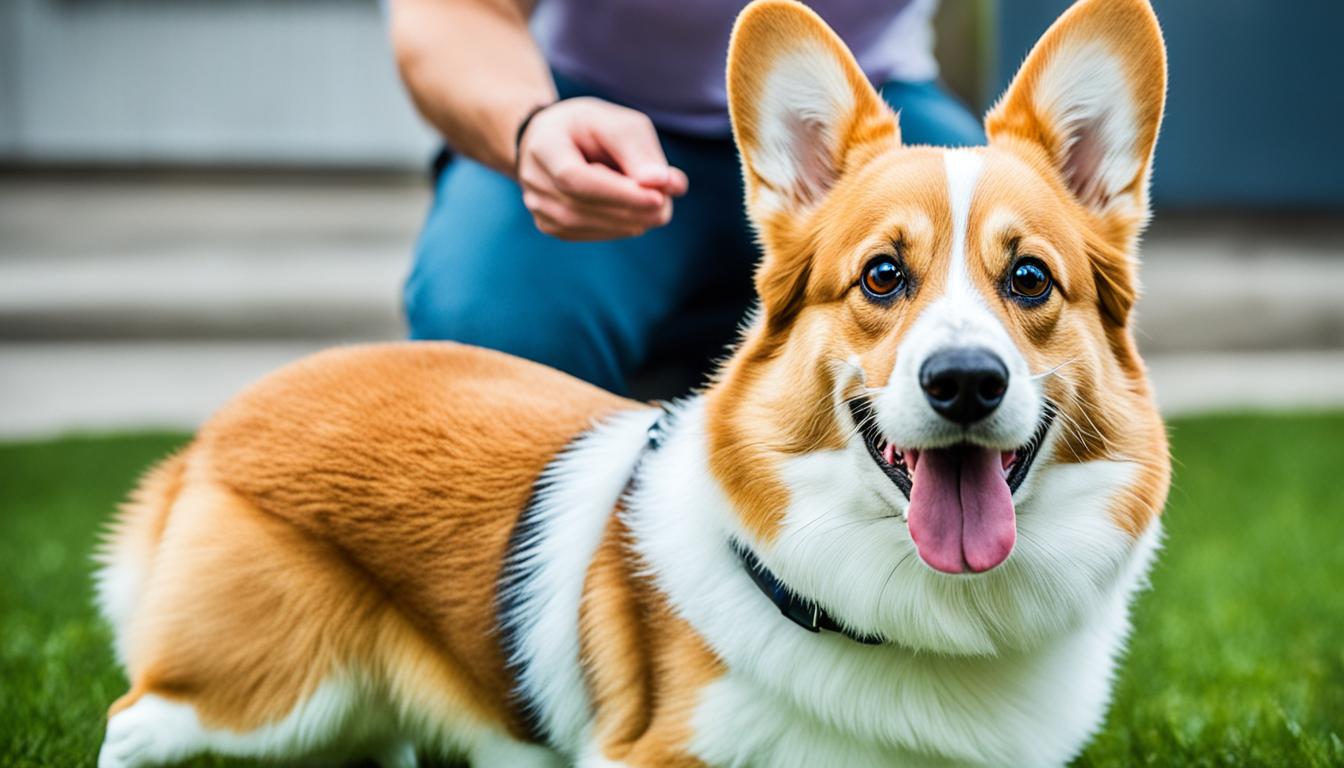

Have you ever wondered what your corgi is trying to tell you? Do you know how to decipher their body language cues and understand their behavior? Understanding your corgi’s body language is key to forging a deep and meaningful connection with them, ensuring their well-being, and avoiding any communication breakdowns.
In this article, we dive into the fascinating world of corgi body language. We unravel the mystery behind their wagging tails, expressive faces, and subtle cues that convey their emotions and intentions. Join us as we decode the intricate language of corgis and learn how to better connect with our furry friends.
Key Takeaways:
- Understanding corgi body language is crucial for their well-being and safety.
- Observing their signals, such as facial expressions and tail wagging, helps you decode their emotions and intentions.
- Paying attention to their body language strengthens the bond and trust between you and your corgi.
- Interpreting their vocalizations and understanding common misinterpretations of their body language is essential.
- Each corgi may have individual variations in their body language, requiring you to observe and understand your corgi’s unique cues.
The Importance of Corgi Body Language
Understanding the importance of your corgi’s body language is crucial for effective communication and building a strong bond. By paying attention to their Corgi body language cues, you can better understand their emotions, needs, and even prevent potential conflicts. Corgis, like other dogs, rely heavily on non-verbal cues to express themselves and interact with their environment.
Recognizing signs of stress or discomfort, such as flattened ears or a tucked tail, can help ensure your corgi’s safety and well-being. When you understand their communication cues, you can provide them with the necessary support or remove them from potentially overwhelming situations. This leads to a happier and more confident corgi.
Not only does understanding Corgi body language benefit their well-being, but it also strengthens the bond and trust between you and your furry friend. By observing their body language cues, such as tail wagging, leaning into you, or offering their bellies for a belly rub, you can respond appropriately and provide them with the care and attention they need.
Additionally, interpreting their body language can also enhance your training sessions with your corgi. For example, noticing a relaxed and loose posture can indicate that your corgi is receptive and ready to learn. On the other hand, a stiff and tense posture might mean that they are feeling anxious or afraid, and you may need to adjust your training approach accordingly.
“Understanding your corgi’s body language is like listening to their unspoken words. It allows you to connect with them on a deeper level and build a strong bond based on trust and understanding.”
Tips for Understanding Corgi Body Language:
- Observe their overall body posture and positioning.
- Pay attention to their facial expressions, such as relaxed eyes and a slightly open mouth.
- Notice their tail position and wagging speed.
- Interpret their ear movements.
- Listen to their vocalizations and understand their context.
By being attuned to your corgi’s body language, you can navigate their emotions and needs more effectively, ensuring a harmonious and fulfilling relationship. Now, let’s dive deeper into understanding their facial expressions and how they communicate through their adorable corgi expressions in the next section.
Understanding Corgi Facial Expressions
Corgis are known for their adorable and expressive faces, which can reveal a wealth of information about their emotions. By understanding the subtle cues in their facial expressions, you can gain valuable insights into how your corgi is feeling and build a stronger connection with them. Let’s take a closer look at some key aspects of corgi facial expressions.
Eye Movements
The eyes are often referred to as the window to the soul, and this holds true for corgis as well. Pay attention to your corgi’s eye movements as they can provide important clues about their emotions. Direct eye contact with relaxed eyes indicates trust and contentment. On the other hand, wide or dilated eyes may signal fear or alertness.
When your corgi blinks slowly or repeatedly, it is a sign of relaxation and comfort. However, rapid blinking or avoiding eye contact could indicate anxiety or submission. Understanding these eye movements can help you gauge your corgi’s level of relaxation and determine if they need reassurance or space.
Mouth Expressions
Corgis use various mouth expressions to communicate their emotions. Drooling can occur in different situations, such as when your corgi anticipates food or feels nauseous. Excessive drooling may also be a sign of anxiety or stress, so it’s essential to assess the context and the overall body language of your corgi.
Lip licking is another important facial cue to watch for. Corgis often lick their lips when they feel uneasy or stressed. This behavior can indicate their attempt to communicate discomfort or a need for reassurance. By recognizing these signals, you can create a supportive environment for your corgi and address their needs effectively.
Understanding your corgi’s facial expressions, including eye movements and mouth expressions, is crucial for deciphering their emotions and enhancing your communication with them.

Decoding Corgi Tail Wagging and Position
Corgis have a unique way of using their tails to communicate their emotions and intentions. By paying attention to different tail positions, you can gain valuable insights into what your corgi is trying to express. Understanding the meaning behind these tail wagging signals is essential for reading your corgi’s body language effectively.
When it comes to tail wagging, the speed, height, and position all play a role in conveying specific messages. A high and fast wag usually indicates excitement and happiness. Conversely, a low and slow wag suggests caution or uncertainty. By carefully observing the speed and height of the tail wag, you can gauge the level of enthusiasm or hesitation your corgi is experiencing.
In addition to the wagging speed and height, the position of the tail can also provide valuable clues about your corgi’s emotional state. A tail held high and upright often signifies confidence and a positive outlook. On the other hand, a tucked tail, where it is pulled tightly between the hind legs, is often a sign of fear or anxiety. If you notice your corgi’s tail in a tucked position, it’s important to create a calm and comforting environment to help them feel safe.

Pay close attention to how your corgi’s tail moves and positions itself in different situations. This will help you better understand their emotions and respond accordingly. Remember, every corgi is unique, so it’s important to familiarize yourself with your own corgi’s specific tail wagging patterns and associated behaviors.
Here are the key points to remember:
- A high and fast wag indicates excitement and happiness.
- A low and slow wag suggests caution or uncertainty.
- A tail held high and upright signifies confidence.
- A tucked tail often signals fear or anxiety.
By decoding your corgi’s tail wagging and position, you can gain a deeper understanding of their feelings and create a stronger bond based on effective communication. Remember to consider tail wagging in conjunction with other body language cues to ensure accurate interpretation.
“A wagging tail speaks volumes about a corgi’s emotions. Understanding their tail language is key to unlocking their feelings and needs.”
| Position | Meaning |
|---|---|
| High and fast wag | Excitement and happiness |
| Low and slow wag | Caution or uncertainty |
| High and upright tail | Confidence |
| Tucked tail | Fear or anxiety |
Interpreting Corgi Ear Movements
Paying attention to your corgi’s ear movements can provide valuable insights into their mood and communication. Just like humans, corgis use their ears to express themselves and convey important messages.
One of the key ear positions to observe is when your corgi’s ears are pricked forward. This indicates alertness and shows that your corgi is actively engaged with their surroundings. When their ears are perked up, it’s a sign that they are attentive and focused.
On the other hand, laid-back ears may signal fear or anxiety. If your corgi’s ears are pulled back against their head, it’s a clear indication that they are feeling uneasy or threatened. It’s essential to provide a calm and secure environment for your corgi in such situations to help alleviate their anxiety.
You may also notice your corgi adopting the “one ear up, one ear down” position. This can signify confusion or uncertainty. Your corgi might be processing information or considering their next move. It’s important to give them time and space to gather their thoughts and make decisions.
Understanding these ear positions allows you to better communicate with your corgi and address their needs. It helps you tailor your responses and provide the necessary support or reassurance.
By paying attention to your corgi’s ear movements and combining this observation with other body language cues, such as facial expressions and tail wagging, you can gain a more comprehensive understanding of their emotions and intentions.
Listening to Your Corgi’s Ears: Tips for Interpretation
Here are a few tips to help you interpret your corgi’s ear movements:
- Observe the direction of their ear movement. Are they pointing forward, to the side, or pushed back?
- Take note of any changes in their ear position. Are their ears normally up, but suddenly start to droop?
- Consider the context. Is there something specific that might be causing your corgi’s ears to react in a certain way?
Remember, every corgi is unique, and while ear movements can provide valuable insights, it’s important to observe your corgi as a whole and consider their overall body language.

Corgi Body Posture and Positioning
Understanding your Corgi’s body language is key to deciphering their emotions and intentions. This includes observing their body posture and positioning, which provides valuable insights into their well-being and state of mind.
A relaxed and loose body posture is a sign of comfort and contentment, indicating that your Corgi is at ease. They may have a slightly curved or lowered back, and their tail will likely be held at a neutral level. You may also notice that their ears are in a natural position.
On the other hand, a stiff and tense body posture suggests anxiety or threat. Their body may be rigid or even slightly crouched, and their tail may be held tightly against their body. Their ears might also be laid back or flattened against their head.
The position of your Corgi’s body plays a crucial role in expressing their emotions and intentions. When your Corgi’s tail is up and wagging, this indicates confidence and a positive state of mind. It may also be accompanied by an upright stance and forward-leaning body.
In contrast, a lowered or tucked tail typically suggests fear or submission. Your Corgi may exhibit a hunched posture or try to make themselves appear smaller. This is an important signal to ensure their well-being and provide reassurance when needed.
Remember, each Corgi may have their own individual variations in body language, so take the time to understand your dog’s unique cues. This will help strengthen your bond and improve your communication with them.
“By paying attention to your Corgi’s body posture and positioning, you can better understand their emotions and respond to their needs effectively.”
To illustrate these body postures and positions, here’s a visual reference:
| Relaxed and Content | Stiff and Tense |
|---|---|
 |
Corgi Vocalizations and What They Mean
Paying attention to your corgi’s vocalizations can provide valuable insights into their emotions and intentions. Understanding their various vocal cues allows you to respond appropriately and better meet their needs.
Barking: Corgis may bark for various reasons. It can be a sign of excitement, alerting you to something they find interesting or enjoyable. Barking can also indicate a warning or potential danger, as they try to communicate their concern. In some cases, corgis may bark out of fear or seek attention from their owners.
Growling: Growling is often a sign of discomfort or aggression. Your corgi may growl when they feel threatened or when they want to establish boundaries. It’s essential to pay attention to their body language and the context in which the growling occurs to determine the appropriate response.
Whining, Whimpering, Howling, and Singing: Corgis may use these vocalizations to convey various emotional states and communication needs. Whining or whimpering can indicate anxiety, pain, or a desire for attention or affection. Howling is often an instinctual response to certain triggers such as hearing other dogs howl or expressing loneliness. Some corgis may even “sing” along with certain sounds or music, showcasing their unique personality.
Understanding your corgi’s vocalizations in conjunction with their body language and overall behavior will give you a more complete understanding of their emotional state and communication cues.
Common Misinterpretations of Corgi Body Language
Understanding corgi body language is crucial for effective communication and preventing misunderstandings. However, it’s common for people to misinterpret certain cues, leading to confusion and potential conflicts. To better understand your corgi’s behavior, it’s essential to recognize these misinterpretations and adjust your understanding accordingly.
Recognizing Signs of Anxiety
One common misinterpretation is dismissing signs of anxiety as mere quirks. Excessive panting, a lowered tail, or trembling in your corgi may indicate underlying stress or discomfort. It’s important not to overlook these signals and take steps to address their anxiety, providing a safe and reassuring environment for your furry friend.
Context is Key During Playtime
During playtime, corgis may exhibit behaviors like barking or growling, which can be easily misinterpreted as aggression. However, it’s crucial to consider the context and overall body language. Playful barks, along with relaxed body posture and wagging tail, are often a sign of excitement and engagement. It’s essential to observe the cues holistically to accurately interpret their behavior.
“By recognizing and understanding common misinterpretations, you can strengthen your bond with your corgi and ensure a harmonious relationship.”
Observing your corgi’s body language takes practice and attention to detail. By acknowledging the potential for misinterpretations, you can become more attuned to your corgi’s needs and emotions. This understanding enables effective communication and strengthens your bond with your beloved corgi companion.
Common Misinterpretations of Corgi Body Language
| Misinterpretation | Correct Interpretation |
|---|---|
| Anxiety signs | Recognize excessive panting, lowered tail, or trembling as signs of stress or discomfort. |
| Playtime behaviors | Contextualize barking or growling during play with other relaxed body cues to identify excitement and engagement. |
| Overlooking submissive behavior | Understand that a lowered tail or crouching posture may signify submission or fear, not defiance. |
| Confusing aggression with resource guarding | Learn to differentiate between aggressive behavior and corgi’s natural tendency to guard their belongings. |
Are All Corgis’ Body Language the Same, or Do They Have Individual Variations?
While corgis share some common body language cues, just like people, they also have individual variations in their communication style. It’s important to observe and understand your corgi’s unique cues to effectively communicate and meet their specific needs and emotions.
Each corgi may have their own way of expressing themselves, and being attuned to these individual variations can deepen your bond with them. By paying attention to their subtle signals and behaviors, you can better understand their preferences, fears, and desires.
For example, one corgi may wag their tail vigorously when excited, while another may have a more subtle wag. Some corgis may tilt their heads when curious, while others may express their curiosity in different ways. By familiarizing yourself with your corgi’s individual variations, you can respond accordingly and provide the care and attention they need.
Understanding the individual variations in corgi body language goes hand in hand with understanding their overall behavior. It allows you to tailor your approach and training methods to match their unique personality and communication style. This not only strengthens your bond but also helps create a harmonious environment where your corgi feels understood and valued.
However, it’s important to note that while individual variations exist, there are still general guidelines for interpreting corgi body language. It’s crucial to be mindful of the context and other accompanying cues to ensure accurate interpretation.
So, take the time to observe and understand your corgi’s individual body language cues. Embrace their unique way of communicating and respond with patience, empathy, and love.
| Body Language Cue | Meaning |
|---|---|
| Tail Wagging | Indicates excitement, happiness, or the need for attention |
| Ear Position | Can signify alertness, fear, or relaxation |
| Facial Expressions | Provide insights into emotions, such as happiness, anxiety, or discomfort |
| Posture and Positioning | Convey confidence, fear, or submission |
| Vocalizations | Indicate emotions, such as excitement, fear, or the need for attention |
Can Corgis Use Their Body Language to Communicate?
Dogs, including corgis, possess an intricate system of nonverbal communication that relies heavily on body language. While vocalizations play a role in their communication repertoire, corgis primarily convey their thoughts, feelings, and intentions through a variety of physical cues and cues.
Understanding and interpreting corgi body language is crucial for effective communication and building a strong bond with your furry companion. By familiarizing yourself with their unique body language cues, you can decipher their emotions, recognize their needs, and respond appropriately.
From facial expressions and tail wagging to postures and vocalizations, each aspect of corgi body language offers valuable insights into their well-being and communication cues.
The Complexity of Corgi Body Language
The intricate nature of corgi body language reflects the depth of their emotional range and communication abilities. By honing your observation skills, you can decode their body language and gain a deeper understanding of their behavior.
Just as humans use facial expressions, body postures, and gestures to communicate, corgis employ a complex array of nonverbal cues to express their thoughts, feelings, and intentions. By paying attention to their nuanced body language, you can connect with your corgi on a deeper level.
Key Elements of Corgi Body Language
Several key elements make up the intricate world of corgi body language:
- Facial Expressions: By observing their eyes, eyebrows, mouth, and ears, you can gauge your corgi’s emotions and intentions.
- Tail Wagging and Position: The position and movement of your corgi’s tail communicate important messages about their overall mood.
- Ear Movements: Corgis’ ears are highly expressive, providing insights into their level of alertness, comfort, or stress.
- Body Posture and Positioning: The way your corgi holds their body conveys vital information about their confidence, anxiety, or submission.
- Vocalizations: Corgis use a range of vocalizations, such as barking, growling, and whining, to express their needs and emotions.
By evaluating these elements together and considering the context, you can unlock the rich tapestry of your corgi’s body language and establish a stronger connection.
Building a Stronger Connection Through Body Language
Learning to decipher and respond to your corgi’s body language can deepen your bond with them. It allows you to anticipate their needs, provide comfort during anxiety-inducing situations, and strengthen trust.
(Add a compelling, relevant image in the center)
Understanding corgi body language is not about achieving perfection or mastering a complex code. It’s about attuning yourself to your corgi’s unique signals and responding with empathy and care. By doing so, you can forge a deeper connection and ensure your corgi feels understood and loved.
| Benefits of Understanding Corgi Body Language |
|---|
| Enhanced communication |
| Improved bond and trust with your corgi |
| Ability to address their needs and emotions effectively |
| Reduction in miscommunications and conflicts |
Tips for Effective Communication With Your Corgi
Effective communication with Corgis is essential for fostering a strong bond and ensuring their well-being. By understanding their unique body language cues, you can enhance your interactions and build a deeper connection with your furry friend.
1. Observe and Interpret Body Language Cues
To communicate effectively with your corgi, it’s crucial to observe their body language in different contexts. Pay attention to their specific signals, such as tail wagging, ear movements, and facial expressions. These cues can provide valuable insights into their emotions and intentions.
“Corgis communicate through their body language, including tail wagging, ear movements, and facial expressions.” – Corgi Lover
2. Be Consistent in Signals and Commands
Corgis respond well to consistency, so it’s important to be clear and consistent in the signals and commands you use. Use the same words and gestures for specific behaviors and reinforce them consistently. This helps your corgi understand what is expected of them and promotes effective communication.
3. Learn from Your Corgi’s Responses
Every corgi is unique, and they may have their own preferences and communication styles. Learn from how your corgi responds to your signals and commands. If they seem confused or unsure, adjust your approach accordingly to better meet their needs.
4. Consider Obedience Training
Obedience training can greatly improve communication between you and your corgi. Enroll in a training program or work with a professional trainer to teach your corgi basic commands and reinforce positive behaviors. This formal training can create a common language and strengthen your bond.
5. Practice Patience, Understanding, and Respect
Effective communication with your corgi requires patience, understanding, and respect for their unique communication style. Remember that they are individuals with their own personalities and emotions. Take the time to listen and respond to their needs with empathy and kindness.
6. Strengthening Your Bond
Building a strong bond with your corgi is a lifelong process. The more you communicate effectively, the deeper your connection will become. Cherish the little moments, be present with your corgi, and enjoy the journey of understanding and being understood.
Conclusion
Understanding your corgi’s body language is key to effective communication and building a deep bond with your furry friend. By paying close attention to their facial expressions, tail wagging, ear movements, vocalizations, and body posture, you can gain valuable insights into their emotions and needs.
Interpreting their cues allows you to respond appropriately and create a safe and happy environment for your corgi. Whether it’s recognizing signs of stress, offering comfort during vulnerability, or engaging in playtime, understanding their body language is crucial for their well-being and happiness.
So, the next time you interact with your corgi, remember to observe and decipher their body language. By cultivating this understanding, you will strengthen your bond and create a fulfilling and enriching relationship with your beloved corgi companion. Happy chatting with your corgi!
FAQ
Why is understanding corgi body language important?
How can I interpret corgi facial expressions?
What can corgi tail wagging and position tell me?
How can I interpret corgi ear movements?
What does corgi body posture and positioning convey?
How can I understand corgi vocalizations?
What are common misinterpretations of corgi body language?
Do all corgis have the same body language?
Can corgis use their body language to communicate?
What tips can help me communicate effectively with my corgi?
Source Links
- https://www.akc.org/expert-advice/advice/how-to-read-dog-body-language/
- https://www.idreamofcorgis.com/understanding-your-corgis-body-language
- https://corgicult.com/mastering-the-art-of-corgi-communication-understanding-your-dogs-signals/

Carlos is the passionate founder and primary author behind “CorgisCorner.com,” a website dedicated to all things related to the beloved Corgi breed. Born and raised in a small town known for its strong sense of community and love for animals, Carlos developed a deep affection for Corgis from a young age. This love was sparked by his childhood companion, a spirited and loyal Corgi named Toby, who was a constant source of joy and friendship.