


Do you find yourself struggling to manage your hyperactive puppy’s boundless energy? Are you looking for effective techniques to help calm them down and improve their behavior? Look no further! In this article, we will explore the 5 best techniques for soothing hyperactive puppies, providing you with the tools you need to bring peace and relaxation to your furry friend’s life.
Key Takeaways:
- Understanding your puppy’s energy levels and recognizing signs of hyperactivity is the first step in managing their behavior.
- Providing appropriate outlets for your puppy’s energy, such as physical exercise and mental stimulation, can help drain their excess energy and promote calmness.
- Training techniques like clicker training, place/settle training, and impulse control training can teach your puppy self-control and reinforce calm behaviors.
- Consistency is key in training hyperactive puppies. Setting clear rules and boundaries, incorporating training into their daily routine, and reinforcing calm behaviors will contribute to their overall behavior improvement.
- With patience and dedication, you can help your hyperactive puppy become a well-behaved and content companion.
Understanding Hyperactive Puppies
Puppies are bundles of energy, much like human infants. They possess an innate curiosity and excitement about the world around them. However, it’s important to recognize that puppies also require ample rest to thrive. Identifying signs of hyperactivity in puppies is crucial in effectively managing their behavior. These signs may include restlessness, excessive barking, clinginess, trouble-making behavior, and a short attention span.
Nurturing a deep understanding of why puppies have so much energy is the first step toward addressing their hyperactivity. By pinpointing the signs of hyperactivity in puppies, you can take proactive measures to alleviate their restlessness and promote a calmer state of being.
Signs of Hyperactivity in Puppies
Here are some common indicators that your puppy may be hyperactive:
- Restlessness: Hyperactive puppies may exhibit constant movement or an inability to settle down.
- Excessive Barking: If your puppy barks excessively without apparent reason, it could be a sign of hyperactivity.
- Clinginess: Hyperactive puppies often seek constant attention and may become overly dependent on their human companions.
- Trouble-Making Behavior: Destructive chewing, jumping on furniture, or engaging in other disruptive behaviors can be a manifestation of hyperactivity in puppies.
- Short Attention Span: Puppies with hyperactivity may struggle to focus on tasks or training exercises for extended periods.
Recognizing these signs empowers you to address your puppy’s hyperactivity proactively. By identifying the underlying factors contributing to their restlessness and disruptive behavior, you can implement strategies to manage their energy effectively.
“Identifying signs of hyperactivity in puppies is crucial in effectively managing their behavior.”
Understanding the energetic nature of puppies and recognizing signs of hyperactivity is essential for providing them with appropriate outlets for their energy and maintaining a peaceful environment. By addressing hyperactivity in puppies, you can foster a harmonious relationship with your furry companion and ensure their well-being.
| Signs of Hyperactivity in Puppies | Description |
|---|---|
| Restlessness | Puppies may exhibit constant movement or an inability to settle down. |
| Excessive Barking | Puppies may bark excessively without apparent reason. |
| Clinginess | Puppies seek constant attention and become overly dependent on their human companions. |
| Trouble-Making Behavior | Puppies engage in destructive chewing, jump on furniture, or exhibit other disruptive behaviors. |
| Short Attention Span | Puppies struggle to focus on tasks or training exercises for extended periods. |
Managing Hyperactiveness in Puppies
To effectively manage a hyperactive puppy, it’s crucial to implement strategies that promote calm behavior and provide outlets for their energy. Here are some key techniques that can help:
1. Avoid Encouraging Over-Excitement
When dealing with a hyperactive puppy, it’s important not to reward or encourage their over-excited behavior. By ignoring their hyperactivity and not engaging with it, you can help prevent the reinforcement of such behavior.
2. Drain Your Puppy’s Energy
To help calm a hyperactive puppy, ensure that they engage in sufficient physical exercise to drain their excessive energy. Regular walks, play sessions, and other forms of exercise can help tire them out and reduce their hyperactivity.
3. Provide Limited Outlets for Energy
Instead of giving your puppy free rein to engage in unlimited energetic activities, provide them with structured playtime and appropriate outlets for their energy. Designated play areas, interactive toys, and games can help focus their energy and prevent them from becoming overly hyperactive.

4. Engage Their Nose with Relaxing Scents
Aromatherapy can be a soothing technique for hyperactive puppies. By using relaxing scents, such as lavender or chamomile, you can help calm their nervous system and promote relaxation. Introduce these scents in their environment or incorporate them into their bedding for a calming effect.
5. Encourage Calm Behavior
Reinforce and reward calm behavior in your hyperactive puppy. When they exhibit calmness and relaxation, acknowledge and reward them with treats, praise, or gentle petting. This positive reinforcement helps them associate calm behavior with positive outcomes, encouraging them to continue displaying calmness.
By implementing these techniques and providing a structured routine, you can effectively manage hyperactivity in your puppy and guide them towards developing calm and well-behaved behavior.
Tips for Calming Your Hyperactive Puppy
Training plays a crucial role in managing a hyperactive puppy and helping them develop calm behavior. Here are some helpful tips to assist you in soothing your lively furry friend:
1. Clicker Training for Calm Behavior in Puppies
Clicker training is an effective technique for teaching calm behavior to hyperactive puppies. By using a clicker to mark the desired calm behavior and following it with a reward, you can reinforce and encourage your puppy to stay calm. Consistency and positive reinforcement are key to successfully implementing clicker training.
2. Teaching Practical Skills to Manage Hyperactivity
Teaching practical skills such as sit, down, and stay can be invaluable in managing hyperactivity. These basic commands provide your puppy with structure and help them learn impulse control. Practice these commands regularly in different situations to reinforce calm behavior and provide your puppy with a reliable toolkit to manage their energy.
3. Giving Your Puppy a Job to Focus Their Energy
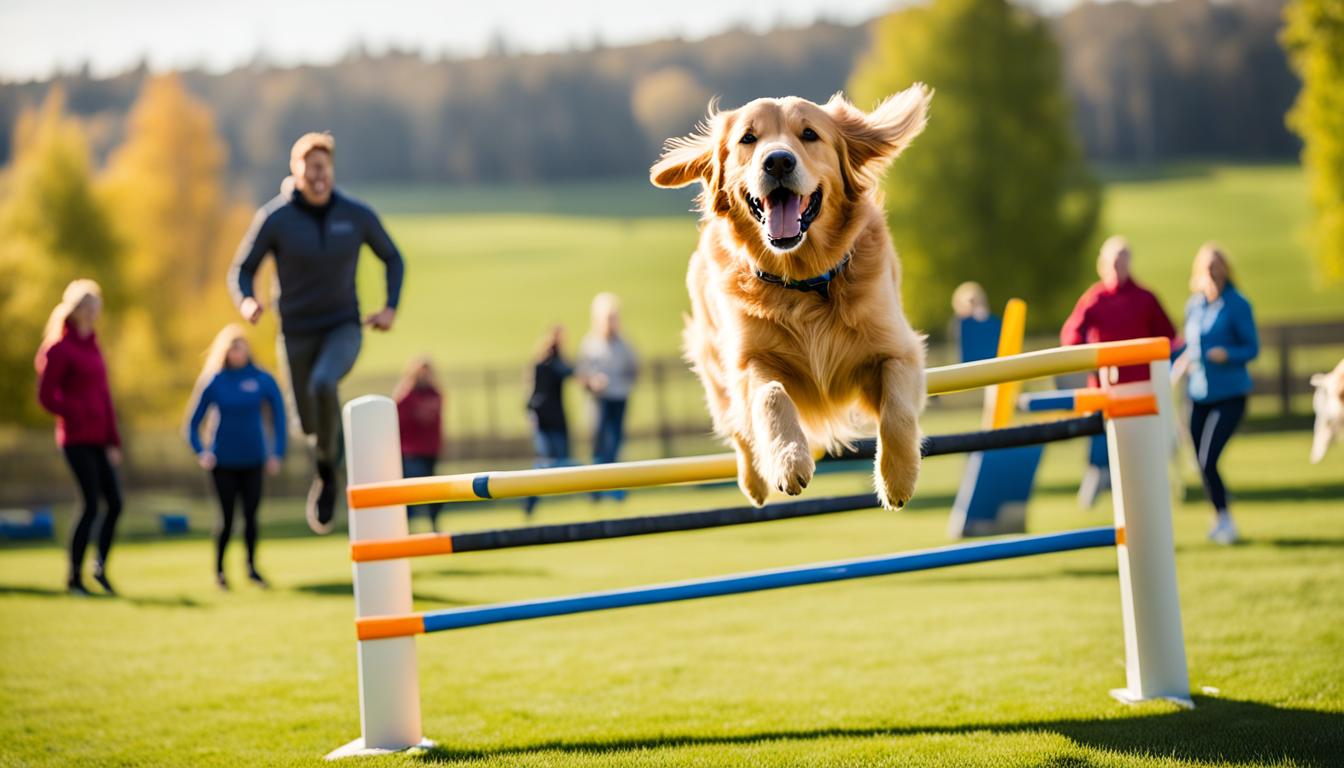
Hyperactive puppies often need an outlet for their boundless energy. Giving them a job or a task can help focus their energy and prevent destructive behavior. Engage your puppy in interactive toys, stimulating puzzles, or consider enrolling them in performance events such as agility or obedience training classes. These activities provide mental and physical outlets, allowing your puppy to burn off excess energy in a positive and controlled way.
4. Incorporating Veterinary Check-ups for Hyperactive Puppies
Regular veterinary check-ups are essential for hyperactive puppies. Some medical conditions can contribute to hyperactivity or mimic hyperactive behavior. By incorporating routine check-ups, your veterinarian can assess your puppy’s overall health and rule out any underlying medical issues that may be causing or exacerbating their hyperactivity.
| Training Tip | Key Benefit |
|---|---|
| Clicker Training | Teaches calm behavior through positive reinforcement |
| Teaching Practical Skills | Helps manage hyperactivity and impulse control |
| Giving a Puppy a Job | Provides an outlet for energy and prevents destructive behavior |
| Incorporating Veterinary Check-ups | Rules out medical conditions contributing to hyperactivity |
Remember, every puppy is unique, and it may take time to find the right combination of techniques that work best for your hyperactive puppy. Patience, consistency, and positive reinforcement are key elements in the journey of calming your energetic bundle of joy.
The Importance of Mental Exercise
Mental exercise is a crucial aspect of raising a happy and well-balanced puppy. While physical exercise is essential for their overall health, mental stimulation plays a vital role in tiring out their active minds and helping them stay calm and focused. Providing games, puzzles, and other mentally stimulating activities not only entertains your hyperactive puppy, but it also helps channel their energy in a positive way.

One effective way to provide mental exercise for your hyperactive puppy is through games and puzzles. These activities engage their minds, requiring them to solve problems and think creatively. Interactive toys and treat-dispensing puzzles are excellent options to challenge their intellect while keeping them entertained. These games and puzzles encourage mental agility and help prevent boredom and destructive behavior.
| Games and Puzzles | Description |
|---|---|
| Hide and Seek | A fun game where you hide treats or toys around the house for your puppy to find using their sense of smell. |
| Interactive Toys | These toys require your puppy to solve puzzles or manipulate parts to access treats, keeping them engaged and mentally stimulated. |
| Treat Dispensing Balls | These balls have compartments where you can place treats. As your puppy rolls the ball, treats are released, providing mental exercise and rewarding play. |
Another way to provide mental exercise is through foraging boxes. These boxes contain hidden treats or toys, encouraging your puppy to use their natural scenting abilities to find the rewards. Introducing new scents, such as lavender or chamomile, to the foraging box can also have a calming effect on your hyperactive puppy, enhancing their relaxation during the mental exercise.
Engaging your hyperactive puppy in obstacle courses is yet another way to challenge their mental abilities. These courses, consisting of tunnels, jumps, and weave poles, require your puppy to navigate through various obstacles by following your commands. This not only provides mental stimulation but also enhances their physical coordination and listening skills.
By incorporating mental exercise into your puppy’s daily routine, you can help them develop focus, problem-solving skills, and self-control. It also provides an opportunity for bonding and interactive play with you, strengthening your relationship. Remember to choose activities that are suitable for your puppy’s age and breed, and always supervise them during mentally stimulating exercises.
The Benefits of Mental Exercise for Hyperactive Puppies
- Helps channel energy in a positive way.
- Prevents boredom and destructive behavior.
- Enhances problem-solving skills.
- Promotes mental agility and focus.
- Strengthens the bond between you and your puppy.
Providing games, puzzles, foraging boxes, and obstacle courses for mental exercise is an essential part of managing your hyperactive puppy’s energy levels and behavior. By engaging their minds, you can help them stay calm, focused, and well-behaved, ensuring a harmonious relationship with your furry friend.
Place/Settle Training for Calm Behavior
Teaching a puppy to settle in a designated spot is an essential technique for calming hyperactive puppies. By using a mat or bed specifically designated for place/settle training, you can create a consistent and calming space for your puppy. This allows them to associate the spot with relaxation and tranquility.
Start by introducing your puppy to the designated spot and rewarding them with treats and praise when they choose to settle there. Encourage them to lie down and relax on the mat or bed, using verbal cues like “settle” or “go to your spot.” Repeat this process several times a day and gradually increase the duration of their settle behavior.
Utilizing place/settle training is particularly effective in calming hyperactive puppies. By providing them with a specific spot to settle, you help them understand that there is a time for rest and relaxation. This training technique establishes boundaries and teaches your puppy impulse control and patience, resulting in calmer behavior overall.

Integrating place/settle training into your puppy’s daily routine can be highly beneficial. It not only provides them with a safe space to relax but also helps redirect their hyperactive energy into positive behavior. Remember to use positive reinforcement, rewards, and plenty of patience during the training process.
| Benefits of Place/Settle Training | Steps for Place/Settle Training |
|---|---|
|
|
By incorporating place/settle training into your hyperactive puppy’s routine, you can provide them with a valuable tool for self-soothing and relaxation. Remember, consistency and patience are key when teaching your puppy to settle in their designated spot.
The Role of Physical Exercise
When it comes to managing the hyperactivity of puppies, providing them with appropriate physical exercise is crucial. Regular exercise not only helps burn off their excess energy but also promotes overall well-being.
Walking and running are excellent forms of physical exercise for puppies, as they allow them to release pent-up energy while strengthening their muscles and stamina. Walking provides a low-impact workout that is suitable for puppies of all ages and breeds. It also offers a great opportunity for you to bond with your furry friend and explore the world together. On the other hand, running can be more intense and is better suited for puppies with higher energy levels or those who are in good physical condition. Always start with shorter distances and gradually increase the duration and intensity of the exercises to prevent overexertion.
Associating physical activities with rewards is an effective way to motivate and engage hyperactive puppies. By using rewards such as treats, praise, or playtime, you can create positive associations with exercise and reinforce desired behavior.
In addition to preventing hyperactivity, regular exercise plays a vital role in preventing boredom in puppies. Hyperactive puppies tend to get into trouble when they feel restless or mentally unstimulated. By providing them with adequate physical exercise, you can keep them engaged and entertained. A tired puppy is a well-behaved puppy.

Remember to adjust the intensity and duration of the exercise based on your puppy’s age, breed, and individual needs. Consult your veterinarian if you have any concerns about the appropriate exercise for your specific puppy. They can provide valuable guidance tailored to your puppy’s health and well-being.
| Benefits of Physical Exercise for Puppies |
|---|
| 1. Helps burn off excess energy |
| 2. Strengthens muscles and stamina |
| 3. Provides mental stimulation |
| 4. Promotes healthy growth and development |
| 5. Helps prevent obesity |
Regular exercise is essential for the physical and mental well-being of hyperactive puppies. By incorporating appropriate exercise into their daily routine, you can help them channel their energy in a positive way and prevent behavioral issues caused by excessive restlessness.
Trick Training for Mental Stimulation
Trick training is a fantastic way to provide mental stimulation for hyperactive puppies, while also strengthening the bond between you and your furry friend. By teaching tricks using positive reinforcement, you can redirect their energy and focus into learning new skills. Not only will this help to calm their hyperactivity, but it will also improve communication and understanding between you and your puppy.
Positive reinforcement is key when it comes to trick training. By rewarding your puppy with treats, praise, and affection for successfully performing tricks, you create a positive association with the training process. This encourages them to continue learning and engaging in the training sessions.
Examples of tricks you can teach your hyperactive puppy:
- High Five
- Roll Over
- Speak/Bark on Command
- Play Dead
- Spin
- Fetch and Retrieve
- Shake Hands/Paw
- Jump Through a Hoop
Trick training can be further expanded by participating in performance events specifically designed for mentally stimulating hyperactive puppies. Events such as agility courses and obedience competitions provide an additional outlet for your puppy’s energy, while also challenging their cognitive abilities. These events not only provide mental stimulation, but also give you and your puppy the opportunity to connect with other dog owners and share experiences.
To get started with trick training, make sure you have plenty of small, tasty treats on hand as rewards. Break down each trick into small steps and use consistent cues or hand signals to guide your puppy’s actions. Be patient, as it may take time for them to fully grasp each trick. Practice sessions should be short and frequent to keep them engaged and prevent boredom.
Remember, trick training is not only about teaching your hyperactive puppy fun and impressive tricks. It is also about providing them with mental stimulation, fostering a stronger bond, and enhancing communication and understanding between you and your furry companion.
| Benefits of Trick Training for Hyperactive Puppies | Examples |
|---|---|
| Provides mental stimulation, calms hyperactivity | High Five, Roll Over, Speak/Bark on Command |
| Strengthens bond and communication | Play Dead, Spin, Fetch and Retrieve |
| Offers additional outlets for energy | Shake Hands/Paw, Jump Through a Hoop |
Impulse Control Training for Calm Behavior
Impulse control training plays a vital role in teaching hyperactive puppies to calm down and develop self-control. By teaching them to wait and resist acting immediately on their impulses, you can effectively manage their hyperactivity and prevent unwanted behaviors such as jumping and snatching.
This type of training requires patience and consistency. It’s important to remember that puppies are still learning and developing, so it may take time for them to fully grasp and apply impulse control. Consistency in training is crucial to reinforce the desired calm behaviors and ensure they become a habit.
Teaching puppies to wait can be done through exercises like “wait at the door” or “wait for meals.” Start by asking the puppy to wait for a short duration, then gradually increase the time as they become more proficient. Consistency in enforcing the wait command and rewarding them for their patience will help solidify their impulse control skills.
In addition to teaching impulse control, it’s essential to provide alternative behaviors and outlets for the puppy’s energy. Engaging them in interactive games, puzzle toys, and structured physical exercise can help redirect their energy in a positive way. Mental stimulation, such as sniffing games or obedience training, can also contribute to their overall calmness.
Remember, impulse control training is a process that requires time and commitment. By incorporating patience, consistency, and providing appropriate outlets for their energy, you can help your hyperactive puppy develop the necessary self-control to lead a calm and well-behaved life.
Benefits of Impulse Control Training:
- Prevents jumping and snatching behaviors
- Improves overall obedience
- Enhances self-control and patience
- Promotes a calm and balanced temperament
- Strengthens the bond between owner and puppy
Impulse Control Training Tips:
- Be consistent in enforcing the wait command.
- Reward your puppy for demonstrating patience.
- Gradually increase the duration of the wait command.
- Provide alternative outlets for their energy.
- Incorporate mental stimulation through games and puzzles.
| Behaviors to Prevent | Impulse Control Techniques |
|---|---|
| Jumping on people | Teach “off” and wait commands |
| Snatching items | Practice “leave it” and “drop it” commands |
| Excessive barking | Use the “quiet” command and redirect their attention |
| Chasing people or animals | Teach “stay” and “come” commands for recall |
Consistency in Training Hyperactive Puppies
Consistency is crucial when it comes to training hyperactive puppies. By incorporating training into their daily routine, you can establish a structured environment that promotes learning and behavioral improvement. Setting clear rules and boundaries is essential for hyperactive puppies to understand what is expected of them and helps them develop good habits.
Reinforcing calm behaviors in puppies is another important aspect of consistent training. By rewarding and praising calm behavior, you can encourage and reinforce positive habits. This can be done through verbal cues, treats, or positive reinforcement methods such as clicker training. Remember to be patient and consistent in your approach, as it takes time for hyperactive puppies to learn and adapt.
Consistent training and reinforcement of calm behaviors play a significant role in managing the hyperactivity of puppies. By providing a structured routine and clear boundaries, you can help them channel their energy in appropriate ways and prevent unwanted behaviors.
Integrating training sessions into your daily routine is key to maintaining consistency. Find dedicated times throughout the day to work on obedience training, impulse control exercises, and mental stimulation activities. This not only helps your puppy develop essential skills but also strengthens the bond between you and your furry friend.
Remember, hyperactive puppies thrive on routine and structure. By being consistent and providing a predictable environment, you can effectively manage their hyperactivity and promote calm behavior.
| Benefits of Consistency in Training Hyperactive Puppies | Methods for Incorporating Training into a Daily Routine | Effective Ways to Reinforce Calm Behaviors | Importance of Setting Rules and Boundaries |
|---|---|---|---|
| 1. Establishes a structured environment | 1. Schedule regular training sessions | 1. Use positive reinforcement techniques | 1. Define clear rules and boundaries |
| 2. Promotes consistent learning | 2. Incorporate training into daily activities | 2. Reward and praise calm behavior | 2. Be consistent in enforcing boundaries |
| 3. Strengthens the bond between owner and puppy | 3. Integrate training during walks or playtime | 3. Establish a calm training environment | 3. Communicate expectations clearly |
| 4. Promotes positive habits and behaviors | 4. Use consistent verbal cues and hand signals | 4. Incorporate training into everyday life | 4. Provide guidance and structure for the puppy |
Conclusion
Managing and training hyperactive puppies can be a challenge, but with the right techniques and consistency, you can calm them down and improve their behavior. It’s important to understand their energy levels and provide appropriate outlets for their energy. Additionally, teaching them impulse control is crucial in soothing their hyperactivity.
By engaging in activities that drain their energy, such as physical exercise and mental stimulation, you can help your hyperactive puppy find a healthy balance. Trick training and impulse control training are effective methods for redirecting their energy and developing self-control.
Remember, patience and dedication are key in training a hyperactive puppy. With your commitment and the use of these calming techniques, you can transform your hyperactive puppy into a well-behaved and happy companion. So, don’t hesitate to put these strategies into practice and enjoy the rewards of a harmonious relationship with your furry friend.
FAQ
Why do puppies have so much energy?
What are the signs of hyperactivity in puppies?
How can I manage a hyperactive puppy?
What are some tips for calming a hyperactive puppy?
What training methods are effective for managing hyperactivity in puppies?
How important is mental exercise for hyperactive puppies?
What is place/settle training and how can it help calm hyperactive puppies?
How important is physical exercise for managing hyperactivity in puppies?
How can trick training help calm hyperactive puppies?
How can impulse control training help calm hyperactive puppies?
How important is consistency in training hyperactive puppies?
Source Links
- https://www.bdrr.org/dog-blog/how-to-calm-a-hyper-dog
- https://www.akc.org/expert-advice/training/5-tips-for-a-hyperactive-dog/
- https://pupford.com/calm-down-hyper-dog/

Carlos is the passionate founder and primary author behind “CorgisCorner.com,” a website dedicated to all things related to the beloved Corgi breed. Born and raised in a small town known for its strong sense of community and love for animals, Carlos developed a deep affection for Corgis from a young age. This love was sparked by his childhood companion, a spirited and loyal Corgi named Toby, who was a constant source of joy and friendship.