

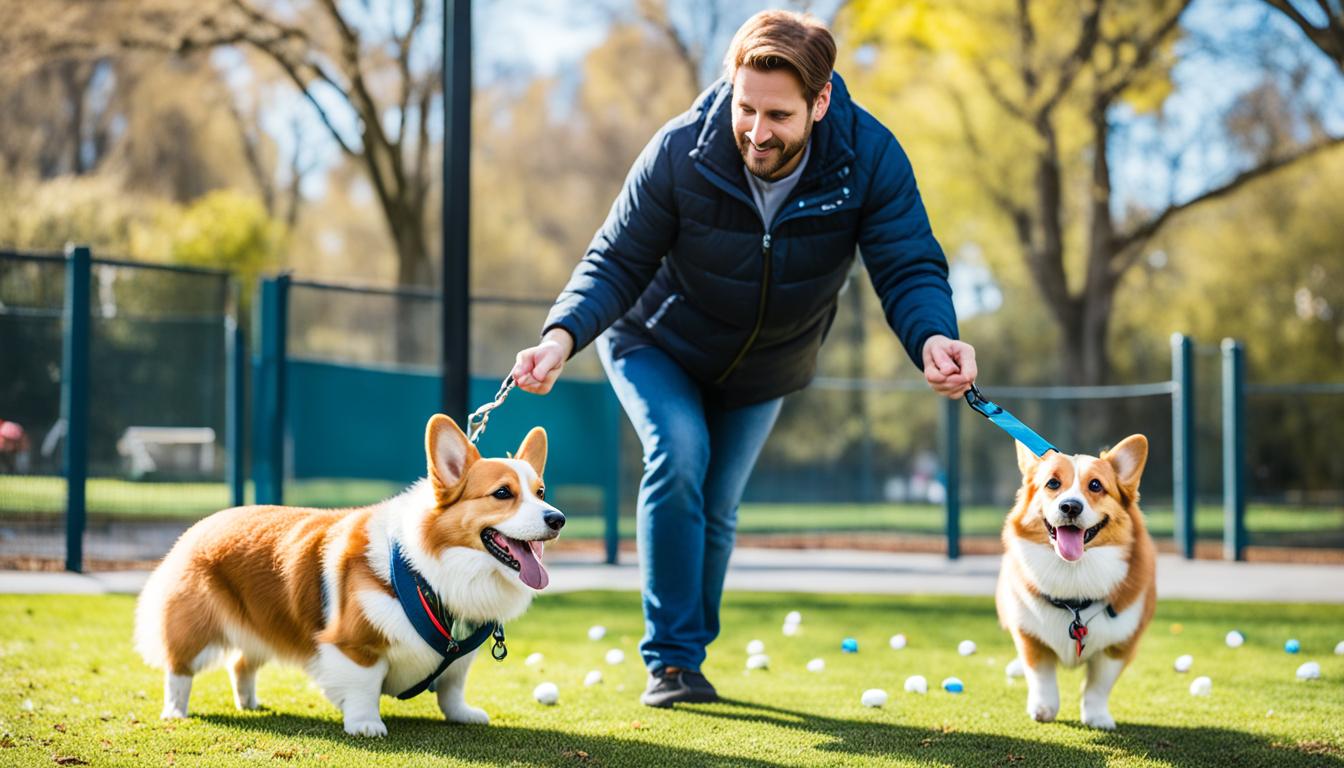

Are you struggling with unwanted behaviors in your Corgi? From jumping on people to countersurfing for food, it’s common for our furry friends to develop bad habits. But fear not! With the right training techniques and exercise, you can effectively address and solve these typical behavioral issues in Corgis.
Training and exercise are key factors in curbing unwanted behaviors in Corgis. By implementing proper training techniques and providing adequate exercise, you can establish boundaries, reinforce desired behaviors, and create a harmonious home environment for both you and your furry companion.
Key Takeaways:
- Proper training and exercise are essential for addressing typical behavioral issues in Corgis.
- Positive reward-based training helps establish boundaries and strengthens the bond between you and your Corgi.
- Creating a safe and controlled environment through puppy-proofing can prevent unwanted behaviors from developing.
- Rewarding desired behaviors and setting consistent expectations contribute to effective behavior modification.
- Addressing common behavioral issues in Corgis, such as jumping, chewing, countersurfing, pulling on the leash, and excessive barking, requires specific training techniques and consistency.
The Importance of Training in Addressing Behavioral Problems
When it comes to addressing behavioral problems in Corgis, training plays a vital role. Effectively training your Corgi can correct unwanted behaviors and establish a harmonious relationship between you and your four-legged friend. Through positive reward-based training methods, you can shape your Corgi’s behavior and foster obedience and respect.
One key aspect of training is teaching your Corgi basic commands such as sit, come, and lie down. These commands not only provide structure and boundaries but also contribute to strengthening the bond between you and your furry companion. By consistently reinforcing these commands with rewards and treats, you can motivate your Corgi to exhibit desired behaviors and discourage unwanted ones.
Consistency is crucial in training Corgis effectively. By setting clear expectations and consistently reinforcing desired behaviors, your Corgi will understand what is expected of them and be more likely to repeat those behaviors. Consistent training creates a strong foundation for behavior modification and ensures a well-behaved and obedient Corgi.
Training Corgis effectively is all about positive reinforcement and consistent guidance. By rewarding desired behaviors and providing clear boundaries, you can correct Corgi behavior issues and create a happy and well-behaved companion.
Remember, correcting Corgi behavior through training requires patience, time, and dedication. Every Corgi is unique, and some behaviors may take longer to address than others. With perseverance and positive reinforcement, you can overcome behavioral challenges and cultivate a respectful and well-mannered Corgi.
Next, let’s explore the role of exercise in behavior modification and how it contributes to managing and preventing common Corgi habits.
The Role of Exercise in Behavior Modification
Exercise plays a crucial role in managing Corgi habits and behavior modification. Regular physical activity is essential for Corgis to release their excess energy and prevent them from engaging in destructive behaviors.
“A tired Corgi is a well-behaved Corgi.”
When Corgis are properly exercised, they are less likely to indulge in unwanted behaviors such as excessive barking, chewing, or digging. In addition, exercise helps stimulate their minds and keeps them mentally engaged, promoting a sense of overall well-being.
It’s important to note that the exercise requirements of Corgis vary depending on their age, breed, and overall health. Puppies generally require more exercise than adult dogs as they have higher energy levels and need additional opportunities to explore and play.
To determine the appropriate amount of exercise for your Corgi, it is recommended to consult with a veterinarian. They can provide personalized guidance based on your Corgi’s specific needs and help establish an exercise routine that meets their physical and mental requirements.
Engaging in activities such as regular walks, play sessions, and interactive games not only helps manage Corgi behavior but also strengthens the bond between you and your furry companion.
Remember, a healthy and well-exercised Corgi is more likely to exhibit positive behaviors and be a happy member of your family.

Tips for Managing Corgi Habits through Exercise:
- Ensure your Corgi has daily opportunities for physical activity, such as walks, off-leash playtime, or interactive toys.
- Vary the types of exercise to keep your Corgi mentally stimulated and prevent boredom. Consider activities like agility training or scent games.
- Monitor your Corgi’s behavior during and after exercise. If they are still exhibiting unwanted behaviors, it may indicate the need for additional mental stimulation or revising their exercise routine.
- Use exercise as a positive reinforcement tool. Reward desired behaviors and provide treats and praise after a successful exercise session. This helps strengthen the connection between exercise and positive outcomes.
Preventing Unwanted Behaviors through Puppy-Proofing
Puppy-proofing your house is crucial in preventing your Corgi from developing unwanted behaviors. Understanding Corgi behavior and addressing Corgi behavior problems early on can save you time and frustration in the long run. By creating a safe and controlled environment, you can minimize the chances of your Corgi learning bad habits.
Securing Valuables
To prevent your Corgi from getting into trouble, keep valuable items out of reach. Make sure to store your personal belongings, such as shoes, electronic cords, and small objects, in areas that are inaccessible to your dog. This not only protects your belongings but also prevents your Corgi from ingesting something harmful.
Quote: “Preventing access to valuable items is essential in puppy-proofing your home.”
Removing Hazards
Picking up houseplants and toxic substances such as cleaning supplies is essential for your Corgi’s safety. Keep in mind that some plants are toxic to dogs, so it’s best to remove them from your home. Additionally, store cleaning supplies and other chemicals in secure cabinets or areas that are completely out of reach.
Supervising Your Puppy
Supervision is key, even if you have a fenced-in yard. Always keep an eye on your puppy to prevent them from escaping, getting into potentially dangerous situations, or practicing behaviors you wish to discourage. By closely monitoring your puppy’s activities, you can correct any unwanted behavior promptly and redirect their attention to more appropriate activities.
Creating a Safe Space
Providing a designated safe space for your Corgi can help prevent unwanted behaviors. Set up a crate or a designated area where your dog can retreat to when they need some alone time or feel anxious. Make sure this area is comfortable and stocked with appropriate chew toys and treats to keep your Corgi occupied and satisfied.
| Puppy-Proofing Steps | Benefits |
|---|---|
| Securing valuables | Prevents damage to personal belongings and ensures the safety of your Corgi |
| Removing hazards | Protects your Corgi from toxic substances and potential injuries |
| Supervising your puppy | Allows for immediate correction of unwanted behavior and redirection |
| Creating a safe space | Gives your Corgi a designated area to relax and reduces anxiety |
By puppy-proofing your home, you can set your Corgi up for success and prevent the development of unwanted behaviors. Understanding Corgi behavior and taking the necessary precautions from the beginning will make your journey as a pet owner smoother and more enjoyable.
Reward-Based Training for Desired Behaviors
One effective approach to addressing Corgi behavior problems is to reward and reinforce desired behaviors. By focusing on what you want your Corgi to do instead of what you don’t want them to do, you can effectively shape their behavior in a positive way.
When your Corgi displays positive behaviors such as lying quietly or walking calmly on a leash, make sure to praise and reward them with treats or affection. This positive reinforcement helps your Corgi associate good behavior with positive outcomes, encouraging them to repeat those behaviors in the future.
Rewarding desired behaviors is an essential part of Corgi training. When your Corgi performs a desired behavior, such as sitting or coming when called, make sure to acknowledge their efforts and provide a reward. This can be a small treat, verbal praise, or even a favorite toy. By consistently rewarding desired behaviors, you create a positive learning environment for your Corgi and strengthen your bond with them.
Remember to be consistent in your approach to reward-based training. Set clear expectations for your Corgi and reward them consistently when they meet those expectations. With time and practice, your Corgi will learn to associate the desired behaviors with positive rewards, making them more likely to repeat those behaviors in the future.
Benefits of Reward-Based Training
- Creates a positive learning environment
- Strengthens the bond between you and your Corgi
- Motivates your Corgi to repeat desired behaviors
- Encourages your Corgi to actively engage in training sessions
Through reward-based training, you can effectively address Corgi behavior problems and shape your Corgi into a well-behaved and obedient companion. Remember to focus on rewarding desired behaviors and be consistent in your training approach. With time and patience, you’ll see positive results and enjoy a harmonious relationship with your Corgi.

Consistency and Setting Standards for Behavior
Consistency plays a crucial role in shaping your Corgi’s behavior and setting the standards for their actions. It is essential that everyone in the household follows the same rules and expectations, creating a unified front in training your furry companion.
When setting standards for your Corgi, it’s important to establish clear boundaries and consistently enforce them. For example, if you don’t allow your Corgi to beg at the table, it is essential that no one feeds them from the table. Consistency in behavior expectations ensures that your Corgi understands what is acceptable and what is not.
“Consistency is key in teaching your Corgi the desired behavior. By setting consistent standards, your Corgi will learn what is expected of them and be more likely to follow through.”
Benefits of Consistency and Setting Standards
Consistency in dog behavior provides several benefits for both you and your Corgi. By setting clear standards, you establish a foundation of trust and understanding between you and your furry friend. When your Corgi knows what behavior is expected and consistently receives reinforcement for those actions, they feel more secure and confident.
Consistency in setting behavior standards also helps your Corgi develop good habits and prevents the formation of unwanted behaviors. When everyone in the household follows the same rules, your Corgi receives consistent guidance, reducing confusion and creating a harmonious environment.
The Importance of Positive Reinforcement and Consistency
Positive reinforcement is a powerful tool in shaping your Corgi’s behavior. When your Corgi displays desired behaviors, such as sitting calmly or walking nicely on a leash, be sure to praise and reward them. This positive association reinforces the desired behavior and motivates your Corgi to repeat it consistently.
Consistency is crucial when implementing positive reinforcement. Your Corgi needs to understand that the rewards they receive are directly tied to their actions. By consistently rewarding desired behaviors and ignoring or redirecting undesirable ones, you create a clear understanding for your Corgi.

The Role of Training in Consistency and Setting Standards
Training plays a vital role in maintaining consistency and setting standards for your Corgi’s behavior. Through training, you can effectively communicate your expectations and reinforce positive behaviors.
Consistency in training methods and practicing them regularly are key in achieving the desired behavior outcomes. By using consistent commands, cues, and rewards, you provide clear guidance to your Corgi, making it easier for them to understand and follow the rules.
Addressing Common Behavioral Issues: Jumping
Jumping is a common behavioral issue in Corgis. It can be challenging to address, but with consistent training and positive reinforcement, you can correct this behavior and foster better manners in your Corgi.
When your Corgi jumps on people, it’s important to remember not to give them attention or reward their behavior. Instead, stand like a statue or turn your back to discourage the jumping. This shows your Corgi that jumping does not lead to attention or affection.
Teaching your Corgi the “sit” command is an effective way to redirect their jumping behavior. When your Corgi tries to jump, calmly ask them to sit and reward them with attention and praise for remaining calm and sitting. This reinforces the desired behavior and helps them understand that sitting is a more appropriate way to greet people.
To further reinforce good behavior and discourage jumping, consistency is key. Practice these techniques every time your Corgi is tempted to jump, whether it’s when you arrive home or when guests visit. With time and patience, your Corgi will learn that sitting politely is the expected behavior.

By addressing the issue of jumping in a positive and consistent manner, you can correct this behavior and create a well-behaved and polite Corgi.
Addressing Common Behavioral Issues: Chewing
Chewing is a natural behavior for dogs, especially when they are teething. To prevent your Corgi from chewing on inappropriate items, it’s important to take proactive measures and provide them with appropriate alternatives.
One effective way to control their chewing behavior is to keep valuable possessions out of their reach. Make sure that items such as shoes, furniture, and cables are stored away or placed in areas where your Corgi cannot access them.
Providing your Corgi with appropriate chew toys is also essential. These toys are specifically designed for dogs and can help satisfy their chewing needs. Look for toys that are made of durable materials, such as rubber or nylon, which can withstand their strong jaws and keep them occupied for hours.
For puppies, additional guidance and supervision may be necessary to redirect their chewing behavior. If you catch your puppy chewing on something they shouldn’t have, gently remove the item and replace it with an appropriate chew toy. Consistency is key in teaching them what is acceptable to chew on.
A useful command to teach your Corgi is the “leave it” command. This command instructs your dog to disregard and avoid items that they may be tempted to chew on. By reinforcing this command consistently, you can reduce the likelihood of your Corgi grabbing things they shouldn’t.
In summary, preventing chewing behavior in Corgis requires a combination of proactive measures, appropriate chew toys, and consistent training. By redirecting their chewing instincts towards suitable items and teaching them the “leave it” command, you can effectively address this common behavioral issue.
Addressing Common Behavioral Issues: Countersurfing
Countersurfing can be a challenging behavior to address in Corgis. It is important to avoid feeding your Corgi from the counter and to teach them to stay in a designated area while you prepare food. By preventing countersurfing, you can ensure the safety of your Corgi and maintain a harmonious home environment.
To discourage countersurfing, use the “place” command to teach your Corgi to stay in a specific area, such as a mat or bed, while you cook or eat. This helps them understand their boundaries and reduces the temptation to explore countertops for food. Reinforce this behavior by rewarding them with treats and praise when they stay in their designated spot.
In addition to the “place” command, teaching your Corgi the “leave it” command is essential in redirecting their attention away from the countertop. Use this command when they show interest in food or attempt to jump on the counter. By consistently reinforcing the “leave it” command, you can teach your Corgi to respect boundaries and resist the urge to countersurf.
Consistency is key in preventing countersurfing behavior. Ensure that everyone in the household follows the same rules and reinforces the same commands. This helps create a clear understanding for your Corgi and reduces confusion regarding what is acceptable behavior in the kitchen. By providing consistent guidance, you can effectively address countersurfing issues in your Corgi.
By implementing these strategies and remaining consistent in your training, you can successfully prevent countersurfing in Corgis. Remember to provide alternative outlets for your Corgi’s natural instincts, such as offering appropriate chew toys and ensuring they receive sufficient mental and physical stimulation throughout the day. With patience, positive reinforcement, and consistent guidance, you can address the common behavioral issue of countersurfing and create a well-behaved and happy Corgi.
Addressing Common Behavioral Issues: Pulling on the Leash
Pulling on the leash is a common issue in Corgis. Many Corgi owners find themselves frustrated and struggling to control their dogs during walks. However, with the right training techniques, you can correct leash pulling and have enjoyable walks with your Corgi.
One effective method to address leash pulling is to reinforce walking calmly on the leash. You can do this by providing praise, using a training clicker, or offering treats as rewards when your Corgi walks nicely beside you without pulling. Positive reinforcement reinforces the desired behavior, making your Corgi more likely to repeat it.
If your Corgi starts pulling on the leash during walks, instead of continuing to walk, stop in your tracks or quickly reverse direction. This will help redirect your Corgi’s attention and discourage pulling. When your Corgi walks calmly beside you without pulling, resume walking and reward them for their good behavior.
Consistency is key when it comes to training your Corgi to walk calmly on a leash. Practice walking in low-distraction environments before gradually increasing the level of distraction. Reinforce the desired behavior consistently, and be patient—it may take time for your Corgi to learn and fully understand what is expected of them.
Benefits of correcting leash pulling in Corgis
Correcting leash pulling in Corgis is important for several reasons:
- Improved control during walks: By teaching your Corgi to walk calmly without pulling, you can have better control over their movements and ensure their safety.
- Reduced risk of injuries: Leash pulling can lead to injuries for both you and your Corgi, such as strains, sprains, or falls. Correcting this behavior helps minimize the risk of such injuries.
- Enhanced walking experience: Walking with a Corgi that walks nicely on a leash makes the experience more enjoyable for both of you. It allows you to focus on bonding and exploring together without the constant pulling.
Tips for correcting leash pulling in Corgis
Here are some additional tips to help you correct leash pulling in your Corgi:
- Use a well-fitted harness or a head halter: These tools can help you gain better control over your Corgi’s movements and redirect their attention when they start pulling.
- Practice loose-leash walking: Teach your Corgi the concept of walking with a loose leash. This means that there should be some slack in the leash when your Corgi is walking calmly beside you.
- Engage in mental and physical exercise: Providing your Corgi with sufficient mental and physical stimulation before walks can help reduce their energy levels and make them less likely to pull on the leash.
- Seek professional help if needed: If you’re struggling to correct leash pulling on your own, consider seeking the assistance of a professional dog trainer who specializes in behavior modification.
By consistently implementing these techniques and being patient with your Corgi, you can correct leash pulling and enjoy pleasant walks together. Remember, training takes time and effort, but the end result is a well-behaved and happy Corgi.
Addressing Common Behavioral Issues: Barking
Excessive barking can be a nuisance for both Corgis and their owners. To effectively manage this behavior, it is important to implement appropriate training techniques and understand the underlying causes.
Managing barking behavior in Corgis starts with teaching your furry friend a “quiet” or “enough” command. Whenever your Corgi starts barking excessively, calmly say the command and wait for them to stop. Once they are quiet, praise and reward them for their desired behavior.
Identifying the underlying cause of barking is crucial in addressing this behavior. Sometimes, Corgis bark out of boredom or fear. By providing mental and physical stimulation, such as interactive toys and regular exercise, you can help alleviate these underlying causes and reduce excessive barking.
“A well-exercised and mentally stimulated Corgi is less likely to engage in excessive barking.”
Remember, consistency is key when it comes to managing barking behavior. Make sure to reinforce the “quiet” or “enough” command consistently and provide positive reinforcement for good behavior. With patience and dedication, you can effectively address barking problems in your Corgi.
Summary:
In summary, managing barking behavior in Corgis requires a combination of training, understanding the underlying causes, and providing appropriate mental and physical stimulation. By implementing these strategies consistently, you can help your Corgi develop better barking habits and create a peaceful environment for both you and your pet.
Conclusion
In conclusion, addressing typical behavioral issues in Corgis is a multifaceted process that requires a combination of training, exercise, and consistency. By implementing positive reward-based training techniques, you can effectively manage common behavioral issues such as jumping, chewing, countersurfing, pulling on the leash, and excessive barking.
Providing mental and physical stimulation is crucial for the overall well-being of your Corgi and can help prevent unwanted behaviors. Setting clear boundaries and being consistent in your training methods establishes a strong foundation for your Corgi’s behavior.
By following the Corgi training tips outlined in this article, you can create a harmonious home environment and solve typical behavioral issues in Corgis. Remember to be patient and understanding as each Corgi is unique and may require different approaches. With dedication and love, you can shape your Corgi into a well-behaved and happy companion.
FAQ
How can I solve typical behavioral issues in my Corgi?
What is the importance of training in addressing behavioral problems?
How does exercise help in behavior modification?
How can I prevent unwanted behaviors through puppy-proofing?
What is the role of reward-based training in addressing Corgi behavior problems?
Why is consistency important in setting standards for behavior?
How can I address jumping behavior in my Corgi?
How can I prevent my Corgi from chewing on inappropriate items?
How can I prevent my Corgi from countersurfing?
How can I correct leash pulling in my Corgi?
How can I manage excessive barking in my Corgi?
Source Links
- https://www.akc.org/expert-advice/training/how-to-curb-unwanted-dog-behaviors/
- https://www.merckvetmanual.com/dog-owners/behavior-of-dogs/behavior-modification-in-dogs
- https://www.3lostdogs.com/a-simple-daily-routine-to-help-calm-hyper-dogs-and-solve-behavior-problems/

Carlos is the passionate founder and primary author behind “CorgisCorner.com,” a website dedicated to all things related to the beloved Corgi breed. Born and raised in a small town known for its strong sense of community and love for animals, Carlos developed a deep affection for Corgis from a young age. This love was sparked by his childhood companion, a spirited and loyal Corgi named Toby, who was a constant source of joy and friendship.