

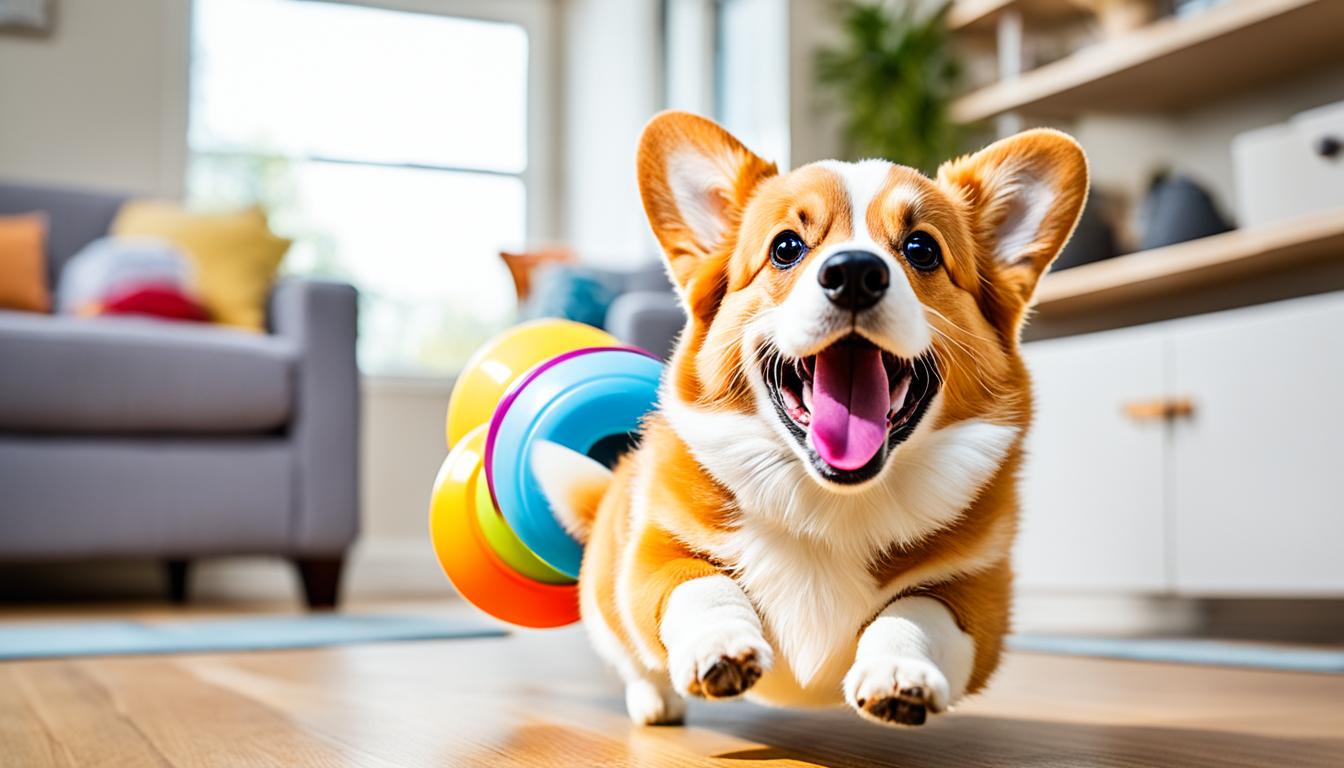

Are you finding it challenging to give your corgi enough exercise during quarantine or bad weather? Don’t worry, we’ve got you covered! Discover a range of engaging indoor activities that will keep your corgi active, entertained, and mentally stimulated. Say goodbye to boredom and hello to fun workouts and interactive games specially designed for your corgi’s fitness and playtime needs. Let’s unlock the excitement together!
Key Takeaways:
- Engage your corgi in indoor activities to keep them active and entertained when outdoor options are limited.
- Indoor exercise is crucial for maintaining your corgi’s physical health and preventing behavioral problems.
- On average, corgis require 30 to 60 minutes of exercise every day, but individual needs may vary.
- Fun indoor workouts for corgis include running up and down the stairs, playing hide and seek, and tug of war.
- Interactive games, training, food enrichment activities, and nose work games also provide mental stimulation for your corgi.
Why Indoor Exercise is Important for Corgis
Indoor exercise plays a vital role in the overall well-being of your beloved corgi. When outdoor activities are limited due to factors such as weather or quarantine, providing your corgi with regular indoor exercise becomes even more critical. Not only does it contribute to their physical health, but it also prevents behavioral problems that can arise from boredom. By engaging your corgi in indoor playtime and physical activities, you offer them numerous benefits that promote their happiness and contentment.
Benefits of Indoor Exercise for Corgis
Indoor exercise provides a range of advantages that contribute to your corgi’s overall health. Some of the key benefits are:
- Physical Health: Regular indoor exercise helps your corgi maintain a healthy weight, strengthens their muscles and joints, and improves cardiovascular fitness.
- Mental Stimulation: Engaging in indoor play and exercise activities stimulates your corgi’s mind, providing mental enrichment and helping prevent boredom.
- Behavioral Prevention: Boredom can lead to destructive behaviors in corgis, such as chewing or excessive barking. Indoor exercise helps thwart such behaviors by channeling their energy in a positive and productive way.
- Bonding Opportunity: Participating in indoor exercise activities with your corgi strengthens the bond between you and your furry friend. It creates shared experiences and enhances the sense of companionship.
By recognizing the importance of indoor exercise for your corgi, you are taking vital steps to ensure their overall well-being and happiness. Regular indoor playtime and physical activities provide the necessary physical and mental outlets for your corgi, keeping them active, entertained, and content.
Quotation:
“Indoor exercise is not only essential for a corgi’s physical health but also crucial for their mental well-being.” – Dr. Jane Wilson, Veterinary Specialist
How Much Exercise Does a Corgi Need Every Day?
The exercise needs of a corgi can vary depending on several factors, such as age, health, and breed. Although each corgi is unique, it is generally recommended that they get 30 to 60 minutes of exercise every day. This regular physical activity is crucial for their overall well-being and helps prevent obesity, which can be a common issue in the breed.
However, it’s important to note that individual corgis may have different exercise requirements. Some may have higher energy levels and need more exercise, while others may have health conditions that limit their activity. Consulting with a veterinarian can provide valuable insights into your corgi’s specific exercise needs and help you create a tailored exercise plan.
When considering exercise options for your corgi, it’s essential to focus on activities that engage them both physically and mentally. Corgis are intelligent dogs and enjoy tasks that stimulate their minds. Incorporating interactive games, obedience training, and puzzle toys into their exercise routine can provide mental enrichment alongside physical exercise.
Regular exercise not only helps maintain a healthy weight for your corgi but also supports their cardiovascular health, keeps their joints mobile, and promotes good muscle tone. It is also an excellent opportunity for you and your furry companion to bond and strengthen your relationship.
Here are some recommended exercise options for corgis:
- Brisk walks or jogs
- Playtime at a dog park
- Fetch games
- Swimming, if your corgi enjoys water
- Hiking or trail walks
- Agility training
Remember, it’s crucial to monitor your corgi during exercise to ensure they don’t overexert themselves or show signs of fatigue or discomfort. Always provide access to fresh water and take breaks as needed. By understanding your corgi’s exercise needs and engaging them in appropriate activities, you can keep them healthy, happy, and well-exercised.

“Exercise is not just about physical activity, it’s about keeping your corgi mentally stimulated and ensuring their overall well-being.”
Fun Indoor Workouts for Corgis
When it comes to keeping your corgi active indoors, there are plenty of fun workouts you can engage in. These exercises not only help burn energy but also strengthen the bond between you and your furry friend. Here are some corgi-friendly workouts you can try at home:
1. Running Up and Down the Stairs
One simple but effective workout is running up and down the stairs. Corgis have short legs, so this exercise helps them build strength and agility. Make sure to supervise them and ensure the stairs are safe for their size.
2. Obstacle Courses
Set up obstacle courses using cushions, boxes, or other household items. Guide your corgi through the course, encouraging them to jump over or crawl under objects. This activity not only provides physical exercise but also engages their problem-solving skills.
3. Hide and Seek
Hide treats or toys around the house and let your corgi use their keen sense of smell to find them. This game stimulates their natural hunting instincts while keeping them entertained.
4. Keep Away Games
Play keep away games with your corgi using a favorite toy or ball. This activity encourages them to chase and move around, providing a good cardio workout.
5. Fetch in a Long Corridor or Spacious Living Room
If you have a long corridor or a spacious living room, playing fetch can be a great indoor workout. Make sure to use a soft toy or a lightweight ball suitable for indoor use.
6. Tug of War
Tug of war is a classic game that corgis love. Find a sturdy rope toy and engage in a friendly tug of war session. This activity helps build their strength and provides an engaging workout.

Remember to always prioritize your corgi’s safety during these workouts. Ensure the space is clear of any hazards, and monitor their behavior and energy levels. With these corgi-friendly workouts, you can keep your furry companion active and entertained even when outdoor activities are limited.
Interactive Games for Mental Stimulation
Mental stimulation is just as vital as physical exercise for corgis. Engaging your corgi in interactive games can provide the mental challenges they need to keep their minds sharp and engaged. Here are a few game ideas to stimulate your corgi’s brain:
- “Which Hand”: Start by placing a treat in one of your hands and close both fists. Let your corgi sniff and nudge the hand they think contains the treat. This game strengthens their problem-solving skills and enhances their ability to make choices.
- The Shell Game: Hide a treat under one of three identical cups or shells and shuffle them around. Your corgi then has to discover which one holds the treat by nudging or pawing at the correct cup. This game promotes cognitive development and stimulates their sense of smell and sight.
- Teaching Essential Commands: Teaching your corgi essential commands such as sit, stay, come, and paw not only strengthens the bond between you and your furry friend but also provides mental stimulation. These commands engage their cognitive abilities and reinforce good behavior.
- Puzzle Toys: Invest in puzzle toys designed for dogs. These toys usually have hidden compartments or treat-dispensing mechanisms that challenge your corgi’s problem-solving skills as they figure out how to retrieve the treats or toys inside.
- Brain Training Activities: Engage your corgi in brain training activities. One example is creating an obstacle course in your living room or backyard and guiding them through it using cues and commands. This requires them to problem-solve and navigate the course.
Remember, it’s important to provide a mix of physical exercise and mental stimulation to keep your corgi healthy and happy. Incorporate these interactive games into your corgi’s routine to ensure their brain gets the exercise it needs along with their physical activities.

Teach Your Corgi New Tricks
If you’re looking for a fun and engaging way to provide mental stimulation for your corgi while strengthening your bond, teaching them new tricks is the perfect solution. Corgis are intelligent dogs that thrive on mental challenges, and learning new tricks is a great way to keep them mentally engaged and eager to please.
Start with simple tricks like “sit,” “stay,” and “paw.” These basic commands not only teach your corgi obedience but also establish a foundation for more complex tricks. Use positive reinforcement techniques such as treats and praise to reward your corgi when they successfully execute these commands.
“Teaching your corgi new tricks is not just about fun and entertainment; it’s also a great way to provide mental stimulation and reinforce their training.”
Once your corgi has mastered the basics, you can move on to more advanced tricks like “roll over” and “spin.” These tricks require more coordination and physicality from your corgi, challenging them both mentally and physically. Break down these complex tricks into smaller steps and reward your corgi for each successful attempt, gradually piecing the entire trick together.
Remember to be patient and consistent during the training process. Some tricks may take longer for your corgi to learn, but with perseverance and positive reinforcement, they will eventually master them. Training sessions should be short and frequent, ensuring that your corgi remains engaged and focused.
Benefits of Teaching Your Corgi New Tricks
Training your corgi has numerous benefits beyond mental stimulation. It strengthens the bond between you and your furry friend and improves their overall obedience and responsiveness. It also provides an avenue for your corgi to showcase their intelligence and eagerness to learn.

| Benefits of Teaching Your Corgi New Tricks | Description |
|---|---|
| Improved Bonding | Training sessions create a strong bond between you and your corgi, fostering trust and communication. |
| Positive Mental Stimulation | Learning and executing new tricks keeps your corgi mentally engaged and prevents boredom. |
| Enhanced Obedience | Training improves your corgi’s overall obedience and responsiveness to commands. |
| Intellectual Challenge | Complex tricks challenge your corgi’s problem-solving skills and showcase their intelligence. |
| Increased Confidence | Successfully learning and performing tricks boosts your corgi’s self-confidence. |
Teaching your corgi new tricks is not just about fun and entertainment; it’s also a great way to provide mental stimulation and reinforce their training. Take advantage of your corgi’s intelligence and eagerness to learn by incorporating regular training sessions into your daily routine.
Food Enrichment Activities
Turn mealtime into a mentally stimulating activity by using food enrichment techniques for your corgi. These activities not only satisfy their hunger but also challenge their problem-solving skills. Let’s explore some food enrichment ideas to keep your corgi engaged and entertained:
Scatter Feeding
One way to make mealtime more exciting is by scattering your corgi’s food in different areas of the house. This encourages them to use their nose and brain to search for their food, mimicking the natural foraging instincts of dogs. Scatter feeding stimulates their mental abilities and provides a fun and engaging way to eat.
Feeding Puzzles
Feeding puzzles are interactive toys that require your corgi to work for their food. These puzzles come in various shapes, sizes, and difficulty levels, allowing you to choose the right one for your corgi. By solving the puzzle, your corgi will be rewarded with tasty treats or kibble, keeping them mentally stimulated and preventing them from eating too quickly.
Feeding puzzles can be in the form of treat-dispensing toys, where your corgi has to manipulate the toy to release the food. They can also be puzzle boards or mats, where your corgi has to search and find hidden treats. These puzzles provide mental stimulation, promote problem-solving skills, and slow down eating habits.
Interactive Dog Toys
Interactive dog toys are designed to engage your corgi’s senses and keep them entertained for hours. These toys often have compartments or hiding spots where you can place treats or kibble. Your corgi will have to figure out how to access the treats, stimulating their problem-solving skills and rewarding them with a tasty snack.
There are a variety of interactive dog toys available, including treat balls, puzzle toys, and interactive feeding mats. Choose toys that are safe and suitable for your corgi’s size and chewing habits. These toys not only provide mental stimulation but also help prevent boredom and destructive behaviors.
Mealtime Tips:
- Divide your corgi’s daily food portion into multiple small meals to provide additional opportunities for food enrichment.
- Rotate the food enrichment activities to keep them fresh and exciting for your corgi.
- Supervise your corgi while they engage with food enrichment toys to ensure their safety and prevent the toys from getting damaged.
- Consult with your veterinarian to determine the appropriate food portions and ensure that the food enrichment activities align with your corgi’s dietary needs.
By incorporating food enrichment activities into your corgi’s mealtime routine, you can provide mental stimulation, prevent digestive issues, and turn regular feeding into an engaging experience for your furry companion.
Engaging With Nose Work Games
Corgis have a keen sense of smell, making nose work games an excellent activity for mental stimulation. These games tap into their natural instincts and keep them occupied and entertained.
“Hide and seek with treats is a classic nose work game for corgis. Start by hiding small, bite-sized treats around your home, allowing your corgi to use their nose to find them. This not only stimulates their senses but also provides a rewarding challenge.”
Another exciting nose work game is playing the shell game with your corgi. Place a treat under one of three cups, mix them up, and encourage your corgi to find the treat by using their sense of smell. This game requires concentration and problem-solving skills, keeping your corgi mentally engaged.
In addition to treats, you can also teach your corgi to find specific toys or objects using their nose. Hide their favorite toy or a scented object in a specific location and encourage them to locate it. This activity not only stimulates their sense of smell but also reinforces their obedience training.
Engaging in nose work games with your corgi provides mental stimulation, challenges their problem-solving abilities, and taps into their natural instincts. It’s a fun and rewarding way to keep them mentally engaged and entertained.
Benefits of Nose Work Games
- Stimulates sense of smell and mental agility
- Provides a rewarding challenge
- Promotes problem-solving skills
- Reinforces obedience training
- Keeps corgis mentally engaged and entertained
Incorporating Toys and Equipment
If you’re looking for ways to provide additional entertainment and mental stimulation for your corgi, incorporating toys and exercise equipment into their routine can be a great solution. These toys and equipment are designed to keep your corgi engaged and entertained while providing a satisfying workout.
Mental Stimulation Toys
Mental stimulation toys are a fantastic way to challenge your corgi’s problem-solving skills and keep their minds sharp. Consider puzzle toys that require your corgi to figure out how to retrieve treats or toys hidden inside. These toys provide mental stimulation and engage your corgi in interactive play, which can help prevent boredom and destructive behavior.
Exercise Equipment
Exercise equipment designed specifically for dogs can offer a structured and controlled workout for your corgi. Treadmills designed for dogs are a great way to provide consistent exercise, especially during inclement weather or when outdoor activities are limited. With adjustable settings and safety features, these treadmills allow your corgi to walk or run at their own pace.
Additionally, exercise balls can be used to engage your corgi in balance and coordination exercises. These balls provide an unstable surface, forcing your corgi to use their core muscles and improve overall stability. Using exercise equipment not only provides physical exercise but also mimics natural movements and engages different muscle groups.
Toys for Interactive Play
Incorporating interactive toys into your corgi’s playtime can help stimulate their senses and keep them physically active. Laser toys, for example, can provide hours of chasing and pouncing fun. But remember, never shine the laser directly in your corgi’s eyes.
Tug toys can also be a fantastic way to engage in interactive play and strengthen the bond between you and your corgi. Look for sturdy toys made specifically for dogs that can withstand a good tug and pull. These toys offer both mental stimulation and physical exercise.
Choosing the Right Toys and Equipment
When selecting toys and exercise equipment for your corgi, it’s important to choose items that are safe, durable, and appropriate for their size and breed. Avoid toys with small parts that could be swallowed and opt for toys made from non-toxic materials.
It’s also crucial to supervise your corgi during playtime with toys and equipment to ensure their safety. Regularly inspect toys for any signs of damage or wear and replace them as needed to prevent any hazards. Consulting with a veterinarian or professional dog trainer can help you choose the right toys and equipment for your corgi’s specific needs.
| Toy/Equipment | Description |
|---|---|
| Mental Stimulation Toys | Interactive puzzle toys that challenge your corgi’s problem-solving skills and provide mental stimulation. |
| Exercise Equipment | Treadmills designed for dogs that offer a controlled and structured way to provide consistent exercise. |
| Interactive Play Toys | Toys designed for interactive play, such as laser toys and tug toys, helping to engage your corgi physically and mentally. |
Engaging Your Dog With Clicker Training
Clicker training is a valuable tool for teaching your corgi new behaviors and reinforcing positive habits. By associating the clicker sound with a reward, you can communicate with your corgi more effectively and encourage them to engage in desired behaviors. Clicker training can be used for tricks, obedience training, and agility exercises.
Positive reinforcement training, such as clicker training, focuses on rewarding desired behaviors rather than punishing unwanted ones. This method creates a positive association in your corgi’s mind and motivates them to repeat the behavior. With consistency and patience, clicker training can lead to impressive results.
To get started with clicker training for your corgi, follow these steps:
- Get a Clicker: Purchase a clicker from a pet store or online. Alternatively, you can use a verbal cue like saying “Good!” or a distinct sound.
- Choose a Reward: Find a treat or toy that your corgi finds highly motivating. This will be the reward you give them when they exhibit the desired behavior.
- Condition the Clicker: Associate the clicker sound with the reward. Click the clicker and immediately give your corgi the reward. Repeat this several times to establish the connection in their mind.
- Start Training: Begin with simple behaviors like “sit” or “stay”. When your corgi performs the behavior correctly, click the clicker and give them the reward. Repeat this process consistently.
- Gradually Increase Difficulty: Once your corgi understands the concept of clicker training, you can introduce more complex behaviors and tricks. Break the behaviors down into smaller steps and click and reward for each successful attempt.
- Be Consistent: Practice clicker training daily and keep sessions short to maintain your corgi’s focus. Use the clicker to mark desired behaviors and always follow up with a reward.
Clicker training not only allows you to teach helpful behaviors, but it also strengthens the bond between you and your corgi. It’s a positive, reward-based method that encourages your corgi to learn and engage in a fun and interactive way.
“Clicker training has been a game-changer for me and my corgi. It has helped us communicate better and taught him some amazing tricks. Plus, it’s so much fun for both of us!” – Sarah, proud corgi owner
Advanced Training with Clicker
Once your corgi has mastered the basics, you can move on to more advanced clicker training exercises. Here are some ideas:
- Targeting: Teach your corgi to touch their nose to a target object, such as a stick or your hand.
- Shaping: Shape complex behaviors by clicking and rewarding successive approximations of the desired behavior.
- Agility Training: Use the clicker to train your corgi to navigate agility obstacles like jumps and tunnels.
- Heel Training: Teach your corgi to walk alongside you without pulling, using the clicker to reward them for staying by your side.
Remember, clicker training is most effective when combined with patience, consistency, and positive reinforcement. Be sure to keep training sessions enjoyable and end on a positive note, always rewarding your corgi for their efforts.
| Pros of Clicker Training for Corgis | Cons of Clicker Training for Corgis |
|---|---|
|
|
Creating a Schedule for Indoor Exercise
To ensure your corgi gets enough exercise indoors, it’s essential to create a structured schedule. By establishing specific times for different activities, such as workouts, mental stimulation games, and interactive play, you can provide consistent exercise and mental stimulation for your corgi’s overall well-being.
Here’s a sample daily routine for your corgi:
| Time | Activity |
|---|---|
| Morning | Interactive play session with a toy, such as fetch or tug of war |
| Mid-morning | Mental stimulation game, like hiding treats for your corgi to find |
| Afternoon | Structured exercise session, such as a brisk walk or indoor obstacle course |
| Evening | Training session to teach your corgi new tricks or reinforce existing ones |
Remember to adapt this schedule to your corgi’s needs and energy levels. Some corgis may require more exercise or mental stimulation, while others may be satisfied with less. The key is to observe and understand your corgi’s preferences and abilities.
Conclusion
Indoor exercise is vital for the health and well-being of your corgi. It provides essential physical exercise to keep their muscles strong and their weight in check. But it’s not just about the physical benefits; indoor exercise also offers mental stimulation, keeping your corgi’s mind sharp and preventing boredom.
By incorporating a variety of indoor activities, you can keep your corgi happy, healthy, and entertained, even when outdoor activities are limited. Engage in fun workouts like running up and down the stairs or setting up obstacle courses. Play interactive games that challenge their problem-solving skills. Teach them new tricks to strengthen your bond. And don’t forget about food enrichment activities, engaging their nose with scent games and using toys designed for mental stimulation.
Remember, every corgi has individual exercise needs. It’s always a good idea to consult with a veterinarian for personalized exercise recommendations tailored to your corgi’s age, health, and breed. They can also guide you on how to ensure your corgi’s safety during any indoor activities. With the right indoor exercise routine, you can provide your corgi with the physical exercise, mental stimulation, and bonding opportunities they need to thrive.
FAQ
What are some indoor exercise ideas for my corgi?
Why is indoor exercise important for corgis?
How much exercise does a corgi need every day?
What are some fun indoor workouts for corgis?
What are some interactive games for mental stimulation?
How can I teach my corgi new tricks?
How can I provide food enrichment for my corgi?
How can I engage my corgi in nose work games?
What toys and equipment can I use to engage my corgi indoors?
How can clicker training benefit my corgi?
How can I create a schedule for indoor exercise?
Source Links
- https://petcube.com/blog/indoor-dog-exercise/
- https://www.puppyleaks.com/easy-ways-to-keep-your-dog-busy-indoors/
- https://www.barclondon.com/blogs/dog-training-behaviour/brain-games-for-dogs

Carlos is the passionate founder and primary author behind “CorgisCorner.com,” a website dedicated to all things related to the beloved Corgi breed. Born and raised in a small town known for its strong sense of community and love for animals, Carlos developed a deep affection for Corgis from a young age. This love was sparked by his childhood companion, a spirited and loyal Corgi named Toby, who was a constant source of joy and friendship.