

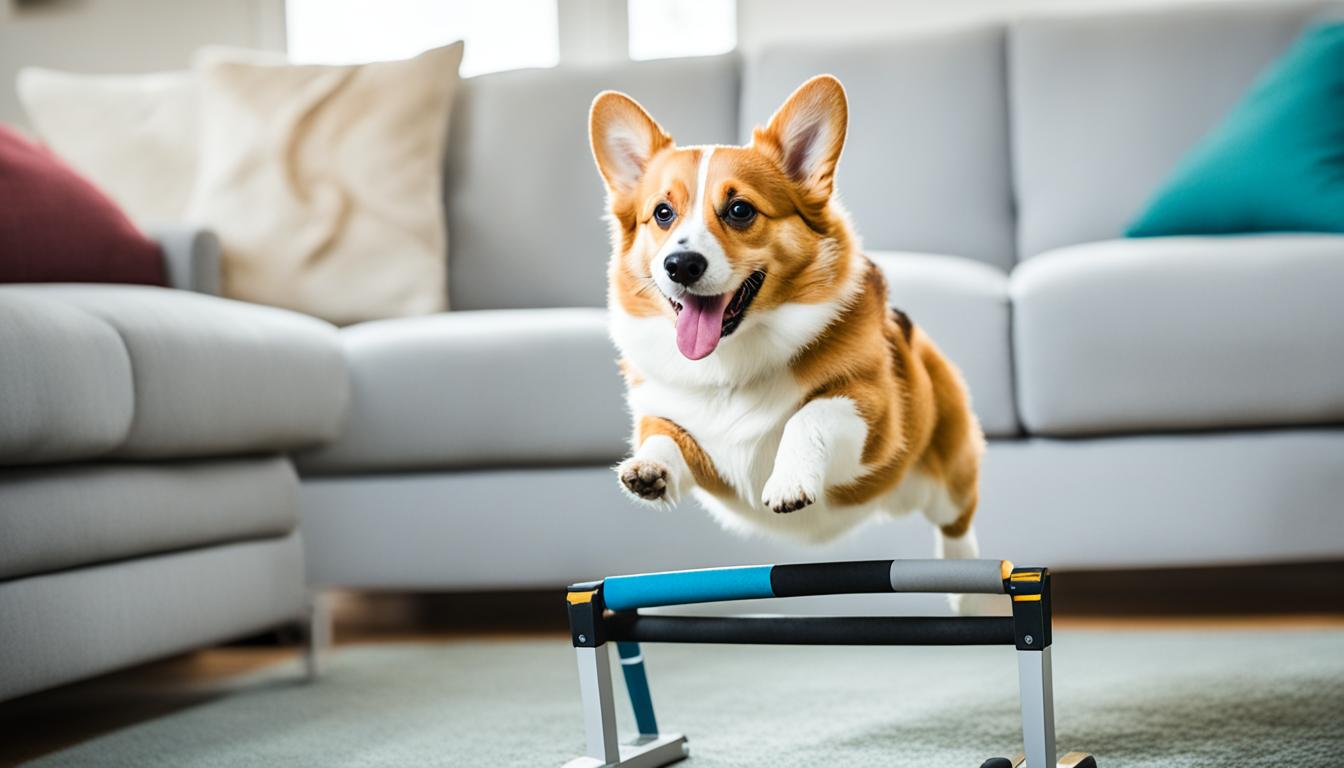

Are you a busy owner struggling to find time to keep your Corgi active and fit? Don’t worry, we’ve got you covered! In this article, we’ll share quick exercise tips specifically designed for busy Corgi owners like you. Discover time-saving Corgi exercises, easy fitness hacks, and efficient ways to keep your furry friend in top shape, even with your hectic schedule.
Key Takeaways:
- Busy Corgi owners can incorporate quick exercise routines into their daily lives.
- Short training sessions can be more effective and prevent boredom for your Corgi.
- Incorporate training exercises into your everyday routine to make the most of your time.
- Use rewards and positive reinforcement to ensure successful training sessions.
- Make the most of your daily walks by incorporating training exercises.
Short Training Sessions
Training sessions with your Corgi don’t have to be long to be effective. In fact, incorporating short bursts of training throughout the day can be more suitable for dogs, preventing boredom and frustration. By keeping the sessions short and fun, you can ensure that your Corgi stays engaged and enthusiastic about training.
Try incorporating 5-minute training sessions into your daily routine. These quick sessions can be done multiple times a day, conveniently fitting into your busy schedule. Focus on basic commands and tricks to keep the training sessions simple and effective.
“Short training sessions are perfect for Corgis. They are quick learners and thrive on mental stimulation.”
During these short sessions, you can work on commands like sit, stay, lie down, or paw. Keep the sessions upbeat and positive, using treats or verbal praise as rewards. By breaking down the training into shorter sessions, you can prevent your Corgi from getting overwhelmed and ensure better retention of the lessons.
Remember, the key to successful short training sessions is consistency. Incorporate them into your daily routine, just like meal times or walks. This way, your Corgi will come to expect and enjoy these training sessions, making it a positive part of their day.
Benefits of Short Training Sessions:
- Prevents boredom and frustration
- Keeps your Corgi engaged and enthusiastic
- Allows for convenient integration into your busy schedule
- Enhances recall and retention of commands
- Provides mental stimulation
Remember, short training sessions are not meant to replace longer exercise sessions. They should complement your Corgi’s overall fitness routine. By incorporating these quick sessions into your daily life, you can provide mental stimulation and reinforce good behavior, all while strengthening the bond between you and your Corgi.
Next, we’ll explore ways to incorporate training into your daily routine to maximize efficiency for busy Corgi owners.
Incorporating Training into Daily Routine
When you have a busy schedule, finding time for dedicated training sessions with your Corgi can be challenging. However, you can still incorporate training into your daily routine, making it a seamless part of your day. By doing so, you can ensure that your Corgi receives the exercise and mental stimulation they need, even if you have limited time.
Practicing Basic Commands
One simple way to incorporate training into your daily routine is to practice basic commands throughout the day. Before heading outside for a walk or playtime, take a few minutes to go over commands such as sit, stay, or come. This not only reinforces their training but also helps establish a routine for your Corgi.
Tip: Use short, focused training sessions of about 5 minutes to keep your Corgi engaged and prevent them from getting bored.
Using Mealtimes as Training Sessions
Another effective way to incorporate training into your busy schedule is to use mealtimes as training sessions. Before placing your Corgi’s food bowl down, ask them to perform a command such as sit or lie down. This not only adds mental stimulation to their mealtime but also reinforces their obedience training.
Tip: Keep rewards like treats or toys close by to make training more convenient and accessible. This way, you always have them on hand during your busy day.
By finding simple ways to integrate training into your daily routine, you can ensure that your Corgi receives the exercise and mental stimulation they need, even when you’re busy. With consistent practice and positive reinforcement, you’ll be able to maintain their training and strengthen the bond between you and your furry friend.

Incorporating Training into Daily Routine
| Training Opportunity | How to Incorporate |
|---|---|
| Before going outside | Practice basic commands like sit, stay, or come. |
| Mealtimes | Ask your Corgi to perform a command before placing their food bowl down. |
| During walks | Incorporate training exercises such as sitting before crossing the road or practicing “leave it” with distractions. |
| Before bedtime | Use a quiet moment before bed to work on commands or tricks. |
Using Rewards and Positive Reinforcement
Rewards play a crucial role in training your Corgi and can make the process both effective and enjoyable. While treats are commonly used as rewards, they are not the only option. Efficient pet exercise tips suggest that you can use anything that your dog finds rewarding, such as going for a walk or receiving a cuddle. By varying the rewards and utilizing positive reinforcement techniques, you can create a positive association with training sessions for both you and your Corgi.
Positive reinforcement involves rewarding desired behavior to encourage its repetition. This technique quickly and effectively promotes learning and motivation. When your Corgi demonstrates good behavior during training, such as following a command or performing a trick, reward them immediately. This reinforces the connection between the behavior and the reward, increasing the likelihood of it being repeated.
When using rewards and positive reinforcement, keep these tips in mind:
- Be consistent: Always reward your Corgi for desired behavior to reinforce their understanding of what’s expected.
- Timing is key: Offer rewards immediately after the desired behavior to strengthen the association between the behavior and the reward.
- Use verbal praise: Along with treats or other rewards, praise your Corgi with enthusiastic and encouraging words. This helps reinforce the positive behavior and strengthens your bond with your furry companion.
- Be patient: Training takes time, so remain patient and consistent. Your Corgi will learn and improve with practice and repetition.
Remember, it’s important to tailor your rewards to what your Corgi finds most motivating. Experiment with different rewards and observe what they respond to best. Keep the training sessions fun, engaging, and rewarding for both you and your Corgi.
“Positive reinforcement is a powerful tool in training dogs. By using rewards and positive reinforcement, you can effectively train your Corgi while strengthening the bond between you and your furry friend.” – Dog Trainer Jane Smith

By utilizing rewards and positive reinforcement techniques, you can create a positive training experience for your Corgi and achieve quick and effective results. Whether it’s a tasty treat, a favorite toy, or a well-deserved walk, your Corgi will be motivated to learn and succeed. Embrace the power of rewards and positive reinforcement to make training an enjoyable and bonding experience for both of you.
Making the Most of Walks
Regular walks are essential for keeping your Corgi healthy and active. However, walks can also be an excellent opportunity to incorporate training exercises and make the most of your busy schedule. By combining exercise and training, you can maximize the benefits of each walk while saving time. Here are a few Corgi exercise shortcuts you can try during your walks:
- Practice Sitting Before Exploring: Before starting your walk, ask your Corgi to sit and wait patiently. This simple exercise helps reinforce their obedience and self-control. Wait for a few seconds, then release them with a command like “Okay” or “Let’s go!” This technique can be especially useful when you’re in a hurry but still want to provide some mental stimulation for your Corgi.
- Teach the “Leave It” Command: Use your walks as opportunities to practice the “leave it” command with distractions. When your Corgi shows interest in something they shouldn’t touch or eat, immediately say “leave it” and encourage them to refocus their attention on you. Reward them with a treat or praise when they comply. This exercise helps keep your Corgi safe and prevents them from picking up harmful objects.
- Master the Basics Before Adding Distractions: It’s essential to pay attention to your Corgi’s training level and environment. Before introducing complex training exercises during walks, make sure your Corgi has mastered the basic commands in a controlled environment. Once they have a solid foundation, gradually increase the level of difficulty by adding distractions such as other dogs, squirrels, or new environments.
Remember, consistency is key when incorporating training into your walks. Reinforce positive behavior with treats, praise, or toys to motivate and encourage your Corgi. By making the most of your walks, you can save time and ensure that your Corgi gets both the physical exercise and mental stimulation they need.

Benefits of Training During Walks
Training during walks offers several benefits for both you and your Corgi. Here are a few reasons why you should take advantage of this opportunity:
“Incorporating training exercises into your walks helps reinforce obedience, increase mental stimulation, and improve your Corgi’s overall behavior. It also allows you to save time by combining exercise and training into one activity.” – Dr. Amanda Johnson, Canine Behavior Specialist
| Benefits | Explanation |
|---|---|
| Efficiency | By combining exercise and training, you can save time and make the most of your busy schedule. |
| Mental Stimulation | Training exercises during walks provide mental stimulation, preventing boredom and promoting a well-rounded dog. |
| Obedience Reinforcement | Consistently practicing commands during walks reinforces obedience and strengthens the bond between you and your Corgi. |
| Better Behavior | Incorporating training exercises into walks helps address unwanted behaviors and encourages good manners in various environments. |
Starting Early and Being Consistent
Consistency is key when it comes to training your Corgi. Starting early and establishing a regular routine and schedule will help your Corgi understand what is expected of them. Corgis are known for being quick learners, but they can also be stubborn at times, so it’s important to be patient and persistent throughout the training process.
Using efficient pet exercise tips and routines can make training more effective. Remember that your Corgi thrives on positive reinforcement, so use praise, treats, and toys to reward good behavior. Avoid harsh punishments, as they can damage the trust and bond between you and your furry friend.
“Consistency is key when it comes to training your Corgi.”
When starting early with training, focus on the basics. Teach your Corgi commands such as sit, stay, come, and heel. These commands form the foundation for a well-behaved Corgi and will provide them with the necessary skills to navigate the world. Reinforce these commands with clear and simple words, repetition, and positive reinforcement to ensure they understand what is expected.
The key to successful training is repetition and consistency. Practice commands regularly in different environments to help your Corgi generalize their training. Gradually increase the difficulty level and add distractions as your Corgi progresses. With time and consistency, they will become more reliable in their responses.
Remember, training is a lifelong process. Even after your Corgi has mastered the basics, it’s important to continue reinforcing their training and introducing new challenges to keep their mind sharp and engaged.
Benefits of Starting Early and Being Consistent
Starting early and being consistent with training your Corgi brings a range of benefits:
- Establishes a strong foundation for obedience and good behavior
- Builds trust and strengthens the bond between you and your Corgi
- Provides mental stimulation and keeps your Corgi engaged
- Enhances communication and understanding between you and your Corgi
- Creates a well-rounded and well-adjusted companion
Investing time and effort into training your Corgi from an early age will set them up for a lifetime of success and happiness.
Training Schedule Example
| Training Session | Duration |
|---|---|
| Morning Walk and Basic Commands Practice | 10 minutes |
| Mealtime Training – Sit and Stay | 5 minutes |
| Playtime – Fetch and Recall | 15 minutes |
| Evening Walk and Loose Leash Training | 10 minutes |
Remember, consistency is key. Stick to your training schedule and adapt it to fit your Corgi’s needs. With dedication and patience, your Corgi will become a well-behaved and happy companion.
Teaching Basic Commands and Manners
Basic commands and manners are essential for ensuring that your Corgi is well-behaved and safe. By teaching your furry friend commands such as sit, stay, come, leave it, and heel, you can establish a foundation of obedience and control during daily routines and interactions.
Repetition and clear instructions are key when teaching your Corgi basic commands. Start by giving a clear verbal cue, such as “sit,” and use a hand gesture to accompany the command. Practice the command multiple times throughout the day in different environments to reinforce the behavior.
For example:
When giving the command “sit,” gently push your Corgi’s hindquarters down while gently saying the word “sit.” Repeat this process several times during the day, gradually reducing the amount of physical guidance needed until your Corgi can sit on command without assistance.
Positive reinforcement is a powerful tool in training your Corgi. When your furry buddy successfully follows a command, reward them with praise, treats, or a favorite toy. This positive feedback helps reinforce the desired behavior and encourages your Corgi to continue obeying commands.
For example:
When your Corgi sits on command, immediately offer verbal praise, such as “good sit!”, and give them a small treat as a reward. This positive association will motivate your furry friend to perform the command consistently.
Hand signals can also be used alongside verbal commands to strengthen communication with your Corgi. Associating hand gestures with specific commands helps your dog understand and respond to cues without relying solely on verbal prompts. Consistency is important to ensure that your Corgi can intuitively understand and respond to both verbal and nonverbal commands.
For example:
When teaching the “stay” command, use an open palm facing your Corgi as a hand signal. Pair this gesture with the verbal command “stay” and reinforce the behavior with rewards when your dog successfully remains in place.
Professional assistance can be sought if you’re encountering challenges or need additional guidance in training your Corgi. Certified dog trainers have the expertise to address specific behavioral issues and help tailor training methods according to your Corgi’s individual needs.
By investing time and effort in teaching basic commands and manners, you’ll establish a strong bond with your Corgi while ensuring their safety and obedience in various situations.

Socialization and Mental Stimulation
Ensuring that your Corgi is comfortable around strangers and other animals is vital for their well-being. Socialization plays a crucial role in preventing aggression or fear in your furry companion. It is important to expose your Corgi to various people, places, and situations to help them develop confidence and adaptability.
In addition to socialization, providing mental stimulation is essential for keeping your Corgi engaged and mentally sharp, especially in a busy schedule. Interactive toys, puzzles, and training exercises are great ways to challenge your Corgi’s mind and prevent boredom. These activities will not only provide mental stimulation but also contribute to your Corgi’s overall happiness and well-roundedness.
“Providing your Corgi with mental stimulation is just as important as physical exercise. It helps prevent behavioral issues and keeps their mind active and healthy.” – Dr. Samantha Thompson, Veterinarian
While your schedule may be packed, allocating time for socialization and mental stimulation is crucial for your Corgi’s holistic development. These activities will improve their overall behavior and enhance their quality of life.
| Socialization Tips | Mental Stimulation Ideas |
|---|---|
|
|
The Benefits of Socialization and Mental Stimulation
By prioritizing socialization and mental stimulation for your Corgi, you not only prevent behavior problems but also foster a well-rounded and confident dog. Socialization helps your Corgi develop proper manners and prevents them from becoming anxious or aggressive in new situations. On the other hand, mental stimulation exercises their cognitive skills and prevents boredom-related issues.
Remember that each Corgi is unique, and their socialization and mental stimulation needs may vary. Observe your Corgi’s behavior and consult with a professional trainer or veterinarian if you have any concerns or questions.
Incorporating Exercise and Fun
Exercise should be both beneficial and enjoyable for your Corgi. It’s important to find ways to incorporate exercise into playtime, making it a fun and engaging experience for both you and your furry friend. Here are some simple ways to exercise your Corgi while having fun:
1. Play fetch
Playing fetch is a classic game that can provide both physical and mental stimulation for your Corgi. Throw a ball or a favorite toy and encourage your Corgi to retrieve it. This activity helps improve their agility, reflexes, and coordination. Plus, it’s an excellent way to burn off some energy!
2. Interactive games
Engaging your Corgi in interactive games keeps their mind sharp and their body active. Try playing hide-and-seek by hiding treats or toys around the house, and encourage your Corgi to search for them. This game provides mental stimulation and promotes problem-solving skills.
3. Agility or obedience classes
Consider enrolling your Corgi in agility or obedience classes. These classes not only provide structured exercise but also help strengthen the bond between you and your furry companion. Corgis are intelligent dogs, and they thrive in environments that challenge them mentally and physically.
“Exercise should be a fun and engaging experience for your Corgi. Incorporate playtime and interactive games into their routine to keep them active and stimulated.”
4. Adapt activities to your schedule
Being a busy owner doesn’t mean you can’t provide exercise for your Corgi. Adapt activities to your schedule and find small pockets of time throughout the day for short bursts of exercise. Whether it’s a quick game of fetch during a work break or a training session during TV commercials, every minute of exercise counts.
Remember, the key is to make exercise enjoyable for your Corgi. By incorporating playtime, interactive games, and structured classes, you can ensure that your furry companion stays fit, healthy, and happy.
Conclusion
Keeping your Corgi fit and active doesn’t have to be overwhelming, even for busy owners. With Quick Corgi Exercise Tips for Busy Owners, you can easily incorporate workout routines into your daily routine. By utilizing time-saving exercises, incorporating training throughout the day, and providing mental stimulation, you can ensure your Corgi stays healthy and happy.
Remember, efficiency is key. Find creative ways to engage your Corgi, like incorporating training into playtime or enrolling them in agility or obedience classes. The key is to make exercise a fun and positive experience for both you and your furry friend.
So, whether you have a hectic schedule or limited time, these quick tips can help you maintain your Corgi’s fitness and well-being. Get started today and discover the joy of keeping your Corgi active and healthy, no matter how busy life gets!
FAQ
How can I incorporate exercise into my busy schedule as a Corgi owner?
How long should training sessions with my Corgi be?
How can I incorporate training into my daily routine?
What rewards should I use for training my Corgi?
How can I make the most of walks with my Corgi?
How should I start training my Corgi and maintain consistency?
What are some basic commands and manners I should teach my Corgi?
How can I provide mental stimulation for my Corgi?
How can I incorporate exercise and fun into my Corgi’s routine?
How can I ensure my Corgi stays fit and healthy even with a busy schedule?
Source Links
- https://www.linkedin.com/posts/jonathon-tater-6a00872a7_daily-tip-10-corgi-training-tips-and-tricks-activity-7154846214134362112-03Sz
- https://www.akc.org/expert-advice/training/fit-dog-training-busy-life/
- https://www.reddit.com/r/corgi/comments/147vckt/tips_for_keeping_a_corgi_entertained_indoors/

Carlos is the passionate founder and primary author behind “CorgisCorner.com,” a website dedicated to all things related to the beloved Corgi breed. Born and raised in a small town known for its strong sense of community and love for animals, Carlos developed a deep affection for Corgis from a young age. This love was sparked by his childhood companion, a spirited and loyal Corgi named Toby, who was a constant source of joy and friendship.