

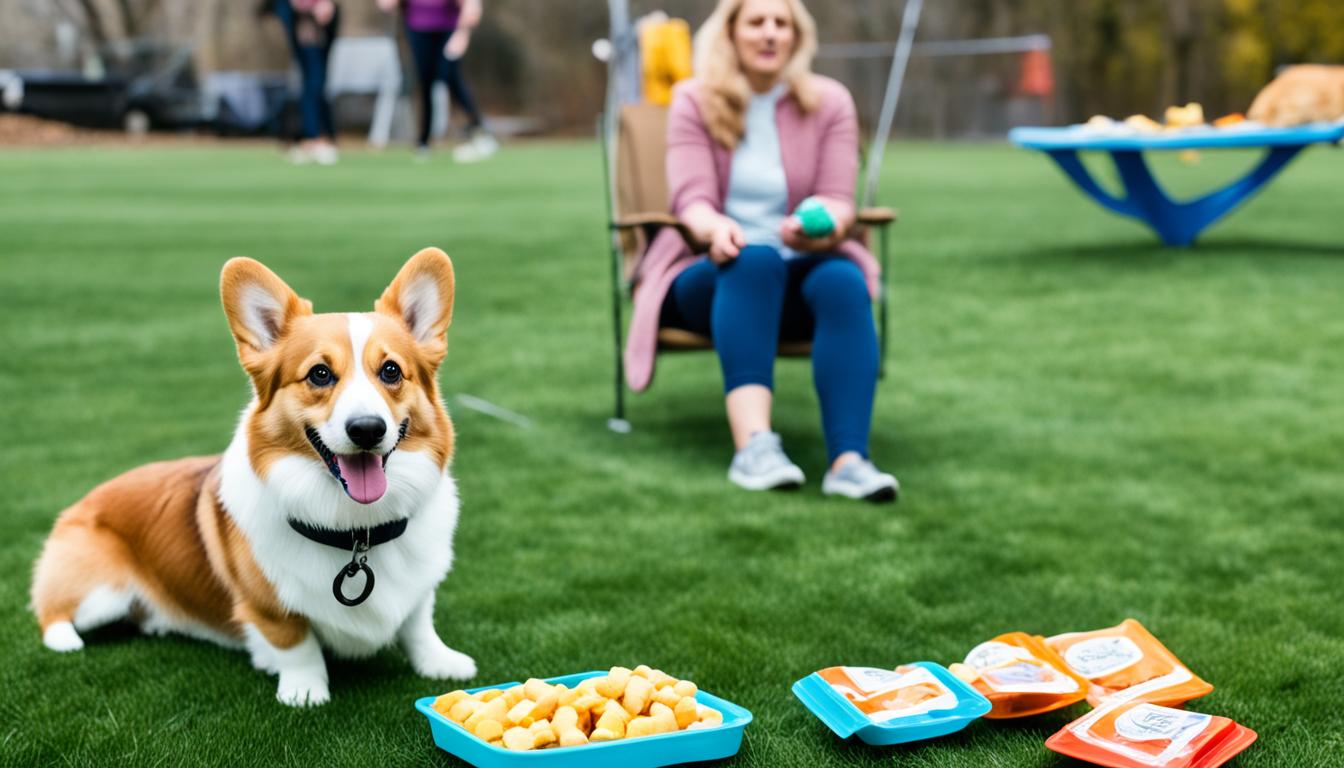

Meet Lily, a playful and stubborn corgi puppy. She loved to challenge her owner, Sarah. Often ignoring commands, Lily made training tough for both. Sarah was determined to overcome this. She set out to find the best ways to train stubborn corgis like Lily.
Training a corgi needs a special approach. They’re smart and like to do things their way. Sarah found out that being patient, consistent, and using the right methods were key.
Sarah tried many training techniques. She found ones that worked well for Lily’s stubbornness. These methods made their training fun and brought them closer together.
In this article, we’ll look into corgi training. We’ll share tips for training your stubborn pup. These tips work for corgi puppies and adults. They’ll make your training more effective and enjoyable.
Key Takeaways:
- Corgis are smart and stubborn. They need patience and effective training.
- Be consistent with training your corgi. It helps them learn and listen better.
- Use positive reinforcement and socialization. It makes training fun and strengthens your bond.
- Expose your corgi to different places and situations. It helps them become confident.
- Keep your corgi active and mentally challenged. It keeps them healthy and prevents problems.
Socializing Your Corgi Around People.
Teaching your corgi to mingle with different people is crucial. It makes them fear less and feel more secure in new places. Taking them to active spots like parks helps. Here, they encounter various individuals, traffic, and sounds. This exposure is key for them to get used to unfamiliar situations and be friendly with newcomers.
Introducing your corgi to new faces should be done positively and calmly. Let your corgi meet new people slowly, letting them adjust at their own comfort level. Use treats and kind words when they react well. This approach builds good connections and boosts polite behaviors.
Joining obedience classes or socialization training can also benefit. These classes offer guided chances for your corgi to meet others in a safe setting. They learn how to behave properly and you can spot and fix any awkward behaviors.
Keep in mind, socializing is a constant effort. Always let your corgi experience new situations and meet various people. This practice hones their social abilities and decreases their fear or aggression towards strangers.
“Getting your corgi used to other people is crucial for them to feel secure and sure in different settings. Activities like visiting lively places and meeting new people gently can help them get comfortable with strangers.”
Benefits of Socializing Your Corgi:
- Improved behavior around strangers
- Reduced fear or aggression towards new experiences
- Enhanced social skills
- Greater confidence in various social situations
Getting Your Corgi Used to Grooming.
Grooming is key for your corgi’s coat health. Since corgis have a double coat and shed often, grooming makes their coat look great. Getting your corgi to like grooming can be fun for you both.
Start grooming your corgi young to get them used to it. Show them the blow dryer’s sound and what brushing feels like. Choose a good brush made for double coats. It helps remove loose fur without hurting them.
Make each grooming time fun with rewards and kind words. Give treats when your corgi is calm and works with you during grooming. This shows them grooming is a good thing.
“Grooming sessions provide an excellent opportunity to bond with your corgi and reinforce your relationship.”
Use treats and praise to make grooming something your corgi looks forward to. Treats and kind words during grooming help them behave better next time. This approach turns grooming into a happy routine.
Tips for Effective Corgi Grooming:
- Brush your corgi’s coat regularly to keep it free of loose fur.
- Keep their nails short to avoid any discomfort.
- Clean their ears often to stop infections.
- Brush their teeth to keep their mouth healthy.
- Think about getting a professional groomer for the best care.
Grooming Supplies for Corgis:
| Grooming Supplies | Description |
|---|---|
| Double Coated Brush | This brush is perfect for corgis with double coats. It takes out loose fur and stops matting. |
| Nail Clippers | These clippers are made to trim your corgi’s nails safely. Regular trimming helps avoid pain and injury. |
| Ear Cleaner | It’s a soft cleaner that keeps your corgi’s ears clean and infection-free. |
| Toothbrush and Toothpaste | Dog-specific toothbrush and toothpaste for your corgi’s dental care. Helps prevent teeth and gum problems. |
Grooming is a great time to get closer to your corgi. Starting early, rewarding them, and using the right supplies make grooming great. This keeps your corgi looking and feeling their best.

Exposing Your Corgi to Their Environment.
Puppies love to explore. It’s key to let your corgi see and hear new things early. This will help them be brave and happy with new adventures when they’re older. Things like car trips or loud sounds are good to start with. This will make them confident in new places.
Getting your corgi used to new things is a big part of training. By showing them different places and situations, you’re giving them confidence. This will help them a lot as they grow.
“Corgis do best when they feel safe. Slowly introducing them to new things makes them strong and ready for change.”
One good way to help your corgi adjust is by taking them on car rides. Start with short drives then try longer ones. This lets them get used to moving and sounds.

Meeting new people and animals is also key. When your corgi is nice and curious, give them treats and praise. This will teach them how to be social and boost their confidence with unfamiliar faces.
Creating a Positive Environment
The goal is to make sure your corgi feels good and safe. Slowly increase what they’re exposed to, keeping their happiness in mind. This helps your corgi get used to new experiences in a good way.
Here are some fun things to try with your corgi:
- Visiting parks and playgrounds
- Letting them feel different grounds like grass, sand, and wood
- Going to places where pets are welcome
- Trying out different ways to travel
- Meeting friendly dogs
The Benefits of Environmental Exposure
Showing your corgi the world has a lot of pluses. It makes them adaptable and comfy in various settings. It’s also important for stopping fear and stress behaviors.
Introducing new things often creates a strong start for training and health.
| Benefits of Environmental Exposure | Benefits of Acclimating Corgis to New Experiences |
|---|---|
| Increased adaptability | Improved confidence |
| Reduced fear and anxiety | Enhanced socialization skills |
| Prevention of behavior issues | Wider acceptance of new environments |
Teaching Your Corgi to Play Fetch.
Corgis are full of energy and need regular exercise to stay healthy. Teaching them to play fetch is a great way to provide this. It keeps their minds sharp and bodies fit.
To start, introduce what fetching means. Pick a toy or ball they can easily carry. Toss it a little way and show excitement to make the game appealing.
Give treats and praise when your corgi brings the toy back. This rewards them and makes fetching a happy activity. Keep doing this, throwing the toy farther each time.
Remember to keep initial training sessions short and fun. This avoids boredom or stress. Aim for several brief sessions a day, slowly increasing as your corgi gets better at fetching.
Fetching exercises the body and mind of your corgi. It teaches them to solve the problem of retrieving the toy. Such activities are key for their happiness and health.
Playing fetch often will keep your corgi lively and help manage their weight. Since corgis can gain weight quickly, regular exercise is crucial.
Fetching Tips for Corgis:
- Pick a toy that’s easy for your corgi to carry.
- Begin with small throws and increase distance over time.
- Always use treats or praise for successful fetches.
- Ensure playtime is enjoyable to maintain interest.
- Check that the play area is safe and clear of dangers.
Fetching with your corgi offers great exercise and strengthens your bond. It’s exciting to teach them and see their progress in each session.

| Benefits of Fetch for Corgis | Importance |
|---|---|
| Physical Exercise | Helps keep corgis active and prevents weight gain. |
| Mental Stimulation | Encourages problem-solving skills and mental agility. |
| Bonding Time | Strengthens the bond between owner and corgi. |
| Fun and Entertainment | Provides an enjoyable activity for both the corgi and owner. |
Crate Training and Housebreaking Your Corgi.
Crate training is key for teaching your corgi puppy. It gives them a safe spot and helps them learn good potty practices. Use these tips for a smooth training journey.
Creating a Schedule
Having a routine matters when training your corgi. Make a plan for feeding and potty breaks. This keeps things steady and taps into their instincts. With a schedule, your corgi will know when it’s time to go outside.
Choosing the Right Crate
Pick a crate that’s just right for your corgi to turn around in but not too big. A crate that’s too spacious might lead them to use a corner as a bathroom. This would beat the goal of crate training.
Introducing the Crate
Let your corgi get to know their crate slowly, making it a happy place. Put it in a calm spot at home. Encourage them to check it out by themselves. Use treats, toys, and praise to make them love the crate. Never push them in or use the crate to punish.
Tip: Covering the crate with a blanket or towel can create a den-like environment and help your corgi feel more secure.
Establishing a Bathroom Routine
Being steady is vital for crate training and teaching your corgi. Take them out to their bathroom spot after waking up, eating, or playing. Reward them with praise and treats for going in the right place. They will start to link the crate with bathroom breaks.
Preventing Accidents
Watch your corgi closely in the beginning to avoid messes. If they look like they need to go while in the crate, take them out right away. Be patient and keep at it, even if there are some slip-ups.
“Crate training is a valuable tool for housebreaking corgi puppies. By following a schedule, choosing the right crate, introducing it properly, establishing a bathroom routine, and preventing accidents, you’ll successfully housebreak your corgi.”

Summary
Crate training helps a lot with housebreaking your corgi. Make a plan, pick a suitable crate, introduce it well, set up a potty routine, and stop accidents. You’ll lead your corgi to success. Always be patient, consistent, and use positive feedback.
Teaching Your Corgi Basic Commands.
It’s vital to train your corgi in basic commands for their well-being and obedience. Start with easy commands like “sit,” “stay,” and “heel.” This sets a solid training base. These commands help control your corgi at home and in public.
Begin obedience training with the “sit” command. Press down on their back end while saying “sit.” When they sit, give them a treat and praise. Do this several times to make the command stick. Training a corgi needs daily practice and patience.
After “sit,” teach them “stay.” Have them sit, then step back and say “stay.” If they stay, give treats and praise. Slowly make them stay longer and from further away. Always reward your corgi’s obedience.
Teaching “heel” is next. Show how with a trained dog. With a leash on, walk and say “heel,” guiding them to your side. Give praise and treats for doing it right.
“Corgis must learn basic commands for safety and friendliness,” states Jessica Adams, a known dog trainer. “Rewarding their obedience ensures a happy, well-behaved corgi.”
Training Goals for Corgis
For training corgis, aim for steady progress and consistency. Learn basic commands before trying harder ones. Keep training fun and short, using play and rewards to focus your corgi.
Using these methods in training builds a strong bond with your corgi. It also keeps them safe in all places.
Keeping Your Corgi Active.
Corgis are smart, lively pets needing fun activities to stay happy. Besides regular walks and playtime, mix in different activities to keep them busy. This keeps their mind and body in great shape.
1. Corgi Exercise Routines
Having a daily exercise plan is key for your corgi’s health. They should get 30 minutes to an hour of activity, based on their health and age. Without enough exercise, corgis can easily gain weight. Let’s explore some exercise options:
- Brisk Walks: Daily walks let your corgi explore and stay mentally and physically active.
- Running or Jogging: Take your corgi on runs. Start slow to build their stamina.
- Playdates: Playdates with other dogs boost social skills and physical health.
- Swimming: For corgis that like water, swimming is a great way to exercise without stress on their bodies.
2. Corgi Mental Stimulation
Corgis also need mental challenges to avoid getting bored or acting out. Stimulating their brain with puzzles can help them stay sharp. Check out these ideas for mental workouts:
- Puzzle Toys: Puzzle toys challenge your corgi to think critically, keeping them busy.
- Training Sessions: Regular training boosts learning and problem-solving skills.
- Hide-and-Seek: Hiding treats or toys around your home makes for a fun search game.
- Interactive Play: Toys that make your corgi think, like treat dispensers, enhance their playtime.
3. Dog Sports for Corgis
If your corgi loves to move and learn, dog sports could be perfect. These activities keep them fit, smart, and close to you. Here are some sports corgis love:
- Agility: This tests their speed and agility in fun obstacle courses.
- Obedience Training: Competitions check how well a corgi can follow commands and perform tasks.
- Herding Trials: Corgis can use their natural instinct to herd animals in these competitions.
Dog sports are not just fun. They also boost your corgi’s physical and mental health, and bring you closer together.
But remember, always match activities to your corgi’s health and age. Talk to your vet before starting new exercises or sports.
“Keeping your corgi active and mentally engaged is essential. Pick activities they enjoy for a happy, healthy life together.”
| Exercise Recommendations | Mental Stimulation Ideas | Dog Sports for Corgis |
|---|---|---|
| Brisk Walks | Puzzle Toys | Agility |
| Running/Jogging | Training Sessions | Obedience Training |
| Playdates | Hide-and-Seek | Herding Trials |
| Swimming | Interactive Play |
Combining exercises, brain games, and dog sports can make your corgi’s life exciting. Keep these activities fun to motivate your furry friend.
Conclusion.
Training a stubborn corgi can be quite tough but also very rewarding. Using good corgi training tips is crucial. This way, your corgi can become well-behaved and obedient. Always be consistent in your training.
Patience is key, and so is positive reinforcement to boost good behaviors. Make sure to socialize your corgi well. This means exposing them to different places and teaching them basic commands.
It’s also important to get your corgi used to being groomed. Plus, keeping them mentally and physically active is vital. Try activities like fetch and dog sports to keep them engaged.
To wrap up, great corgi training combines socializing, grooming, learning commands, and staying active. Stick with it, be consistent, and have fun along the way. Soon, your corgi will be well-trained and a delight to have around.
FAQ
What are some effective training tips for stubborn corgis?
How can I socialize my corgi around people?
How can I get my corgi used to grooming?
How can I expose my corgi to their environment?
How can I teach my corgi to play fetch?
How can I crate train and housebreak my corgi?
What basic commands should I teach my corgi?
How can I keep my corgi active?
Source Links
- https://www.akc.org/expert-advice/training/train-corgi-corgi-puppy-training-timeline/
- https://www.wikihow.com/House-Train-Corgi-Puppies
- https://iheartdogs.com/12-secrets-for-teaching-a-corgi-puppy-obedience/

Carlos is the passionate founder and primary author behind “CorgisCorner.com,” a website dedicated to all things related to the beloved Corgi breed. Born and raised in a small town known for its strong sense of community and love for animals, Carlos developed a deep affection for Corgis from a young age. This love was sparked by his childhood companion, a spirited and loyal Corgi named Toby, who was a constant source of joy and friendship.