

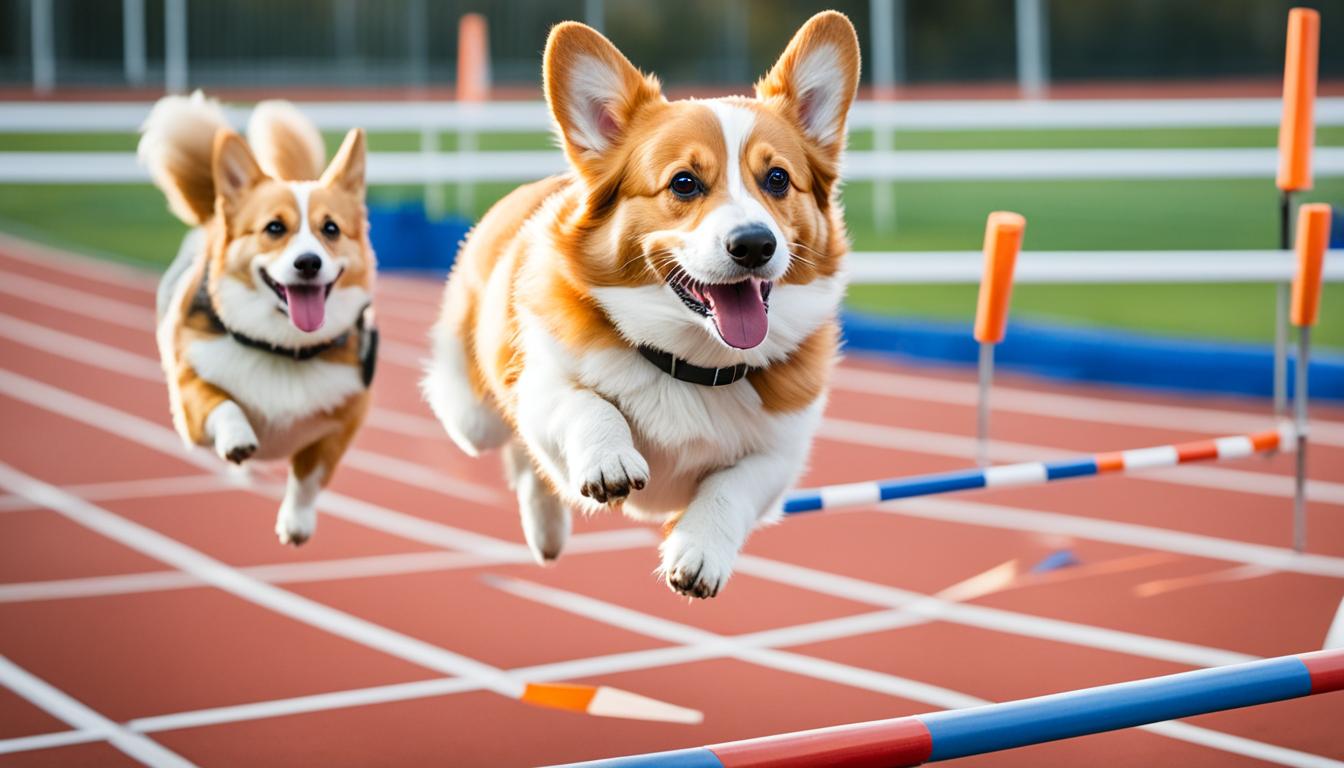

Ever seen a corgi in action? They dash with such joy, legs moving fast. It warms your heart to watch them. These little dogs are just too cute. Through agility training, their boundless energy gets a positive outlet.
Agility training is super fun for your corgi. It’s good for their body and mind too. They get to tackle obstacle courses, improving their speed and skills. It helps your pup grow more confident. Plus, it brings you and your pet closer.
Ready for a fun adventure with your corgi? We’ll dive into three agility drills suited for corgis. These exercises are exciting and showcase their talents. Watch them zip through tunnels, dodge poles, and jump hurdles. Prepare for unforgettable moments!
Key Takeaways:
- Agility training is a thrilling way to enhance your corgi’s physical and mental abilities.
- By participating in agility training, you strengthen the bond between you and your furry friend.
- These three exciting agility drills are designed to challenge and bring out your corgi’s natural abilities.
- Through agility training, your corgi will navigate obstacles, test their speed and coordination, and boost their confidence.
- Are you ready to embark on an adventure with your corgi? Let’s dive into these exciting drills!
Why Agility Training is Beneficial for Corgis
Agility training is great for corgis and their owners. It lets them get exercise, bond, and have fun. This activity is not just physical. It also challenges the dog’s mind. Through agility training, corgis get fit and improve their skills.
Advantages of Agility Training for Corgis:
- Corgi agility training promotes health by ensuring regular exercise.
- It helps corgis build muscle and keep a healthy weight.
- This training is a mental workout, sharpening their problem-solving skills.
- It boosts their balance and agility, making obstacle navigation easier.
- Training helps corgis face new challenges confidently.
- It reduces their fear and anxiety, leading to a calmer demeanor.
- Agility training gives corgis a chance to enjoy a stimulating activity, adding to their happiness.
Corgis are smart and want to make their owners happy. Agility training taps into these traits. It helps with clear communication and strengthens their bond. These sessions challenge the dog’s brain, fend off boredom, and prevent bad behavior. They also let corgis burn off extra energy.
| Benefit | Explanation |
|---|---|
| Physical Exercise | Agility training is a tough workout. It helps corgis stay fit and boosts their stamina. |
| Mental Stimulation | It challenges their brains, enhancing their ability to solve problems and make decisions. |
| Improved Coordination | Corgis gain better coordination and awareness through agility training. |
| Increased Confidence | Mastering courses and overcoming obstacles raises their confidence. |
Agility training isn’t just for corgis; it’s rewarding for their owners too. Owners get involved in the training, strengthening their relationship. They also develop better leadership skills. This happens as they guide their corgis through courses.
“Agility training is a win-win activity for both corgis and their owners. It combines physical exercise, mental stimulation, and bonding, creating a harmonious and fulfilling experience for everyone involved.”
Given these benefits, it’s clear why many corgi owners love agility training. If you own a corgi, try agility training. You’ll see how it positively changes their health and behavior.
Drills to Enhance Speed
Speed matters a lot in training corgis for agility. These drills are designed to make your corgi quicker and more nimble:
- Sprinting Through a Straight Line: Set up a straight path and motivate your corgi to dash from start to finish. It boosts their speed.
- Interval Training: Mix in quick, intense runs into your corgi’s workout. Place markers at distances and let your corgi sprint between them. This improves speed and endurance.
- Quick Turns and Direction Changes: Work on drills for swift turns and direction shifts. Use cones to create a course for your corgi to weave through quickly. It betters their agility and speed on the course.
Keep doing these speed drills with your corgi regularly. It will help them get faster for agility competitions and enhance their performance.

Drills for Improved Coordination
Coordination is key for corgis in agility training. Adding drills for coordination makes your corgi quicker and more precise on the course. These drills help them move through obstacles smoothly. Let’s look at some drills for your corgi:
Zigzag Cone Weaving
Set up cones in a zigzag. Get your corgi to weave in and out of the cones. They’ll learn to move with speed and accuracy. This improves their coordination and lets them change direction quickly.
Low Hurdle Jumps
Place a line of small hurdles or bars. Lead your corgi over these hurdles, making sure they jump accurately. This not only boosts coordination but also their jumping ability. You can raise the hurdles as they get better.
Balance Training on Wobble Boards
Start with balance exercises using wobble boards. Have your corgi stand on the board to keep balance. This exercise betters their stability and coordination on the course.
Practicing these drills regularly will make your corgi agile and efficient in training. Start these exercises slowly and celebrate your corgi’s achievements. With time and effort, your corgi’s coordination for agility training will shine.

| Drill | Description |
|---|---|
| Zigzag Cone Weaving | Set up a zigzag pattern of cones and guide your corgi to weave through them, improving their coordination and maneuvering skills. |
| Low Hurdle Jumps | Position a row of small hurdles or low bars for your corgi to jump over, enhancing their coordination and jumping abilities. |
| Balance Training on Wobble Boards | Introduce wobble boards or unstable surfaces for your corgi to stand on, improving their balance and overall coordination. |
Building Confidence through Drills
Confidence is key for any corgi to do well in agility training. By using drills that build confidence, your corgi can learn to tackle hurdles and embrace new situations. Start with simple challenges and gradually make them harder to build their confidence. Always reward their efforts and encourage them positively throughout their training journey.
Drill 1: Tunnel Exploration
Begin by getting your corgi used to a basic tunnel. Put treats at the tunnel’s start to lure them in. As they get comfortable, make the tunnel longer. Guide them with your voice and gentle touches. Don’t forget to praise and treat them for tackling it bravely.
Drill 2: Low Obstacle Jumps
Next, introduce your corgi to small hurdles or bars. Arrange them in a row and motivate your corgi to hop over using treats and cheerful encouragement. Start with the hurdles low and slowly make them taller as your corgi gets braver. Safety first—make sure the hurdle height is safe for your corgi.
“Training should be a positive and enjoyable experience for your corgi. By boosting their confidence through these drills, you are setting them up for success in agility training.”
Drill 3: Challenging Balance Exercises
Add in balance exercises to boost your corgi’s confidence on shaky surfaces. Try using a wobble board made for dogs. Have them get on with all paws and keep steady. Slowly add in movements and tougher exercises as they grow more sure of themselves.
Building confidence doesn’t happen overnight. It needs time, patience, and steady effort. Celebrate all wins, no matter how small, and keep encouraging them. By focusing on your corgi’s confidence, you’re helping them succeed in agility training and strengthening your bond.

| Benefits of Confidence Training |
|---|
| 1. Improves overall performance in agility training |
| 2. Reduces fear and anxiety |
| 3. Enhances trust between you and your corgi |
| 4. Boosts your corgi’s overall self-esteem |
| 5. Increases their willingness to try new challenges |
DIY Agility Course Ideas for Corgis
You don’t need a lot of money to make an agility course for your corgi. With creative thinking and everyday items, you can put together a fun DIY course. This helps save money and gives your corgi a great workout.
Here are some easy-to-make agility obstacles for your corgi’s course:
A-Frame Climbing Wall
Building an A-frame climbing wall is simple. Use sturdy wood or old furniture for the frame, and add a non-slip surface. It’s great for your corgi’s balance and climbing skills.
Teeter-Totters
Teeter-totters add fun to the course. Make one with a long wood plank and a stable fulcrum. Make sure it’s secure for your corgi’s safety.
Weave Poles
Weave poles boost your corgi’s agility and coordination. Use PVC pipes or broom handles for poles. Start easy, then increase the challenge as your corgi improves.
Tunnels
Corgis love running through tunnels. Make one from big cardboard boxes or PVC pipes with fabric. It adds excitement and tests their speed.
Keep your corgi safe while building and using the agility course. Always watch them during practice. Use strong materials to prevent injuries.
Building your corgi’s agility course is rewarding. It keeps them fit and mentally sharp. So, start creating a fun course that your corgi will love!

Importance of Handler Skills in Agility Training
In agility training, both the handler and dog’s skills matter a lot. Good communication is key to doing well on the agility course. Handlers can get better with training and practice, helping them work well with their corgi. Let’s look at the importance of handler skills in this training.
Communication through Voice Commands and Nonverbal Cues
Handlers must be good at communicating using voice and nonverbal cues. Voice commands like “sit,” “stay,” and “go” guide the dog on the course. Nonverbal cues, including hand signals and eye contact, give detailed instructions. This helps guide the dog through obstacles.
“Good communication is the key to success in any agility training session. Dogs rely on their handlers for guidance and direction, and precise communication ensures a smooth and efficient performance.”
Directing the Dog’s Movements
Handlers need to control their corgi’s moves on the course. They might send the dog ahead or from side to side. They may even have the dog work from a distance. With clear cues, dogs can follow paths better. This leads to better agility and performance.
Improving Handler-Dog Coordination
Handler skills affect how well they and the dog work together. By practicing, handlers can be more precise and guide their corgi better. Better coordination means the dog follows instructions more smoothly. This leads to better transitions between obstacles and overall performance.
Training and Practice for Skill Enhancement
Handlers can get better through training and practice. They can attend classes, workshops, or seminars to learn more. Practicing regularly at home or at facilities improves their skills. This also strengthens their bond with their corgi. As a result, they perform better on agility courses.
Final Thoughts
Handler skills are crucial in agility training. Good communication, directing the dog, and coordination are key. When handlers work on their skills, they bond more with their corgi. This results in great agility training success.
Drills for Weaving Skills
Weaving is key in agility training for corgis. Drills that teach weaving between poles or objects are crucial. They help corgis learn an important skill.
Begin with a single object like a cone. Place it where your corgi can easily navigate around it. Guide your corgi to weave around using treats or a stick. Keep repeating this till they get used to weaving.
“Weaving drills are crucial for corgis to develop strong weaving skills. It is a fundamental technique that helps them navigate agility courses efficiently and with precision,” says Dr. Emily Johnson, a vet and agility fan.
When your corgi gets better, add more objects in a line. This will make things harder and improve their skills. Always encourage and reward your corgi when they succeed. This keeps them motivated.
Staying consistent is essential. Regular practice boosts your corgi’s weaving skills and muscle memory. With time, they will excel in agility courses, showing both finesse and precision.
Benefits of Weaving Training for Corgis
Weaving training has many perks for agility corgis:
- Enhanced agility and speed
- Improved coordination and body awareness
- Increased focus and mental stimulation
- Heightened confidence and obedience
Focus on weaving drills to make your corgi a top agility athlete. This prepares them for any weaving challenge.
Summary of Weaving Drills
| Drill | Description |
|---|---|
| Weaving through a single object | Teaches corgis the basic weaving motion using a single obstacle |
| Gradually adding more objects | Increases the difficulty level by adding additional obstacles in a line |
| Reward-based training | Promotes positive reinforcement to motivate and reinforce weaving skills |
| Consistent practice | Develops muscle memory and reinforces weaving skills over time |
Follow these drills to boost your corgi’s agility and confidence as a weaver on the course!
Drills for Jumping Skills
Jumping is key for corgi agility training. With the right drills, your corgi can jump better and do well in competitions. Try these tips to boost your corgi’s jumping skills:
1. Over Hurdles
Start with short hurdles. Then, make them taller as your corgi gets used to it. Use safe dog agility gear. Begin with one hurdle, then add more gradually. Cheer and reward your corgi when they clear the hurdles.
2. Through Hoops
Hoops can help with your corgi’s jumps too. Begin with a low hoop. Encourage your corgi to leap through. As they get braver, raise the hoop. Always think of your corgi’s safety first.
3. Combination Drills
Try drills that mix jumps, like hurdles and hoops. Begin simple, then increase the complexity. Use varying heights, distances, and angles to engage your corgi and improve their jumps.
Always give positive feedback and treats for their hard work. Be patient and keep their safety in mind. With practice and the right tips, your corgi will get better at jumping and thrive in agility training.
| Benefits of Jumping Drills for Corgis |
|---|
| Increase leg strength and muscle tone |
| Improve coordination and body awareness |
| Enhance cardiovascular fitness |
| Boost confidence and agility |
Enhancing Balance and Stability
Balance and stability are key for corgi agility training. Adding different drills to their routine can help. These drills improve your corgi’s balance and stability.
Walking on a Balance Beam or Plank
Have your corgi walk on a narrow beam or plank for practice. It boosts their body awareness. First, use a wider beam and slowly move to narrower ones as they get better. Always cheer them on and reward their progress.
Walking Across a Teeter-Totter
Letting your corgi walk on a teeter-totter is another great exercise. It builds their core strength as they learn to balance. Begin with a stable teeter-totter and add more movement over time. Make sure to always keep your corgi safe with the right equipment.
Standing on Unstable Surfaces
To test your corgi’s balance, have them stand on unstable surfaces. Use items like balance discs or wobble boards. Their core muscles work harder, which improves balance. Start easy and increase difficulty as they adjust.
Safety comes first in balance training. Begin with easy exercises and get harder as your corgi gains confidence. Watching their improvement and encouraging them will boost their balance and body awareness.
| Benefits of Balance and Stability Drills |
|---|
| Enhances body awareness |
| Improves core strength |
| Boosts balance and stability on the agility course |
| Increases confidence in navigating obstacles |
| Reduces the risk of injuries |
Incorporating Obedience Commands in Agility Training
Obedience commands are vital in corgi agility training. By focusing on essential obedience commands, you boost your corgi’s agility course performance. It also ensures a safe and well-controlled environment.
The key obedience commands for agility training include:
- Sit: Making your corgi sit on command helps at the start line or to regain control on the course.
- Stay: Training your corgi to stay put until you say otherwise helps avoid distractions on the agility course.
- Lie Down: This command can calm your corgi and tone down excitement during training.
- Come: Ensuring your corgi comes when called is critical, especially if they stray off course.
- Heel: The heel command keeps your corgi close and at a steady pace, important in walking sections of the course.
Consistency and positive reinforcement are crucial. Use treats and praise to encourage good behavior. Begin with basic commands. Then, raise the difficulty and distractions as your corgi gets better.
“Effective communication through obedience commands is crucial for successful agility training. A well-trained corgi will quickly respond to your commands. This leads to a smooth and controlled agility course performance.”
Obedience commands are not for punishment in agility training. They guide and direct your corgi’s movements. This keeps them safe and ensures the training session’s success.
Showing the value of obedience commands in agility training, here is a chart:
| Training Type | Performance Level |
|---|---|
| No Obedience Training | Uncontrolled and inconsistent performance |
| Obedience-Only Training | Good control but limited agility skills |
| Agility and Obedience Training | Top-notch performance with synced movements |
Adding obedience commands in agility training boosts their performance. It also strengthens your bond. Be patient, consistent, and ensure training is fun for your corgi and you.
Conclusion
Agility training is a great way to boost your corgi’s agility and athleticism. Drills that focus on speed, coordination, balance, and weaving are key. They help your corgi become an amazing athlete in agility sports.
This training not only improves their physical skills but also increases their confidence. It makes the bond between you and your corgi stronger.
Agility training is a joyful activity for you and your corgi. It keeps them sharp and in great shape. But remember, safety comes first during training. Make sure your corgi is fit for agility exercises by talking to your vet. Always start with simple commands before moving on to harder ones.
Putting time and effort into agility training reveals your corgi’s true talents. You’ll see them excel on the agility course. Whether you’re aiming for competitions or just having fun, agility training has great benefits. Start training your corgi in agility today and enjoy your journey together.
FAQ
What is agility training?
Can corgis participate in agility training?
At what age should I start agility training with my corgi?
Is it important to get approval from a veterinarian before starting agility exercises?
What are the benefits of agility training for corgis?
How can I enhance my corgi’s speed on the agility course?
What drills can I use to improve my corgi’s coordination?
How can I build my corgi’s confidence through agility training?
Do I need fancy equipment to create an agility course for my corgi?
How important are the handler’s skills in agility training?
How can I improve my corgi’s weaving skills?
What drills can I use to improve my corgi’s jumping skills?
How can I enhance my corgi’s balance and stability?
Are obedience commands important in agility training?
Conclusion
Source Links
- https://alternativecaninetraining.com/2021/04/29/5-fun-agility-training-exercises-for-your-dog/
- https://www.akc.org/expert-advice/training/10-tips-to-practice-agility-at-home-with-your-dog/
- https://www.maximumfundogs.com/dog-agility-exercises-rear-end-awareness/

Carlos is the passionate founder and primary author behind “CorgisCorner.com,” a website dedicated to all things related to the beloved Corgi breed. Born and raised in a small town known for its strong sense of community and love for animals, Carlos developed a deep affection for Corgis from a young age. This love was sparked by his childhood companion, a spirited and loyal Corgi named Toby, who was a constant source of joy and friendship.