

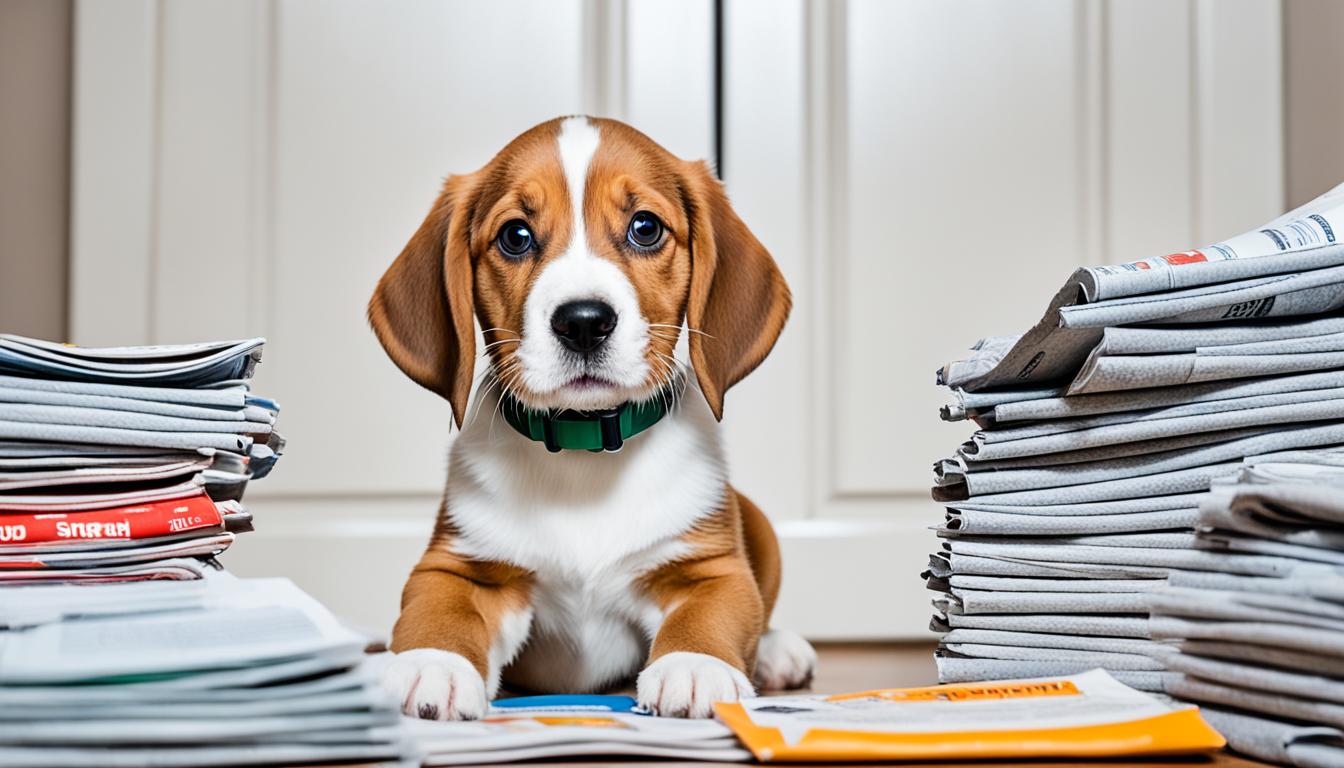

Training a young dog at home can feel like a tough journey. When Max, my lively puppy, came home, he was all play but no potty skills. Cleaning up after him and feeling defeated was a daily routine. However, with dedication and steady training, Max and I overcame this challenge.
If you’ve got a new young dog, you might wonder about teaching them bathroom habits. The great news? They can learn fast! By sticking to a good plan and training consistently, your pet will learn potty manners quickly.
Key Takeaways
- Establishing a routine is crucial in house training young dogs.
- Reward-based training with praise and treats reinforces desired behaviors.
- A regular feeding schedule can help control your dog’s bathroom habits.
- Using a crate can assist in house training and preventing indoor accidents.
- Consistency and supervision are key to successful potty training.
The Importance of Establishing a Routine
Puppies thrive on consistency. They learn when to eat, play, and go potty. This schedule helps them adapt to their new home.
Regular bathroom breaks are key. Take them outside every two hours to the same spot. It teaches them where to potty and avoids indoor accidents.
After waking up, playing, or eating, take them out right away. These times are when they most likely need to go. This prevents messes and gets them into a routine.
Pick a spot in the yard for them to use. Say “go potty” to make them understand. This clear guidance helps them know where and when to go.
Always reward them for going outside. Praise or treats tell them they’re doing great. This makes them want to do it again.
Having a routine is essential for potty training. It makes everything clearer for them. Regular outings, a specific spot, and rewards are all important. They strengthen good habits.
| Benefits of Establishing a Routine | How to Establish a Routine |
|---|---|
|
|
|
|
Reward-Based Training for Bathroom Habits
Rewarding your puppy is key to teaching them right bathroom habits. Giving them positive reinforcement helps them understand their tasks. Rewards like praise and treats work well to encourage good habits.
After your puppy goes outside, praise them right away. This praise makes them connect going outside with good feelings. They learn that going outside is what they should do.
While rewarding is crucial, do it at the right time. Don’t reward too early as puppies can lose focus. Wait until they’ve completely finished before offering praise or treats. This helps them link the reward to going outside successfully.
Along with rewards, you can use verbal cues or a command like ‘go potty’ while training. Using the same command helps them tie the command with going outside. This makes training more effective.
Every dog is unique, and finding the right reward is important. Some prefer verbal praise, others like treats. Try different rewards to see what helps your puppy learn best.
Advantages of Reward-Based Training
Using reward-based training for bathroom habits has many benefits:
- Positive reinforcement: This method rewards good behavior, making training fun and engaging for your puppy.
- Motivation: Rewards like praise and treats motivate your puppy to keep doing well.
- Building trust and bonding: Rewarding your puppy regularly strengthens your bond and builds trust.
- Effective learning: Rewards help your puppy quickly grasp the expected behavior.
However, remember that reward-based training is just one part of training your puppy. A mix of a consistent routine, proper supervision, and positive reinforcement ensures your training’s success.

| Technique | Description |
|---|---|
| Praise | Verbal praise and enthusiastic affirmation to reinforce desired bathroom habits. |
| Treats | Using small, tasty treats as rewards for eliminating in the appropriate location. |
| Verbal Cues | Using specific command words or phrases to signal the desired behavior. |
| Consistency | Maintaining a consistent approach to reward-based training to reinforce habits effectively. |
Feeding Schedule and Bathroom Habits
Getting your puppy on a steady feeding schedule is crucial for their bathroom habits. Depending on their age, puppies usually eat two to three times daily. Feeding them at regular times helps them learn when to use the bathroom.
Limits on water before bed can prevent nighttime accidents. Remove their water bowl a few hours before bedtime. This step lowers the chance they’ll need to go out during the night. Most puppies can last about seven hours overnight without a bathroom trip.
Since puppies have smaller bladders, they’ll need to go outside more often than adult dogs. Stick to a regular feeding plan and tweak it as per your puppy’s needs. This will aid in bladder control and lessen daytime and nighttime accidents.
Sample Feeding Schedule
| Age | Number of Feedings | Feeding Times |
|---|---|---|
| 8-12 weeks | 4 | 7 a.m., 12 p.m., 5 p.m., 10 p.m. |
| 12-16 weeks | 3 | 7 a.m., 1 p.m., 7 p.m. |
| 16-24 weeks | 2 | 8 a.m., 5 p.m. |

Image: A puppy following a feeding schedule and controlling bladder can help reduce accidents.
Using a Crate for House Training
Using a crate helps house train your young dog well. Dogs like small, safe spaces because they are den animals. A crate keeps their bladder under control and stops indoor accidents. It makes a special spot for your dog to rest, just like they naturally want. Plus, it teaches them to wait to go outside.
When picking a crate for house training, size matters. It should let your puppy stand, turn, and lie down easily. But don’t get one too big. If it’s too large, your puppy might sleep in one corner and use another as a bathroom. A snug, den-like crate feels secure and comfortable.
Start slow when introducing the crate. Leave it open in a quiet spot at home. Let your puppy check it out on their own. Put in cozy bedding and favorite toys or treats to make it welcoming. If they go in by themselves, give them praise or a treat.
The crate shouldn’t be used for punishment. It’s meant to be a happy place for your puppy. Don’t force them into it or leave them there too long. Use it when you can’t watch them directly. Like when you’re asleep or out.
Crate training as part of your routine sets up good habits. It helps your dog see the crate as a chill spot. This way, they’re less likely to have accidents inside. Be patient and keep rewarding your dog for going potty outside.

Puppy Pads and Paper Training
Dealing with housetraining? Puppy pads and paper training are good inside solutions. They work well when taking your puppy outside often is tough. This is true if you’re in a place with very cold winters.
Puppy pads are soaking pads that give your dog a specific place inside to pee or poop. Paper training is when you spread newspaper or training pads on the floor. Both methods are easy to use and help keep things clean, especially at the start of housetraining.
These methods save your floors and carpets from accidents while your puppy learns to pee outside. They’re a stopgap for puppies who can’t always go out yet.
But remember, puppies might get mixed signals if they only use these indoor spots. The main aim is teaching them to do their business outside.
To prevent confusion, set a clear routine. Slowly switch from puppy pads to going outdoors. Move the pads closer to the door, then outside to their spot.
Benefits of Puppy Pads and Paper Training:
- Convenience: They’re handy for indoor toilet needs, especially when outdoor trips are hard.
- Reduced Mess: They keep your floors and carpets clean as your puppy learns bathroom rules.
Limitations of Puppy Pads and Paper Training:
- Confusion: Only using pads or paper can confuse your dog about the right place to go. It might slow down learning to use the bathroom outside.
- Dependency: Your dog might rely too much on these indoor options. It could be harder to teach them to go outside.
Indeed, puppy pads and paper training help in some cases. But, they are short-term fixes. Consistent training, praise, and clear signals will help your dog learn fast.

| Puppy Pads and Paper Training | Pros | Cons |
|---|---|---|
| Convenience | Provides a designated indoor spot for toileting | Confusion about appropriate elimination location |
| Reduced Mess | Protects floors and carpets from accidents | Dependency on indoor toileting options |
Consistent Housetraining Schedule
It’s vital to keep a stable housetraining schedule for your puppy’s potty training success. Puppies have small bladders, so they need many bathroom breaks during the day. By setting a regular routine, you help your puppy learn the right bathroom habits, making training more effective.
At the start, you might take your puppy outside over a dozen times in one day. This helps avoid indoor accidents and lets your puppy go potty outside. Watch for signs they need to go, like sniffing or circling, and build a schedule that fits their needs.
Take your puppy out first thing in the morning, after they play, spend time in their crate, chew, and eat. These times are when they often need to eliminate. Consistent bathroom breaks at these times will reinforce good behavior and teach your puppy the right places and times for potty.
Keeping a regular schedule is crucial for teaching your puppy proper bathroom habits. A consistent housetraining routine gives them a clear pattern and helps them know where to go. Puppies do best with structure and routine, which aids in their housetraining success.
Here’s an example routine to help you plan a consistent housetraining schedule:
| Time | Activity |
|---|---|
| 6:30 AM | Take puppy outside for bathroom break |
| 7:00 AM | Feed puppy breakfast |
| 8:00 AM | Take puppy outside for bathroom break |
| 9:30 AM | Playtime and supervised activity |
| 10:00 AM | Take puppy outside for bathroom break |
| 12:00 PM | Feed puppy lunch |
| 1:00 PM | Take puppy outside for bathroom break |
| 2:30 PM | Playtime and supervised activity |
| 3:00 PM | Take puppy outside for bathroom break |
| 5:00 PM | Feed puppy dinner |
| 6:00 PM | Take puppy outside for bathroom break |
| 7:30 PM | Quiet time and relaxation |
| 8:00 PM | Take puppy outside for bathroom break |
| 9:30 PM | Last bathroom break before bedtime |
Each puppy is unique, so you might need to tweak this schedule to suit your puppy’s specific needs. Stay consistent and patient. Over time, your puppy will link the schedule with the right bathroom habits.
Monitoring and Supervising Your Dog
Watching your young dog closely is key to house training. Each dog has its own signs and timing for needing to go outside. By paying attention, you can prevent accidents before they happen.
Some dogs can hold it longer than others. Notice their behaviors to see when they need to go out. For instance, sniffing or circling might mean they need to go.
Early on in house training, you must watch your dog closely. Knowing their needs and actions helps you train them well. Always keep an eye on them, especially outside their crate or potty spot.
It’s normal for accidents to happen as your dog learns. If they start to go inside, gently interrupt and take them outside. Don’t scold them. This could make training harder.
By watching your dog and keeping them close, you’ll tailor training to their needs. With time, patience, and consistency, they’ll learn good bathroom habits. They’ll become a trained part of your family.
| Tip | Benefit |
|---|---|
| Always keep your dog in sight | Prevent accidents and be ready to take them out when needed |
| Take note of their individual signals | Understand when they need to go out based on their behavior |
| Closely monitor their activities | Anticipate their bathroom needs and prevent accidents |
| Interrupt and redirect if accidents occur indoors | Teach them that eliminating outdoors is the desired behavior |
Controlling Your Dog’s Diet
It’s key to manage your dog’s diet to keep their bathroom habits in check. Puppies, with their young digestive systems, need small meals throughout the day. This prevents system overload. Establishing a steady feeding schedule is crucial to manage their eating.
Feeding your puppy high-quality food is a must. This ensures they get the nutrients needed for growth. Look for food made especially for puppies. It should have the right mix of proteins, fats, and carbs for health and digestion.
Watching your puppy’s stool helps you know if their diet is good. Healthy diet equals well-formed stools. This means they’re getting the right nutrients. If the stools are off or your puppy has diarrhea, their diet might need changes. Talk to your vet about picking the best food for your puppy.
Overfeeding can cause digestive problems, such as diarrhea. This makes training harder. Keep an eye on how much you feed them. Use the feeding guide on the food package. Adjust food amounts as your puppy grows to keep them at a healthy weight.
A balanced diet and steady eating schedule helps your puppy stay well. It also makes training easier.
| Age | Number of Meals | Feeding Amount per Meal |
|---|---|---|
| 8-12 weeks | 4 | 1/4 to 1/3 cup |
| 12-24 weeks | 3 | 1/3 to 1/2 cup |
| 24-36 weeks | 2 | 1/2 to 3/4 cup |
| 6 months+ | 2 | 3/4 to 1 cup |
Source: [Brand Name Puppy Food]
Reinforcement and Positive Feedback
Training your dog to housetrain is more effective with positive reinforcement and praise. Instead of getting upset over accidents, focus on rewarding your dog for going in the right spot.
Avoid scolding your dog for mistakes. Instead, aim to guide them to the correct behavior. When your dog goes outside or uses a puppy pad, shower them with praise. Use kind words, a gentle pat, or a small treat to show you’re pleased.
“Good boy! What a smart pup you are for going potty outside!”
Being consistent with your praise is crucial. Always provide positive feedback when your dog goes in the right spot. This helps them link their actions to rewards, encouraging them to continue.
Dogs love making their owners happy and respond well to positive reinforcement. Offering praise and rewards builds a loving, supportive environment for housetraining.
Conclusion
Success in potty training your dog comes with the correct method. Patience, consistency, and understanding are very important. These help your dog learn good bathroom habits.
The time needed for training can change. It depends on your dog’s age, past learning, and training methods. But, with hard work, most dogs can learn and adjust.
Each dog is different and might need special care during training. Some dogs learn fast; others need more time. Being patient and recognizing your dog’s needs is crucial.
To achieve success, make a routine and use reward-based training. Also, set feeding times and watch your dog carefully. With steady training and positive support, your dog can become well-trained and behaved.
FAQ
Can young dogs learn bathroom habits quickly?
How can I establish a routine for my young dog?
How can I reward my puppy for proper bathroom habits?
How can a feeding schedule help with my dog’s bathroom habits?
How can I use a crate for house training?
Are puppy pads and paper training helpful for house training?
How important is a consistent housetraining schedule?
How can I closely monitor and supervise my dog for bathroom habits?
How can controlling my dog’s diet affect their bathroom habits?
How important is positive reinforcement in housetraining?
How long does it take to successfully house train a dog?
Source Links
- https://www.humanesociety.org/resources/how-potty-train-your-dog-or-puppy
- https://www.akc.org/expert-advice/training/how-to-potty-train-a-puppy/
- https://www.rspca.org.uk/adviceandwelfare/pets/dogs/training/toilettraining

Carlos is the passionate founder and primary author behind “CorgisCorner.com,” a website dedicated to all things related to the beloved Corgi breed. Born and raised in a small town known for its strong sense of community and love for animals, Carlos developed a deep affection for Corgis from a young age. This love was sparked by his childhood companion, a spirited and loyal Corgi named Toby, who was a constant source of joy and friendship.