

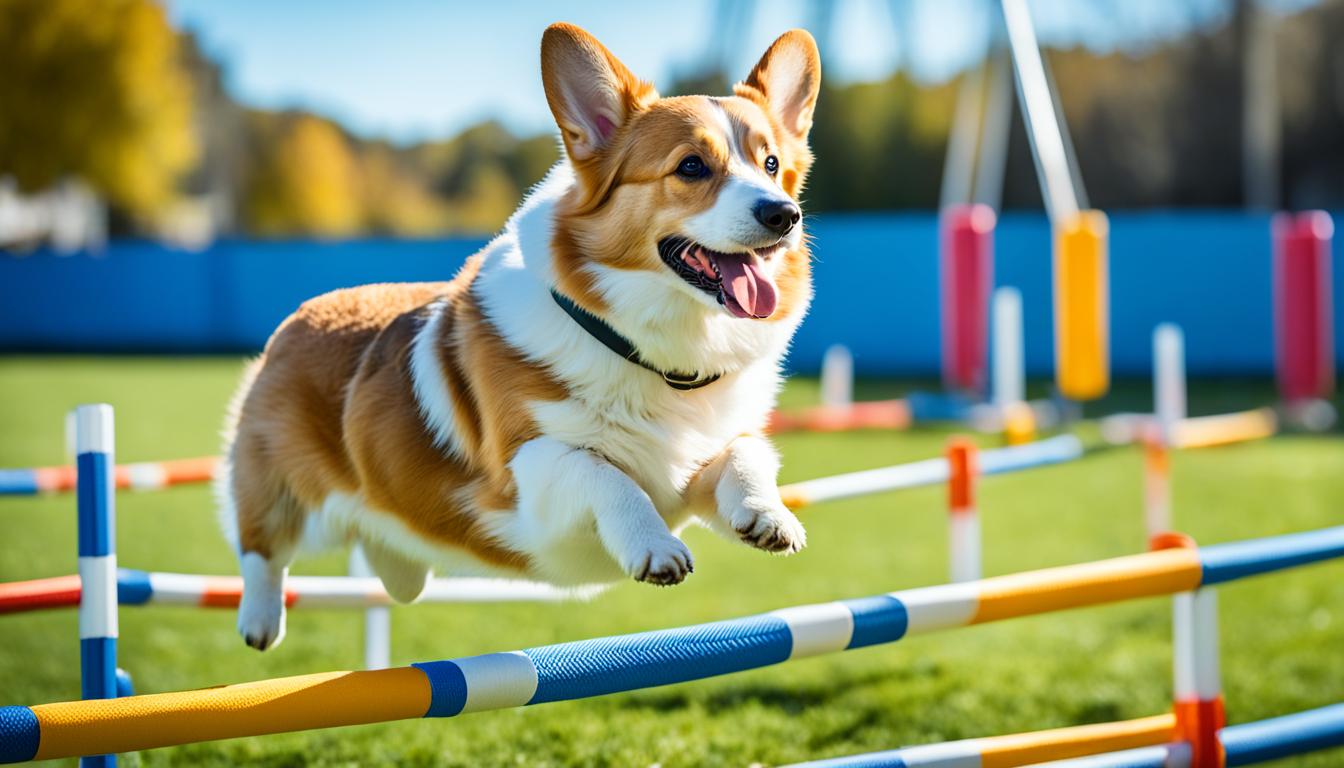

Owning a Corgi brings joy and love into our lives. But, struggling with advanced obedience can be frustrating. Sometimes, it feels like your Corgi won’t listen, showing behaviors that confuse you.
When I got my Corgi, I was excited. Over time, though, I saw his behavior become a challenge. Excessive barking, leash pulling, and ignoring commands needed a solution.
That solution was advanced obedience training. It changed my Corgi’s behavior for the better. Now, we enjoy a stronger bond and a happier life together.
Key Takeaways:
- Struggling with advanced obedience? Transform your Corgi’s behavior with the right training techniques.
- Advanced obedience solutions are crucial for addressing complex behaviors and ensuring a happy and healthy life for your Corgi.
- With proper training, you can improve your Corgi’s obedience and strengthen the bond between you and your furry friend.
- Don’t give up on your Corgi’s behavior—invest in advanced obedience training and witness amazing transformations.
- Expert guidance and techniques can help you navigate the challenges and enjoy a harmonious relationship with your well-trained Corgi companion.
Why Training Your Corgi is Important
Training your Corgi is key to being a great pet owner. It helps you bond with your pet. Also, it improves their happiness and health. Training is vital, whether your Corgi is a puppy or an adult.
Proper training sets your Corgi up for success in life. Let’s look at why it matters:
1. Strengthening the Bond
Training builds trust and understanding. You and your Corgi will communicate better. It makes your relationship stronger and everyday life more fun.
2. Physical and Mental Health
Training is good for your Corgi’s mind and body. It keeps them busy and stops bad habits. It also keeps them fit and happy.
3. Safe Interactions
Trained Corgis are safer around others. Obedience training teaches them how to behave. You won’t worry about their actions during walks or when meeting new people.
4. Behavior Transformation
Training is the solution for better behavior. Use positive methods to change bad habits. It helps your Corgi act better and strengthens your bond.
Follow expert tips for Corgi training. This journey improves your Corgi’s behavior and your connection. It’s based on trust and respect.
Are Corgis Hard To Train?
Training Corgis is easier than many people think. These dogs are smart and focus well, making them fast learners. With steady training and rewards, your Corgi can follow rules and show good behavior.
To train your Corgi, use treats or kind words as rewards. This helps them link good actions to good outcomes. With time and effort, they can learn everything from simple commands to trickier ones.
Corgis do best with positive training methods. Building a relationship on trust and respect boosts their learning. Be patient, as each Corgi learns at their own pace. Adjust your training to fit their unique character and needs.
Integrating Corgi Training Tips
Here are some tips to make training better:
- Start with basic commands: Teach your Corgi foundational commands such as ‘sit,’ ‘stay,’ and ‘come.’ Reinforce these commands during daily interactions.
- Be consistent: Consistency is key in training any dog, including Corgis. Use the same commands, gestures, and rewards to avoid confusion.
- Positive reinforcement: Reward good behavior with treats, praise, or playtime. Positive reinforcement encourages your Corgi to repeat the desired actions.
- Ignore bad behavior: Redirect your Corgi’s attention and avoid rewarding negative behavior. Reinforce positive behaviors instead.
- Mental stimulation: Incorporate mentally stimulating activities, such as puzzle toys or obedience games, to keep your Corgi engaged and motivated.
Training is a journey that requires time and patience. Celebrate the small wins and don’t get discouraged by the setbacks. With continuous training and positive encouragement, your Corgi will become obedient and a joy to be around.
“Training a Corgi needs patience, consistency, and positive rewards. They want to please and quickly pick up on clear instructions and rewards.” – Professional Corgi Trainer

Keep reading to learn about the benefits of training Corgis and get advice on more advanced obedience techniques in the next sections.
Benefits of Training Corgis
Training your Corgi is rewarding. It deepens the bond and improves communication. This makes daily life more fun. A trained Corgi behaves better on walks and in public, listens well, and is confident. Training gives them both mental and physical workouts. It also cuts down on issues like too much barking or chewing.

Putting effort into training your Corgi turns them into great companions. Here are the key benefits:
- Improved Communication: Training helps you talk to your Corgi better. This strengthens your connection.
- Easier Handling: Trained Corgis are simpler to manage on outings and at the vet’s. They listen better, making them calmer.
- Confidence Boost: Training makes your Corgi braver in social situations. They deal better with other animals and people.
- Mental Stimulation: Training keeps your Corgi’s mind busy. Learning new things helps avoid boredom and naughtiness.
- Physical Exercise: Activities like agility training keep your Corgi fit. It stops them from getting overweight.
- Reduced Problem Behaviors: Training targets bad behaviors like barking or chewing. It teaches them the right way to act.
Training your Corgi makes their life and yours better. It creates a respectful bond. Together, you’ll have a peaceful home.
Guiding your Corgi with patience and positive steps shapes their behavior. With regular training, they become well-mannered. Your Corgi will be a joy to have in the family.
Start Training Corgi Puppies (8-16 Weeks)
Bringing your Corgi puppy home from 8 to 16 weeks old is a key time. It’s the perfect moment to begin their training. They’re ready to learn and fit into new places, making it the best time to teach them to obey.
Start with easy commands, like teaching them to “sit.” This helps them learn to listen to you. Give them treats or praise when they get it right.
Also, make sure your puppy gets to meet other dogs and people. This helps them feel okay in different spots and avoid problems later. Take them to new places and let them hear various sounds. It makes them more social and brave.
Training Corgi puppies from 8 to 16 weeks is important. Teach them easy commands and let them meet others. It helps them grow into well-behaved adult Corgis.

Add grooming and potty training to your puppy’s daily lessons. Teach them about grooming slowly, making it fun with treats. Start a regular potty routine and pick a special spot for them. Reward them for doing it right.
The first weeks are vital for your Corgi puppy’s growth and manners. Starting training early builds a base for more learning and good behavior.
Get Your Corgis Used to Grooming
Grooming your Corgi is important due to their thick coat. Starting early helps them get used to it, making bath and nail trim times easy. Here are tips to make grooming a breeze.

Familiarize Them Gradually
Begin with a soft brush on your Corgi. Do it where they’re most at ease. Start with short sessions, then slowly extend them. Giving treats and praise during grooming helps a lot.
Make It Enjoyable
Turn grooming into fun time. Include a game they love or a special snack. This makes them look forward to grooming and reinforces good behavior.
“Grooming is a chance to bond with your Corgi. Make it positive and spend quality time together.”
Establish a Routine
Stick to a grooming schedule. It helps your Corgi know what to expect, reducing their stress. Regularly check their ears, teeth, and nails to keep them healthy.
Professional Grooming
Consider a professional groomer for special care. They know how to manage a Corgi’s fur and nails properly. It’s also good for your Corgi’s social skills.
Using these tips, grooming will be enjoyable for you and your Corgi. It keeps them looking great and strengthens your bond.
| Benefits of Getting Your Corgis Used to Grooming | Advanced Obedience Techniques Utilized |
|---|---|
| 1. Maintenance of a healthy coat and reduced shedding. | 1. Gradual familiarization with grooming practices. |
| 2. Calm and comfortable behavior during baths and nail trims. | 2. Positive reinforcement using treats and praise. |
| 3. Strengthened bond between you and your Corgi. | 3. Incorporating enjoyable activities during grooming. |
| 4. Regular health checks of ears, teeth, and nails. | 4. Establishing a consistent grooming routine. |
| 5. Exposure to professional grooming and socialization. | 5. Professional grooming by experts. |
Teach Your Corgi Basic Commands
Teaching your Corgi basic commands helps set boundaries and builds trust. It’s key for their safety and your relationship. This way, you both feel more connected.
Start with the ‘Sit’ Command
The ‘sit’ command is a great starting point. It’s a base for good behavior and future training.
“Sit.”
To teach ‘sit,’ use treats and praise. Add a hand signal, like raising your palm, to help them understand.
Progress to Other Basic Commands
After ‘sit,’ teach commands like ‘stand,’ ‘come,’ and ‘down.’ These are all useful.
- “Stand.”
- “Come.”
- “Down.”
Be patient and consistent. Reward them with treats and love for following your commands.
Consistency and Repetition Are Key
Stay consistent in your commands and signals. That helps your Corgi learn better. Repetition strengthens their obedience.
Keep training sessions short but regular. This will keep your Corgi interested and help them remember commands. It lays the groundwork for advanced training.
| Command | Description |
|---|---|
| Sit | Teaches your Corgi to sit on command. |
| Stand | Teaches your Corgi to stand on command. |
| Come | Teaches your Corgi to come to you when called. |
| Down | Teaches your Corgi to lie down on command. |
Potty Train Your Corgi
Potty training is crucial for Corgi obedience. It’s about setting up a potty spot outside and using consistent techniques. This way, your Corgi learns where and when it’s okay to go.
Here are some top tips for potty training success:
- Establish a routine: Take your Corgi out at set times like after meals and naps. Being consistent helps them learn faster.
- Supervise closely: Watch your Corgi during bathroom breaks. Use a leash in the potty area to watch and then praise them when they go in the right spot.
- Positive reinforcement: Give treats or praise right after they go in the right spot. This makes the good behavior stick.
- Redirect accidents: If they start to go in the wrong place, lead them calmly to the right spot. Don’t scold them. Stay positive and consistent.
Patience is important when potty training your Corgi. They all learn at their speed. Keep up the consistency and rewards. With enough time and effort, your Corgi will get it right.
Benefits of Successful Potty Training
Successful potty training your Corgi offers great benefits:
- Clean and hygienic home: If your Corgi knows where to go, your house stays cleaner.
- Stronger bond: Training well makes you and your Corgi closer. It builds trust and communication.
- Improved behavior: A trained Corgi understands limits and what’s expected, making them behave better.
- Convenience during outings: With a potty-trained Corgi, going out is easier. No worries about accidents in public.
Focus on regular training and positive rewards. This way, you’ll potty train your Corgi successfully. And you’ll have a well-behaved pet and a stress-free home.
| Potty Training Tips for Corgis | Benefits of Successful Potty Training |
|---|---|
| Establish a routine | Clean and hygienic home |
| Supervise closely | Stronger bond |
| Positive reinforcement | Improved behavior |
| Redirect accidents | Convenience during outings |
Teach Your Corgi to Play Fetch
Playing fetch is a great way to connect and get your Corgi moving. It helps keep them active and builds a closer relationship with you. By using advanced training steps, you can teach your Corgi to fetch. This changes how they act for the better.
Step 1: Introduce the “Go Get It” Command
Start by saying “Go Get It” while holding their favorite toy. Throw it a little bit away. Cheer them on to get it. When they move towards the toy, say the command again in a happy voice. Give them a treat and praise when they pick it up. This is their reward.
Step 2: Gradually Introduce Toys or Sticks
Once they get the hang of it, try using different toys or sticks. It makes the game more fun for them. Always give them a treat when they bring the toy back. This encourages good actions.
Step 3: Utilize Clicker Training
Using a clicker can really help with training. Click it every time they fetch correctly, then give a treat. This approach helps them understand what you want. It links the sound of the clicker with getting treats.
Fetching gives your Corgi a fun workout and brings you two closer. Teaching them to fetch with the “Go Get It” command and rewarding them makes a big difference. You’ll both enjoy playtime more.
| Benefits of Teaching Fetch to Your Corgi |
|---|
| 1. Physical exercise and mental stimulation |
| 2. Bonding opportunity between you and your Corgi |
| 3. Improved obedience and responsive behavior |
| 4. Enhanced focus and attention |
| 5. Fun and engaging activity for both you and your Corgi |
Training a Young Corgi (6-12 months)
When your Corgi turns 6-12 months old, it’s vital to build on what they’ve learned. This period is key for enhancing their skills and teaching advanced obedience.
Focus on commands that boost their impulse control, like “Leave It,” “Drop It,” and “Stay.” These will help improve their behavior and listening skills.
Keep using positive rewards to teach these new tricks. Rewards encourage them and keep them focused on learning.
Regular practice and consistency are crucial now. By doing so, your Corgi will grow into an obedient and happy pet.
Patience and support are important throughout their training. Since every Corgi learns differently, adjust the training to fit their pace and abilities.
Corgi Training Progress Tracker
| Command | Level of Proficiency |
|---|---|
| Sit | Mastered |
| Stay | Intermediate |
| Come | Advanced |
| Leave It | Beginner |
| Drop It | Beginner |
This progress tracker lets you see how your Corgi is doing with each command. It highlights what they’ve mastered and where they need more work.
Keep up with basic commands and slowly add in more complex ones. With time, your Corgi will learn all these commands well.
Conclusion
Training your Corgi is very important. It makes your bond with your pet stronger. It also keeps them mentally and physically active.
Start with simple commands like ‘sit’. Then, slowly add more complex ones. This way, you and your Corgi will understand each other better. Getting help from an expert in Corgi training can really help with any tough spots.
A trained Corgi makes life happier. Always be consistent, patient, and use positive reinforcement. Put in the time and effort. You’ll see your Corgi become a well-behaved and loved family member.
FAQ
Why is training your Corgi important?
Are Corgis hard to train?
What are the benefits of training Corgis?
When should I start training my Corgi puppy?
How can I get my Corgi used to grooming?
What basic commands should I teach my Corgi?
How can I potty train my Corgi?
How can I teach my Corgi to play fetch?
How can I train a young Corgi?
Source Links
- https://thecorgiguru.com/corgi-training-guide/
- https://www.caninesolutionsinc.com/training
- https://www.arl-iowa.org/behavior-and-training/training-classes/

Carlos is the passionate founder and primary author behind “CorgisCorner.com,” a website dedicated to all things related to the beloved Corgi breed. Born and raised in a small town known for its strong sense of community and love for animals, Carlos developed a deep affection for Corgis from a young age. This love was sparked by his childhood companion, a spirited and loyal Corgi named Toby, who was a constant source of joy and friendship.