

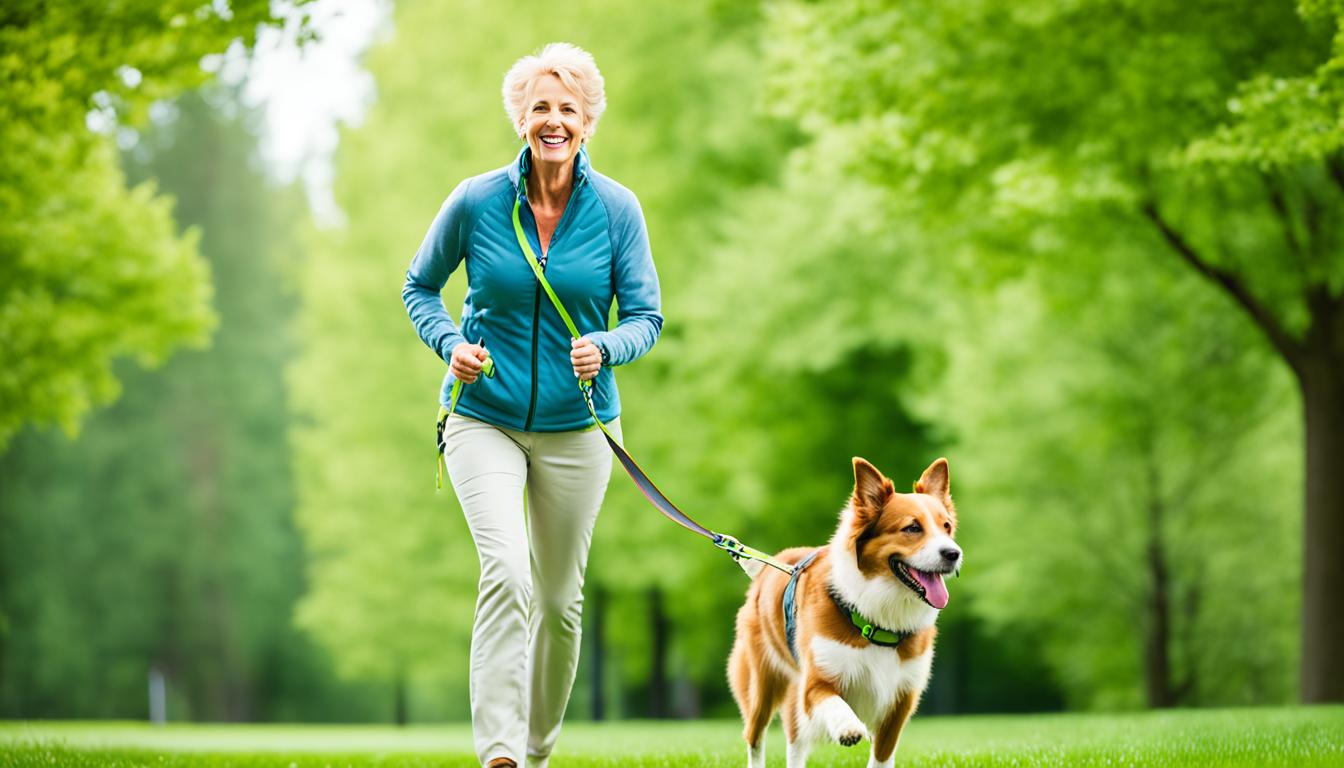

Imagine walking your dog in the park, with the sun shining warmly. You both enjoy the gentle breeze. Suddenly, your dog gets too excited and starts pulling on the leash. This turns your peaceful walk into a tough struggle. Leash training turns these struggles into happy moments together.
Leash training does more than just control your dog. It keeps them safe, teaches them about limits, and strengthens your relationship. When dogs know how to behave on a leash, they feel more secure and confident. This changes the game by allowing fun explorations while keeping them safe.
Key Takeaways:
- Leash training is essential for ensuring your dog’s safety and well-being.
- Well-trained dogs have enhanced control and behavior in public.
- Leash training creates a stronger bond between you and your furry companion.
- It opens up opportunities for enjoyable walks and adventures.
- Leash training improves your dog’s social interactions with other animals and people.
The Importance of Leash Training for Dog Behavior
Leash training is key in shaping a dog’s behavior. Dogs not trained to walk on a leash may feel frustrated or show leash reactivity. It helps dogs stay calm, focused, and in control.
Through leash training, dogs learn to avoid pulling. This prevents possible injuries. It also ensures clear communication between the owner and the dog. This is vital for obedience and good behavior.
Leash trained dogs understand discipline and know their limits. They learn to obey commands and react to their owners’ cues. This creates a trusting and respectful relationship between the dog and the owner.
Leash training is crucial for good leash behavior in dogs. Untrained dogs may pull too much, lunge, or act aggressively towards others. These actions can be harmful. Proper training helps manage these issues, making walks more enjoyable.
The Benefits of Leash Training:
- Enhanced control: It allows owners to better manage their dog’s behavior.
- Better public interactions: Trained dogs behave more politely with others during walks.
- Improved exercise opportunities: Dogs enjoy walks more without pulling, leading to better health.
“Leash training is not just about preventing your dog from running off or getting into trouble. It’s about creating a positive and cooperative relationship between you and your canine companion.” – Emily, Dog Trainer
Leash training improves a dog’s behavior and life quality. It fosters obedience, reduces stress, and keeps everyone safe. By dedicating time to leash training, owners strengthen their bond with their pets. This makes walks more pleasant and peaceful.
The Advantages of Leash Training for Dog Safety
Leash training is crucial for the safety of dogs and their owners. Well-trained dogs on leashes are less likely to behave dangerously or act aggressively towards others. Leashes help control pets and keep them from running off into danger or getting lost. This training means owners can enjoy dog-friendly areas without stress over their pet’s safety or actions.
Enhanced Control and Prevention of Hazards
Leash training gives you control over your dog. It stops them from going too far, chasing animals, or landing in risky situations. This way, you can keep your dog safe and sound during walks or any outing.
Promoting Safe Interactions
Leash training is key for safer dog meetings with people or other dogs. It lets you handle how your dog meets others, avoiding conflicts or accidents. This is crucial in crowded places where unexpected encounters can happen. Leash training means your dog can meet others safely and calmly.
Preventing Runaways and Lost Dogs
A dog on a leash won’t likely run away or get lost. The leash acts as a safety net, stopping your pet from straying or running off. This is vital in open or busy areas where losing your dog or safety issues could arise. Leash training keeps your dog near and safe.
Enjoying Dog-Friendly Spaces
With leash training, visiting dog-friendly spots is worry-free. Be it a park, a cafe, or a trail, a leashed and behaved dog makes outings enjoyable. You’ll be at ease, knowing your pet is under control and nice to others around.
| Benefit | Description |
|---|---|
| Enhanced Control and Prevention of Hazards | Leash training provides the owner with greater control over their dog’s actions, preventing them from engaging in potentially dangerous behaviors or situations. |
| Promoting Safe Interactions | By keeping a dog on a leash, owners can manage their social interactions, promoting peace and preventing conflicts with other dogs or people. |
| Preventing Runaways and Lost Dogs | A leash acts as a barrier, reducing the risk of a dog running away or getting lost in unfamiliar environments or busy areas. |
| Enjoying Dog-Friendly Spaces | Leash training allows dog owners to confidently explore and enjoy various dog-friendly spaces without concerns about their pet’s behavior or safety. |
Image:
Effective Leash Training Techniques
Leash training has many techniques. Find the one that fits your dog’s personality. Positive reinforcement is highly recommended. This method rewards your dog when it walks nicely on a leash. It helps your pet link leash-walking with happy times.
For leash training to work, be consistent and patient. This is very important with puppies. They learn fast if you train them the same way every time. Begin training early to set good habits. Start with short walks, then slowly go longer as your puppy gets used to it.
You can also try clicker training and treats in leash training. With clicker training, you make a clicking noise to show good behavior, then give a reward. This improves how you two communicate and helps your dog learn what you like. Giving treats helps your dog learn to walk nicely, wanting to earn more treats.
Patience is a must in leash training. Each dog is different, so you might need to try a few methods. Keep at it, use positive feedback, and celebrate small steps forward. With the right approach and lots of love, your dog will get good at walking on a leash!
Building a Strong Leash-Walking Relationship
Building a strong bond with your dog is key for good leash training. It’s all about being consistent, predictable, and using positive reinforcement. Dogs need to see leash time as fun and rewarding. Training in a safe, comfy place makes dogs feel at ease and ready to learn. A bond based on trust and rewards lays the groundwork for successful leash training and good obedience.
Fostering Trust through Positive Reinforcement
Positive reinforcement makes leash training work. It focuses on rewarding the behaviors you want with treats, praise, or play. This approach shapes your dog’s behavior in a positive way. It also makes them link training with fun. Reward your dog right away when they do well with leash commands. This approach boosts their good behavior and strengthens your relationship.
“The more you reward your dog for good leash behavior, the more motivated they become to please you and engage in the training process.”
Consistency and Predictability
Consistency helps dogs learn. They like knowing what to expect. So, setting clear rules and regular routines is vital. Always use the same commands like “heel” or “stay.” Having training sessions at the same time and place adds structure. This makes learning and improving leash skills easier for your dog.
Creating a Safe and Comfortable Environment
It’s important for your dog to feel safe and comfy during leash training. Pick a quiet spot they know well to reduce distractions. Make sure their harness or collar fits well and is comfy. Avoid choke or prong collars as they can be harmful. Always have rewards ready to praise positive behavior. This encouragement leads to better leash manners and strengthens your bond.

| Benefits of Building a Strong Leash-Walking Relationship |
|---|
| 1. Enhanced communication and understanding between you and your dog |
| 2. Increased trust and bond between you and your dog |
| 3. Improved focus and obedience during walks |
| 4. Prevention of leash reactivity and potential aggression |
| 5. A more enjoyable and stress-free walking experience for both you and your dog |
By nurturing a strong leash-walking relationship, you prepare for a well-behaved, manageable dog. With consistency, positive rewards, and a safe setting, you can build a harmonious team. This makes leash training better and deepens the connection with your furry friend.
Selecting the Right Leash and Harness
Choosing the right leash and harness is key for successful leash training. The right gear makes sure your dog is comfortable and under control. This lets you teach positive behaviors well.
Harnesses for Control and Comfort
A harness is better for leash training because it puts pressure evenly across your dog’s body. This means less chance of injury and discomfort, making it a safer choice.
Back-clip harnesses work great for dogs that don’t pull. They have a D-ring on the back which helps you guide your dog. This type of harness lets your dog move freely and keeps their neck safe.
If your dog pulls, dual-clip harnesses with training leads are a good fit. They have D-rings on the front and back for more control. By using the front D-ring, you can get your dog’s attention and reduce pulling.
Choosing the Right Leash
For leash training, non-retractable leashes are the best. They help you manage your dog and stop them from going too far.
Pick a leash that’s the right length for your dog. A shorter leash helps with control during training. A longer leash lets your dog explore more in open areas, which is good for more advanced training.
Additional Tools for Enhanced Training
Adding treat bags and clickers can make training better and promote good behaviors. Treat bags keep rewards ready, and clickers signal to your dog they did something right.

| Leash and Harness Features | Benefits |
|---|---|
| Back-clip Harness | Provides comfort and even pressure distribution |
| Dual-clip Harness with Training Leads | Offers more control and discourages pulling |
| Non-Retractable Leash | Provides better control during leash training |
| Treat Bags | Allows easy access to rewards during training |
| Clickers | Provides consistent markers for desired behaviors |
Every dog is different, so think about their size, behavior, and comfort when choosing gear. With the right equipment and tools, you’ll make leash training a positive experience.
Creating a Positive Training Environment
Leash training your dog needs a positive, distraction-free setting. This foundation makes leash learning efficient and stress-free.
Begin training in places like your home or backyard. These spots are less stressful and make your dog feel safe. This helps them focus on learning. Keeping early trainings low on distractions helps your dog pay better attention.
Use consistency, patience, and positive rewards throughout the process. Stick to the same commands and celebrate good behavior. This way, your dog learns what you expect on walks.
Start with off-leash training inside to build positive links. This gets your dog used to training in a relaxed way. Slowly add the leash, letting your dog adjust and connect it to known commands and treats.
| Creating a Positive Training Environment | Effective Leash Training |
|---|---|
| Start training in familiar spaces | Use positive reinforcement consistently |
| Minimize distractions | Gradually introduce the leash |
| Practice patience | Reinforce positive behaviors |
Follow these steps for a positive training environment that leads to effective leash training. Be patient, as every dog learns differently. With consistency and positive steps, leash walks will become enjoyable and confident.

Introducing Leash Training Step by Step
Leash training helps dogs get used to the leash and harness. It’s important to introduce it slowly to make the training positive. This method teaches your dog to walk on a leash well.
Start Indoors with Short Training Sessions
Start training inside where your puppy feels safe. Keep sessions short, about 5-10 minutes, so they don’t get stressed. Give treats to reward them for walking with you.
Increase the Number of Steps Gradually
When your puppy gets used to the leash, slowly take more steps together. Begin with a few steps, then walk further as they learn. This builds their confidence gently without stress.
Reinforce Positive Behaviors
Always reward good behavior during training. Say good things and give treats when they walk nicely or follow you. Positive rewards help them keep up the good leash behavior.
Transition to Outdoor Spaces
After mastering indoors, move to quieter outdoor spots. Begin in a calm neighborhood or park. Then, slowly introduce new places and more distractions.
Consistency, Positive Reinforcement, and Patience
Being consistent, using positive rewards, and patience are vital in leash training. Stick with your training style and reward good actions to make them love leash training. Understand that learning takes time for your puppy.
Remember, training takes time, and every puppy learns differently. By teaching leash training slowly, you’ll help your puppy master it with confidence. Stay patient, consistent, and enjoy getting closer to your furry friend.

Overcoming Leash Pulling Behavior
Many dogs pull on the leash during walks. This is a common problem but it’s fixable. Positive reinforcement and being consistent help. Avoid using force, like yelling or pulling back hard. It could make things worse and hurt your dog’s trust in you.
To beat leash pulling, talk clearly and reward good behavior.
Stop and Be an Immovable Object
If your dog starts pulling, stop walking. Stand firm and don’t move. Wait until your dog stops pulling.
This teaches your dog that pulling won’t get them anywhere. They’ll learn to stop pulling if they want to keep walking.
Release Tension and Reward Relaxation
When your dog stops pulling and walks nicely, ease up on the leash. Then, praise them or give them a pat. This rewards their calmness.
Always reward calm walking. This encourages them to keep it up and not pull.
Re-establish Training and Ask for Sit
If your dog keeps pulling, pause your walk. Have them come back and sit. This resets their focus.
Asking them to sit helps remind them of what you want. It shows that walking nicely means a good, smooth walk for both of you.
Use these tips and reward good behavior consistently. You’ll be able to stop leash pulling and have better walks.
Enjoying the Benefits of Leash Training
When your dog learns to walk on a leash, you gain many perks. It boosts control and confidence in dog-friendly places and public spots. You know your pet will stick by you and act well.
Leash training makes walks safer for everyone. It prevents injuries from sudden distractions. It also reduces leash aggression, making walks peaceful and fun.
It also means consistent exercise for your dog. Regular leash walks let dogs check out their world, use up energy, and stay healthy. This keeps them in good shape, both body and mind.
Plus, leash training brings you and your dog closer. With positive feedback and kind guidance, you earn their trust. This makes your bond stronger, filled with respect and mutual understanding.
Leash training does more than teach obedience. It’s about control, safety, body and brain exercise, and a deeper connection with your pet. With dedication to positive training, you help your dog reach their full potential. This leads to a happy life together.
Maintaining Leash Training Skills
Leash training needs regular practice to keep your dog behaving well. By always working on leash skills, you help your dog understand and stick to good leash manners.
Consistency is Key
Staying consistent helps your dog remember how to act on a leash. Always use the same commands, like “heel” or “let’s go”. Praise them when they follow these commands well.
Positive Reinforcement
Keep rewarding your dog for good leash behavior. Use treats, kind words, and love. This makes them link leash walking with happy times, so they keep up the good work.
Refresh Training Skills
Occasionally, brush up on your dog’s leash manners. Have training sessions to go over what they’ve learned. Even short, regular sessions prevent them from forgetting their training.
Incorporate Training Into Daily Walks
Make leash lessons part of your dog’s daily walks. Use these times to practice commands and praise calm walking. This keeps the training fresh and effective.
| Best Leash Training Tips |
|---|
| Consistency |
| Positive reinforcement |
| Refresh training skills |
| Incorporate training into daily walks |
Following these top leash training strategies ensures your dog stays well-behaved. Consistency and positive rewards are key for a polite and obedient dog on walks.
Conclusion
Teaching your dog to walk on a leash is vital. It keeps them safe and helps you control them better. By using rewards and spending quality time together, leash training becomes fun for you both.
Success in leash training depends on being consistent, patient, and encouraging. Rewarding your dog for good behavior on the leash teaches them what you like. This stops bad habits from forming.
With a leash-trained dog, outings become more enjoyable. Your dog will behave well around others, follow your commands, and stay out of danger. Start leash training today. Enjoy your adventures knowing your furry friend is well-behaved.
FAQ
Why is leash training essential for your dog?
What is the importance of leash training for dog behavior?
What are the advantages of leash training for dog safety?
What are some effective leash training techniques?
How can you build a strong leash-walking relationship?
How do you select the right leash and harness for leash training?
How can you create a positive training environment for leash training?
How do you introduce leash training step by step?
How can you overcome leash pulling behavior?
What are the benefits of leash training?
How do you maintain leash training skills?
Why is positive reinforcement leash training beneficial?
What are some effective leash training techniques?
Source Links
- https://fetchmasters.com/importance-leash-training-dog/
- https://www.petmd.com/dog/general-health/how-to-leash-train-dog
- https://gooddogtraining.co.nz/5-reasons-why-leash-training-your-dog-is-important/

Carlos is the passionate founder and primary author behind “CorgisCorner.com,” a website dedicated to all things related to the beloved Corgi breed. Born and raised in a small town known for its strong sense of community and love for animals, Carlos developed a deep affection for Corgis from a young age. This love was sparked by his childhood companion, a spirited and loyal Corgi named Toby, who was a constant source of joy and friendship.