

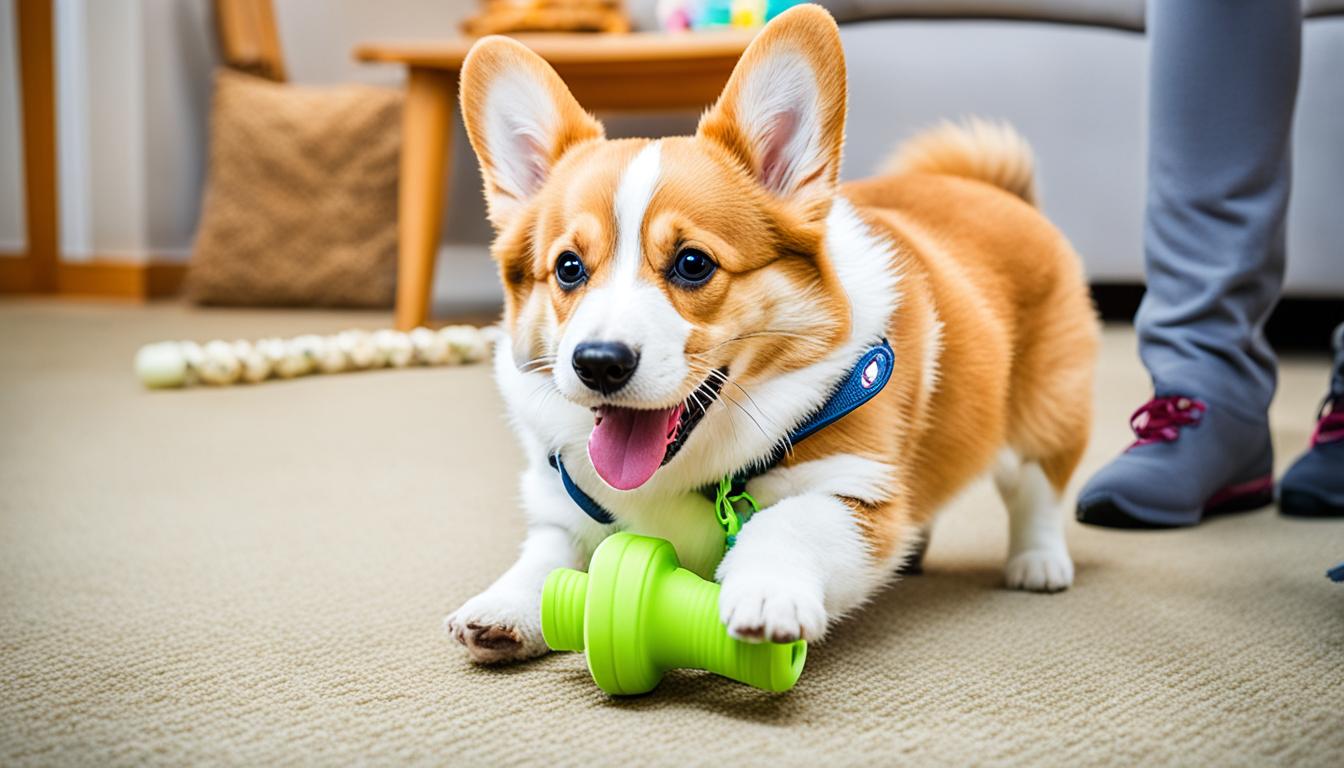

Are you tired of your adorable Corgi puppy constantly nipping at your fingers and toes? Don’t worry, you’re not alone. Corgis are known for their playful nature, but their biting behavior can be frustrating for owners. However, there are effective methods to teach them bite inhibition, redirect their biting, and create a positive training environment. So, how can you stop your Corgi puppy’s biting?
In this article, we will provide 10 valuable tips to help you tackle your Corgi puppy’s biting habit. From bite inhibition training to providing appropriate chew toys, we will guide you through the process of raising a well-behaved puppy. Say goodbye to those painful nips and hello to a harmonious relationship with your furry friend!
Key Takeaways:
- Teach your Corgi puppy bite inhibition to control the force of their bites.
- Establish clear boundaries and teach your puppy that biting during playtime means “game over.”
- Provide your puppy with appropriate chew toys to redirect their biting behavior.
- Prevent pouncing on legs and feet by offering a high-value treat as a distraction.
- Use positive reinforcement to reinforce calm and desired behavior.
Teach Your Puppy Bite Inhibition
Teaching bite inhibition is essential for all puppies. It involves training them to control the force of their bites. Puppies naturally nip at each other while playing, and if a bite is too hard, their littermate will yelp as a signal that it hurts. Owners can mimic this behavior by yelping when their puppy bites too hard, teaching them to be more gentle. Consistency is important in teaching bite inhibition.
Understanding Bite Inhibition
Bite inhibition is the ability of a puppy to control the force of its bites. It is a crucial skill for puppies to learn to avoid causing harm to humans and other animals during play or accidental interactions. By teaching bite inhibition, you can ensure that your puppy learns to be more gentle when interacting with others.
Yelping as a Teaching Technique
When your puppy bites too hard during play, you can yelp in a high-pitched tone to mimic the response of a littermate. This signals to your puppy that their bite was too forceful and helps them understand that it causes discomfort. By consistently yelping and stopping play whenever your puppy bites too hard, they will learn to be more careful with their bites.
“Consistency is key when teaching bite inhibition. By providing clear cues and repeating the training process, you can effectively teach your puppy to control the force of their bites.”
In addition to yelping, you can also use other techniques to discourage biting, such as redirecting your puppy’s attention to a chew toy or providing them with appropriate teething toys to alleviate any discomfort. By offering alternative outlets for chewing and play, you can redirect their biting behavior onto more suitable objects.
Positive Reinforcement
Remember to reward your puppy for exhibiting gentle behavior and for responding to your cues during bite inhibition training. Positive reinforcement, such as treats, praise, or a pat on the head, can help reinforce the desired behavior of gentle biting or not biting at all.
| Teaching Bite Inhibition | Benefits |
|---|---|
| Yelping when puppy bites too hard | Teaches puppy to be more gentle |
| Redirecting biting to chew toys | Prevents destructive biting behavior |
| Using positive reinforcement | Encourages desired behavior |
By consistently implementing these techniques and providing a structured and positive training environment, you can effectively teach your puppy bite inhibition. Remember, patience and consistency are key in helping your puppy learn and grow into a well-behaved adult dog.
Teach Your Puppy That Biting Means “Game Over”
During playtime, it is crucial to establish that biting is not acceptable behavior for your puppy. By teaching them that biting leads to the end of play and no interaction, you can effectively discourage puppy biting. If your puppy bites you, stop the play immediately and withdraw your attention. This sends a clear message that biting results in the termination of the fun activity. Consistency is key in reinforcing this message so that your puppy learns not to bite during play.
Redirecting Puppy Biting Behavior
Redirecting your puppy’s biting behavior is another important aspect of puppy training. Instead of biting you, your puppy should learn to chew on appropriate toys. When your puppy bites, offer them a chew toy instead. This teaches them what is acceptable to bite and redirects their biting behavior. By consistently providing them with alternative items to chew on, such as durable chew toys or bones, you can help them develop constructive chewing habits and mitigate the urge to bite people.
It is essential to remember that redirecting biting behavior requires patience and repetition. Your puppy may not immediately understand that toys are the preferred choice for biting. Reinforce this behavior by praising and rewarding your puppy when they chew on appropriate toys. This positive reinforcement will encourage them to continue using toys for chewing instead of resorting to biting.
Create a Positive Training Environment
Establishing a positive training environment is vital when teaching your puppy to stop biting. Avoid using physical punishment or responding with anger or frustration when your puppy bites. Instead, focus on using positive reinforcement techniques and maintaining a calm demeanor. By remaining calm and patient, you can create a supportive environment that fosters learning and encourages desired behaviors.
Remember, your puppy is learning and needs guidance to understand what is expected. Redirecting your puppy’s biting behavior and reinforcing good behavior are key components of creating a harmonious bond with your furry friend.
Next, we will explore the importance of providing your puppy with appropriate chew toys to help redirect their biting behavior.
| Techniques to Stop Puppy Biting | Pros | Cons |
|---|---|---|
| Stop play immediately and withdraw attention | – Effectively communicates that biting leads to the end of play – Teaches puppy appropriate behavior – Supports positive reinforcement training |
– May require multiple repetitions to reinforce the message – Requires consistency and patience |
| Redirect biting behavior to chew toys | – Helps puppy understand what is acceptable to chew – Provides an outlet for their chewing needs – Encourages positive chewing habits – Reinforces the use of toys instead of biting |
– May take time for the puppy to understand toy preference – Requires ongoing supervision to ensure safety with toys |
Give Your Puppy an Alternative Item to Chew
Providing your puppy with appropriate chew toys is essential in redirecting their biting behavior. When your puppy tries to bite you, offer them a toy instead to substitute toys for hands. This teaches them what is acceptable to bite and helps them understand that chewing on toys is more appropriate than chewing on people.
By consistently providing your puppy with alternative items to chew on, you can redirect their biting behavior and encourage them to focus their chewing instincts on appropriate objects. This not only protects your hands and clothing from puppy teeth but also helps promote good dental health for your furry friend.
There are various puppy chew toys available in the market that are designed to withstand teething and chewing puppies. Look for toys made of durable materials, such as rubber or nylon, that can withstand your puppy’s sharp teeth. Your puppy will enjoy the texture and provide them with a satisfying chewing experience.

Benefits of Providing Chew Toys for Your Puppy:
- Prevents unwanted chewing on furniture, shoes, or household items
- Helps soothe teething discomfort
- Mental stimulation and entertainment
- Reduces anxiety and boredom
- Promotes healthy teeth and gums
When selecting chew toys for your puppy, ensure that they are safe and appropriate for their age and size. Avoid toys that are too small, as they can pose a choking hazard, and opt for toys that are designed specifically for puppies. It’s also a good idea to rotate your puppy’s chew toys regularly to keep them engaged and prevent them from getting bored with the same toys.
| Type of Chew Toy | Material | Description |
|---|---|---|
| Rubber Chew Toys | Durable rubber | Provide a satisfying texture and can withstand heavy chewing |
| Plush Toys | Soft fabric | Great for gentle chewing and cuddling, but make sure they are reinforced and don’t have any small parts |
| Tug Toys | Durable ropes or fabrics | Encourage interactive play and satisfy your puppy’s natural instinct to tug and pull |
| Treat Dispensing Toys | Durable plastic or rubber | Provide mental stimulation and reward your puppy for playing with a tasty treat |
Remember, while chew toys are a great way to redirect your puppy’s biting behavior, supervision is still important. Monitor your puppy during playtime to ensure they are not damaging the toy or ingesting any small parts. If you notice any signs of wear or damage, replace the toy promptly to avoid any potential hazards. With patience and consistency, your puppy will learn to associate chewing with their toys, making them less likely to bite on inappropriate objects or hands.
Prevent the Pounce
Puppies have a natural inclination to pounce on legs and feet as they walk. This behavior can be problematic, as it may result in nipping and discomfort for both the puppy and the owner. To prevent your puppy from pouncing, it’s important to redirect their attention and provide them with an alternative focus.
One effective method is to hold a high-value treat next to your leg while walking. This will encourage your puppy to walk nicely alongside you and focus on the treat instead of nipping at your feet and legs. By consistently reinforcing this behavior, your puppy will learn to associate walking calmly by your side with a rewarding experience.

This gentle redirection technique helps prevent puppy pouncing and redirects their attention to positive behavior. Additionally, it enhances the bond between you and your furry friend, fostering a relationship based on trust and mutual understanding.
Benefits of Redirecting Puppy Pouncing:
- Reduces potential injury from puppy nipping
- Promotes calm and controlled walking
- Strengthens the bond between puppy and owner
- Encourages positive reinforcement and reward-based training
Important Considerations:
Consistency is key when redirecting puppy pouncing behavior. It’s essential to practice this technique during every walk to ensure your puppy understands the expected behavior. Additionally, always use positive reinforcement and rewards to create a positive association with walking calmly by your side.
Put Them in a Time-Out
Sometimes, puppies can become overexcited and continue to bite despite redirection. In these cases, it’s important to create a calm space for your puppy to help them calm down and prevent further biting.
One effective technique is to gently put your puppy in their crate or a designated quiet area. This gives them a chance to relax and helps reduce their overexcitement. However, it’s essential to create a positive association with the crate and avoid using it as a form of punishment.
By giving your puppy a time-out in their crate, you provide them with a safe and calm space where they can settle down and regain their composure. This not only helps prevent them from biting further but also teaches them to associate the crate with a place of relaxation.
Remember to always make the crate comfortable by adding cozy bedding and a few favorite toys. This creates a pleasant environment that your puppy will enjoy spending time in. Additionally, make sure to use positive reinforcement by giving them praise and treats when they willingly enter their crate.
Using time-outs as a tool for calming down a biting puppy is an effective method that helps provide structure and boundaries. However, be sure to use this technique in conjunction with other training methods such as redirecting biting behavior and offering alternative items to chew.
Overall, time-outs are a valuable tool in your training toolbox to help manage and redirect your puppy’s biting behavior. By creating a calm space for your puppy to relax and teaching them appropriate behavior, you’ll be on the path to raising a well-behaved and happy puppy.

| Pros of using Time-Outs | Cons of using Time-Outs |
|---|---|
|
|
Offer Quiet Time or a Potty Break
Sometimes, biting can be a sign that your puppy is tired or needs a potty break. It’s important to understand your puppy’s needs and provide them with the necessary rest and bathroom breaks to prevent discomfort and excessive biting.
Puppy nap time is essential to help your little one relax and recharge. Create a quiet space for your puppy, such as a cozy crate or a designated area with a comfortable bed. This allows your puppy to have a peaceful and uninterrupted nap, reducing their biting behavior.
Establishing regular puppy rest periods throughout the day is vital for preventing overstimulation. Just like young children, puppies can easily become exhausted if they don’t have enough downtime. By incorporating planned rest periods, you can prevent your puppy from becoming overtired, which can contribute to increased biting.
In addition to providing quiet time, potty breaks are crucial to ensure your puppy’s comfort. When puppies need to relieve themselves, they may become restless or anxious, leading to biting as a way to get your attention. Take your puppy outside regularly, especially after meals, naps, or play sessions, to give them an opportunity to go potty. This not only prevents accidents but also helps alleviate any discomfort and reduces the likelihood of biting.

Remember to keep a consistent puppy sleep schedule to establish a routine. Puppies thrive on predictability, and having a structured sleep schedule can help regulate their energy levels and prevent them from becoming overly bitey. Create a schedule that includes regular nap times and adequate overnight sleep to ensure your puppy is well-rested and less likely to engage in excessive biting behavior.
Help Use Up Some Energy
Puppies are full of energy and playfulness, and sometimes they may resort to biting as a way to release that excess energy. To curb their biting behavior, it is important to engage in active play with your puppy, allowing them to burn off their energy in a positive way.
One way to help your puppy burn off energy is by running in the yard with them. This not only provides a great opportunity for exercise but also allows your puppy to explore their surroundings, stimulating their senses and keeping them mentally engaged.
Another fun activity to tire out your puppy is playing fetch. Throw a ball or toy and encourage your puppy to retrieve it. This not only provides physical exercise but also helps them learn to focus and follow commands, such as “fetch” and “drop it”.
Remember to provide breaks and water during playtime to ensure your puppy stays hydrated and doesn’t overexert themselves.
By engaging in active play and providing outlets for your puppy’s energy, you can help reduce their biting behavior and foster a happy and tired pup.
Pro Tip:
When playing with your puppy, keep their safety in mind. Avoid rough play that may encourage biting or aggressive behavior. Instead, focus on interactive and mentally stimulating activities that promote bonding and positive reinforcement.
Reinforce Behaviors You Desire
Positive reinforcement is a fundamental aspect of effective puppy training. By using rewards and praise, you can encourage and reinforce the behaviors you desire in your puppy. When your puppy exhibits calm and desired behavior, such as sitting quietly or walking by your side, it is important to provide immediate positive reinforcement.
Reward your puppy for good behavior using treats, verbal praise, or a gentle pat on the head. This not only communicates to your puppy that their actions are appreciated but also motivates them to continue behaving in that manner. Be consistent in your rewards, offering them each time your puppy demonstrates the desired behavior.
“Positive reinforcement is a highly effective technique in puppy training. By rewarding your puppy for good behavior, you build a strong bond and promote their understanding of desired actions.”
Reinforce calm behavior by praising and rewarding your puppy when they display relaxed and composed actions. This can include instances where they patiently wait for their food or peacefully rest in their designated spot. By acknowledging their calmness, you are encouraging them to remain serene and composed in various situations.
Remember, consistency is key in reinforcing behaviors. Be patient and persistent in your positive reinforcement efforts, and soon your puppy will understand what is expected of them and strive to meet your expectations.
Example of Reinforcement Techniques:
Here are some specific examples of how you can reinforce behaviors you desire in your puppy:
- When your puppy sits on command, immediately reward them with a treat and verbal praise.
- If your puppy remains calm and quiet during grooming sessions, provide them with attention and a gentle pat on the head.
- When your puppy walks politely on a leash without pulling, offer verbal encouragement and a small treat.
Incorporating positive reinforcement into your training routine will create a positive and enjoyable experience for both you and your puppy. Remember to be patient, consistent, and reward good behavior to help your puppy become a well-behaved and happy companion.
| Behavior | Reinforcement Technique |
|---|---|
| Sitting on command | Immediate reward with a treat and verbal praise |
| Remaining calm during grooming sessions | Providing attention and a gentle pat on the head |
| Walking politely on a leash | Verbal encouragement and a small treat |
By utilizing positive reinforcement and consistently rewarding your puppy for good behavior, you can establish a strong foundation for their training and create a lasting bond based on trust and respect.
Never Hit Your Dog
When it comes to dog training, it is crucial to avoid physical punishment and opt for punishment-free and positive reinforcement training instead. Punishing your dog through physical means, such as hitting, can have serious negative consequences.
Physical punishment can lead to fear and anxiety in dogs, causing them to become defensive or aggressive. It damages the trust and bond between you and your furry companion, making it difficult to establish a positive training relationship. Punishment can also escalate behavioral issues rather than resolve them.
“Physical punishment can lead to fear and aggression in dogs, damaging the trust and bond between you and your furry companion.”
Instead of using physical force, focus on positive reinforcement training. This approach involves rewarding desired behaviors and ignoring or redirecting unwanted behaviors. By using treats, praise, and play as rewards, you can motivate and encourage your dog to repeat good behavior.
Positive reinforcement training creates a cooperative and enjoyable learning environment for both you and your dog. It fosters mutual respect, trust, and understanding. Through repetition and consistency, your dog will learn to associate desired behaviors with positive rewards, making training more effective and enjoyable.
Benefits of Positive Reinforcement Training
The advantages of positive reinforcement training are numerous. Here are some key benefits:
- Builds a strong bond between you and your dog
- Promotes obedience and desirable behaviors
- Reduces fear, anxiety, and aggression
- Enhances communication and understanding
- Creates a positive and enjoyable training experience
Choosing the Right Training Methods
When it comes to training your dog, it’s important to choose methods that prioritize their well-being and emotional state. Punishment-free training methods, such as positive reinforcement, are scientifically proven to be effective and humane.
Remember, your dog looks to you for guidance and support. By emphasizing positive reinforcement and avoiding physical punishment, you can create a happy, well-behaved, and confident companion.
Expert Advice
According to renowned dog trainer, Victoria Stilwell:
“Punishment is not only ineffective but can also cause behavior problems to escalate.”
“Positive reinforcement is the most powerful tool we have in dog training and behavior modification.”
Comparison of Training Methods
| Training Method | Advantages | Disadvantages |
|---|---|---|
| Positive Reinforcement |
|
|
| Physical Punishment |
|
|
Conclusion
Raising a well-behaved puppy requires patience, consistency, and positive reinforcement. By implementing effective methods to stop puppy biting, such as teaching bite inhibition and redirecting biting behavior, you can shape your corgi puppy’s behavior and create a positive training environment. Providing appropriate chew toys and engaging in active play can also help channel their energy and prevent excessive biting.
Remember, creating a positive training environment is crucial in raising a well-behaved puppy. Use positive reinforcement techniques to reinforce desired behaviors and avoid physical punishment. With time and effort, you can effectively reduce and eventually eliminate your corgi puppy’s biting habits.
If you encounter challenges along the way, don’t hesitate to seek professional help. Trainers and behaviorists can provide expert guidance tailored to your puppy’s needs. Stay consistent, remain patient, and enjoy the journey of raising a happy and obedient furry companion.
FAQ
How can I teach my puppy bite inhibition?
What should I do if my puppy bites me during playtime?
How can I redirect my puppy’s biting behavior?
How can I prevent my puppy from pouncing on legs and feet?
What should I do if my puppy continues to bite despite redirection?
Should I provide my puppy with quiet time or a potty break if they’re biting?
How can I help my puppy burn off excess energy and reduce biting?
Is positive reinforcement effective in training my puppy?
Is physical punishment a good training method for my puppy?
How can I stop my corgi puppy from biting?
Source Links
- https://willothecorgi.com/blog/how-to-teach-your-corgi-puppy-not-to-bite
- https://www.akc.org/expert-advice/training/stop-puppy-biting/
- https://stumpsandrumps.com/corgi-puppy-nipping/

Carlos is the passionate founder and primary author behind “CorgisCorner.com,” a website dedicated to all things related to the beloved Corgi breed. Born and raised in a small town known for its strong sense of community and love for animals, Carlos developed a deep affection for Corgis from a young age. This love was sparked by his childhood companion, a spirited and loyal Corgi named Toby, who was a constant source of joy and friendship.