

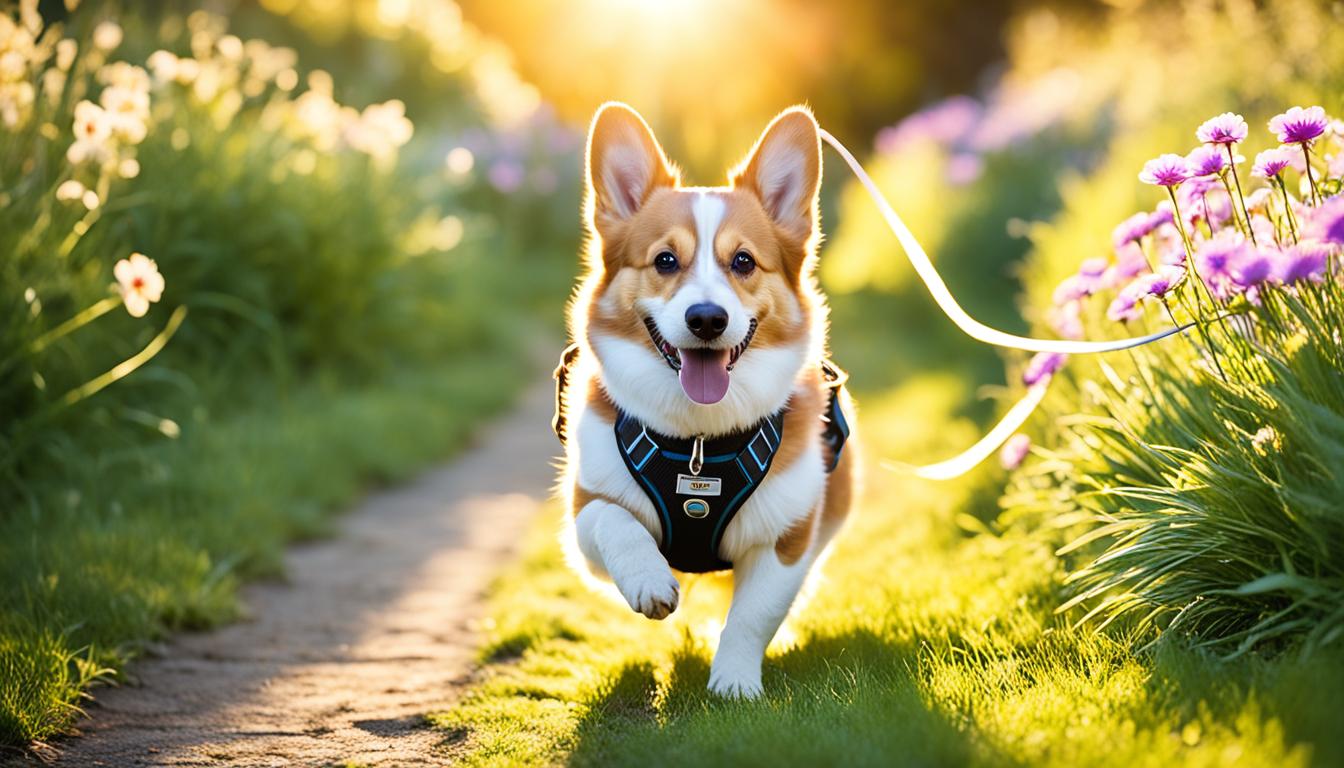

Walking your Corgi should be fun. But if they’re not trained, it can turn into a struggle. Imagine you’re walking with your Corgi, Sparky, and he sees a squirrel. Suddenly, he pulls hard on the leash. You try to keep control as others watch.
But don’t worry! With some good methods and patience, you can teach your Corgi to walk nicely on a leash. This will make walks enjoyable for you both.
Sarah had trouble walking her Corgi, Max, too. She was determined to have calm walks. So, she worked hard to train Max to be good on his leash. She figured out a step-by-step way to make Max behave better on walks.
Sarah wants to share her successful tricks with you. By following her 7 steps, you’ll become great at leash training. Then, you can happily explore with your Corgi.
Key Takeaways:
- Leash training is necessary for safe and fun walks with your Corgi.
- Being patient and consistent is important to teach your Corgi polite walking.
- Start training with the right gear and a signal that rewards good behavior.
- Teach your Corgi to pay attention and look at you to stay focused.
- Train by walking backwards first to stop them from pulling.
Introduce Walking Equipment and Reinforcement Marker
Starting leash training with your Corgi begins with the right gear. Choose a comfortable collar or harness and a good leash. A harness is best for Corgis to avoid neck strain. It spreads pressure evenly across their bodies.
Let your Corgi get used to their gear at home first. This should be in a calm place. It’s important they don’t feel overwhelmed while getting used to it. Also, make sure their collar or harness fits just right. This will keep them comfy and secure on walks.
Walking Equipment for Dogs:
Good walking gear is key to teaching your Corgi leash manners. It keeps them safe and helps manage their behavior on walks. Pick equipment that’s strong and right for your dog’s size and walking habits.
It’s also important to use a reinforcement marker in training. This could be a clicker or a specific word. It tells your Corgi they did something right. Linking this marker with rewards like praise or treats makes training clearer and more effective for them.
Reinforcement Marker in Dog Training:
A reinforcement marker is a big help in dog training. It’s a way to signal your dog they’ve done well, making commands clearer to them. This helps Corgis understand what we want, strengthening our communication and their training.
Getting your Corgi used to their walking gear and using a reinforcement marker are crucial first steps. They help your dog feel comfortable and understand training better. With these basics, your Corgi is ready to learn good leash habits.
Gain Your Corgi’s Attention and Eye Contact
To make leash training work for your Corgi, getting their attention and eye contact is crucial. This helps guide them safely and pleasantly on walks.
Rewarding your Corgi for eye contact is a great way to grab their attention. When they look at you, reward them. This makes them want to make eye contact more.
Remember, consistency is key when training your Corgi. Practice this technique during dedicated training sessions and incorporate it into your daily interactions.
Adding a verbal cue, like “look” or “eyes”, helps too. Use the cue consistently. Then, your Corgi will start to connect the word with looking at you.
Over time, you can wait longer before rewarding eye contact. This helps your Corgi focus better, which is important for leash training.
Why is Eye Contact Important?
“Eye contact is a powerful way to communicate with your Corgi. It creates a connection, builds trust, and shows your leadership. Getting your Corgi’s eye contact makes guiding them easier, especially during walks and when dealing with distractions.”
Make sure your Corgi is fully paying attention before starting training. If they’re focused on you, they’ll follow your commands better, making training more effective.

Remember, building a strong connection and bond with your Corgi is essential for successful leash training.
Start with Backward Steps
Now your Corgi knows the walking gear and how to follow cues. It’s time to start walking. To stop pulling, try walking backward.
Take some steps back and have your Corgi follow you. Do this using a calm and positive voice. This makes your dog pay attention to you instead of pulling ahead.
Give treats or praise when your Corgi stays by you during these steps. Rewards should come right after they do well.
When your Corgi gets good at this, do more steps before going forward. Mix backward and forward walking, rewarding them for staying close.
This way, your Corgi learns to walk nicely by your side. Backward steps are great for teaching them focus and patience.
“Training is not about dominating your dog but rather building a strong bond based on trust and cooperation.”
Benefits of Starting with Backward Steps
Backward steps in leash training are pretty beneficial:
- They teach your Corgi to stick by you, not pull on the leash.
- Your dog learns to watch and follow your lead.
- This method promotes walking with a loose leash.
- It’s a good start for more advanced training.
Be patient and keep at it. Every Corgi learns at their pace. Celebrate their progress and keep encouraging them.
| Backward Steps Technique Overview | Benefits |
|---|---|
| Take a few steps backward and encourage your Corgi to follow you. | Helps your Corgi understand the importance of staying by your side. |
| Reward your Corgi for following you and staying close. | Encourages attention and focus during walks. |
| Gradually increase the number of backward steps and alternate with forward steps. | Reinforces proper leash walking and discourages pulling behaviors. |

Teach Recall on Leash
Training your Corgi to come when called on a leash is key. It stops pulling and makes walks safer. Start by making a fun game out of coming to you when called. Remember, using treats and praise works wonders to encourage them.
Step 1: Get Your Corgi’s Attention
First, get your Corgi to look at you. Show them a treat, say their name, and wait for eye contact. Then give them the treat. Do this many times until they always look when you say their name.
Step 2: Introduce the Cue “Come”
When your Corgi always makes eye contact, start saying “come”. Use a happy tone and step back. When they move to you, give lots of praise and treats. Keep doing this, making the gap between you bigger over time.
Step 3: Practice in Different Environments
Try recall training in many places for your Corgi to listen anywhere. Begin in quiet spots like your yard. Then, try it in busier places like parks.
Always use a leash for safety during training. If they don’t come right away, don’t pull the leash. Instead, sound excited and offer rewards to motivate them.
“Recall training needs patience and regular practice. Start easy and slowly up the challenge for success.”
Training your Corgi to come with a leash leads to easier walks and a strong bond. Keep sessions enjoyable and upbeat, and they’ll love coming when called.
| Common Mistakes to Avoid | Tips for Success |
|---|---|
|
|
Transition to Outdoor Walks
Once your Corgi gets the hang of leash training inside, it’s ready for the outside world. This is important to make sure they can walk nicely outdoors. They also need to deal with different things that distract them.
Begin outdoors slowly. Start with short walks in places like your backyard or garage. These places are good for your Corgi to get used to the leash without too much going on.
Focus on the good moments when they walk well on the leash outside. Give your Corgi treats or kind words when they do this. This shows them that walking nicely on a leash outside is good.
Don’t forget to use times when you stop walking too. Get their attention by calling their name or saying “look.” Give them treats or praise when they look at you and pay attention.
Be patient with your Corgi as they learn to handle the outdoors. New places bring new challenges and distractions. Stay positive and keep encouraging them with rewards when they do well.
Now, let’s see a table summarizing the key points for transitioning to outdoor leash training:
| Transition to Outdoor Walks – Summary |
|---|
| Start with short walks in low-stimulus areas |
| Reinforce moments of nice leash walking while in motion |
| Reward attention when you stop during walks |
| Be patient and consistent with your training approach |
Remember, take your time and build on what your Corgi learns. With patience and practice, they will get better at walking nicely outside.

Gradually Increase Distance and Difficulty
After your Corgi gets good at walking on a leash, make your walks longer and tougher. Doing this helps your pet get stronger and get used to new places. It also keeps good walking habits strong.
Begin with short walks in places your Corgi knows well. This could be around your block or a park close by. Use this time to keep practicing your leash skills.
As your Corgi gets better at walking nicely on a leash, make your walks longer. You can do this by adding more blocks or trying new paths in areas you know. This method gives your Corgi a challenge but doesn’t scare them.
Always cheer on good walking habits during your walks. Keep using positive ways to say well done, like kind words, snacks, or a clicker. This rewards your Corgi for calm walking and staying close.
To make leash training harder, add some distractions on your walks. This might include other people, dogs, or animals like squirrels or birds. It’s a good way for your Corgi to learn to stay focused when there are distractions.
Each Corgi is different, so their progress can vary. Some might quickly get used to longer and harder walks. Others might need more time and patience. Watch how your Corgi acts and go at a pace that works for them.
Building up distance and difficulty slowly is key to better leash walking. It makes sure your walks are fun and safe in different places. It’s a great way for you and your Corgi to see the world together.
Troubleshooting Leash Training Issues
Leash training your Corgi can bring challenges. You may face pulling or lunging as your pet discovers new places and distractions. But, with the right approach, you can solve these problems. This ensures a good leash training journey.
Dealing with Pulling
Many dog owners struggle with their dogs pulling on the leash. An effective way to stop this is the “a tree” method. If your Corgi pulls, stop walking and stand still like a tree. This shows that pulling won’t help them move forward. Once your Corgi eases up, you can start walking again. With steady use of this technique, your Corgi will learn to walk nicely without pulling.
Dealing with Lunging
Lunging at people or other animals is tough to handle. The best strategy is to redirect your Corgi’s focus. If they start to lunge, quickly get their attention with a treat or toy. This shift prevents lunging. Being consistent and using positive rewards help teach your Corgi to stay calm on walks.
Dealing with Barking
Barking is another issue in leash training. It’s natural for dogs to bark, but too much can be a problem. A good way to reduce barking is by keeping your Corgi busy. Try activities that tire them out mentally and physically before walks. This may include playing with puzzle toys or doing obedience training. A tired dog tends to bark less and focus more during walks.
To fix common leash training issues, use these tips. Stay patient, consistent, and always reinforce good behavior. With effort, you and your Corgi will have peaceful and fun walks.

Conclusion
Congratulations on finishing leash training your Corgi! You’ve learned a lot from the seven steps in this guide. Now, you know how to train your furry friend well. Use what you’ve learned to keep your Corgi polite on walks.
Sticking to it and being patient are key. Keep rewarding good behavior and work hard on training. This way, you’ll build great habits in your Corgi. Enjoy each walk as a chance to grow closer to your dog.
Leash training is great for your Corgi’s happiness. With time, your Corgi will walk nicely, making outings fun for you both. You’re ready now for great adventures together with what you’ve learned!
FAQ
Why is leash training important for Corgis?
How do I introduce walking equipment and a reinforcement marker?
How can I gain my Corgi’s attention and eye contact?
What is the starting point for leash training?
How do I teach recall on a leash?
How can I transition my Corgi to outdoor walks?
How do I gradually increase the distance and difficulty of walks?
How do I troubleshoot leash training issues?
What is the importance of leash training for Corgis?
Source Links
- https://www.dailypaws.com/dogs-puppies/dog-training/basic/how-to-teach-a-puppy-to-walk-on-leash
- https://www.akc.org/expert-advice/training/teach-puppy-walk-leash/
- https://www.reddit.com/r/corgi/comments/hm8i3p/tips_on_walking_a_7_monthold_corgi/

Carlos is the passionate founder and primary author behind “CorgisCorner.com,” a website dedicated to all things related to the beloved Corgi breed. Born and raised in a small town known for its strong sense of community and love for animals, Carlos developed a deep affection for Corgis from a young age. This love was sparked by his childhood companion, a spirited and loyal Corgi named Toby, who was a constant source of joy and friendship.