

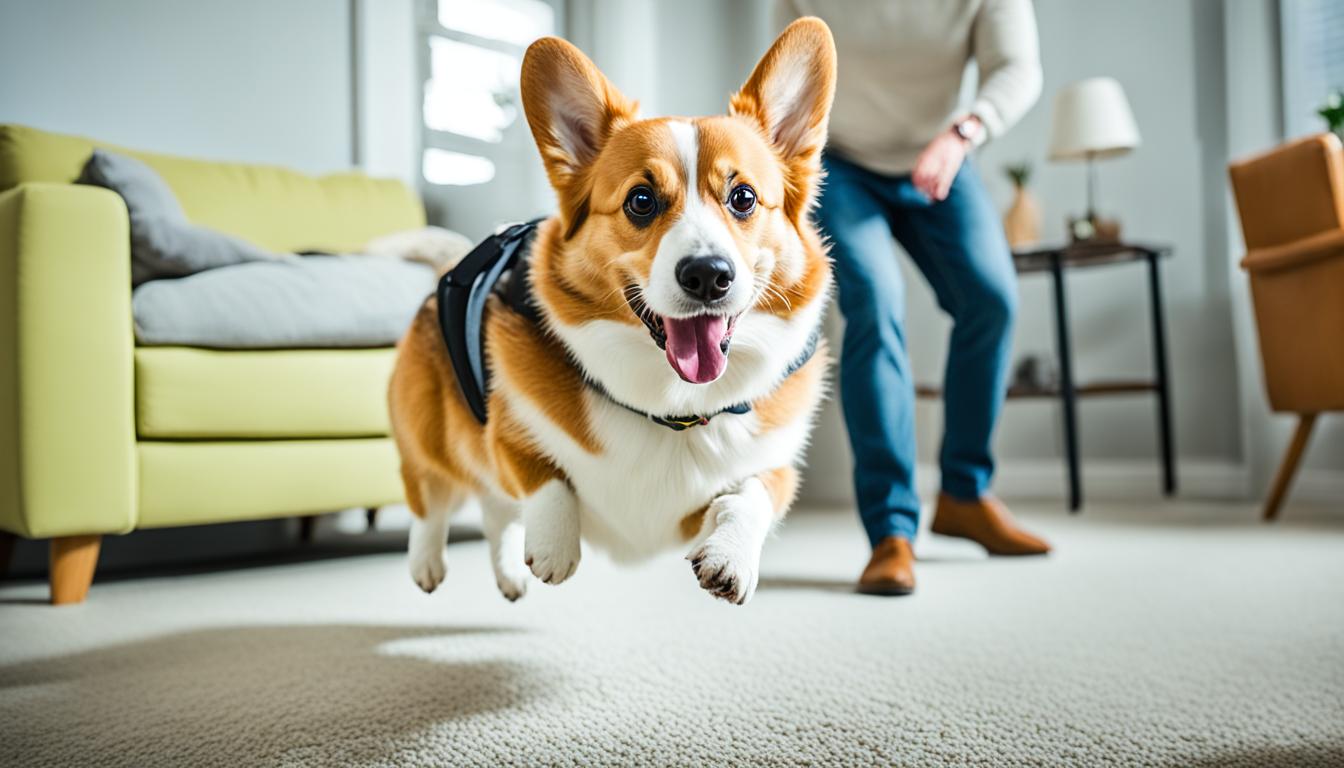

Do you own a Corgi or are considering getting one? Have you ever wondered why Corgis exhibit certain behaviors that can sometimes be challenging to handle? Understanding typical Corgi behavior is key to cultivating a harmonious relationship with these adorable pups. In this article, we will unveil the common behavior issues Corgis face and provide valuable insights to help you solve them.
Key Takeaways:
- Understand the typical behavior issues faced by Corgis
- Learn how to address and solve these behavior problems
- Discover the unique personality traits of Corgis
- Find effective training methods for Corgis
- Explore the impact of Corgi behavior on their relationship with children
Corgi Personality
Corgis, also known as Pembroke Welsh Corgis, possess a unique and delightful personality. Originating as working dogs, they have retained their herding instincts, which greatly influence their behavior.
These adorable troublemakers are eager to please and thrive on attention and involvement in family activities. Corgis love being the center of attention! They are cheerful, playful, and have an incredible sense of humor that brings joy to any household.
Corgis are independent and strong-willed, showcasing their intuitive nature. Without proper training and guidance, they may even attempt to train their owners! Establishing clear roles within the family is crucial to maintaining a loving and harmonious relationship with these spirited canines.
To truly understand and appreciate the distinct Corgi personality, it is important to recognize their need for mental and physical stimulation. Corgis are not only intelligent but also mischievous. They require proper attention and engagement in activities to channel their energy and prevent any playful mischief.
“Corgis are not only adorable companions but also possess a remarkable personality that keeps their owners entertained and on their toes!”
The Eager Pleasers
Corgis are known for their eagerness to please. They are highly trainable and thrive on learning new tasks and tricks. Their intelligence combined with their desire to impress their owners makes them quick learners and ideal participants in various dog sports, including agility training.
Independent and Strong-Willed
Corgis exhibit independent and strong-willed traits. While their independence can be endearing, it also requires a firm and confident owner who can provide consistent training and positive reinforcement. Setting clear boundaries and rules helps establish a healthy and respectful relationship with your Corgi.
A Mischievous Sense of Humor
With their mischievous personality and a great sense of humor, Corgis bring endless entertainment to their families. Whether it’s playfully stealing socks or engaging in silly antics, Corgis have a knack for finding joy in the simplest of things.
| Personality Traits | Description |
|---|---|
| Eager to Please | Corgis are highly trainable, enjoying the feeling of accomplishment when they successfully complete a task or receive praise from their owners. |
| Independent | Corgis have a strong independent streak, which can be both endearing and challenging at times. They value their autonomy and may need extra guidance in establishing their role within the family. |
| Strong-Willed | Corgis possess a determined and self-assured nature, requiring a firm and confident owner who can establish clear expectations and boundaries. |
Activity Level
When it comes to activity level, Corgis are known for their high energy. These dogs are always ready for an adventure and require a moderate amount of exercise to stay healthy and happy. While they may not need lengthy play sessions or hours of running, daily walks and regular playtime are essential to help them burn off energy.
Corgis thrive on activities that engage both their minds and bodies. They love mental stimulation as much as physical exercise. Keeping them mentally stimulated helps prevent boredom and ensures they remain happy and content.
Corgis are adaptable to different living environments, including apartments or condos, as long as they have access to outdoor play areas. They enjoy exploring their surroundings and will make the most of any space they have available.
Physical Exercise:
Moderate exercise, such as daily walks, is necessary to keep Corgis in good physical shape. These walks give them a chance to stretch their legs and burn off any excess energy. Engaging them in outdoor activities like fetch or short runs can also help keep them fit and active.
Mental Stimulation:
Corgis have a sharp intellect and love to be mentally challenged. They enjoy tasks that make them think and solve problems. Engaging their minds through interactive toys, puzzle games, and training exercises can fulfill their need for mental stimulation.
Interactive toys and puzzle games help keep Corgis mentally stimulated, preventing boredom and destructive behaviors associated with a lack of mental exercise.

Providing Corgis with both physical exercise and mental stimulation is crucial for their overall well-being. It helps prevent behavioral issues that can arise from boredom, such as excessive barking or destructive chewing. By incorporating regular exercise and engaging activities into their routine, owners can ensure that Corgis lead happy and fulfilling lives.
Training
When it comes to training Corgis, their intelligence and eagerness to please make the process relatively smooth. However, their independent and stubborn nature can present challenges that require a firm and consistent approach.
Corgis are intelligent dogs that thrive on mental stimulation and learning new tasks and tricks. Training should be an ongoing process throughout their lives to keep their minds engaged and prevent boredom. Consider incorporating agility training into their routine, as Corgis excel in this area and can even participate in competitions.
To effectively train a Corgi, positive reinforcement is key. Rewarding good behavior with treats, praise, or playtime will motivate them to repeat desired actions. It’s important to establish clear boundaries and rules from the beginning to give your Corgi a sense of structure and discipline.
Consistency is essential when training a Corgi. They respond best to training methods that are consistently applied and reinforced. Be patient, persistent, and confident in your training approach, as these qualities will help you establish yourself as the leader and earn your Corgi’s respect and cooperation.
“Training a Corgi requires the right balance of positivity, patience, and assertiveness. By providing clear guidance and sticking to a consistent training routine, you can steer their independent nature in the right direction and foster a well-behaved and obedient companion.”
Preventing Barking and Managing Herding Instincts
One common challenge in Corgi training is managing excessive barking and their natural herding instincts. Corgis are known to be vocal, and without proper training, this behavior can become a nuisance. Using positive reinforcement techniques, such as redirecting their attention and rewarding them when they’re quiet, can be effective in curbing excessive barking.
Due to their herding background, Corgis may display behaviors such as nipping or trying to control the movement of people or other animals. Training can help manage these instincts and teach them appropriate ways to interact with others. Setting boundaries and redirecting their focus onto alternative activities, such as playing with toys or participating in obedience training, can help channel their energy into more appropriate outlets.

Training Methods that Work
When training a Corgi, it’s important to use training methods that align with their intelligent and independent nature. Here are some effective approaches:
- Positive reinforcement: Rewarding good behavior with treats, praise, or play stimulates their desire to please and reinforces positive actions.
- Clicker training: Using a clicker to mark desired behaviors and following it with a reward helps Corgis associate the sound with positive reinforcement.
- Consistency: Consistently applying training techniques and boundaries helps reinforce expectations and ensures they understand the desired behaviors.
Remember, every Corgi is unique and may respond differently to various training methods. It’s important to be patient, observant, and adaptable in your training approach to find what works best for your individual Corgi.
Barking and Separation Anxiety
Corgis, like many other dog breeds, have a tendency to bark. However, without proper training or socialization, Corgis may develop excessive barking habits.
As highly alert dogs, Corgis may react to unfamiliar sounds or people, leading to increased barking. To prevent this behavior, it is essential to train Corgis to trust strangers and other animals from an early age. By providing them with positive experiences and gradual exposure, their alertness can be managed effectively.
In addition to barking, Corgis can also experience separation anxiety when left alone for extended periods of time. This can result in destructive behavior and incessant barking as a way to cope with their anxiety.
To alleviate separation anxiety in Corgis, proper training and desensitization techniques are crucial. Gradually increasing the duration of alone time and providing mental stimulation in the form of puzzle toys or treat dispensers can help keep them occupied and reduce anxiety levels.
It’s important to remember that Corgis are intelligent and highly perceptive dogs. They thrive on mental stimulation and require an outlet for their energy. Engaging them in regular training sessions, providing interactive toys, and incorporating playtime into their daily routine can help curb both barking behavior and separation anxiety.
Remember: A well-trained and properly stimulated Corgi is a happy and content companion.
Corgis and Children
While Corgis can be great companions for children, it is important to understand their herding instinct and provide appropriate supervision. Their innate herding instinct may lead them to nip at young kids in an attempt to control their behavior. Therefore, families with children under five years old should exercise caution when considering a Corgi as a pet.
However, with proper socialization and training, Corgis can form strong bonds with children and be excellent family pets. Introducing Corgis to children at an early age and teaching both parties how to interact safely can help foster a harmonious relationship. It is crucial to supervise interactions between Corgis and children to ensure the safety and well-being of both.
Children can learn valuable lessons about responsibility, empathy, and respect by growing up with Corgis. These intelligent and loyal dogs can become trusted companions and playmates, providing children with long-lasting memories and teaching them valuable life skills.

Corgis can form strong bonds with children and be excellent family pets when properly trained and socialized.
Benefits of Corgis as Family Pets
Corgis possess a variety of qualities that make them well-suited for family life. Their small size and adaptable nature mean that they can thrive in different living environments, including apartments and houses with or without yards. Corgis are known for their playful and cheerful personalities, which can bring joy and laughter to a household.
Furthermore, Corgis’ intelligence and eagerness to please make them highly trainable companions. They can participate in various activities alongside the family, such as obedience training, agility courses, and interactive play sessions. Involving children in the training and care of Corgis can promote a sense of responsibility and shared ownership within the family.
Supervision and Training to Manage Herding Instinct
Corgis’ herding instinct can manifest in nipping or chasing behaviors towards children, especially when they are running or behaving energetically. Though these actions may be instinctual rather than aggressive, it is crucial to teach Corgis appropriate boundaries and redirect their herding instincts towards more suitable activities.
Training Corgis to respond to commands such as “leave it” and “stop” can help manage their herding instincts and prevent nipping incidents. Consistency and positive reinforcement are essential in training Corgis to understand and respect the boundaries set by their families.
“Supervision and proper training are vital to ensure that both Corgis and children enjoy a safe and positive relationship. Teaching children how to interact respectfully with Corgis and providing them with clear guidelines can help prevent any potential misunderstandings or accidents.”
Sample Table – Corgis and Children: Pros and Cons
| Pros | Cons |
|---|---|
| Corgis can form strong bonds with children. | Corgis may nip at young children due to their herding instinct. |
| Children can learn responsibility and empathy by caring for a Corgi. | Families with children under five years old need to exercise caution. |
| Corgis can bring joy and laughter to family life. | Supervision and training are necessary to manage herding behaviors. |
Choosing the Right Breed
When it comes to adding a furry friend to your family, choosing the right breed is crucial. It’s important to consider your lifestyle and living arrangements to ensure that the breed you choose is a good fit.
One breed that often comes up in the conversation is the Corgi. Known for their adorable looks and charming personality, Corgis can make wonderful companions. But before welcoming a Corgi into your home, there are a few lifestyle considerations to keep in mind.
Lifestyle Considerations
Corgis are high-energy dogs that require regular exercise and mental stimulation. They love to be active and participate in various activities. If you lead a busy and active life, a Corgi may be a great choice for you.
- Regular exercise: Corgis need daily walks and playtime to burn off their energy. This can be achieved through activities like fetch, agility training, or long walks in the park.
- Mental stimulation: Corgis are intelligent dogs and thrive when their minds are engaged. Interactive puzzle toys, obedience training, and learning new tricks are excellent ways to keep them mentally stimulated.
Corgi in an Apartment
Living in an apartment or a smaller living space doesn’t necessarily mean that you can’t have a Corgi. With proper exercise and mental stimulation, Corgis can adapt well to apartment living. However, it’s important to provide them with opportunities to release their energy.
Access to outdoor play areas, such as dog parks or nearby open spaces, can provide the exercise and socialization that Corgis need. Creating a routine that includes regular walks and play sessions will help keep them happy and content in an apartment setting.
High-Energy Dogs
Corgis are undoubtedly high-energy dogs. They have a natural inclination for activities and enjoy being on the move. It’s essential for owners to match their energy levels and provide them with ample opportunities for physical and mental stimulation.
“Corgis are like little balls of energy. They are always ready for an adventure and love to participate in activities that challenge them.”
Whether it’s going on a hike, playing a game of frisbee, or teaching them new tricks, incorporating activities that keep Corgis engaged and entertained is crucial.
Is a Corgi the Right Breed for You?
Choosing the right breed is a personal decision that should be based on your lifestyle and preferences. If you lead an active life and have the time and energy to devote to a high-energy dog, a Corgi may be an excellent fit for you.
However, it’s important to be prepared for their energy levels and training needs. Owning a Corgi requires dedication and commitment to providing them with the exercise and mental stimulation they require to thrive.

| Considerations | Corgi in an Apartment | High-Energy Dogs |
|---|---|---|
| Exercise Needs | Regular walks and access to outdoor play areas | Daily exercise and mental stimulation |
| Living Space | Adaptable to apartment living | Adequate space for activities |
| Energy Levels | Can thrive with proper exercise | Requires an active owner to match energy levels |
Dog Ownership and Personal Growth
Owning a dog, especially a Corgi, can be a transformative experience that promotes personal growth. Dogs have a unique way of reflecting their owner’s behavior and leadership skills. They have the ability to teach important qualities such as persistence, assertiveness, and the desire to protect and care for their “pack” or team. A Corgi, with its loyal and intelligent nature, serves as an ideal companion for individuals looking to develop these traits and become better leaders and caretakers in various aspects of life.
When we own a dog, we realize that our actions and choices directly impact their behavior and well-being. Dogs can sense our emotions and respond accordingly, making them incredibly perceptive creatures. If we approach dog ownership with dedication and consistency, our Corgis will reflect these qualities back to us.
Persistence is a key attribute that dog ownership encourages. Dogs, like Corgis, require patience and persistence in training, as well as in overcoming challenges and setbacks. By persistently working towards effective communication and reinforcing desired behaviors, we can shape our dogs into well-behaved and obedient companions.
“A dog is the only thing on earth that loves you more than you love yourself.” – Josh Billings
To successfully raise a Corgi, it is important to exhibit assertiveness. Dogs thrive when they have a strong leader who sets clear boundaries and maintains consistency. Establishing yourself as the pack leader helps to establish a respectful and balanced relationship with your Corgi. By being assertive in your training approach and setting expectations, you are effectively guiding your Corgi to become a well-mannered and obedient member of your family.
Additionally, caring for a Corgi requires a sense of protection and responsibility. Dogs are loyal creatures who look to their owners for safety and security. As owners, it is our duty to protect and provide for our furry companions, ensuring their health and well-being. This sense of protection extends to advocating for our dogs’ needs in different situations, whether it’s at the veterinarian’s office or in social interactions with other dogs and people.
The Benefits of Dog Ownership
Beyond personal growth, owning a Corgi or any dog offers many other benefits. Dogs provide unwavering companionship, unconditional love, and emotional support. They encourage regular exercise and outdoor activities, leading to improved physical health. Dogs also have a positive impact on mental well-being, reducing stress and anxiety levels.
Take the opportunity to appreciate the personal growth that comes with owning a Corgi. Embrace the lessons in persistence, assertiveness, and protection that these loyal companions can teach us. In return, you’ll not only have a well-trained and obedient dog but also a source of unwavering love and endless joy.
Conclusion
Understanding and addressing typical Corgi behavior issues is crucial for maintaining a harmonious relationship between Corgis and their owners. By investing time and effort into training and socialization, as well as providing appropriate mental and physical stimulation, owners can effectively manage behaviors such as excessive barking, herding instincts, and separation anxiety.
Corgis are intelligent, loyal, and adaptable dogs that can thrive in various environments, as long as their needs are met. It is important to train them and understand their unique personality traits to establish a fulfilling and mutually rewarding relationship.
By prioritizing training and the well-being of their furry companions, Corgi owners can ensure a positive and enriching experience for both themselves and their beloved pets. Through understanding Corgi behavior, consistent training, and socialization, owners can forge a strong bond with their Corgis, leading to a lifetime of love and companionship.
FAQ
What are some common Corgi behavior issues?
How can I address Corgi behavior problems?
What is the personality of a Corgi?
How much exercise do Corgis need?
Are Corgis easy to train?
Do Corgis bark a lot?
Can Corgis be left alone without experiencing separation anxiety?
Are Corgis good with children?
Can Corgis adapt to apartment living?
How can owning a Corgi promote personal growth?
What is the key to understanding and addressing Corgi behavior issues?
Source Links
- https://canna-pet.com/articles/corgi-personality/
- https://cecilia-j-sanders.medium.com/how-choosing-a-corgi-as-my-first-dog-has-helped-my-career-as-a-scrum-master-61764a3bf32d
- https://www.countryliving.com/uk/wildlife/pets/news/a2373/how-to-fix-dogs-bad-behaviour/

Carlos is the passionate founder and primary author behind “CorgisCorner.com,” a website dedicated to all things related to the beloved Corgi breed. Born and raised in a small town known for its strong sense of community and love for animals, Carlos developed a deep affection for Corgis from a young age. This love was sparked by his childhood companion, a spirited and loyal Corgi named Toby, who was a constant source of joy and friendship.