

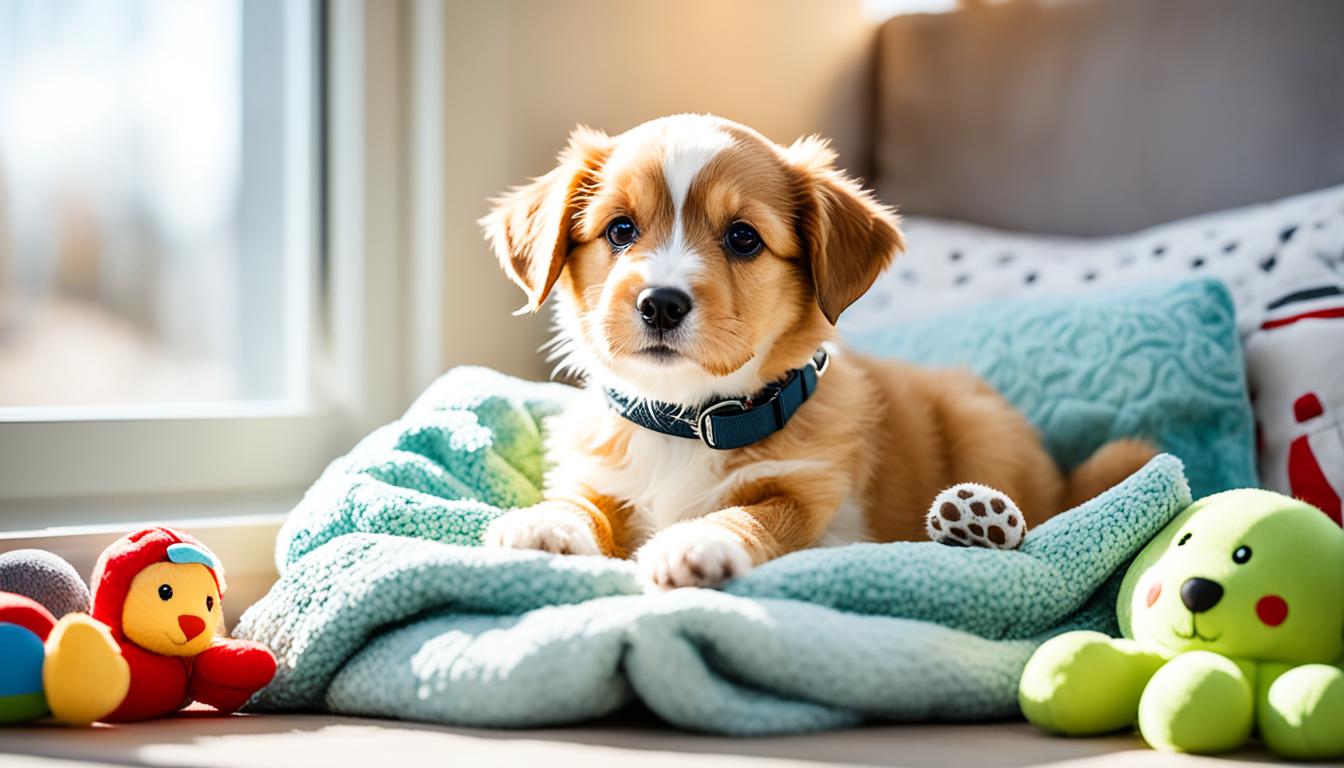

Bringing home a new puppy is an exciting and joyful experience. However, it’s not uncommon for Welsh pups to struggle with separation anxiety when they’re separated from their mother and littermates. So, how can you soothe separation anxiety in your Welsh pup and help them thrive in their new home?
Understanding your puppy’s behavior and providing them with the right support is key. In this article, we’ll explore practical strategies to ease your Welsh pup’s separation anxiety and ensure a smooth transition into their new environment. From creating a secure space to gradually training them to be alone, you’ll discover effective methods to help your pup adjust and thrive.
Key Takeaways:
- Separation anxiety is common in Welsh pups when they are separated from their mother and littermates.
- Waiting until the puppy is at least eight weeks old before bringing them home can help them develop important social skills.
- Providing a calm and consistent environment, establishing a routine, and creating a comfortable space can help ease separation anxiety.
- Gradual training and desensitization techniques can help your puppy become more comfortable with being alone.
- Seeking professional help from an ABTC approved behaviorist can provide tailored guidance for addressing separation anxiety in your Welsh pup.
What To Expect In the Early Days With Your Puppy
In the early days with a new puppy, it is common to experience certain behaviors associated with separation anxiety. These behaviors can include crying when the owner is out of sight, following the owner everywhere, howling or crying in the crate, being frightened by loud noises, and constantly wanting to be held. Although these behaviors are normal, they can be managed with a calm and consistent approach.
To help your puppy adjust, it is important to create a calm and mellow environment in the first few days. Provide plenty of attention and involvement in the household activities to make your puppy feel included and part of the family. Establish a routine for feeding, walks, and potty breaks to give your puppy a sense of predictability and security.
One of the most effective ways to provide comfort to your puppy during the early days is to create a comfortable and secure space for them. Consider placing a crate in your bedroom to reassure your puppy that they are not alone. This can help alleviate separation anxiety and provide a sense of safety for your furry friend.
Additionally, there are time-tested methods to help your puppy settle down at night. You can use a hot water bottle or a ticking clock to simulate the comfort of their mother and siblings. These familiar sensations can help soothe your puppy and make them feel more secure in their new environment.
Image: illustration of a puppy in a crate, portraying the theme of separation anxiety in dogs.
By creating a calm and secure environment, establishing a routine, and providing comforting measures, you can help your puppy overcome separation anxiety in the early days and make their transition into your home smoother and more enjoyable.
Preventing and Treating Separation Anxiety
Taking positive action to prevent or treat separation anxiety in dogs can be helpful for both the dog and the owner. Here are some effective calming techniques for anxious dogs and natural remedies for separation anxiety:
- Provide stimulating activities: When left alone, give your dog long-lasting chews or treat toys that can keep them occupied and mentally engaged. This can help redirect their focus and alleviate anxious behaviors.
- Ensure adequate exercise: Before leaving your dog alone, make sure they have had enough physical exercise. Regular exercise helps reduce anxiety and promotes relaxation.
- Create a calm environment: Close the curtains to minimize external stimuli and create a quiet room for your dog to stay in. Playing soothing background noise, such as calming music or a radio, can also help prevent disturbances and reduce barking.
- Consider Adaptil: Adaptil is a product that releases comforting pheromones, which can help ease anxiety in dogs. It is available in the form of diffusers, sprays, and collars.
- Avoid punishment: If your dog engages in undesirable behavior while left alone, it is important to avoid punishment. Punishment can increase anxiety and worsen the behavior. Instead, focus on positive reinforcement and reward-based training.
By implementing these calming techniques and natural remedies, you can create a soothing environment for your anxious dog and help them overcome separation anxiety.
| Calming Techniques for Anxious Dogs | Natural Remedies for Separation Anxiety |
|---|---|
| Provide stimulating activities | Consider Adaptil |
| Ensure adequate exercise | |
| Create a calm environment | |
| Avoid punishment |

Setting Up a Space for Your Puppy
If you’re dealing with a furry friend that experiences separation anxiety, creating a safe and comfortable space for your puppy when they are left alone can make a significant difference. By setting up a designated area just for them, you can help alleviate their anxiety and promote a sense of security.
Designing the Perfect Space
Start by using stair gates to establish boundaries. This will allow your puppy to see and hear you while still providing them with a little distance. Place a cozy bed and a bowl of fresh water in the designated area so your pup can rest and hydrate comfortably.
To keep their minds engaged, provide them with chew toys specifically designed for mental stimulation. These toys can help divert their attention and keep them occupied, reducing their anxiety.
Additionally, consider using a quiet radio or soothing music to provide background noise and a sense of companionship for your puppy. The gentle tunes can help create a calming environment and make your pup feel less alone.

Introducing Alone Time
Gradual exposure to being left alone is crucial for helping your puppy adjust and feel secure. Start by introducing short periods of alone time behind a closed door while ensuring they still feel safe. Over time, gradually increase the duration of their alone time as they become more comfortable and confident.
Key Tips for Success
- Ensure the designated area is free from any potential hazards or items that may cause anxiety.
- Use positive reinforcement techniques and reward your puppy for calm behavior in their space.
- Always consider your puppy’s comfort, security, and well-being when designing their space.
By creating a secure and inviting space for your puppy, you can help them feel more at ease and mitigate their separation anxiety. Remember, each puppy is unique, so be patient and observe what works best for your anxious Welsh pup.
Gradual Training for Alone Time
Training plays a crucial role in helping your puppy overcome separation anxiety. By using a gradual approach, you can help your anxious Welsh pup become more comfortable being alone and develop confidence in their independence.
Start by designating a specific area where your puppy can stay while you go about your activities within sight and earshot. Provide them with a tasty chew or toy to keep them occupied. This helps them associate being alone with something enjoyable. Gradually increase the time your puppy spends in this designated area, ensuring they remain calm and relaxed throughout the training process.
“The key is to progress at your puppy’s pace and provide positive reinforcement and rewards during training,” advises dog behavior expert, Dr. Emily Watson. “This helps them build a positive association with being alone and reinforces their confidence.”
Once your puppy is comfortable being left alone in a specific area, you can start introducing short periods of separation by leaving the house. Begin with just a few minutes and gradually increase the time as your puppy becomes more at ease with your absence. Remember to always reward them with praise and treats when they demonstrate calm behavior while you’re away.
This gradual training approach helps your puppy gradually acclimate to being alone, reducing their separation anxiety over time. It’s important to be patient and consistent in your training efforts, as every pup is unique and will progress at their own pace.
Benefits of Gradual Training for Alone Time
Gradual training for alone time offers several benefits for anxious Welsh pups:
- Reduced anxiety: By gradually increasing the time spent alone, your puppy learns that being alone is safe and manageable, reducing their anxiety levels.
- Increased confidence: As your puppy successfully adjusts to being alone, their confidence grows, helping them become more independent and self-assured.
- Improved behavior: Training your puppy to be comfortable with alone time can prevent destructive behaviors often associated with separation anxiety, such as excessive barking or chewing.
- Stronger bond: Through positive reinforcement and rewards during training, the bond between you and your puppy strengthens, promoting a sense of security and trust.
Remember to be patient and consistent throughout the training process. Gradual training for alone time can greatly benefit your anxious Welsh pup, helping them develop resilience and confidence while reducing separation anxiety.

Training Progress Tracker
| Training Phase | Duration | Behavioral Progress |
|---|---|---|
| Training in designated area | 10 minutes | Puppy remains calm with chew toy |
| Training in designated area | 30 minutes | Puppy shows increased comfort and relaxation |
| Training in designated area | 1 hour | Puppy stays content and engaged with chew toy |
| Short periods of separation | 15 minutes | Puppy remains calm and settles quickly |
| Short periods of separation | 30 minutes | Puppy demonstrates increased confidence and independence |
| Extended periods of separation | 1 hour | Puppy exhibits calm behavior throughout the absence |
Desensitizing Your Puppy to Departure Cues
If the puppy starts to show signs of worry or distress when they notice departure cues such as picking up keys or putting on a coat, it is important to desensitize them to those cues. This can be done by regularly exposing the puppy to the sights and sounds of these cues while they are relaxed and comfortable in their designated area.
Gradually, the owner can begin leaving the house for short periods of time, ensuring the puppy is calm and relaxed before leaving. It is important to avoid making a fuss or showing signs of excitement or alarm during departures to create a calm and relaxed environment for the puppy.
“Regular exposure to departure cues in a safe and secure environment can help your puppy develop comfort and confidence.”
During the desensitization process, it can be helpful to engage the puppy in calming activities such as playing soft music or providing a favorite toy. By associating these cues with positive experiences, the puppy can start to form new associations and reduce anxiety.
Remember to keep the departures short at first and gradually increase the time away. This will help your puppy become more accustomed to your departures without feeling overwhelmed or stressed. Patience and consistency are key in successfully desensitizing your puppy to departure cues.

The Benefits of Desensitization
Desensitization is a powerful technique that can have long-lasting effects on your puppy’s well-being. By gradually exposing them to departure cues and creating positive associations, you can help them feel more secure and relaxed when left alone. This can not only reduce anxiety and stress but also promote a sense of independence and confidence in your puppy.
| Benefits of Desensitization: |
|---|
| Reduces separation anxiety |
| Promotes independence and confidence |
| Creates positive associations with departure cues |
| Helps your puppy feel more secure and relaxed |
Desensitization is a gradual process that requires consistency and patience. With time and effort, you can help your anxious Welsh pup overcome their fear of departure cues and build a strong foundation of calmness and security.
Creating a Calm Departure and Arrival Routine
Establishing a calm departure and arrival routine is essential when helping your dog deal with separation anxiety. By following a consistent and soothing routine, you can create a sense of predictability and security for your anxious Welsh pup.
When returning home, it’s crucial to avoid any signs of disapproval or punishment, even if you discover undesirable behavior. Instead, greet your puppy calmly, showing patience and understanding. Cleaning up any messes without anger or frustration will help maintain a positive atmosphere and prevent additional stress for your pup.
Keeping greetings low-key can also contribute to reducing anxiety. By downplaying your own excitement or emotions, you communicate to your dog that departures and arrivals are routine and nothing to worry about. This helps alleviate their anxiety and promotes a sense of calm.
Creating a soothing departure and arrival routine is a simple yet effective way to support your anxious Welsh pup and ease their separation anxiety.
Seeking Professional Help
If your puppy continues to struggle with separation anxiety or if you need additional support, it is highly recommended to seek professional help from an ABTC approved behaviorist. These dedicated professionals specialize in helping dogs overcome separation anxiety and can provide tailored guidance and training to address your puppy’s specific needs.
With their expertise, they will develop a personalized plan to help your furry friend cope with and conquer their anxiety. By working closely with a behaviorist, you can create a safe and supportive environment that fosters your puppy’s emotional well-being.
Why Choose an ABTC Approved Behaviorist?
ABTC stands for Animal Behavior and Training Council, which is an independent regulatory body made up of professional organizations in the fields of animal behavior and training. Behaviorists approved by ABTC have undergone comprehensive training, assessments, and adhere to strict codes of conduct, ensuring the highest standard of care for your beloved pet.
By choosing an ABTC approved behaviorist, you can have peace of mind knowing that you are seeking help from a qualified professional who follows evidence-based practices to address your puppy’s separation anxiety.
“Working with a behaviorist can make a world of difference in helping your dog overcome separation anxiety. Their expertise and guidance will empower you to navigate the challenges and implement effective calming techniques for anxious dogs.”
– Dr. Sarah Johnson, DVM
Don’t wait until your puppy’s separation anxiety worsens. Early intervention is key to preventing long-term issues and ensuring your puppy’s overall well-being and happiness. Take the proactive step of reaching out to an ABTC approved behaviorist who can help your furry companion on their journey towards a calmer and more confident state of mind.
Professional help from an ABTC approved behaviorist can make a significant difference when it comes to helping your dog deal with separation anxiety. They possess the knowledge, experience, and techniques to provide the support and guidance needed to address your puppy’s specific needs. Don’t hesitate to reach out for assistance and give your puppy the best chance at overcoming separation anxiety.
Conclusion
Managing separation anxiety in puppies and dogs requires patience, consistent training, and tailored strategies. By understanding the needs of your Welsh pup, providing a secure environment, gradually training them to be alone, and seeking professional help when necessary, you can help them overcome separation anxiety and live a happy, balanced life. Additional techniques, such as using soothing music for dogs with separation anxiety, can contribute to creating a calm and relaxing atmosphere.
Remember that every puppy is unique, and it may take time to find the most effective methods for soothing separation anxiety in your Welsh pup. With dedication and a positive approach, you can help your furry friend overcome their anxiety and thrive in their new home. Whether it’s creating a comfortable space, implementing a calm departure and arrival routine, or using natural remedies, finding what works best for your pup will contribute to their overall well-being and happiness.
So, don’t be discouraged if progress takes time. Keep providing love, support, and consistent training, and soon your Welsh pup will feel more confident and comfortable when separated from you. With your commitment and the right strategies, you can help your furry friend overcome separation anxiety and build a strong bond based on trust and security.
FAQ
What can I expect in the early days with my new puppy?
How can I prevent and treat separation anxiety in my Welsh pup?
How should I set up a space for my puppy when they are left alone?
How can I train my puppy to be alone gradually?
How can I desensitize my puppy to departure cues?
What should I do to create a calm departure and arrival routine?
When should I seek professional help for my puppy’s separation anxiety?
What is a natural way to soothe separation anxiety in dogs?
Source Links
- https://www.akc.org/expert-advice/training/how-to-help-your-new-puppy-deal-with-separation-anxiety/
- https://www.rspca.org.uk/adviceandwelfare/pets/dogs/behaviour/separationrelatedbehaviour/treatment
- https://www.bluecross.org.uk/advice/dog/behaviour-and-training/preventing-separation-anxiety-in-puppies

Carlos is the passionate founder and primary author behind “CorgisCorner.com,” a website dedicated to all things related to the beloved Corgi breed. Born and raised in a small town known for its strong sense of community and love for animals, Carlos developed a deep affection for Corgis from a young age. This love was sparked by his childhood companion, a spirited and loyal Corgi named Toby, who was a constant source of joy and friendship.