

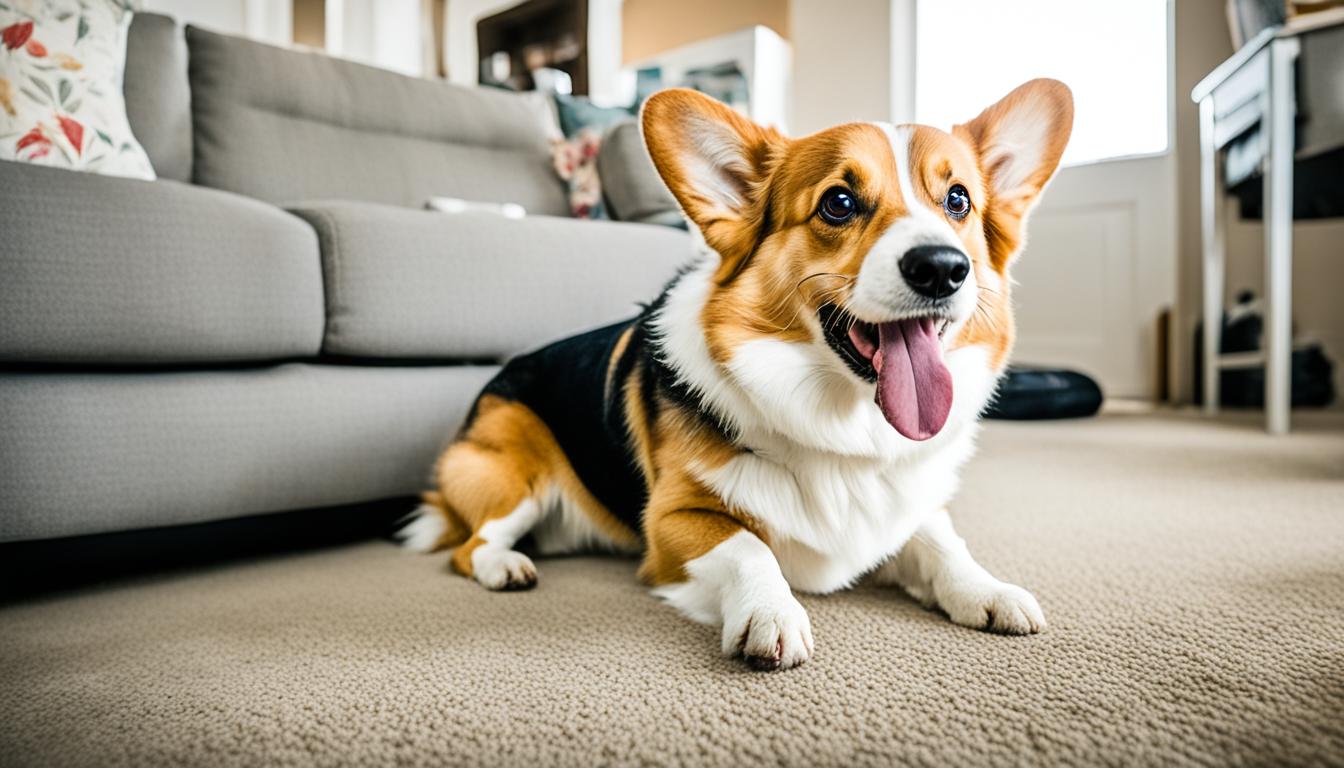

Are you struggling with common behavioral challenges in your Corgi? Do you find it difficult to manage their overexcitement, rough treat taking, or lack of listening? Don’t worry, you’re not alone. Many Corgi owners face these issues and wonder how to address them effectively.
Fortunately, there are training techniques and strategies that can help you overcome these challenges and create a harmonious relationship with your Corgi. With the right approach and a little patience, you can solve typical Corgi behavioral challenges with ease.
Key Takeaways:
- Solving typical Corgi behavioral challenges requires proper training and consistency.
- Exercise is essential for addressing overexcitement in Corgis.
- Petting with a purpose and recognizing desired behaviors can be effective training techniques.
- Managing the environment and providing mental stimulation can prevent unwanted behaviors like cabinet diving.
- Establishing yourself as the pack leader and setting boundaries is crucial for dealing with stubborn and manipulative behaviors.
Addressing Overexcitement Before Walks
Overexcitement before walks is a common issue that many Corgi owners experience. While it’s natural for dogs to get excited about going for a walk, excessive excitement can lead to pulling on the leash, jumping, and difficulty controlling the dog. Fortunately, there are training techniques that can help address these behavior problems and make walks a more enjoyable experience for both you and your Corgi.
One effective approach to addressing overexcitement before walks is through gradual desensitization and teaching your Corgi to stay calm. This process involves breaking down the elements of the walk and practicing each step while rewarding your dog for staying calm.
- Start by introducing your Corgi to their leash and harness in a calm environment. Allow them to sniff and become familiar with the equipment.
- Next, practice walking indoors or in a quiet area where there are fewer distractions. Use treats or a favorite toy as positive reinforcement for maintaining a calm demeanor.
- Gradually increase the level of difficulty by walking in busier areas or places with more distractions. Repeat the training exercises and reward your Corgi for staying calm in these situations.
- Continue this gradual exposure and reward-based training until your Corgi is able to remain calm and focused even in highly stimulating environments.
This training technique can have a transformative effect on the quality of life for both your Corgi and yourself. It helps your Corgi learn self-control and reduces the likelihood of leash-related behavior problems. By teaching your Corgi to stay calm before walks, you’ll be able to enjoy peaceful and enjoyable walks together.
Frequently Asked Questions
Q: How long does it take to address overexcitement before walks?
A: The duration of training can vary depending on the individual dog and the consistency of training. It’s important to be patient and consistent in your efforts. With regular practice and reinforcement, you should start to see improvements within a few weeks.
Q: Are there any other techniques that can help with overexcitement before walks?
A: Alongside training, it’s important to provide mental and physical stimulation for your Corgi. Engage them in activities such as puzzle toys or interactive play to help burn off excess energy before going for a walk. Additionally, ensuring a consistent daily exercise routine can help reduce overall excitement levels.
Tips for Successful Training
- Use high-value treats or rewards to motivate your Corgi during training sessions.
- Start training in a quiet and familiar environment before gradually increasing the level of difficulty.
- Remain calm and patient throughout the training process. Your Corgi can pick up on your energy and emotions.
- Consistency is key. Practice the training exercises regularly to reinforce the desired behavior.
- Seek professional help if you’re facing challenges or need additional guidance in addressing your Corgi’s overexcitement before walks.
| Pros of Addressing Overexcitement | Cons of Ignoring Overexcitement |
|---|---|
|
|
Addressing overexcitement before walks is an important aspect of Corgi training. By implementing the techniques discussed, you can help your Corgi develop self-control and enjoy more peaceful walks together. Remember, consistency and patience are key to achieving successful results.
Preventing Cabinet Diving Behavior
Many Corgis have a natural inclination to dive into cabinets and grab anything within reach. Not only can this behavior be potentially dangerous, but it also reinforces unwanted habits. Fortunately, there are effective solutions to address this issue and keep your Corgi safe.
One of the key strategies to prevent cabinet diving behavior is to manage the environment. Install gates or latches to restrict your Corgi’s access to the cabinets. This way, you create physical barriers that prevent them from reaching the cabinets and grabbing items.
Providing mental stimulation and regular physical exercise is essential for redirecting your Corgi’s energy away from cabinet diving. Engaging your Corgi in interactive puzzle toys, food-dispensing toys, and training games can help keep their mind occupied and prevent boredom-driven behavior.
Teaching alternative behaviors is another effective approach to tackling cabinet diving. Train your Corgi to retrieve toys or go to a specific spot when they feel the urge to dive into cabinets. This redirection not only distracts them from unwanted behavior but also reinforces positive habits.
Remember, consistency is key when training your Corgi. Reinforce desired behaviors with praise, treats, and affection. Consistently applying these preventative measures and redirecting their focus will help your Corgi overcome cabinet diving tendencies and promote a safer and more harmonious living environment.

Dealing with Stubborn and Manipulative Behavior
Corgis are known for their charming personalities, but they can also be stubborn and exhibit manipulative behavior from time to time. It’s essential for Corgi owners to establish themselves as the pack leader and set clear boundaries with consistent rules and expectations.
Positive reinforcement techniques are highly effective in addressing stubborn and manipulative behavior in Corgis. By rewarding desired behaviors and ignoring or redirecting unwanted behaviors, you can shape your Corgi’s behavior in a positive way.
Patience and persistence are key when dealing with stubbornness in Corgis. Remember that these personality traits may become more apparent as your Corgi grows older, but they can be managed with the right training techniques.
Establishing Leadership:
An important aspect of training a Corgi is establishing yourself as the pack leader. This means setting clear boundaries and consistently enforcing rules and expectations.
By providing consistent guidance and structure, your Corgi will learn to respect you as the leader and understand their place in the family dynamic. This lays the foundation for addressing stubborn and manipulative behaviors.
Consistent Training:
Consistency is key when training a Corgi with stubborn tendencies. Set aside regular training sessions to reinforce basic commands and focus on desired behaviors.
Use positive reinforcement techniques such as praise, treats, and toys to reward your Corgi for obeying commands and exhibiting good behavior. Reinforcing positive behaviors helps to build a strong bond between you and your Corgi while discouraging manipulative tendencies.
Remember, Corgis are intelligent dogs, and they respond best to positive reinforcement training methods. Punishment or harsh training techniques can backfire and lead to more stubbornness and resistance.
Redirecting Manipulative Behaviors:
When your Corgi exhibits manipulative behavior, it’s important to redirect their attention to more appropriate activities. Provide mental stimulation through interactive toys and puzzles to keep them occupied and engaged.
Additionally, teaching alternative behaviors can help redirect manipulative tendencies. For example, if your Corgi tends to manipulate you for attention, teach them to perform a specific command or task before receiving your attention.

By consistently practicing these training techniques, you can effectively address stubborn and manipulative behavior in your Corgi. Remember that training is an ongoing process, and patience is key to achieving long-term behavioral changes.
The Challenges of Being a First-Time Corgi Owner
Being a first-time Corgi owner can be an exciting and rewarding experience. However, it may also come with its fair share of challenges, especially when it comes to understanding and managing their unique behavior problems. Corgis are known for their strong-willed and sometimes stubborn nature, which can lead to potential issues if not properly addressed.
One common challenge that first-time Corgi owners may face is a power struggle with their furry companion. Corgis have a natural inclination towards asserting dominance, and this can sometimes result in conflicts and behavioral issues. It’s important to establish yourself as the pack leader and set clear boundaries from the beginning.
Seeking the help of a professional trainer or behaviorist can be extremely beneficial during this journey. They can provide valuable guidance and support, helping you understand your Corgi’s behavior problems and implementing effective training techniques. A professional can also help you tailor your training approach to suit your specific Corgi’s needs, ensuring a positive and harmonious relationship between you and your pet.
Remember, dogs go through different phases and stages of development, just like humans. With patience and consistent training, you can overcome the challenges associated with being a first-time Corgi owner. Remember to always approach training with a positive mindset and use reward-based training techniques to reinforce good behavior.
Key Takeaways:
- First-time Corgi owners may face challenges when managing their pets’ behavior problems.
- Corgis have a strong personality and may try to assert dominance, leading to power struggles with their owners.
- Seeking assistance from a professional trainer or behaviorist can provide guidance and support during the training process.
- Consistent training, clear boundaries, and positive reinforcement are crucial for addressing behavior problems.
- Remember that dogs go through phases, and with patience and proper training, these challenges can be overcome.
Being aware of the challenges and taking proactive steps to address them will set you and your Corgi up for a successful and fulfilling relationship.

The Importance of Proper Training and Socialization
Proper training and socialization are crucial for Corgis to develop into well-behaved and happy dogs. Training should start early and focus on positive reinforcement techniques. It’s important to establish a strong foundation of obedience and manners to prevent behavior issues later on.
One key aspect of training is Corgi behavior training, which involves teaching your dog essential commands such as sit, stay, and come. By consistently practicing these commands, your Corgi will learn to obey your instructions, promoting a harmonious relationship between you and your furry friend.
Socialization is equally important for Corgis. Exposing your dog to different people, animals, and environments helps them become comfortable and confident in various situations. This reduces the likelihood of fear-based aggression or anxiety as they grow older.
Remember, a well-socialized and well-trained Corgi is more likely to be a happy and obedient companion.
When it comes to Corgi obedience training, consistency and patience are key. Corgis can be stubborn at times, so it’s important not to give up easily. Stick to a regular training schedule and use positive reinforcement techniques, such as treats and praise, to motivate your dog.
During the training process, it’s essential to be patient with your Corgi. Dogs learn at their own pace, and it’s important to avoid frustration or punishment when they make mistakes. Instead, focus on rewarding good behavior and gradually building on their skills.
By investing time and effort into proper training and socialization, you are setting your Corgi up for success. A well-trained and socialized Corgi will be a joy to be around, both at home and in public.

The Benefits of Corgi Behavior Training and Obedience:
- Improved obedience, making daily activities smoother and more enjoyable
- Enhanced safety for your Corgi and those around them
- Reduced chances of behavior issues, such as aggression or destructive chewing
- Stronger bond and communication between you and your dog
- Increased confidence and social skills in various situations
Taking a Proactive Approach to Behavior Issues
When it comes to addressing Corgi behavior problems, a proactive approach is crucial. Waiting for these issues to arise can lead to frustration and make them more challenging to correct. By understanding the breed’s tendencies and implementing appropriate Corgi training solutions, you can prevent many behavioral challenges from occurring in the first place.
Consistent training is key to maintaining good behavior in Corgis. Establishing clear boundaries and reinforcing desired behaviors helps them understand what is expected of them. Positive reinforcement techniques, such as treats and praise, can be effective motivators during training sessions.
It’s also beneficial to seek advice and guidance from experienced Corgi owners or professionals. They can provide valuable insights and support based on their own experiences with Corgi behavior problems. They may offer specific training techniques or recommend resources that have been successful for them.
By taking a proactive approach to behavior issues, you can create a harmonious living environment for both you and your Corgi. Preventing these problems before they arise saves you time and frustration in the long run.
Mental and Physical Stimulation
Corgis are an active breed that requires both mental and physical stimulation. Boredom can contribute to negative behaviors, such as excessive barking or destructive chewing. Providing engaging activities for your Corgi can help channel their energy and prevent behavior problems.
Here are some ideas for mental and physical stimulation:
- Regular exercise: Take your Corgi for daily walks, play fetch, or engage in other physical activities that allow them to burn off excess energy.
- Puzzle toys and treat dispensers: These toys require your Corgi to think and problem-solve, keeping their minds occupied and entertained.
- Obedience training and tricks: Teaching your Corgi new commands and tricks not only stimulates their mind but also strengthens the bond between you and your dog.
- Agility training: Setting up an agility course in your backyard or participating in organized agility classes can provide both mental and physical exercise for your Corgi.
By providing your Corgi with ample mental and physical stimulation, you can prevent boredom-related behavioral issues and promote overall well-being.
| Benefits of a Proactive Approach | Benefits of a Reactive Approach |
|---|---|
| Prevents behavior problems | Reactive measures may be less effective |
| Establishes clear boundaries | Boundaries may become blurred without proactive training |
| Strengthens the bond between you and your Corgi | Behavior issues can strain the owner-dog relationship |
| Creates a harmonious living environment | Living environment may become stressful and chaotic |
How Training Benefits the Owner-Dog Relationship
Training is an essential component of addressing and managing Corgi behavioral challenges. But aside from correcting unwanted behaviors, training provides numerous benefits for both the owner and their furry companion. Let’s delve into how training can strengthen the bond between Corgi and owner, promoting a harmonious and fulfilling relationship.
Establishing Leadership and Building Trust
Through consistent training, owners can establish themselves as leaders in their Corgi’s eyes. By setting clear rules and expectations, owners can guide their dogs towards desired behaviors. This process builds trust and respect between the owner and their Corgi, creating a solid foundation for a healthy relationship.
Mental Stimulation and Structure
Training provides important mental stimulation for Corgis, fulfilling their need for mental engagement and preventing boredom. Dogs thrive on structure and guidance, and training offers a structured routine that can bring a sense of security and satisfaction to Corgis. Regular training sessions provide mental exercise and challenge their problem-solving skills, leading to a happier and more contented dog.
A Well-Behaved and Happy Corgi
Investing time and effort into training a Corgi pays off in the form of a well-behaved, happy, and balanced dog. Training instills desirable behaviors, such as obedience, leash manners, and social skills, making daily interactions more enjoyable for both the owner and their Corgi. A well-trained Corgi is more likely to be accepted in various social settings and can participate in activities with ease, strengthening the bond between owner and dog.
Improved Communication and Understanding
Training enhances communication between the owner and their Corgi. By consistently reinforcing commands and cues, owners can effectively communicate their expectations, while Corgis learn to understand and respond appropriately. This mutual understanding fosters a deeper connection, allowing owners to better meet their Corgi’s needs and address any future challenges that may arise.
A Joyful Partnership
Training turns the owner-dog relationship into a joyful partnership, where both parties work together towards common goals. The bond formed through training promotes companionship, love, and respect, creating a harmonious household. With a well-trained Corgi by their side, owners can experience the joy and fulfillment that comes with owning a well-behaved and delightful companion.
Training is not just about correcting behavioral challenges; it is a vital aspect of building a strong, positive, and mutually beneficial relationship between Corgi and owner. By establishing leadership, providing mental stimulation, and fostering open communication, training promotes a harmonious partnership filled with love, trust, and joy.
Conclusion
Corgis may present a range of behavioral challenges, including overexcitement, stubbornness, and cabinet diving. However, with the right approach and training techniques, these common Corgi behavior issues can be addressed and overcome.
Consistency, patience, and positive reinforcement are key when it comes to Corgi behavior training. By providing clear boundaries, setting expectations, and rewarding desired behaviors, Corgis can become well-rounded, obedient, and loving companions.
Seeking guidance from professionals and experienced Corgi owners can be immensely helpful throughout the training journey. Their insights and support can provide valuable tips, techniques, and reassurance as you navigate the challenges of training your Corgi.
Remember, training is not only about correcting behavior but also about building a strong and positive relationship with your Corgi. By investing time and effort into their training, you can create a bond based on trust and respect, ensuring a happy and harmonious life together.
FAQ
What are some typical behavioral challenges that Corgis face?
How can I address the issue of overexcitement before walks?
How can I prevent my Corgi from diving into cabinets?
How can I deal with stubborn and manipulative behavior in my Corgi?
What challenges should I expect as a first-time Corgi owner?
Why is proper training and socialization important for Corgis?
How can I take a proactive approach to behavior issues with my Corgi?
How does training benefit the owner-dog relationship?
How can I overcome behavioral challenges in my Corgi?
Source Links
- https://www.doggoneproblems.com/zoey-excited-for-walks/
- https://yourcaninecoach.com/yogi-the-corgi-june-2012/
- https://www.reddit.com/r/puppy101/comments/v7l04u/help_i_do_not_like_my_corgis_personality/

Carlos is the passionate founder and primary author behind “CorgisCorner.com,” a website dedicated to all things related to the beloved Corgi breed. Born and raised in a small town known for its strong sense of community and love for animals, Carlos developed a deep affection for Corgis from a young age. This love was sparked by his childhood companion, a spirited and loyal Corgi named Toby, who was a constant source of joy and friendship.