


Meet Bella, a joyful Labrador puppy who found her forever home with the Smiths. The Smiths were thrilled but knew potty training was key. They started the potty training journey, ready with tips and tricks.
Key Takeaways:
- Consistency is key in potty training dogs, regardless of their age.
- Positive reinforcement, such as praise and treats, encourages desired behaviors.
- Supervision and close observation help prevent accidents and redirect dogs to the correct potty area.
- Having a designated potty area and following a consistent schedule simplifies the training process.
- Potty training takes time and patience, but with consistency and positive reinforcement, it can be achieved.
Understanding the Basics of Dog Potty Training
Teaching your dog where to go potty is crucial for their training. It’s important to help them learn the right place. Here are some key concepts for successful dog potty training:
Consistency is Key
Dogs love routines and learn well from them. Keep a regular schedule for meals, potty breaks, and play. This helps your dog know when and where to do their business.
Positive Reinforcement
Using positive reinforcement works wonders in potty training. Praise and treats encourage your dog when they use the right spot. This makes learning fun for you and your dog.
Supervision is Crucial
Watch your dog closely during potty training. Guide them to the potty area when needed. Watching them helps prevent accidents at home.
Patience is Important
Potty training takes time, and mistakes can happen. Stay patient and keep your cool. With calmness and consistency, your dog will learn good habits.
Establish a Designated Potty Area
Set a specific potty area for your dog. This could be a spot in your yard or an indoor area for apartment living. Using one spot helps your dog know where to go.
Following these basic potty training principles sets a strong foundation. Remember to be consistent, offer praise, keep an eye on your dog, and set a potty area. With patience and effort, you’ll soon have a well-trained dog.
Potty Training for Puppies
Potty training a puppy can be tough. They have small bladders and less control. But, with patience and the right strategies, you can do it. Here are some tips for potty training success:
1. Take Frequent Breaks
Puppies need to go out a lot because of their tiny bladders. Take them out every 1-2 hours, especially after they eat, drink, play, or wake from a nap. This helps stop accidents and teaches them that outside is for potty.
2. Utilize Crate Training
Crate training really helps. Dogs don’t like to make their living space dirty. So, a crate keeps them from having accidents when you’re not watching. Make sure the crate is big enough for them to move around but not too big.
3. Watch for Signs
Keep an eye on your puppy for any signs they need to go. Look for things like restlessness, sniffing, or circling. These signs mean they need to go out. Take them to their potty spot right away when you see these signs.
4. Praise and Treats
Positive reinforcement is key. Always praise and treat your puppy when they go potty outside. It helps them understand that’s the right place to go. Use words like “go potty” so they connect the words with the action.
Remember, training takes patience. Don’t scold them for accidents. Instead, guide them to the right behavior. With these tips, your puppy will be well-trained in no time.
Potty Training for Adult Dogs
Potty training an adult dog needs a different approach than for a puppy. With correct techniques and consistent work, potty training an adult dog is possible. Here’s how to do it:
Vet Check
First, visit the vet to make sure your dog is healthy. This checks for health problems that cause accidents. After getting the all-clear, you can start potty training.
Reinforcing Previous Habits
Some adult dogs already know where to go. Remind them where it’s okay to potty. Take them out often and use commands to help them remember.
Close Supervision
Watch your dog closely during training. This helps you catch signs that they need to go. Lead them outside quickly if they need to use the potty area.
Thorough Cleaning
Even with training, accidents can happen. Clean spots well with an enzyme cleaner to remove smells. A clean area helps your dog understand where to go.
Patience
Training an adult dog can take time. Stay calm and keep trying, even if it’s hard. Celebrate success instead of getting upset over mistakes. This makes learning easier.
Every dog learns at their own pace. Keep being consistent and positive. Your adult dog will learn the new rules with time and love.
| Benefits of Potty Training Adult Dogs | Tips for Success |
|---|---|
| 1. Eliminates indoor accidents | 1. Schedule regular potty breaks |
| 2. Creates a clean and hygienic environment | 2. Use positive reinforcement techniques |
| 3. Strengthens the bond between you and your dog | 3. Close supervision during the training phase |
| 4. Allows for better socialization and travel opportunities | 4. Thoroughly clean accident spots |
| 5. Prevents potential health hazards linked to unhygienic habits | 5. Practice patience and avoid punishment |
Dealing with Accidents
Accidents happen when potty training. It’s important to stay calm when you catch your dog in the act. Guide the dog to the potty area calmly, without scolding. Use an enzymatic cleaner to remove odors from accident spots. This prevents the dog from using the same spot again. If accidents increase, try changing your training methods. Also, watch your dog more closely. Remember, being patient and consistent helps, as setbacks are expected.
Reacting Calmly
React calmly if your dog has an accident. Being anxious or angry can upset your dog and harm training. Instead, breathe deep and gently take your dog to the potty area. Don’t scold or yell. Remember, mistakes are normal as your dog learns the rules.
Thorough Cleaning
Clean accident areas well to remove smells that might attract your dog back. Use enzymatic cleaners to target and break down odors. Make sure the cleaner reaches all the affected spots. Cleaning thoroughly helps stop future accidents and teaches your dog the right place to go.
If cleaning accident spots is tough or odors linger, think about hiring a pro cleaning service. They know how to get rid of pet stains and smells for good.
Adjusting Training
If your dog starts having more accidents, look at your training approach. Ask yourself if your dog has enough bathroom breaks. Are you watching your dog’s behavior closely? Are you reinforcing what you want your dog to do? Reviewing and changing your training methods can fix problems and help your dog succeed.
| Common Reasons for Accidents | Solutions |
|---|---|
| Insufficient potty breaks | Give your dog more chances to go outside, especially after eating, drinking, or playing. |
| Lack of supervision | Watch your dog closely to catch accidents right away and guide them to the potty area. |
| Inconsistent training | Be consistent with your training, cues, and rewards so your dog isn’t confused. |
| Medical issues | If accidents keep happening, see a vet to check for health problems. |
Keep in mind, accidents are part of learning. Setbacks are normal. Stay patient, keep things consistent, and be supportive. With time, your dog will learn and become reliable at going potty outside.
Getting Started with Potty Training
Starting potty training your dog or puppy needs a clear plan. Setting up a schedule and routine smooths the process for both of you. Here’s how to get going on potty training:
- Begin with a morning potty break: Take your dog outside right after they wake up. Say “go potty” to let them know it’s time. This signals the start of a routine, showing what you expect.
- Be alert for their signs: Notice when your dog shows they need to go. Look for restlessness, circling, and sniffing as clues. It’s how they tell you they need a break.
- Go outside at once: Seeing the signs? Take your dog out immediately. It links going potty with being outdoors, teaching them about the right place.
- Keep potty breaks short: Limit outdoor time to 5 minutes for each potty break. It avoids extra time outside and makes the purpose clear to your dog.
- Record their progress: Use a journal to track your dog’s bathroom habits. Write down when they go and note any mishaps. It helps you see patterns and tweak their schedule as needed.
- Celebrate their wins: Give treats, praise, and playtime when they go in the right spot. It rewards their behavior, making them want to repeat it.
Potty training needs time and patience. Keep up with the routine and always be positive. With commitment and a solid plan, your dog or puppy will be trained quickly.
Preventing Accidents
Stopping accidents is key when potty training. By making sure you have a safe place for your dog, you reduce indoor accidents.
Confined Space
Using a crate or puppy pen helps prevent accidents. Dogs don’t like to make their living space dirty. They instinctively keep their area clean. A cozy space can also help your dog feel secure and calm. This helps lower the chances of accidents.
Supervision
Watching your dog closely is vital to stop accidents. Keep your dog on a leash or close to you inside. This means you can quickly take them outside if they need to go. Paying attention to your dog helps you spot when they need to go to the bathroom.
Crate Training
Crate training is great for preventing accidents when you can’t watch your dog closely. Make sure the crate is big enough for your dog to move comfortably. Since dogs don’t like to soil where they sleep, the crate becomes a safe place for them. It encourages them to hold it until they can go outside.
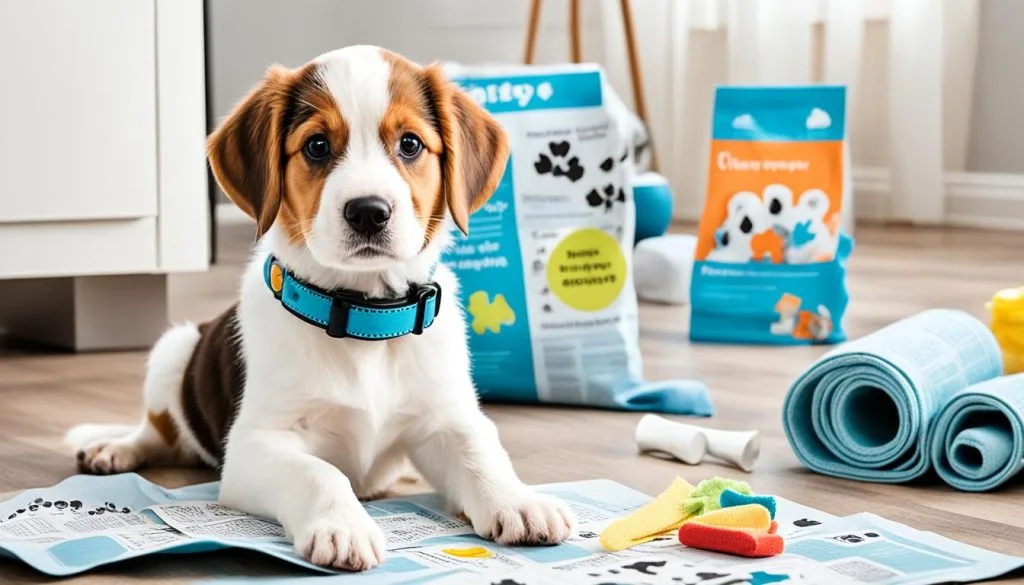
Recognizing the Signs
Knowing when your dog needs to go out is key. Signs include being restless, sniffing around, and circling. Quick action is important to stop accidents. This builds a good bathroom routine for your dog.
Using these steps, you can help your dog learn faster. Being consistent and keeping a close eye on your dog is crucial for success.
Learning Your Dog’s Timeline
Knowing when your dog needs to go is key to potty training success. Every dog shows different signs when they need to go outside. Learning these signs will let you create a potty plan that works for both of you.
A potty journal can help track your dog’s bathroom times. Note when they go and look for any signs that show they’re ready. This journal helps you make a potty schedule that improves bladder control.
“The best way to predict your dog’s future bathroom habits is to observe their past ones.”
As dogs get older, they can hold it in for longer. You’ll see longer gaps between bathroom breaks as their bladder control improves. Keeping your dog active and well-hydrated is important for this process.
Having a regular routine is crucial for your dog’s bathroom schedule. Potty breaks should be at the same times each day. This helps your dog know when it’s time to go and prevents accidents.
| Puppy Age | Average Bladder Control |
|---|---|
| 8 weeks | 1-2 hours |
| 3-4 months | 3-4 hours |
| 5-6 months | 5-6 hours |
| 7+ months | 7-8 hours |
Remember, these are just general guidelines. Every dog is different. By watching your dog and sticking to a schedule, you can help them learn to control their bladder and become fully potty trained.
Rewarding Potties
Rewarding your dog for successful potty breaks is key. Use treats, praise, or playtime to make it positive. Keep treats near the door for easy access.
Reward your dog quickly after they potty. This reinforces good behavior. You can use treats, words, hugs, or play if you’re out of treats.
Make going outside the best part of your dog’s day. Praise them a lot when they do it right. Positive steps like these help with potty training.
Playtime can make potty breaks even better. Have fun with your dog after they go. It makes the good habit even stronger.
Examples of Rewards
| Reward | Benefits |
|---|---|
| Treats | Provides an immediate reward and reinforces desired behavior |
| Praise | Boosts your dog’s confidence and strengthens the bond between you |
| Playtime | Enriches your dog’s physical and mental well-being, making potty breaks enjoyable |
Every dog is different. It’s key to find out what makes yours happy. Some like food, while others prefer praise or games. Use what they love to encourage them to potty outside.
Punishing Accidents?
Punishing accidents after they happen doesn’t work well in potty training. Dogs can’t link the punishment to their mistake. This might make them feel confused and scared. But, acting right away when you see them in the act helps. By quickly saying “NOOOOOO” and taking them outside, you let them know that indoors is not the place. This teaches dogs that going potty inside is wrong.
Focus on preventing accidents rather than punishing. Keep a close eye on your dog. Give them many chances to go outside. Sticking to a regular potty break schedule is crucial. It helps ensure successful potty training. Also, always supporting good behavior is important.
To train your dog effectively, stop accidents before they happen. Use a positive approach. Always cheer on, reward, and encourage your dog when they go potty outside. This will help them learn and build a strong base for being well-trained.
Consequences of Punishing Accidents
Punishing for accidents can backfire, making potty training harder. It can scare dogs or make them anxious. Negative feelings towards eliminating could develop. This can slow progress and raise stress levels. A positive, encouraging environment is crucial during potty training. It ensures the best for your furry friend.
Preventing Accidents
Preventing accidents is crucial for good potty training. Besides watching your dog closely, other tips can help avoid accidents:
- Create a potty area inside and outside your home.
- Guide your dog with visual cues like pee pads or signs.
- Have a regular routine for potty breaks and feeding.
- Consider crate training or keeping your dog in a small, easy-to-clean space when alone.
- Take your dog outside often, especially after eating, sleeping, and playing.
Using these strategies and positive reinforcement can smoothly train your dog. This way, you’ll see fewer accidents.
Conclusion
Potty training your dog is very important. It keeps your home clean and helps you bond with your dog. Use consistency and positivity to train your dog well.
Stick to a schedule, praise your dog for going outside, and use the same spot. Training works for puppies and older dogs alike. Remember, patience is key, even when there are setbacks.
Soon, your dog will know when and where to go. This makes your home happy and clean. So, start the training and have fun with your dog!
FAQ
What are some essential tips for potty training a new puppy?
How can I potty train an adult dog?
How should I handle accidents during the potty training process?
How do I get started with potty training my dog or puppy?
How can I prevent accidents during the potty training process?
How can I learn my dog’s timeline for potty breaks?
How should I reward my dog for successful potty breaks?
Is punishing accidents effective in potty training?
What are the essential tips for potty training a dog?
Source Links
- https://www.dogseechew.in/blog/essential-tips-on-how-to-potty-train-your-dog-or-puppy
- https://telltaildogtraining.com/meet-inky-potty-training-tips/
- https://www.thenakeddogtraining.com/traininghowtos/2019/5/2/a-very-thorough-guide-to-housebreaking

Carlos is the passionate founder and primary author behind “CorgisCorner.com,” a website dedicated to all things related to the beloved Corgi breed. Born and raised in a small town known for its strong sense of community and love for animals, Carlos developed a deep affection for Corgis from a young age. This love was sparked by his childhood companion, a spirited and loyal Corgi named Toby, who was a constant source of joy and friendship.