

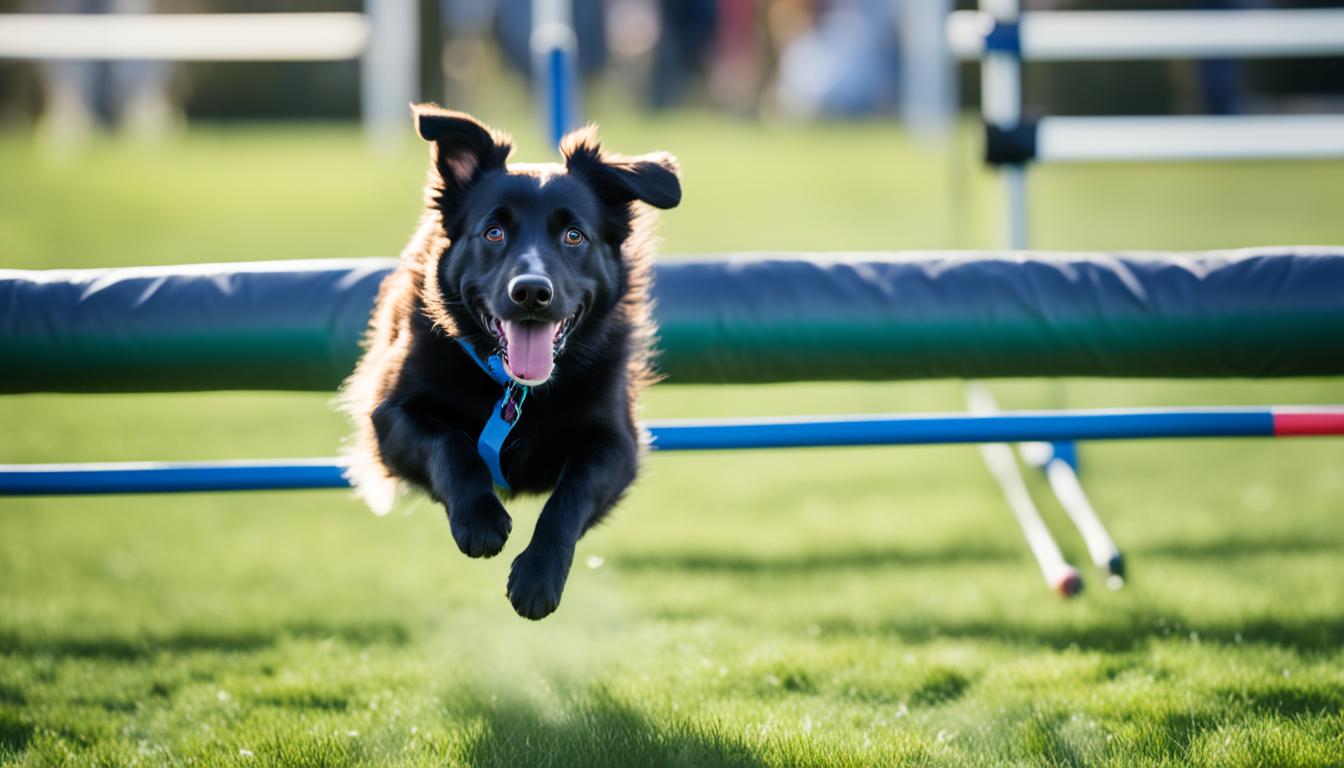

Are you new to dog ownership and looking for a fun journey with your pet? Agility training could be the perfect choice.
Imagine this: feeling the wind, the warm sun on your face, and hearing your dog dash around obstacles. It’s a thrilling ride. It deepens your bond and boosts your dog’s confidence, opening up a world of adventure.
Wondering where to start? Want to make your pup an agility champ?
This guide will show you essential tips and tricks for agility success. We’ll teach you how to build your dog’s focus, flexibility, and tricks. Our aim is to help your pup shine in agility courses.
So, grab your dog’s favorite toy. Let’s start this amazing journey of fun, growth, and victories together.
Key Takeaways:
- Agility training is exciting and strengthens your bond with your dog.
- Begin agility training at home with simple steps and exercises.
- Help your dog succeed by starting with easy tasks and slowly challenging them more.
- Focus and attention are key to good agility training.
- Tricks can enhance coordination and confidence in agility courses.
Setting Your Dog Up for Success
When training your dog in agility, starting off on the right foot is a must. Follow a few key steps to make your training fun and effective.
Starting Small
It’s vital to begin with the basics in agility training. Start with simple tasks and gradually introduce more complex ones. This way, your dog gains confidence and a good skill base.
Make sure training is short, about five to ten minutes. This keeps your dog focused and not too tired. Regular, short sessions are better than long, occasional ones.
Encouragement and Praise
Positive feedback is key in agility training. Cheer on your dog for their successes and progress. This boosts their confidence.
“Well done, Rover! You nailed that jump! Good job!”
Rewards like treats or toys are great for encouraging good behavior. Give rewards right after they do something right, so they make the connection.
Start small and praise often to make agility training a positive experience. These methods not only teach your dog what they need to know but also make training fun for you both.
Building Focus and Attention
Agility training is a thrilling team sport, demanding your dog’s undivided attention and focus. Without it, they might not catch your signals, leading to errors. An effective way to boost focus during training is teaching your dog to lock eyes with you when asked.
Finding a quiet spot with few distractions is key. It helps your dog focus on learning about eye contact. With a treat by your face, use a command like “look” or “watch.” Give them the treat and lots of praise when they gaze into your eyes.
Keep practicing this, slowly extending the eye contact time before giving a treat. When your dog gets the hang of it, try it in busier spots, like parks or streets.
“Teaching your dog to make eye contact with you on cue is an effective way to increase their attention and focus during agility training sessions.”
Patience and consistency are key in training. It might take time for your dog to get the idea of eye contact. But with ongoing practice and positive rewards, they’ll link eye contact with good things and do better in training.
Maintaining Focus in Distractions
Moving on to distractions is vital in agility training after mastering eye contact in calm places. Begin to introduce distractions like toys, other animals, or food while asking for eye contact. Reward them for keeping focus amid these.
Try this in many places, upping the distraction level each time. This trains your dog to keep their focus anywhere. It gets them ready for the distractions they’ll face in real competitions or trainings.
Benefits of Increasing Attention
Boosting your dog’s focus has big pluses for agility training. A focused dog reacts fast and right to your signals, making for smoother runs and better results. Keeping attention also keeps distractions from causing errors or mishaps.
Also, when your dog learns to look at you on command, it strengthens your bond. It betters communication and trust, making your dog count on your leads. This teamwork greatly raises your chances of success in agility training.
Tips for Teaching Eye Contact
- Start in a quiet location with minimal distractions
- Hold a treat near your eyes and use a cue word
- Reward your dog when they make eye contact
- Gradually increase the duration of eye contact before rewarding
- Introduce distractions gradually to maintain focus
Tricks for Agility Training
Teaching your dog tricks can make their agility training better. They learn improved methods, better coordination, and gain confidence. Tricks like nose targeting, back-up, and jumping through hoops are really helpful for agility.
Nose targeting is a trick where your dog learns to touch their nose to something specific. This could be your hand or an object. It helps them learn how to enter contact zones with precision. This skill is very important in agility courses.
Another useful trick is teaching your dog to back-up. This means they learn to move backwards when you ask them. It helps them know their body better and move more smoothly. This is useful in tight spaces or around obstacles in agility training.
Also, getting your dog to jump through a hoop is great for agility training. It teaches them about jumping over things, a key skill in agility. It also makes them more confident in jumping and moving.
These tricks make training more varied and fun. They help your dog learn faster and be more eager. By doing these tricks often, your dog will get better at agility training.

| Trick | Benefits |
|---|---|
| Nose Targeting | Improves precision in entering contact zones |
| Back-Up | Enhances body awareness and coordination |
| Jumping Through a Hoop | Develops confidence in navigating obstacles |
Developing Flexibility
Flexibility is key in agility training for dogs. It lets them move through obstacles smoothly. By using special tricks in training, your dog can become more agile and flexible. This prepares them for success.
The spin trick is a great one for flexibility. Teach your dog to turn in a circle. Use treats and praise. This helps stretch their muscles, improving motion range.
The bow trick is another good method. It involves your dog lowering their front while keeping the back up. It’s not only for flexibility but also strengthens their core.
Figure eight weaving is an excellent exercise for both agility and flexibility. Set up cones in a figure eight. Lead your dog through it. This works out their shoulders and hips, boosting flexibility and coordination.
Start training sessions short and slowly make them harder. As your dog gets better and more comfortable, increase the challenge. Always be patient and reward their progress.

Benefits of Developing Flexibility
“Flexibility is crucial for agility training and your dog’s health. It helps prevent injuries, improves posture, and boosts their athletic abilities.”
Handling Skills
Handling skills are key in agility training. They let you send your dog out, switch their sides, and work at a distance. Here are some tips to better your handling skills:
Work on Handling
Improving handling skills is a must for agility success. First, teach your dog to be comfortable on both sides. This makes course transitions smoother and guiding your dog easier.
“Teaching your dog to work on both sides adds flexibility in agility. It’s good to send them ahead, call them back, and switch sides while they keep going.”
Teaching Side Switch
Teaching your dog to switch sides helps in agility. It lets them know to move from one side of you to the other. This is useful for tackling obstacles smoothly.
- Begin in a spot with no distractions.
- Lure your dog to switch sides using treats or toys.
- Keep practicing until your dog gets it right.
Teaching Wraps
Wraps are vital in agility training. They teach your dog to circle an object or obstacle.

Follow these steps to teach wraps:
- Pick a solid object or cone.
- Lead your dog around the object from both sides.
- Slowly add more complex wraps with obstacles.
- Always reward your dog for doing wraps well.
By improving handling skills, teaching side switches, and wraps, you’ll navigate agility courses better. These skills keep you and your dog in sync, facing obstacles accurately.
Increasing Body Awareness
Dogs don’t naturally know how to be aware of their bodies, which is critical for agility training. Making your dog more aware can greatly help them maneuver obstacles accurately. To improve this, try these exercises:
- Perching Exercises: Start by having your dog stand on different objects, like balance disks and cushions. This helps with balance and knowing where their body is. Begin with easy objects and slowly move to higher ones as they get better.
- Walking Through a Ladder: Place a ladder flat on the ground. Guide your dog to walk through, carefully placing their paws. This teaches them about body placement and how to be mindful of space.
Adding these exercises to your training can really boost your dog’s body awareness for agility success. Be patient and reward their achievements. Strong body awareness is key to confidently taking on any agility challenge.
Benefits of Increasing Body Awareness:
Teaching your dog to perch and navigate a ladder has many benefits for agility:
| Benefits | Description |
|---|---|
| Improved Precision | With better body awareness, dogs can more accurately navigate obstacles, which boosts their agility performance. |
| Enhanced Balance | Perching exercises improve balance by strengthening core muscles. This is vital for overcoming agility obstacles. |
| Increased Confidence | Dogs gain confidence in their physical abilities by mastering balance and coordination. This empowers them to face obstacles more bravely. |
Incorporating these exercises into your training will surely help your dog thrive in agility. Always be safe and up the challenges as they progress.

Building Confidence with Moving Objects
Building confidence in agility training is key for your dog’s success. This is especially true for moving objects like the seesaw. An effective starting point is to use lower-moving objects. Examples include a skateboard or a wobble board.
Starting with lower objects lets your dog get used to shifting ground. This helps them slowly build confidence. They learn to trust their ability to handle moving surfaces.
Begin by placing the skateboard or wobble board on a stable surface, like grass or carpet. Let your dog explore it freely. They can sniff, check it out, and step on it without pressure. Reward their curiosity with treats or praise.
Once your dog is okay with the still object, you can start to move it slightly. You might tilt the skateboard or wiggle the wobble board to make it rock a bit. Move slowly and wait until your dog is ready to do more.
Keep using treats or praise to reward your dog for interacting with the moving object. Make it a fun and rewarding experience for them. This will help build their confidence. It will make them excited for moving objects in agility training.
Remember, building confidence takes time and needs patience. Every dog is different and may need different steps and speeds. Watch their body language and always put their comfort first.
Testimonial: Building Confidence with Lower Objects
“When I first introduced my dog, Max, to the seesaw, he was unsure. So, I started with a skateboard to help him. It was amazing to see his progress. Thanks to the gradual start, Max now loves the seesaw. Starting with smaller objects really helped him in his agility training!”
– Sarah Thompson, Agility Enthusiast
Conclusion
Agility training has many benefits for you and your furry friend. By working on basic skills and exercises, you can build a strong start. Make sure to keep your dog safe and choose training that fits their age.
As you move forward, you’ll see how it helps your dog. They will get better at moving and thinking. Plus, your bond will grow stronger.
Starting on this path is exciting. Have fun, celebrate your wins, and enjoy learning together. This sport will make your dog more confident and agile.
FAQ
What is agility training?
How can I ensure success in agility training?
How can I build focus and attention in my dog?
Are there any tricks that can benefit agility training?
How can I improve my dog’s flexibility for agility training?
What are handling skills in agility training?
How can I help my dog increase their body awareness for agility training?
How can I build confidence with moving objects in agility training?
What are the benefits of agility training?
How do I start my agility journey with my dog?
Source Links
- https://www.akc.org/expert-advice/training/10-tips-to-practice-agility-at-home-with-your-dog/
- https://us.tug-e-nuff.com/blogs/news/agility-training-for-beginners
- https://www.akc.org/expert-advice/training/tricks-training-preparing-puppy-for-agility/

Carlos is the passionate founder and primary author behind “CorgisCorner.com,” a website dedicated to all things related to the beloved Corgi breed. Born and raised in a small town known for its strong sense of community and love for animals, Carlos developed a deep affection for Corgis from a young age. This love was sparked by his childhood companion, a spirited and loyal Corgi named Toby, who was a constant source of joy and friendship.