

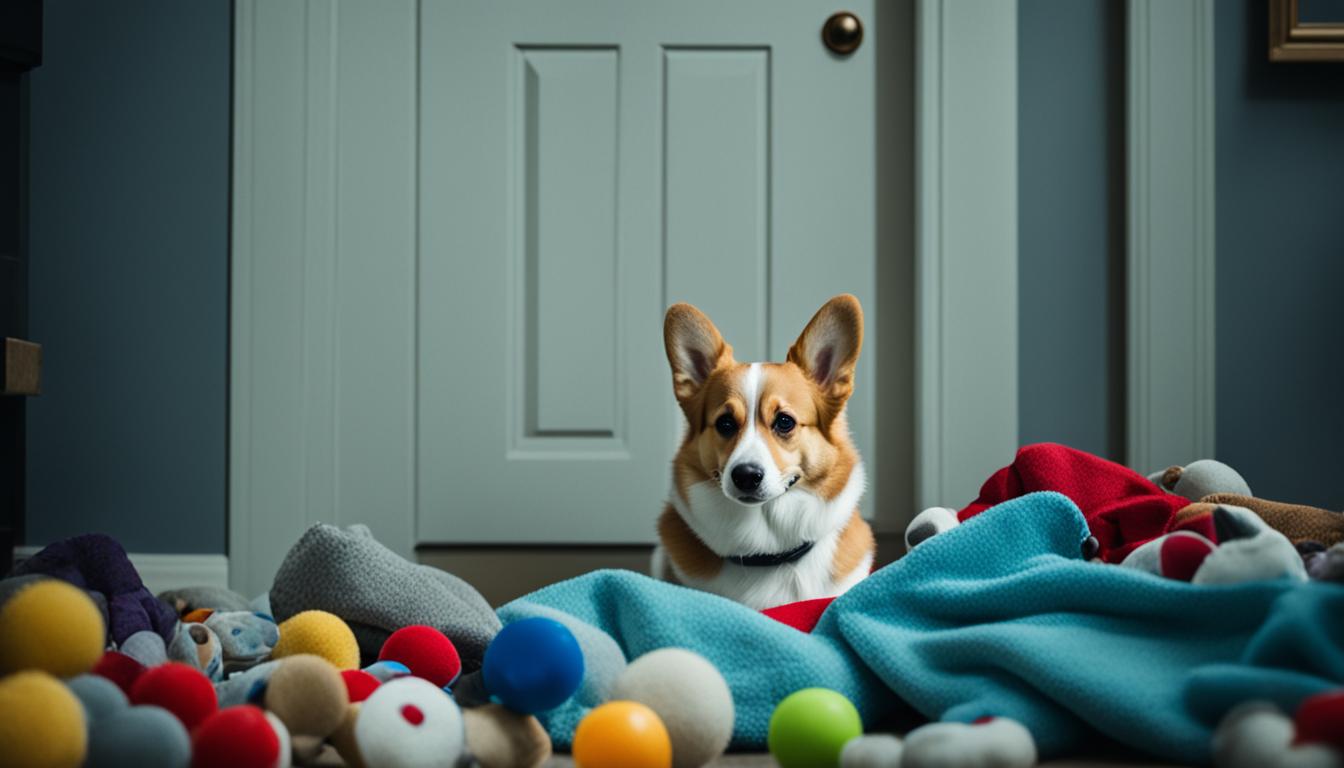

Can your Corgi really overcome separation anxiety? If you’re a Corgi owner, you understand the challenges that come with this common issue. The extreme fear and distress your furry friend experiences when left alone can be heartbreaking. But fear not! With the right strategies and techniques, you can help your Corgi conquer separation anxiety and ensure peaceful alone time for both of you.
Key Takeaways:
- Corgis, like many other dogs, can develop separation anxiety due to their social nature and evolutionary history as pack animals.
- Recognizing the signs and symptoms of separation anxiety is crucial for addressing the issue effectively.
- Training techniques, such as desensitization and counterconditioning, can help your Corgi develop a more positive association with being alone.
- Calming products, environmental enrichment, and gradual departure techniques can also aid in alleviating separation anxiety in Corgis.
- If all else fails, it may be beneficial to seek professional help from a veterinarian or certified animal behaviorist.
Understanding Separation Anxiety in Corgis
Like many other dog breeds, Corgis can experience separation anxiety. This condition arises from their social nature and evolutionary history as pack animals. Corgis tend to form strong bonds with their owners, becoming overly attached and reliant on constant companionship. When left alone and not properly trained to handle alone time, they can develop extreme stress and anxiety. Factors such as changes in routine, moving homes, or the loss of a family member can further contribute to separation anxiety in Corgis.
Separation anxiety is not uncommon in Corgis, and it’s important to recognize the signs and understand the underlying causes to provide the appropriate support and care for your furry friend. By addressing separation anxiety in Corgis, you can help improve their overall well-being and ensure a happier and more balanced life for both you and your pet.
Why do Corgis Get Separation Anxiety?
As pack animals, Corgis have an innate need for social interaction and can develop strong emotional attachments to their human family members. When these bonds become too intense and dependency on constant companionship outweighs the ability to cope with alone time, separation anxiety may arise. Additionally, environmental factors such as changes in routine or living arrangements can disrupt a Corgi’s sense of security, leading to increased anxiety when left alone.
It’s crucial to address separation anxiety in Corgis to prevent further distress and ensure their emotional well-being. By implementing effective training techniques, providing environmental enrichment, and seeking professional help when needed, you can help your Corgi overcome separation anxiety and foster a healthier mindset.
Signs and Symptoms of Corgi Separation Anxiety
Recognizing the signs and symptoms of separation anxiety in Corgis is crucial for addressing the issue effectively. These signs may include:
- Excessive vocalization
- House soiling
- Destructive behavior
- Drooling
- Pacing
- Attempts to escape
Corgis with separation anxiety may become overly attached to their owners, follow them around the house, and show signs of distress when left alone. It is important to differentiate these behaviors from normal puppy behavior or other medical issues.
“Corgi separation anxiety” and “signs of separation anxiety in Corgis” are common indicators that your furry friend may be experiencing separation anxiety. Excessive vocalization, such as barking or howling, can be a clear sign of distress. House soiling, where your Corgi eliminates in inappropriate places, is another common symptom. Destructive behavior, such as chewing furniture or pawing at doors, can occur as a result of anxiety. Drooling, pacing, and attempts to escape are also signs that your Corgi is experiencing separation anxiety.
“One of the key signs of separation anxiety in Corgis is their inability to tolerate being alone. They may exhibit restless behavior, pacing around the house, and attempting to escape through doors or windows,” says Dr. Amanda Rodriguez, a veterinarian specializing in dog behavior.
It’s important to remember that these behaviors can be distressing for your Corgi and may cause damage to your home. However, punishing or scolding your Corgi for these behaviors is not the solution.
Signs and Symptoms of Corgi Separation Anxiety
| Signs of Separation Anxiety | Description |
|---|---|
| Excessive vocalization | Constant barking or howling when left alone |
| House soiling | Eliminating in inappropriate places, even if house-trained |
| Destructive behavior | Chewing furniture, scratching doors, or damaging belongings out of anxiety |
| Drooling | Excessive saliva production as a result of stress |
| Pacing | Restless behavior, constantly moving around the house |
| Attempts to escape | Trying to break through doors or windows to find their owner |
These signs and symptoms are a clear indication that your Corgi is suffering from separation anxiety. If you notice these behaviors, it’s important to address the issue promptly to help your Corgi feel more comfortable and secure when left alone.

Addressing Corgi Separation Anxiety: Training Techniques
If your Corgi struggles with separation anxiety, there are several effective training techniques that can help them overcome this condition. One important strategy is desensitization, which involves gradually exposing your dog to the trigger of their anxiety in a controlled and positive way. For example, if your Corgi becomes anxious when you leave the house, you can start by simply putting on your coat and then rewarding them with treats and praise.
Over time, you can increase the duration of your departures, always ensuring that you return before your Corgi becomes too anxious. This helps them develop a more positive association with your departures, gradually diminishing their anxiety. Remember to reward calm and relaxed behavior, as this reinforces the idea that being alone is a positive experience for your Corgi.
In addition to desensitization, counterconditioning is another effective technique. This involves pairing a positive and enjoyable experience with being alone. For example, you can give your Corgi a special toy or treat that they only receive when you are away. This creates a positive association with your absence and helps reduce anxiety.
Creating a calm environment is also crucial for helping your Corgi manage separation anxiety. Provide a comfortable and safe space for them when you are away, with their favorite toys, a cozy bed, and maybe even an item of clothing that smells like you. This can help alleviate their anxiety and make them feel more secure.
Interactive toys and puzzles are another great way to keep your Corgi mentally stimulated and entertained while you are apart. These toys can distract them from their anxiety and provide a positive outlet for their energy. Consider puzzle toys that dispense treats or toys that require problem-solving skills to keep your Corgi engaged.
Establishing a consistent routine can also be beneficial in managing separation anxiety. Corgis thrive on predictability, so having a set schedule for meals, walks, and alone time can help them feel more secure. Stick to a regular routine as much as possible to provide structure and stability for your Corgi.
Training Techniques for Corgi Separation Anxiety:
- Desensitization: Gradually expose your Corgi to triggers of anxiety, rewarding calm behavior.
- Counterconditioning: Pair being alone with positive experiences, such as special toys or treats.
- Create a calm environment with familiar items and interactive toys to keep them mentally stimulated.
- Establish a consistent routine to provide structure and stability for your Corgi.
Training Techniques for Corgi Separation Anxiety:
| Training Technique | Description |
|---|---|
| Desensitization | Gradually expose your Corgi to anxiety triggers, rewarding calm behavior. |
| Counterconditioning | Pair being alone with positive experiences, such as special toys or treats. |
| Create a calm environment | Provide familiar items and interactive toys to keep them mentally stimulated. |
| Establish a consistent routine | Stick to a regular schedule to provide structure and stability. |

Using Calming Products for Corgi Separation Anxiety
When it comes to managing Corgi separation anxiety, calming products can be valuable tools to help alleviate your furry friend’s distress. These products are specifically designed to provide a sense of calm and relaxation, promoting a more soothing environment for your Corgi when they are alone. Here are some popular calming products that can make a difference:
Hemp Oil
Hemp oil, specially formulated for dogs, has been shown to have a calming effect on anxious canines. It contains compounds that can help reduce stress and anxiety levels in Corgis, promoting a more serene state of mind. Whether it’s administered directly or added to your furry friend’s meals, hemp oil can be a natural and effective option to consider.
Full Spectrum Hemp Treats
Full spectrum hemp treats are another popular choice for Corgis with separation anxiety. These tasty treats are infused with hemp extract, which contains beneficial cannabinoids known for their calming properties. By offering these treats to your Corgi, you can provide them with a tasty and anxiety-reducing snack that may help soothe their nerves.
Compression Wraps
Compression wraps, such as ThunderShirts, can provide gentle pressure that has a soothing effect on dogs. These wraps are designed to mimic the sensation of being held snugly, helping to alleviate anxiety and promote relaxation. By swaddling your Corgi with a compression wrap, you can create a comforting environment that may help alleviate their separation anxiety.
Herbal Supplements
Herbal supplements containing calming ingredients like chamomile and valerian root can also be beneficial in managing Corgi separation anxiety. These natural remedies can help promote relaxation and reduce anxiety levels. Consult your veterinarian to find the right herbal supplement for your Corgi, ensuring it is safe and appropriate for their specific needs.
Canine Pheromone Diffusers
Canine pheromone diffusers release synthetic pheromones that mimic those produced by nursing mother dogs. These pheromones have a calming effect on dogs and can help alleviate separation anxiety. By using a pheromone diffuser in your home, you can create a reassuring environment for your Corgi and help them feel more secure during alone time.
Whether you choose hemp oil, full spectrum hemp treats, compression wraps, herbal supplements, or pheromone diffusers, it’s important to remember that each dog is unique. What works for one Corgi may not work for another, so it may require some trial and error to find the most effective solution for your furry friend. Consulting with your veterinarian can provide valuable guidance in selecting the right calming products for your Corgi’s separation anxiety.
| Calming Product | Description |
|---|---|
| Hemp Oil | A specially formulated oil that has a calming effect on anxious Corgis. |
| Full Spectrum Hemp Treats | Tasty treats infused with hemp extract for a calming snack. |
| Compression Wraps | Wraps that provide gentle pressure to create a soothing environment. |
| Herbal Supplements | Natural remedies containing calming ingredients like chamomile and valerian root. |
| Canine Pheromone Diffusers | Diffusers that release synthetic pheromones to promote relaxation. |

Environmental Enrichment for Corgi Separation Anxiety
Providing environmental enrichment can greatly help in managing Corgi separation anxiety. Regular exercise, both physical and mental, is essential for keeping your Corgi stimulated and reducing anxiety. Daily walks, playtime, and interactive toys can provide outlets for their energy and keep their minds occupied. Creating a comfortable and safe space for your Corgi, with their favorite toys, blankets, and a familiar scent, can also help them feel secure when you are not around.
Create a Stimulating Environment
When it comes to managing Corgi separation anxiety, environmental enrichment plays a crucial role. Corgis are intelligent and active dogs, and they thrive when provided with mental and physical stimulation. Incorporating interactive toys, such as puzzle feeders or treat-dispensing toys, can keep your Corgi engaged and mentally stimulated even when you are not available to play. Additionally, consider rotating their toys regularly to keep their interest and curiosity piqued.
Designate a Comfortable Safe Area
Creating a dedicated space for your Corgi can significantly help alleviate their separation anxiety. Set up a cozy area in your home where they can retreat to when you are away. This space should include their favorite toys, comfortable bedding, and items with your scent to provide a sense of familiarity and security. Additionally, consider using a pheromone diffuser, which releases calming scents that can help reduce anxiety in your Corgi.
Regular Exercise and Mental Stimulation
Physical exercise is vital for managing Corgi separation anxiety. Take your Corgi for daily walks, ensuring they get plenty of fresh air and opportunities to explore the surroundings. Engage in interactive play sessions, such as fetch or tug-of-war, to burn off excess energy. Mental stimulation is equally important; consider introducing puzzle toys or training sessions that challenge their problem-solving skills. These activities help redirect their focus and keep their minds engaged, reducing anxiety when alone.
Seek Enrichment Opportunities
Explore different activities and opportunities to enrich your Corgi’s environment when you are not home. Consider doggy daycare or hiring a trusted dog walker to provide companionship and additional exercise. Socializing your Corgi with other dogs can also be beneficial in reducing separation anxiety. Additionally, you can use technology, such as interactive treat-dispensing cameras, to remotely interact with your Corgi and provide mental stimulation throughout the day.
Comparison of Environmental Enrichment Methods
| Environmental Enrichment Method | Benefits | Considerations |
|---|---|---|
| Daily walks and playtime | – Physical exercise and mental stimulation – Burns off excess energy – Promotes bonding with the owner |
– Time commitment required – Weather-dependent |
| Interactive toys | – Provides mental stimulation – Keeps the dog engaged and entertained – Reduces boredom and anxiety |
– Choose toys suitable for your dog’s size and chewing habits – Rotate toys to maintain interest |
| Creating a safe space | – Provides a secure and comforting environment – Familiar smells and objects reduce anxiety – Helps establish a routine |
– Ensure the space is free from potential hazards – Regularly clean and maintain the area |
| Consider doggy daycare or hiring a dog walker | – Provides companionship and socialization – Additional exercise and mental stimulation |
– Requires budget for professional services – Ensure the caregiver is experienced and trustworthy |
| Use of interactive treat-dispensing cameras | – Remote interaction and monitoring – Provides mental stimulation and treats – Offers reassurance to the dog |
– Requires internet access – Initial setup and learning curve |

Gradual Departure and Return Techniques for Corgi Separation Anxiety
One of the effective techniques to help your Corgi feel more comfortable during your departures and returns is the gradual departure and return method. This approach involves gradually increasing the duration of your absence, starting with short departures and working your way up to longer periods of time.
When implementing this technique, it’s important to make your departures and returns low-key and without excessive excitement. Keep the energy calm and avoid lingering too much on either end, as this can inadvertently reinforce your Corgi’s anxiety.
During your departures, emphasize calm behavior and provide positive reinforcement when your Corgi remains composed. This can include offering a special treat, a favorite toy, or gentle praise. By associating your departure with positive experiences, you can help reduce your Corgi’s anxiety and create a sense of security.
Upon your return, give your Corgi a few moments to settle down before giving them attention. This helps reinforce the idea that your departures and returns are a normal part of their routine and not an event to be overly anxious about.
It’s important to note that the gradual departure and return technique requires patience and consistency. Start with short departures of just a few seconds and gradually increase the duration over time. It may be helpful to use a timer or clock to keep track of your increments and ensure a systematic approach.
Consistency is key in helping your Corgi overcome separation anxiety. Stick to a routine, so your Corgi knows what to expect and feels more secure. It’s also important to avoid making a big deal out of departures and returns, as this can create unnecessary stress for your Corgi.
By implementing gradual departure and return techniques, you can help your Corgi adjust to being alone and alleviate their separation anxiety over time.
Seeking Professional Help for Corgi Separation Anxiety
If you have tried various techniques and strategies to help your Corgi overcome separation anxiety but are still struggling, it may be beneficial to seek professional help. A veterinarian or certified animal behaviorist can provide the expert guidance and support you need to address your Corgi’s specific needs during this challenging time.
These professionals have extensive knowledge and experience in dealing with separation anxiety in dogs, including Corgis. They can assess your pet’s behavior, identify triggers, and develop a personalized plan tailored to your Corgi’s unique situation.
“Professional help is crucial in understanding and addressing the root causes of your Corgi’s separation anxiety. Veterinary assistance can go a long way in ensuring the well-being of your beloved companion.”
Working closely with a veterinarian or certified animal behaviorist may involve implementing additional training techniques, utilizing medication when necessary, and exploring other targeted interventions to help alleviate your Corgi’s anxiety and improve their overall well-being.
Remember, every Corgi is different, and what works for one dog may not be as effective for another. By seeking professional help, you can receive the personalized guidance and support needed to develop an effective treatment plan for your furry companion.
Don’t hesitate to reach out for professional assistance. With the right guidance and support, you can help your Corgi overcome separation anxiety and create a more harmonious and happy environment for both you and your beloved pet.
Conclusion
Help for corgi separation anxiety is achievable with the right techniques and support. By implementing training strategies, such as desensitization and counterconditioning, you can gradually help your Corgi become more comfortable with alone time. Additionally, the use of calming products, like hemp oil and pheromone diffusers, can provide a sense of relaxation for your furry friend. Enriching your Corgi’s environment with exercise and familiar items can also contribute to reducing separation anxiety.
It is crucial to remember that every Corgi is unique, so tailoring your approach to their individual needs is essential. Being patient and understanding throughout the process is key, as overcoming separation anxiety takes time. If you find that your efforts are not yielding the desired results, don’t hesitate to seek professional help from a veterinarian or certified animal behaviorist. With their expertise and guidance, you can develop a personalized plan to address your Corgi’s specific anxiety triggers.
Remember, helping your Corgi overcome separation anxiety is a journey that requires dedication. With the right strategies, the support of professionals, and your unwavering love, you can create a calm and happy environment for your Corgi, allowing them to enjoy their alone time to the fullest.
FAQ
Can Corgis overcome separation anxiety?
Why do Corgis get separation anxiety?
What are the signs of separation anxiety in Corgis?
How can I help my Corgi with separation anxiety?
Are there any calming products that can help with Corgi separation anxiety?
How can environmental enrichment help with Corgi separation anxiety?
What are some techniques for managing Corgi separation anxiety?
When should I seek professional help for my Corgi’s separation anxiety?
Source Links
- https://iheartdogs.com/7-sure-fire-ways-to-calm-your-corgis-anxiety/
- https://www.24petwatch.com/blog/8-ways-to-help-with-dog-separation-anxiety
- https://www.webmd.com/pets/dogs-separation-anxiety

Carlos is the passionate founder and primary author behind “CorgisCorner.com,” a website dedicated to all things related to the beloved Corgi breed. Born and raised in a small town known for its strong sense of community and love for animals, Carlos developed a deep affection for Corgis from a young age. This love was sparked by his childhood companion, a spirited and loyal Corgi named Toby, who was a constant source of joy and friendship.