

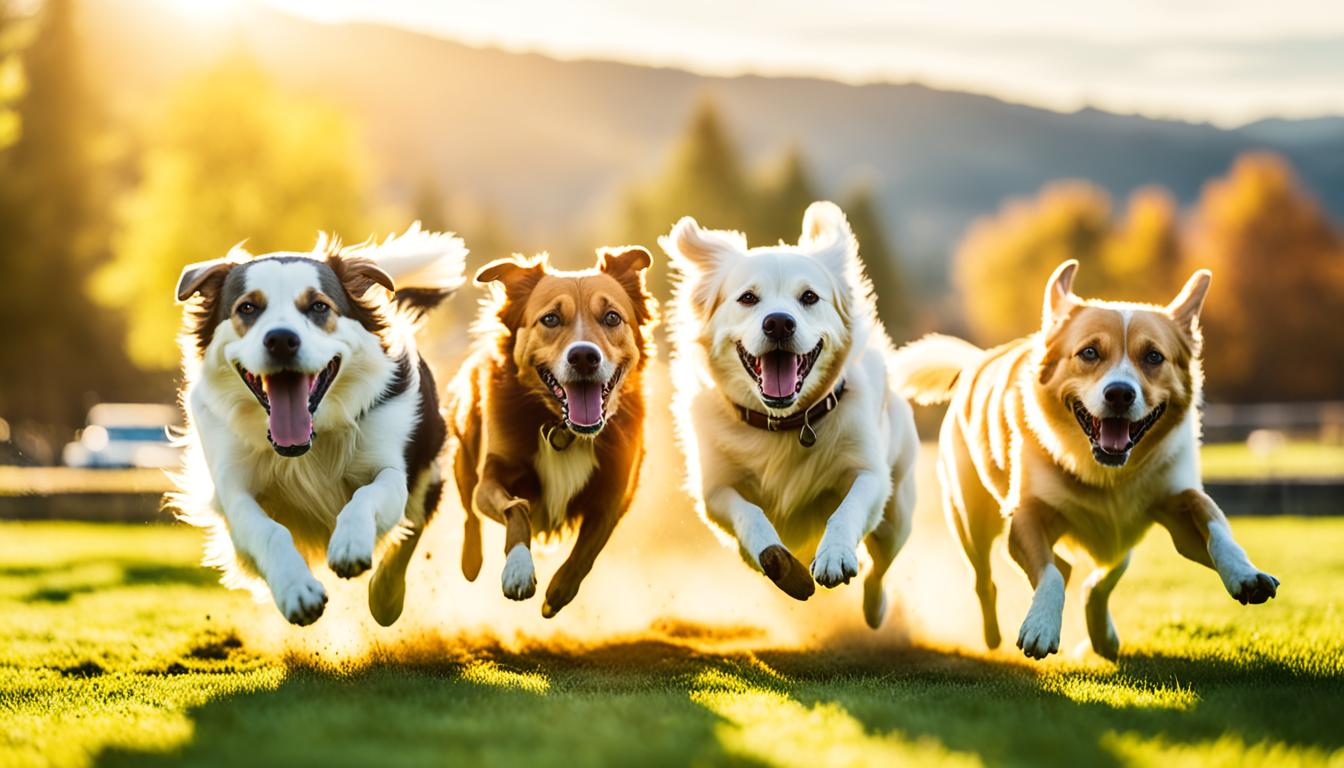

Can your pup make friends easily? Are you looking for dog socialization tips to help your furry friend build better relationships? If so, you’re in the right place! Socializing your dog is crucial for their mental and emotional well-being. It not only helps them feel comfortable in the presence of other dogs but also allows them to navigate new environments and interact with unfamiliar people. But how can you ensure that your pup becomes a social butterfly? Read on to discover expert advice, strategies, and puppy playdate ideas that will help your furry companion develop strong social skills and make friends effortlessly.
Key Takeaways:
- Socializing your dog is important for their mental and emotional well-being.
- Starting socialization at a young age is ideal, but adult dogs can also be socialized.
- Signs that your dog may need socialization include fear, aggression, and shyness.
- Positive experiences, gradual exposure, and rewards are key to socializing adult dogs and puppies.
- Classes, treats, and exposure to different environments can enhance the socialization process.
Why Is Socialization Important for Dogs?
Socialization is crucial for dogs as it helps them develop important canine social skills and understand the world around them. Through socialization, dogs learn how to interact and communicate with other dogs and humans, improving their behavior and overall well-being.
Dogs are naturally social animals, and by socializing them from an early age, we can help them build positive associations with different environments, people, and animals. This exposure allows them to feel more comfortable and relaxed in various situations, reducing anxiety and fear.
Socialization plays a significant role in shaping a dog’s behavior. By exposing them to different stimuli, such as sights, sounds, smells, and experiences, dogs learn how to handle new and potentially challenging situations. This helps prevent behavioral issues, such as fear, aggression, and anxiety.
Beyond behavior, socialization also enhances dog-human interactions. A well-socialized dog is more likely to approach people with confidence, enjoying positive interactions and building trust. This is especially important when it comes to veterinary visits, grooming sessions, or interactions with unfamiliar individuals.
Furthermore, socialization can benefit not only the dog but also the owner. A well-socialized dog is more relaxed and less reactive to unfamiliar people or animals, resulting in increased peace of mind for pet owners. It also enables the dog to participate in various activities, such as visiting dog-friendly establishments, attending events, or going on walks without fear or aggression towards others.
When Should You Start Socializing Your Dog?
To ensure your dog develops excellent social skills, it’s crucial to start socializing them at a young age. The ideal age to begin dog socialization is between 7 weeks to 4 months. Puppies are naturally curious and more receptive to new experiences during this stage of their development.
Socializing puppies during their early months is highly beneficial as they are more adaptable and open to learning. Introducing them to various environments, people, and other dogs at this stage helps them develop confidence, reduces fear or aggression, and fosters healthy interactions in the future.
However, socializing adult dogs is also possible and important, although it may require more patience and gradual exposure to new stimuli. Some adult dogs may not have had proper socialization experiences in their past, so it’s essential to provide them with positive social interactions to help them overcome any anxieties or issues they may have.
Gradual exposure, positive reinforcement, and consistency are key when socializing adult dogs. By starting the process early and being patient, you can create a positive environment that encourages your adult dog to learn and adapt to new situations.
| Age Range | Socialization Advantages |
|---|---|
| 7 weeks to 4 months |
|
| Adult dogs |
|
In summary, starting socialization early is ideal for puppies, but socializing adult dogs is still achievable. By providing appropriate experiences and positive reinforcement, you can help your dog develop effective social skills, build confidence, and enjoy fulfilling interactions with other dogs and people.

Signs Your Dog Needs Socialization
Proper socialization is essential for dogs to lead happy and well-adjusted lives. However, some dogs may exhibit signs indicating a lack of socialization. Recognizing these signs early on can help you address any potential issues and ensure your dog’s overall well-being.
Fearful or Aggressive Behavior: Dogs that have not been adequately socialized may display fear or aggression towards people or other animals. They may react negatively when approached, growl, snap, or even bite. This behavior can be a result of a lack of exposure to different situations and individuals.
Dog Anxiety: Dogs with limited socialization may experience anxiety in new or unfamiliar environments. They may become visibly stressed, show signs of restlessness, excessive panting, or try to escape from the situation. Socialization helps dogs become more comfortable and confident in various settings.
Shyness around Other Dogs or People: Dogs that have not been properly socialized may exhibit shyness or timidity when interacting with other dogs or people. They may cower, hide, or avoid any form of interaction, hindering their ability to form positive relationships and enjoy social interactions.
If you observe any of these signs in your dog, it is crucial to address their socialization needs promptly. Ignoring these signs can escalate the problem and lead to further behavioral issues.
“Socializing your dog helps them become well-rounded and confident, enabling them to handle various situations with ease.”
Incorporating socialization techniques into your dog’s routine can aid in overcoming these challenges. Gradual exposure to new experiences, positive reinforcement, and patience are key in helping your dog develop the necessary social skills.
Next, we will explore effective strategies for socializing both adult dogs and puppies, providing you with practical tips to ensure a positive and enriching socialization experience for your furry friend.

| Signs Your Dog Needs Socialization | Behavioral Indications |
|---|---|
| Fearful or Aggressive Behavior | Growling, snapping, biting, reactive behavior |
| Dog Anxiety | Restlessness, excessive panting, escape attempts |
| Shyness around Other Dogs or People | Cowering, hiding, avoidance of interaction |
Tips for Socializing Adult Dogs
Socializing adult dogs can be more challenging than socializing puppies, but with the right approach and patience, it is definitely achievable. Introducing adult dogs to new experiences gradually and rewarding calm behavior can help them become more comfortable in social situations.
Gradual Exposure is Key
When socializing adult dogs, it’s important to introduce them to new experiences gradually. This can help prevent overwhelming them and ensure a positive learning experience. Start by exposing them to low-stress situations and gradually increase the level of difficulty as they become more comfortable.
Reward Positive Behavior
During the socialization process, it’s crucial to reward calm and appropriate behavior. Positive reinforcement, such as treats and praise, can help reinforce desirable behavior and create positive associations with new experiences. This will encourage your dog to engage in calm and well-mannered behavior in social settings.
Introduce Dogs to New Environments
Introducing adult dogs to new environments is an important part of socialization. Taking them for walks in different locations, such as parks or urban settings, can expose them to new sights, sounds, and smells. Gradually exposing them to these environments can help them feel more at ease and confident in different surroundings.
Interacting with Other Adult Dogs
Introducing adult dogs to other adult dogs can be a valuable part of socialization. Arrange playdates with calm and well-socialized dogs in a controlled environment. This allows your dog to practice their social skills and learn appropriate behavior when interacting with other dogs.
Consider Doggy Daycare
Attending a reputable doggy daycare can be an effective strategy for socializing adult dogs. In a supervised environment, your dog can have positive interactions with other dogs, under the guidance of experienced staff. This can help them build confidence and develop better social skills.

| Advantages of Socializing Adult Dogs | Tips for Socializing Adult Dogs |
|---|---|
| 1. Improved behavior and temperament | 1. Introduce them to new experiences gradually |
| 2. Better interactions with other dogs | 2. Reward calm and appropriate behavior |
| 3. Greater confidence in different environments | 3. Expose them to new environments |
| 4. Reduced fear and anxiety | 4. Arrange playdates with well-socialized dogs |
| 5. Enhanced overall well-being | 5. Consider doggy daycare for supervised interactions |
Tips for Socializing Puppies
Socializing puppies is crucial during their early developmental stages. It’s an essential step in helping them become well-adjusted and confident adult dogs. Here are some tips to ensure a successful puppy socialization process:
- The Puppy Socialization Checklist
- Early Exposure to Various Stimuli
- Positive Experiences
Follow a comprehensive puppy socialization checklist to ensure that you cover all the necessary aspects of socialization. This checklist should include exposure to different environments, people, animals, sights, sounds, and experiences.
Expose your puppy to various stimuli from a young age. Introduce them to different surfaces, such as grass, sand, and concrete, as well as different sounds, smells, and objects. This will help them become familiar and comfortable with the world around them.
Make every socialization experience positive and rewarding for your puppy. Use treats, praise, and affection to reinforce their positive behavior during social interactions. This will create a positive association with socializing and encourage them to seek out new experiences.
Remember, socializing your puppy is an ongoing process. It’s important to continue providing them with opportunities for socialization throughout their life. Early and positive socialization experiences will help your puppy grow into a well-rounded and confident adult dog.
“Early and positive socialization experiences will help your puppy grow into a well-rounded and confident adult dog.”

By following these tips, you can ensure that your puppy develops into a socially adept and friendly companion. The key is to expose them to a variety of stimuli, provide positive experiences, and continue socializing them throughout their life. With proper socialization, your puppy will thrive and enjoy positive interactions with other dogs, people, and new environments.
The Role of Dog Classes in Socialization
Dog training classes and puppy kindergarten provide a controlled environment for socializing dogs. These classes are designed to help dogs interact with other dogs and people under the supervision of a professional trainer. They create a safe and controlled space for dogs to learn and practice their social skills.
Attending dog classes is a great way to expose your pet to a variety of social situations. Dogs get the opportunity to meet and interact with different breeds and personalities, which helps them develop better social behaviors and understand canine communication cues.
During these classes, dogs not only learn how to interact with other dogs but also with people. They become familiar with the presence of unfamiliar humans and learn to respond positively to their interactions.
“Dog classes provide a structured setting for dogs to learn how to navigate their surroundings and handle different social scenarios.” – Jane Smith, Certified Dog Trainer
Puppy kindergarten is specifically designed for young pups and focuses on early socialization. Puppies are introduced to various experiences, such as new environments, sounds, and different types of dogs, which helps build their confidence and adaptability.
In addition to socialization, dog classes also focus on obedience training and teaching basic commands. This further enhances your dog’s ability to interact politely with other dogs and people.
Attending dog classes not only benefits your furry friend but also provides an opportunity for you to meet other dog owners and share experiences. It creates a community of like-minded individuals who understand the importance of dog socialization.
Tips for Choosing the Right Dog Class
When selecting a dog class, consider the following factors:
- Reputation and qualifications of the trainer.
- The size of the class and the individual attention given to each dog.
- The training methods used, ensuring they align with your training goals and philosophies.
- The cleanliness and safety of the facility.
- The cost and availability of the classes.
By choosing the right dog class, you can create a positive and enriching socialization experience for your furry friend, helping them build valuable social skills and ensuring a well-rounded canine companion.
Using Treats for Positive Socialization
Treats can be a valuable tool for socializing dogs. By using treats to reward good behavior and reinforce positive social behavior, you can create a positive association with new experiences for your furry friend.
When socializing your dog, it’s important to remember that positive reinforcement is key. Rewarding your dog with treats when they exhibit good behavior encourages them to continue that behavior and helps them feel more comfortable in social situations.
Using high-value treats, such as freeze-dried raw treats or small pieces of cooked chicken, can be especially effective in motivating and rewarding dogs during the socialization process. These treats are irresistible to most dogs and can help them stay focused and engaged during socialization training.
Here are some tips for using treats effectively during socialization:
- Keep treats easily accessible so you can quickly reward your dog when they display desirable social behavior.
- Use treats as a training tool during introductions to new dogs or experiences. When your dog responds positively and exhibits good social behavior, provide immediate reinforcement with a treat.
- Gradually reduce the frequency of treat rewards as your dog becomes more comfortable and confident in social situations. This helps them transition to relying more on the positive experience itself rather than constant treat reinforcement.
Remember to pair treats with verbal praise and affection to reinforce the positive associations with socialization. Over time, your dog will develop strong social skills, making it easier for them to navigate various social situations with ease.
| Benefits of Using Treats for Positive Socialization | How to Make Treats an Effective Training Tool |
|---|---|
|
|
Socialization Success Story: Treats as a Training Tool
Jenna, a Golden Retriever, used to feel anxious and overwhelmed when meeting new dogs on walks. Her owner, Alex, started using treats as a training tool to reinforce good behavior during introductions. Alex would offer a treat and praise Jenna whenever she displayed calm and friendly behavior towards other dogs.
Over time, Jenna associated meeting new dogs with positive experiences and began to feel more confident during encounters. Now, Jenna looks forward to socializing with other dogs and walks with a relaxed and friendly demeanor.
Using treats as a training tool helped Jenna overcome her socialization challenges and paved the way for positive social interactions with other dogs.
The Importance of Exposure to Different Environments
When it comes to socializing your dog, exposing them to different environments is essential. Dogs need to become familiar and confident around various stimuli to ensure their overall well-being and happiness. By gradually exposing them to new environments, you can help them develop resilience and adaptability, making them more comfortable and secure in different surroundings.
One important aspect of exposing dogs to new environments is desensitization. This process involves gradually introducing your dog to different stimuli in a controlled and positive manner, allowing them to become accustomed to various sights, smells, and sounds. This helps prevent fear or anxiety responses and promotes a sense of calmness in novel situations.
Positive experiences play a crucial role in the socialization process, and exposure to new environments is no exception. Each new environment offers a unique set of stimuli that can contribute to your dog’s sensory enrichment. Urban environments with their busy streets and bustling crowds, tranquil parks with the scent of nature, bodies of water with their splashing waves, and different types of flooring are all opportunities for your dog to expand their comfort zone and build confidence.
“Every new environment provides a chance for your dog to experience something different and exciting. By exposing them to a variety of environments, you are helping them develop a well-rounded personality and the ability to adapt in various situations.”
Gradual exposure is key when introducing your dog to new environments. Start with familiar settings and gradually progress to more challenging ones. For example, if your dog is comfortable in your backyard, you can then move on to walks in your neighborhood, eventually venturing into busier areas or visiting a dog-friendly park.
Benefits of Exposure to Different Environments
The benefits of exposing your dog to different environments are vast. Here are some of the advantages:
- Enhanced social skills: Interacting with new people, animals, and surroundings helps your dog become more comfortable in social situations.
- Reduced anxiety: Gradual exposure to new environments can help reduce anxiety and fear-related behaviors.
- Stimulation and enrichment: Novel environments provide mental and sensory stimulation, enriching your dog’s life.
- Improved adaptability: Dogs exposed to different environments become more adaptable and resilient, making transitions easier.
Remember to always prioritize your dog’s safety and well-being during the exposure process. Observe their body language, ensure they have a positive experience, and provide reassurance and rewards for calm behavior.
By exposing your dog to new environments and providing a positive and supportive experience, you are setting them up for a lifetime of confident and happy exploration. Embrace the opportunity to broaden their horizons and watch as they thrive in a world full of exciting possibilities.
Socializing Your Dog with Other Dogs
Socializing your dog with other dogs is essential for their social development. Interacting with fellow canines allows them to learn and practice important social skills. One of the best ways to facilitate this is through off-leash play in a safe and controlled environment, such as a dog park or through playdates with other dogs. This gives dogs the opportunity to engage in natural dog interactions, such as running, playing, and chasing, which are vital for their overall well-being.
When allowing your dog to engage in off-leash play, it’s important to monitor their interactions and ensure that both dogs are comfortable and enjoying the experience. Watch for signs of discomfort or aggression, such as raised hackles, growling, or excessive snapping, and intervene if necessary to prevent any potential conflicts.
To ensure a positive socialization experience with other dogs, it’s crucial to follow proper dog park etiquette. This includes cleaning up after your dog, respecting the space and boundaries of other dogs and their owners, and avoiding any form of aggressive behavior. By adhering to these guidelines, you can help create a harmonious and enjoyable environment for all dogs and their owners.
Remember that socialization with other dogs is an ongoing process, and it’s important to expose your dog to various social situations throughout their life. Regularly engaging in off-leash play, attending dog-friendly events, and organizing playdates with other dogs can all contribute to their social development and overall happiness.
Conclusion
Socialization is key to helping your dog make friends and build social skills. By implementing the tips and strategies outlined in this article, you can ensure that your pup has the best chance at forming positive relationships with other dogs and people. It is important to provide early and ongoing socialization experiences to promote your dog’s overall well-being and happiness.
Remember, socializing your dog is not just about having playdates or visits to the dog park. It involves exposing them to new environments, introducing them to different stimuli, and rewarding good behavior. Through socialization, your dog can become more confident, comfortable, and adaptable in various situations.
Investing time and effort into socialization will pay off in the long run. You will see your dog flourish as they become a confident, well-adjusted member of society. So don’t hesitate to start socializing your dog today and watch as they make lasting friendships and enjoy fulfilling interactions with others!
FAQ
Can my older dog still be socialized?
What are the signs that my dog needs socialization?
When is the best time to start socializing my dog?
How can I socialize my adult dog?
What can I do to socialize my puppy?
Are dog classes beneficial for socializing dogs?
How can I use treats to help with socialization?
Why is exposure to different environments important for socialization?
How can I help my dog socialize with other dogs?
Why is socialization important for dogs?
Source Links
- https://www.houndslounge.com/blog/how-to-socialize-an-adult-dog-and-why-its-never-too-late/
- https://www.rover.com/blog/how-to-socialize-dog/
- https://ferndogtraining.com/puppy-socialization/

Carlos is the passionate founder and primary author behind “CorgisCorner.com,” a website dedicated to all things related to the beloved Corgi breed. Born and raised in a small town known for its strong sense of community and love for animals, Carlos developed a deep affection for Corgis from a young age. This love was sparked by his childhood companion, a spirited and loyal Corgi named Toby, who was a constant source of joy and friendship.