

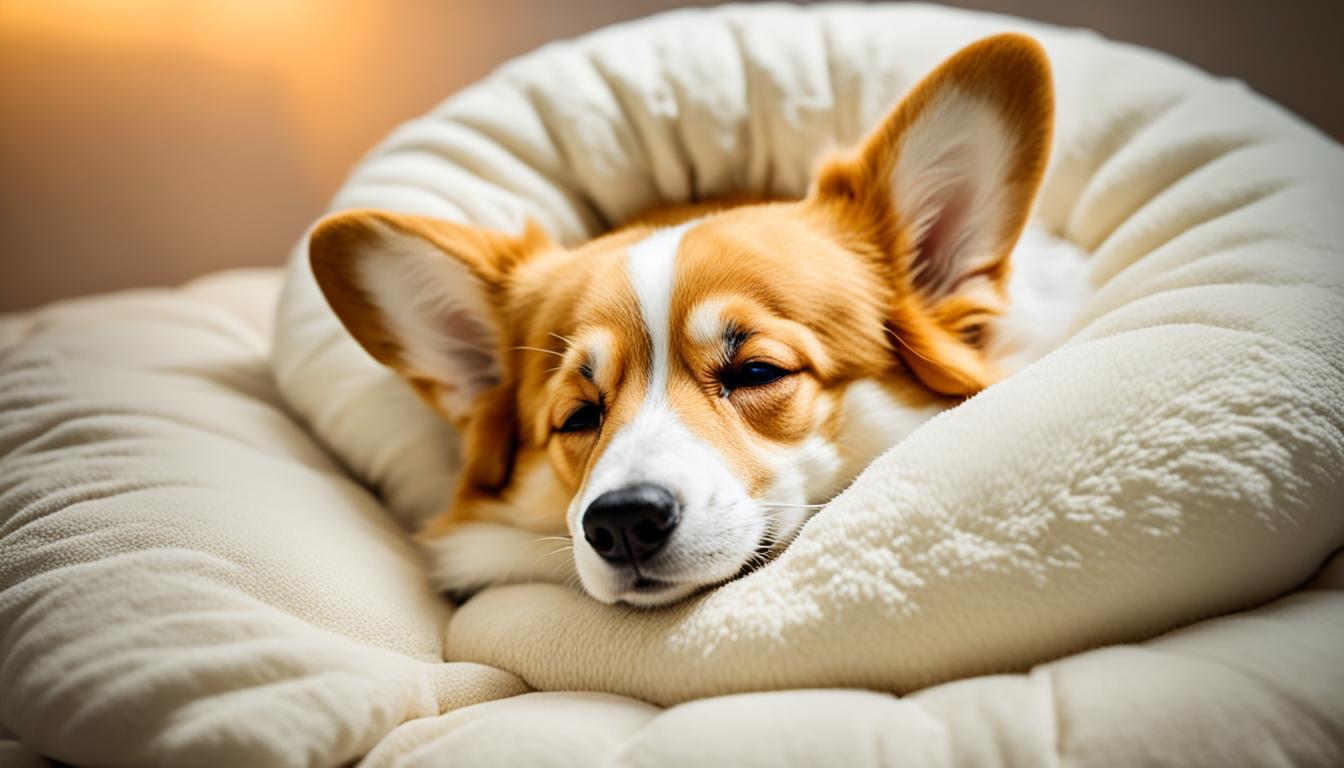

Do you ever wonder if your corgi is happy? Dogs, like humans, experience a wide range of emotions, and it’s important for us, as their owners, to understand how they express their happiness. While they may not be able to tell us directly, they give us clues through their behavior. By paying attention to certain signs, you can determine if your corgi is truly content and joyful.
Key Takeaways:
- Understanding your corgi’s body language is crucial in identifying their happiness.
- A happy corgi will exhibit signs such as wagging tail, soft eye contact, and relaxed ears.
- Observing their behavior, appetite, and energy levels can provide insights into their emotional state.
- Creating a nurturing environment and providing proper care will contribute to your corgi’s happiness.
- Taking note of any changes in behavior and addressing potential issues promptly is essential.
Getting Lots of Sleep
A happy and healthy adult corgi will get many hours of sleep a day. If your corgi is getting lots of quality sleep, it’s a sign that they are content and satisfied. However, if their sleep schedule shifts or they aren’t sleeping as much, it could be a sign of stress or unhappiness.
Adequate sleep is crucial for a corgi’s overall well-being. It allows their body to rest and recharge, ensuring they have the energy they need for daily activities. Just like humans, a happy corgi needs a good amount of sleep to thrive.
Here are some key indicators that your corgi is getting enough quality sleep:
- Their sleeping patterns are consistent. A regular sleep schedule is a positive sign that your corgi is in a comfortable and secure environment.
- They fall into a deep sleep without any disturbances. A calm and peaceful sleep suggests that your corgi feels safe and relaxed in their surroundings.
- They wake up refreshed and ready for the day ahead. A well-rested corgi is more likely to exhibit happy behavior and engage in activities with enthusiasm.
Providing a cozy and quiet sleeping area for your corgi is essential. Make sure they have a comfortable bed or designated space where they can rest without any disruptions. Consider placing their bed in a quiet corner of your home, away from noise and distractions.
The Importance of Sleep for Corgis
Corgis, like all dogs, require proper amounts of sleep to maintain their physical and mental health. During sleep, a corgi’s body repairs and rejuvenates itself, supporting their immune system and overall vitality.
Additionally, sleep plays a significant role in a corgi’s learning and memory consolidation. When your corgi gets sufficient rest, they are better able to absorb new information and retain training cues.
It’s important to note that individual corgis may have slightly different sleep needs. Factors such as age, activity level, and overall health can influence the amount of sleep a corgi requires. Pay attention to your corgi’s unique sleep patterns and adjust their routine accordingly.
| Signs of a Happy Corgi Getting Enough Sleep | Signs of a Stressed or Unhappy Corgi |
|---|---|
|
|
Remember, a happy corgi is a well-rested corgi. By ensuring that your corgi gets plenty of quality sleep, you are setting the foundation for their overall happiness and well-being.
Soft, Relaxed Eye Contact
One of the key indicators of a happy corgi is the way they make eye contact with you. Dogs use eye contact as a means of communication and trust. When a corgi is content and happy, their eye contact will be soft, relaxed, and filled with love. You may notice that they blink often during these moments, showing their relaxed state of mind.
This loving gaze is a clear sign that your corgi is happy and feels safe in your presence. It’s a beautiful moment of connection between you and your furry companion, strengthening the bond you share.
To better understand the significance of soft, relaxed eye contact in corgis, here’s a quote from renowned dog trainer Jordan Carlson:
“When a corgi confidently looks into your eyes without tension or fear, it’s a reliable sign that they are happy and trust you completely. This gentle expression is a testament to the strong bond between a corgi and their human.”
So, if you catch your corgi giving you that soft, relaxed gaze, consider it a heartwarming confirmation of their happiness and trust in you.
Good Behavior on Walks
One of the signs of a happy corgi is good behavior on walks. Dogs are naturally curious creatures and find many things in the world fascinating, like mailmen and squirrels. However, if your corgi is able to come back to you immediately when called during a walk, it indicates that they are more interested in you than anything else. This is a strong indication of a happy corgi.
When your corgi displays good behavior on walks, it demonstrates their trust in you and their positive emotional state. It shows that they feel comfortable and safe in their environment, allowing them to focus on enjoying your company and exploring the world together.
Key Indicators of a Happy Corgi on Walks:
- Responsive to your commands: A happy corgi will eagerly respond to your calls and commands during walks. They will come to you promptly and willingly, showing their willingness to engage and cooperate with you.
- Loose leash walking: When your corgi walks with a loose leash, it indicates that they are relaxed and not feeling restrained or anxious. They are content and comfortable in their surroundings.
- Engaged with you: A happy corgi will stay close to you, frequently looking up and checking in with you. They value your presence and prioritize your company over distractions.
- Playful behavior: A joyful corgi may exhibit playful behavior during walks, such as bouncing, frolicking, or occasionally stopping to play with objects they find interesting. It’s a clear sign that they are feeling happy and carefree.
To ensure that your corgi continues to exhibit good behavior on walks, it’s important to provide them with regular exercise, mental stimulation, and positive reinforcement for their positive behavior. This will help maintain their happiness and strengthen your bond with them.
| Signs of a Happy Corgi on Walks | Indicators of Unhappiness |
|---|---|
| Responsive to commands | Ignoring commands or reluctant to come back |
| Loose leash walking | Pulling on the leash, tense body language |
| Engaged with you | Distracted, constantly pulling towards distractions |
| Playful behavior | Lack of interest in play or exploration |
A Healthy Appetite
A corgi that is content and feeling well will have a good appetite. Pay attention to any changes in your corgi’s eating behavior, as it could be a sign of potential unhappiness or illness.
Monitoring your corgi’s eating habits is an important way to determine their overall happiness and well-being. A healthy appetite is a positive indication that your corgi is content and satisfied. When a corgi is happy, they are more likely to enjoy their meals and eat with enthusiasm.
If you notice a sudden decrease in appetite or a significant change in eating behavior, it could be a sign that something is amiss. It’s essential to observe your corgi’s eating habits and consult a veterinarian if you have any concerns about their health.
Here are some key factors to consider when assessing your corgi’s appetite:
- The amount of food consumed: Is your corgi finishing their meals or leaving food behind?
- Eating speed: Does your corgi eat their meals at a consistent pace, or do they rush through their food?
- Food preferences: Does your corgi show a strong preference for certain types of food, or do they seem indifferent?
- Treat motivation: Does your corgi show excitement and eagerness when offered treats?
By paying attention to these behaviors, you can gauge your corgi’s level of happiness and satisfaction. A voracious appetite is often a positive sign, indicating that your corgi is in good physical and emotional health.
Common Reasons for Changes in Appetite
While a shift in eating habits can sometimes be attributed to a temporary preference or minor digestive upset, it’s crucial to be aware of potential underlying causes. Here are a few common reasons why a corgi’s appetite may change:
- Stress or anxiety: Significant changes in the household or routine can affect your corgi’s appetite.
- Pain or discomfort: Dental issues, digestive problems, or other health issues may impact their desire to eat.
- Temperature: Extreme heat or cold can affect a corgi’s appetite.
- Medication side effects: Certain medications may cause temporary changes in appetite.
It’s essential to address any potential health concerns and seek advice from a veterinarian if your corgi’s appetite remains consistently low or if you notice any other concerning symptoms.
In conclusion, a healthy appetite is a reliable indicator of a happy corgi. By monitoring their eating behavior and addressing any changes or concerns promptly, you can ensure that your corgi remains content, satisfied, and in optimal health.

Wagging Tail and Body
A wagging tail is perhaps the most well-known sign of a happy corgi. When a corgi is feeling joyful and content, their tail will often be raised slightly and wag enthusiastically. It’s a sight that melts the hearts of corgi lovers everywhere. But did you know that a happy corgi’s wag extends beyond just their tail? Their entire body often joins in on the celebration, wiggling with delight.
A corgi’s wagging tail and body are an outward display of their inner happiness. This joyful motion is a result of their excitement and positive emotions, indicating a well-adjusted and content canine companion. So, when you see your corgi’s tail wagging and their body wiggling, it’s a clear sign that they are feeling happy and loved.

| Signs of a Happy Corgi |
|---|
| Wagging tail raised slightly |
| Wiggling body |
Floppy Ears
In addition to other body language cues, a corgi’s ears can reveal a lot about their emotional state. When a corgi is happy and content, their ears will be relaxed and fall naturally against their head. This signifies a sense of calmness and relaxation. Observe your corgi’s ears to see if they are in their natural position. If you notice the ears pulled forward or back, it could indicate different moods such as hyper-interest or stress.
Understanding your corgi’s body language, including their ears, is crucial for recognizing their happiness. By paying attention to these subtle signals, you can nurture a happy and healthy corgi.
| Ear Position | Meaning |
|---|---|
| Ears relaxed, fall naturally against the head | Indicates a happy and content corgi |
| Ears pulled forward | May show hyper-interest or excitement |
| Ears pulled back | Can suggest stress or uneasiness |

“Zoomies”
When a corgi is filled with joy, they may exhibit a delightful behavior known as “zoomies.” These sudden bursts of energy and running around are a playful display of their happiness. Corgis experiencing the zoomies often exhibit other signs of joy, such as a wagging tail and playful expressions.
During the zoomies, your corgi may dart back and forth with speedy enthusiasm, seemingly unable to contain their excitement. They may race around the room, playfully chase their tail, or engage in spontaneous spins and jumps. This energetic display is a testament to their pure enjoyment and contentment.
Observe their body language during the zoomies, as it can provide further insight into their happiness. A corgi experiencing the zoomies typically has a highly animated tail that wags vigorously. Their body may be loose and relaxed, exhibiting an overall sense of joy and freedom.
The zoomies are not only a source of entertainment for your corgi but also a bonding opportunity for you as their owner. Embrace the moment and join in on the fun! Encourage their playfulness with cheerful words and playful gestures. By participating in their joy, you strengthen the bond and create lasting memories with your beloved corgi companion.
Remember, the zoomies are a normal behavior for corgis and often seen as a healthy outlet for their exuberance. However, if your corgi’s zoomies become excessive or disruptive, it may be beneficial to provide additional mental and physical stimulation to help channel their energy in a positive way.

The image above captures the spirit of the zoomies perfectly, showcasing a corgi in full stride, radiating pure happiness and bliss.
Smiling Expression
Happy corgis often appear to be smiling. Their mouth may have an upturned shape, their eyes may beam, and their ears may perk up when they are happy. This smiling expression is a clear indication of a happy corgi.
If you notice your corgi with a smile-like expression, it’s a positive sign of their happiness and contentment. Their mouth may form a slight curve, resembling a smile, which demonstrates their joyful state. Additionally, their eyes will light up, reflecting their inner happiness. Watch for their ears as well. A happy corgi’s ears will be alert and perked up, showing their engagement and enthusiasm.
To better illustrate the smiling expression of a happy corgi, refer to the image above. It captures the essence of a corgi’s joyful demeanor, with an upturned mouth, bright eyes, and perked ears.
Recognizing this smiling expression is an important part of understanding your corgi’s happiness. It allows you to gauge their overall well-being and make efforts to maintain their contentment. Remember to observe their body language, including their smiling expression, alongside other corgi happiness indicators discussed throughout this article.
Conclusion
Understanding the signs of a happy corgi is crucial for ensuring their well-being. By recognizing their body language, such as relaxed ears, soft gaze, wagging tail and body, floppy ears, and other signs of happiness, you can be confident in knowing that your corgi is content.
Remember to provide a nurturing environment, regular exercise, mental stimulation, a balanced diet, and quality time and attention to keep your corgi happy. Pay attention to their sleep patterns, eye contact, behavior on walks, appetite, tail and body movements, and smiling expression, as these are all indicators of their happiness.
When you detect corgi contentment, you can strengthen the bond between you and your furry companion, creating a harmonious and fulfilling relationship. With your love and care, your corgi will thrive and live a joyful life.
FAQ
How can I tell if my corgi is happy?
What does it mean if my corgi is getting lots of sleep?
How can I tell if my corgi is making soft, relaxed eye contact?
Why is good behavior on walks a sign of a happy corgi?
How does my corgi’s appetite indicate their happiness?
Why is a wagging tail and body a sign of a happy corgi?
What do floppy ears indicate about my corgi’s happiness?
What are “zoomies” and why do they indicate a happy corgi?
How does my corgi’s smiling expression indicate their happiness?
How can I ensure my corgi’s happiness?
Source Links
- https://www.naturesrecipe.com/world-of-wag/articles/10-signs-your-dog-is-happy
- https://www.petmd.com/dog/behavior/is-my-dog-happy
- https://www.pdsa.org.uk/pet-help-and-advice/looking-after-your-pet/puppies-dogs/canine-body-language

Carlos is the passionate founder and primary author behind “CorgisCorner.com,” a website dedicated to all things related to the beloved Corgi breed. Born and raised in a small town known for its strong sense of community and love for animals, Carlos developed a deep affection for Corgis from a young age. This love was sparked by his childhood companion, a spirited and loyal Corgi named Toby, who was a constant source of joy and friendship.