

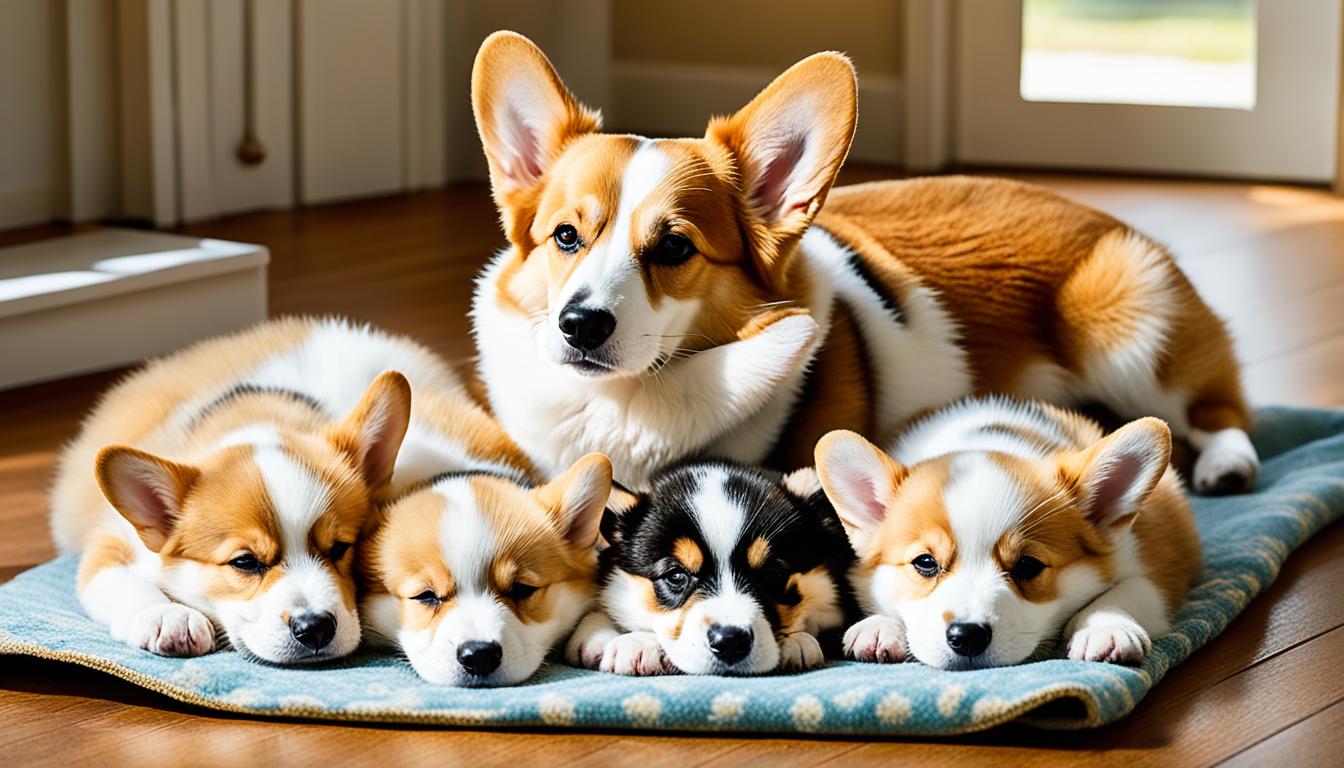

As a Pembroke Welsh Corgi owner, you may have wondered about the timing of your dog’s milk supply. When should you expect it to start showing? Is there a specific timeframe to watch out for? Let’s explore this fascinating topic to ensure optimal nursing and puppy care.
Key Takeaways:
- The mammary glands of a pregnant Corgi start to swell as her due date approaches.
- Some Corgis may start leaking milk anywhere between one day and one week before delivery.
- First-time mothers may experience a longer period of milk leakage.
- Monitoring the dog’s temperature can indicate when she will go into labor.
- A drop in temperature below 99 degrees Fahrenheit suggests that labor will occur within 24 hours.
Feeding a Pembroke Welsh Corgi
Proper feeding is essential during the corgi whelping process and for the care of the puppies. It is crucial to establish a regular feeding schedule to ensure optimal nutrition and growth. Young corgi puppies should be fed three to four times daily, with meals planned for morning, daytime, late afternoon, and late evening.
When it comes to choosing the right food, opt for a high-quality dry dog food that provides the necessary nutrients for a growing puppy. Some recommended brands include Eukanuba Puppy Food, Iams, and Purina Pro. These brands have specially formulated diets that support the development and overall health of corgi puppies.
When bringing a new corgi puppy home, it’s essential to continue feeding them the same food that the breeder has been providing. This helps prevent digestive upsets and allows for a seamless transition into their new environment. If you wish to switch to a different food, it’s recommended to do so gradually to avoid any digestive issues.
A Sample Feeding Schedule for a Corgi Puppy:
- Morning: Feed a measured portion of dry puppy food
- Daytime: Provide a small midday meal to maintain energy levels
- Late Afternoon: Feed another measured portion of dry puppy food
- Late Evening: Offer a final meal before bedtime
It’s important to consult with a veterinarian to determine the best feeding plan for your individual corgi puppy. They can provide guidance based on your puppy’s specific dietary needs and monitor their growth to ensure they are developing appropriately.
Feeding a corgi puppy is a crucial aspect of their care. Providing them with a balanced diet and a regular feeding schedule ensures they receive the necessary nutrients for growth and overall development.
Signs of Lactation in a Corgi
Lactation in a Corgi can be identified through several signs. As the due date approaches, the mammary glands of the dog will start swelling. This is a natural response in preparation for nursing the puppies. Additionally, some dogs may start leaking milk anywhere between one day and one week before delivery. It’s important to note that first-time mothers may leak milk for a longer period as their bodies adjust to the process.
Proper support for lactation is key to ensuring the health and well-being of the mother dog and her puppies. It is crucial to provide the Corgi with a balanced diet to support milk production. High-quality dog food that is specifically formulated for nursing mothers can be beneficial. Additionally, ensuring that the dog stays well-hydrated is important for maintaining milk supply and overall health.
Some breeders may recommend using lactation supplements to further support milk production and the dog’s overall lactation process. These supplements are designed to provide essential nutrients and support the dog’s reproductive system. However, it is important to consult with a veterinarian before introducing any supplements to the dog’s diet.
In addition to providing proper nutritional support, maternal care plays a crucial role in the lactation process. The mother dog should have a comfortable and quiet space to nurse and care for her puppies. This includes having a clean and cozy whelping area where the puppies can safely nurse and bond with their mother. Creating an environment that promotes relaxation and reduces stress is essential for the mother dog and can positively impact the milk letdown and overall lactation process.

By recognizing the signs of lactation in a Corgi and providing the necessary support and care, breeders and owners can ensure that the mother dog and her puppies have a healthy and successful nursing experience. Ongoing monitoring and regular veterinary check-ups can further support the lactation process and address any issues or concerns that may arise.
Care for Newborn Corgi Puppies
The care of newborn Corgi puppies is crucial for their health and development. In the first week of life, puppies are blind, deaf, and unable to regulate their body temperature. It’s important to keep them warm and provide food every two hours to prevent hypoglycemia. Tails are typically docked and dewclaws are removed surgically within the first few days. Puppies are weighed regularly to ensure they are thriving, and any signs of weight loss or other problems should be addressed immediately. Handling the puppies for early neurological stimulation is also recommended. Nails are trimmed regularly, and as they grow, solid food is introduced gradually, starting with a mixture of rice pabulum, formula, and small amounts of puppy-specific food.
Proper Nutrition for Newborn Corgi Puppies
During the first few weeks of their life, newborn Corgi puppies rely solely on their mother’s milk for nutrition. The mother’s milk provides essential nutrients and antibodies that help protect the puppies from infections. It’s important to ensure that the mother is getting a well-balanced diet to support milk production.
In the early stages, it is recommended to monitor the puppies’ weight gain and consult with a veterinarian to ensure they are receiving adequate nutrition.
As the puppies grow older, typically around 3 to 4 weeks old, a gradual transition to solid food begins. It’s important to introduce solid food slowly and in small amounts to avoid digestive issues. A mixture of rice pabulum, formula, and small amounts of puppy-specific food can be given to the puppies to help them transition to solid food.
Physical Care for Newborn Corgi Puppies
In addition to proper nutrition, newborn Corgi puppies require physical care to ensure their health and well-being. Here are some important aspects of their physical care:
- Temperature Regulation: Newborn puppies are unable to regulate their body temperature, so it’s crucial to provide a warm environment for them. The temperature should be kept around 85-90 degrees Fahrenheit during the first week and gradually lowered as the puppies grow older.
- Weighing: Regular weighing of the puppies can help monitor their growth and identify any potential health issues. Weight loss or failure to gain weight can indicate underlying problems that need immediate attention.
- Hygiene: Keeping the puppies and their whelping area clean is vital to prevent the spread of infections. Regularly clean the area, change bedding, and wipe the puppies’ bottoms to ensure cleanliness.
- Nail Trimming: As the puppies continue to grow, their nails will require regular trimming. This helps prevent them from becoming too long or sharp, which can cause discomfort or injury to the puppies or their mother.
By providing proper nutrition and physical care, newborn Corgi puppies can grow into healthy and happy individuals. It’s essential to consult with a veterinarian and breeders for specific guidance and advice on the care of newborn Corgi puppies.

Developmental Milestones for Corgi Puppies
Corgi puppies go through several developmental milestones in their first few weeks. These milestones mark important stages in their growth and overall development. It’s crucial for corgi puppy owners to be aware of these milestones and provide the necessary care and support as their puppies progress through each stage.
Eyes and Ears Development (2 Weeks Old)
At around two weeks old, corgi puppies’ eyes and ears begin to develop. This is an exciting time as their senses start to awaken, allowing them to perceive the world around them. Puppies at this stage may still rely heavily on their sense of touch and smell, but their visual and auditory experiences will continue to expand as they grow.
Mobility and Exploration (3 Weeks Old)
By three weeks old, corgi puppies start to become more mobile, wobbling their way around their whelping area. While they may still stumble and fall, they begin to build coordination and explore their surroundings. This is an essential milestone as it signals their increasing independence and curiosity to interact with their littermates and surrounding environment.
Introduction to Solid Food (4 Weeks Old)
At four weeks old, corgi puppies are ready to be introduced to solid food. This is an important step in their development as they start to wean off their mother’s milk and transition to a diet that includes puppy-specific food. Introducing solid food at this stage allows them to explore different tastes and textures, supporting their growing nutritional needs.
Socialization with Adult Dogs (5 Weeks Old)
When corgi puppies reach five weeks old, it’s beneficial to introduce them to safe adult dogs for socialization purposes. This interaction aids in their social development by allowing them to observe and learn from older canines. It also helps them develop essential social skills and communication with other dogs, providing a strong foundation for their future interactions with both humans and other animals.
Temperament Assessment (7 Weeks Old)
Around the age of seven weeks, temperaments tests can be conducted to determine a corgi puppy’s disposition and personality traits. These assessments can provide valuable insights into the puppy’s individual strengths, weaknesses, and suitability for various types of homes. It assists both breeders and potential owners in finding the best match based on the puppy’s unique temperament characteristics.
Structural Development Assessment (8-10 Weeks Old)
Between eight to ten weeks old, formal photos are taken to assess the structural development of corgi puppies. These photos serve as a tool to evaluate the puppies’ overall conformation, including their physical appearance, body structure, and breed standards. Breeders and potential owners can use these assessments to make informed decisions regarding each puppy’s future, identifying those with show potential and determining appropriate placements in companion homes.

Transitioning to New Environments
As Corgi puppies grow, they go through a period of transitioning from their whelping box to new environments. This is an important phase for their development and socialization. Let’s take a closer look at how this transition takes place.
Moving to a Larger Pen
At around four weeks old, Corgi puppies are ready to explore beyond their whelping box. They are moved into a larger pen that provides more space for them to move around and discover new things. This bigger space allows them to experience different textures and surfaces, such as grass or carpet, and encourages them to explore their surroundings.
Interaction with Adult Dogs
During this time, it’s beneficial for the puppies to interact with adult dogs. This interaction helps them learn proper socialization skills and how to communicate with other dogs. Adult dogs can also provide guidance and teach the puppies appropriate behaviors.
First Visit to the Vet
By the time Corgi puppies reach eight to nine weeks old, they are ready for their first visit to the vet. This visit is crucial for their health and well-being. During the vet visit, the puppies will receive their first vaccinations to protect them from common diseases. They will also undergo a thorough health assessment to ensure they are growing and developing properly. Additionally, the puppies will be microchipped, which helps with identification and ensures they can be reunited with their owners if they ever get lost.
Here is an example of what the table could look like:
| Age | Transition Stage | Key Milestones |
|---|---|---|
| 4 Weeks | Moving to a Larger Pen | Exploring new textures and surfaces |
| 4-9 Weeks | Interaction with Adult Dogs | Socialization and learning from older dogs |
| 8-9 Weeks | First Vet Visit | Vaccinations, health assessment, and microchipping |

“The transition to new environments is an exciting time for Corgi puppies, as they start to explore the world around them and interact with other dogs. Through proper socialization and veterinary care, these puppies are set up for a healthy and happy life.”
Continued Care and Socialization
Providing ongoing care and socialization is crucial for the continued development of your Corgi puppy. As they reach the age of five to six weeks, it’s time to introduce them to various experiences and environments that will help them grow and adapt.
At this stage, let your puppy explore different surfaces, such as grass, carpet, or hardwood floors. You can also introduce them to a variety of toys to stimulate their curiosity and improve their cognitive abilities. Monitoring their playtime and ensuring a safe environment is essential.
It’s also important to gradually transition your puppy to a more adult diet. Start adding small amounts of high-quality puppy food to their milk or formula, gradually decreasing the liquid portion over time. This will help them get used to solid food and support their overall growth and development.
Regular nail trims should be a part of your puppy’s grooming routine. Keeping their nails trimmed helps prevent discomfort, potential injuries, and damage to your furniture and floors.
Ensuring your puppy’s overall health is critical, and deworming is an essential part of their care. Consult with your veterinarian to determine the appropriate deworming schedule and products to use for your puppy’s specific needs.
At eight weeks old, your puppy’s temperament is starting to develop. This is a good time to evaluate their disposition and suitability for different types of homes or purposes. Consider conducting temperament tests under the guidance of a professional to assess their socialization skills, confidence level, and overall behavior.
A formal health assessment at the veterinarian’s office is recommended around nine weeks of age. During this visit, your puppy will receive important vaccinations to protect them against common diseases and viruses. They will also be microchipped, ensuring that if they are ever lost, they can be easily identified and returned to you.
Corgi Puppy Socialization Checklist
Ensuring your Corgi puppy receives proper socialization is vital for their emotional well-being and behavior development. Use the following checklist as a guide to socialize your cuddly companion:
- Expose your puppy to a variety of environments, such as parks, beaches, and city streets, to help them become comfortable in different settings.
- Introduce your puppy to different people, including children, adults, and individuals wearing hats or glasses, to help them become familiar with various appearances and social interactions.
- Arrange playdates with other well-vaccinated and friendly dogs to teach your puppy appropriate canine interactions and help them build confidence in their social skills.
- Expose your puppy to different sounds, such as vacuum cleaners, loud music, and car honking, to prevent fear or anxiety in loud environments.
- Gradually expose your puppy to various stimuli, like bicycles, skateboards, and strollers, to ensure they are not startled or anxious in the presence of common objects.
Remember, socialization should be a positive and gradual process. Always monitor your puppy’s reactions and comfort level, providing reassurance and encouragement throughout their development.
Final Preparations for New Homes
As the time approaches for Corgi puppies to go to their new homes, it’s important to ensure they are well-prepared for this exciting transition. During the final weeks, several essential tasks are completed to ensure the puppies’ health and readiness. These preparations include a comprehensive health assessment, vaccinations, microchipping, and the assessment of their structure and development through formal photos. Let’s dive into each of these final preparations in more detail.
Veterinary Health Assessment
Between eight to nine weeks of age, Corgi puppies undergo a thorough health assessment conducted by a veterinarian. This assessment includes checking their heart, lungs, patellas, eyes, and ears to ensure they are healthy and free of any underlying health issues. It’s an important step in identifying potential concerns and ensuring that the puppies are in optimal health before transitioning to their new homes.
Vaccinations and Microchipping
In addition to the health assessment, Corgi puppies receive their first set of vaccinations during this time. Vaccinations are crucial in protecting the puppies from common diseases and providing them with a strong immune system. Alongside vaccinations, each puppy is microchipped, which involves the insertion of a tiny identification chip under the skin. The microchip is registered with both the breeder and the new owner’s information, providing a permanent form of identification for the puppy.
Formal Photos and Assessment
To assess the structure and development of each Corgi puppy, formal photos are taken. These photos serve as a visual reference for evaluating conformation and potential show potential. These assessments help breeders and potential owners make informed decisions regarding the future of each puppy, whether they are destined for the show ring or companion homes.
In conclusion, the final weeks before Corgi puppies go to their new homes are crucial for their overall well-being and future prospects. Through extensive veterinary health assessments, vaccinations, microchipping, and assessments of their structure and development, breeders ensure that the puppies are healthy, protected, and ready for their new families. By investing time and effort into these final preparations, breeders set a solid foundation for a lifetime of happiness and companionship for both the Corgi puppies and their new owners.
Transition to New Homes
The transition of Corgi puppies to their new homes is an exciting and crucial phase in their development. At this stage, the puppies have reached the appropriate age to leave their litter and embark on their new lives with their forever families. However, it is important for potential owners to understand that this transition requires careful attention and preparation to ensure a smooth adjustment for the puppies and create a nurturing environment for their continued growth.
When bringing a Corgi puppy home, it is essential to provide a safe and loving environment. This includes puppy-proofing the house to minimize potential hazards and ensuring that the puppy has a designated area with a comfortable bed, toys, and access to food and water. A quiet and peaceful space will help the puppy feel secure and ease their adjustment to their new surroundings.
In addition to a supportive physical environment, the new owners should continue the training and socialization that the puppies have received from their breeder. Consistency is key in reinforcing good behavior and teaching healthy boundaries. Socializing the puppy with new experiences, people, and other animals will help them develop into well-rounded and confident adults. Gradual exposure to different environments and stimuli will ensure that the puppy adapts well to various situations throughout their life.
Understanding the specific needs of Corgi puppies is crucial during this transition period. Regular exercise and mental stimulation are essential for their overall well-being. Incorporating daily walks, playtime, and interactive toys into their routine will keep them intellectually engaged and physically active. Being an active and attentive owner will foster a strong bond with your Corgi and contribute to their ongoing happiness and development.
The breeder plays a vital role during this transition period by providing guidance and support. They can offer valuable advice on puppy care, feeding, and training techniques. Experienced breeders are knowledgeable about the unique needs of Corgis and can provide insights into the breed’s temperament and behavior. Staying in touch with the breeder allows for ongoing communication and a support system as you navigate the early stages of owning a Corgi puppy.
In conclusion, the transition of Corgi puppies to their new homes is an exciting but crucial phase in their development. By providing a safe and loving environment, continuing their training and socialization, and addressing their specific needs, new owners can ensure a smooth adjustment for the puppies. Remember to seek guidance from the breeder and stay committed to the ongoing care and well-being of your Corgi throughout their life.
Long-Term Care for Corgis
Long-term care is crucial for the health and well-being of Corgis. To ensure their happiness and longevity, it’s important to provide consistent attention and support throughout their lives.
Here are some key aspects of long-term care for Corgis:
Regular Veterinary Check-Ups and Vaccinations
Regular check-ups with a trusted veterinarian are essential for maintaining your Corgi’s health. These appointments allow for early detection of any potential health issues and ensure that your furry friend is up to date on vaccinations.
Preventative Treatments
To protect your Corgi from common parasites like fleas, ticks, and heartworm, it’s important to administer preventative treatments as recommended by your vet. These treatments help keep your Corgi healthy and prevent the spread of diseases.
Proper Diet and Nutrition
Corgis have specific dietary needs that should be met to support their overall health and well-being. Feed your Corgi a high-quality dog food that is appropriate for their age and activity level. Be mindful of portion sizes and avoid overfeeding, as obesity can lead to various health issues.
Regular Exercise and Mental Stimulation
Regular exercise is important for maintaining your Corgi’s physical health and mental well-being. Take them for daily walks, provide opportunities for playtime, and engage them in activities that stimulate their mind. This can include puzzle toys, obedience training, or interactive games.
Grooming Maintenance
Regular grooming is essential to keep your Corgi looking and feeling their best. Brush their coat regularly to prevent matting and remove loose hair. Additionally, trim their nails as needed and clean their ears to prevent infections.
Dental Care
Good dental hygiene is crucial for the overall health of your Corgi. Brush their teeth regularly using a pet-safe toothpaste and toothbrush. Additionally, provide appropriate dental chews to help promote dental health.
Conclusion
Proper care and attention during the early stages of a Pembroke Welsh Corgi’s life are crucial for their overall health and development. From ensuring proper nutrition and milk supply during the whelping process to providing socialization and regular veterinary care, every step plays a significant role in shaping the well-being of these adorable puppies. As they transition to their new homes, continued care and attention are vital to ensure that the puppies grow up to be healthy, happy, and well-adjusted adult Corgis.
Following the recommended guidelines for corgi puppy care, such as feeding schedules and gradually introducing solid food, is essential in meeting their dietary needs and promoting optimal growth. Additionally, prioritizing socialization and exposing them to various environments at the right stages helps build their confidence and adaptability.
Consulting with experienced breeders and veterinarians throughout the process can provide invaluable guidance and support. They can offer valuable insights into corgi health and development, helping owners make informed decisions regarding nutrition, vaccinations, grooming, exercise, and overall long-term care.
FAQ
When should a Pembroke Welsh Corgi start showing milk supply?
How often should a young Corgi pup be fed?
How can lactation in a Corgi be identified?
What care is needed for newborn Corgi puppies?
What are the developmental milestones for Corgi puppies?
How should Corgi puppies transition to new environments?
What care and socialization is needed for Corgi puppies?
What preparations are needed before Corgi puppies go to new homes?
How should Corgi puppies transition to their new homes?
What is the long-term care for Corgis?
Why is proper care and attention crucial for Pembroke Welsh Corgis?
Source Links
- https://www.welshcorgi.com/feeding.html
- https://dogcare.dailypuppy.com/long-before-labor-dog-begin-lactate-4812.html
- http://curigcorgis.com/resources/breeding-a-litter/breeding-a-litter-part-2

Carlos is the passionate founder and primary author behind “CorgisCorner.com,” a website dedicated to all things related to the beloved Corgi breed. Born and raised in a small town known for its strong sense of community and love for animals, Carlos developed a deep affection for Corgis from a young age. This love was sparked by his childhood companion, a spirited and loyal Corgi named Toby, who was a constant source of joy and friendship.