

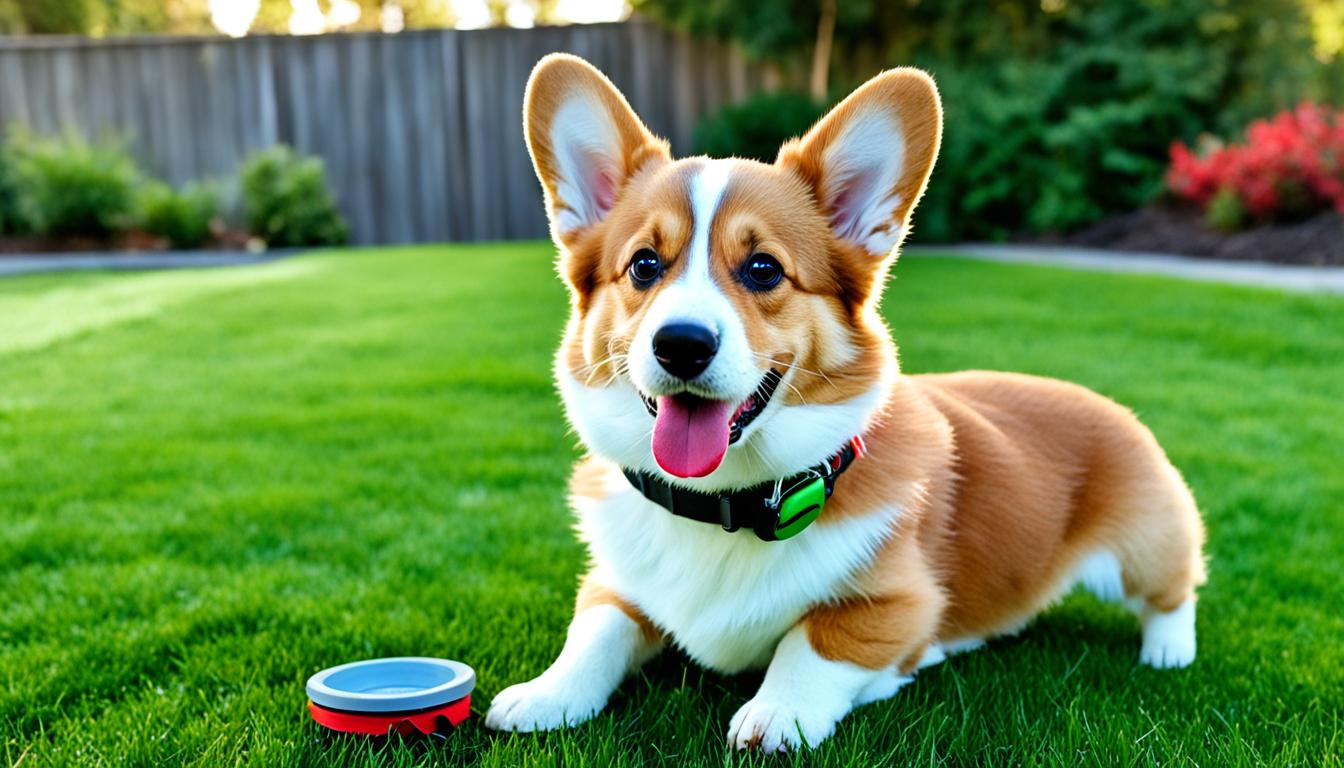

Potty training a Corgi puppy might seem hard at first. But don’t worry! By using the right methods and keeping up with training, you can help your pet learn. This way, you won’t have to clean up messes inside your home.
You’ve just welcomed your cute Corgi puppy home. It’s full of life and wants to explore everything. You look forward to making happy memories. Yet, you quickly see that teaching it where to pee and poop is vital.
Puppies, like young kids, must learn the proper places to do their business. This task may feel tough at the start. However, with our helpful tips, you’ll be ready to guide your Corgi. You’ll ensure it becomes a well-trained pet.
Key Takeaways:
- Consistency is key when potty training your Corgi puppy.
- Set clear goals and create a plan before you begin.
- Establish a schedule to help your puppy anticipate bathroom breaks.
- Show your puppy where to go potty with patience and consistency.
- Gradually transition from puppy pads to going outside.
Set Goals and Make a Plan Before You Begin
Starting potty training with your Corgi puppy? First, set clear goals and a plan. This helps you stay organized and set a timeline for training.
Make sure everyone in the family is on the same page. It’s important for consistency. This way, your puppy learns faster in a supportive environment.
Think about setting up a special spot for your puppy. A crate can be a cozy place for them to learn when to go potty. Add a soft bed and toys to make it feel like a safe space.
Clear goals and a solid plan are key for teaching your puppy. They guide you in training them the right way.
Benefits of Setting Potty Training Goals and Making a Plan:
- Stay organized and track progress
- Establish a timeline for the training process
- Promote consistency and reinforce important routines
- Involve all family members in the training process
- Create a designated space for potty training, such as a crate
Clear goals and a thought-out plan are the foundation of potty training. Remember, being consistent and patient is crucial. Celebrate your puppy’s progress along the way.
Potty Training Goals Checklist:
| Goals | Actions |
|---|---|
| Establish a consistent routine | Create a schedule for regular potty breaks and adhere to it diligently |
| Teach your puppy the appropriate potty area | Show your Corgi puppy where they should go potty, whether it’s outside or on puppy pads |
| Minimize accidents in the house | Monitor your puppy’s behavior, look for signs that they need to go potty, and act promptly |
| Gradually transition from puppy pads to going outside | Use puppy pads as a temporary solution and gradually move them closer to the door until your puppy is comfortable going outside |
| Earn your puppy’s trust and cooperation | Use positive reinforcement, such as treats and praise, to motivate your puppy and reward good potty training habits |
Getting on Schedule
It’s vital to set a schedule when house training your Corgi puppy. A steady routine helps them know when it’s potty time. This reduces mistakes and boosts their potty training success.
If your pup already follows a daily schedule for waking up and walks, add potty breaks to it. Then, they’ll see potty time as a normal part of their day.
Setting a Potty Training Schedule
Here are some tips for making a potty schedule:
- Eat at the same times every day. This helps you know when they’ll need to go.
- Take them to their potty spot regularly, like after meals or naps, or every few hours.
- Watch for signs they need to go, such as sniffing or circling. This means it’s potty time.

“A regular potty schedule helps your Corgi pup learn when and where to go. This routine makes expectations clear and boosts potty training success.”
Patience and consistency are key to potty training. It might take a while for your puppy to get the hang of it. Always praise and treat them when they go potty in the right spot. This positive feedback supports good habits and helps your puppy improve.
Showing Them Where to Go
Teaching your Corgi puppy where to potty is crucial. They don’t naturally know where to eliminate. It’s important to show them the right spot.
Staying consistent is the secret to potty training success. You need to pick a spot for your puppy to go, whether it’s outside or on puppy pads. Then, always take them to that spot. It makes training clearer and builds good habits.
For outdoor training, pick a certain area in your yard. Always take your puppy there to eliminate. Their scent will soon make them recognize it as their potty spot. Saying “potty” while they go helps them make the connection between the word and the action.
“Consistency is key when it comes to potty training.”
Choosing puppy pads? Place them in one area in your home. Make sure your puppy can easily get to it. Show them the pads and guide them there when it’s time. They’ll learn that’s where they should go.
Dogs love routine. A clear toilet area helps your Corgi puppy understand where to go faster and better.

Benefits of a Designated Toilet Area
Having a specific toilet area for your Corgi puppy is very helpful:
- Clear Communication: Taking your puppy to the same place every time shows them where to potty.
- Reduced Confusion: Knowing their potty spot means fewer accidents around the house.
- Easier Cleanup: One potty area simplifies cleaning and keeps the house fresher.
With patience and consistency, your puppy will learn their potty area. This makes training easier and more successful.
To Use or Not To Use Puppy Pads
Are you unsure about using puppy pads for your Corgi puppy? These pads are handy, especially if you’re often away or live where winters are tough. But, remember the goal is to get your puppy to go potty outside eventually.
Long use of puppy pads can lead to hard-to-break habits. Teaching your Corgi to eliminate outside right from the start is best. It saves you from cleaning messy pads and sets good habits early on.
Wondering how to shift from indoor pads to outdoor potty breaks?
Create a Transition Plan
A slow shift works best. Begin by moving the pads closer to the door, bit by bit taking them towards the outside potty area. This connects the smell and feel of the pads with going outside.
“A gradual transition is the key to success.”
Soon, you can stop using the pads and switch to outdoor breaks. Stay patient, as this change takes time for your puppy to get used to.
Consistency is Essential
Being consistent is key in dog training, including potty training. Ensure everyone in the house follows the same rules. This clarity helps your puppy know the correct place to eliminate.
Use the same cue, like “go potty,” when it’s time for them to go outside. Use treats or praise to encourage your puppy during this change.
Be Prepared for Accidents
Accidents might happen while transitioning. Stay patient and don’t scold your puppy. Instead, praise good behavior when they go potty outside. Mistakes are part of learning. With time and steady training, your puppy will master potty training.
By slowly moving from puppy pads to outdoor potty breaks, you prepare your Corgi for the future. Remain consistent, patient, and positive. With commitment, you’ll have a well-trained Corgi ready to go when nature calls.
Establishing Bladder Control
Potty training is crucial for puppies, especially Corgis. They have different bladder control levels depending on their age. The American Kennel Club says puppies can hold their pee based on how many months old they are.
Expecting puppies to hold it for too long is tough. They have small bladders and need to go out often during the day. Regular potty breaks help avoid accidents inside your home.

Younger Corgi puppies need to go out more often. Older ones can wait longer. But don’t push them too hard.
As your Corgi grows, slowly increase the time between potty breaks. Watching their behavior lets you create a good potty break routine.
“Timing potty breaks based on age and bladder control is key for potty training success.” – Corgi Training Expert
Example Schedule for Potty Breaks:
| Age (in months) | Recommended Maximum Time Between Potty Breaks |
|---|---|
| 2 | 2 hours |
| 3 | 3 hours |
| 4 | 4 hours |
| 5 | 5 hours |
| 6 and above | 6 hours or more (after gradually increasing the time between potty breaks) |
Puppies are all different, and so is their bladder control. Some need to go out more often than others. Watching your Corgi and adjusting their schedule will help with potty training.
Observing Your Corgi’s Behavior
Corgi puppies can’t talk about their potty needs. So, watching their behavior is very important. Look for cues to know when they need to go outside. This helps avoid accidents inside.
Look out for signs like squatting, sniffing, or circling. These show your puppy is looking for a spot to go. It’s crucial to act fast and take them to the right place.

“Observing your Corgi puppy’s potty signs is a chance to help them. Quick action and guiding them to the potty area teaches good habits. It also means fewer accidents at home.”
To train your puppy well, be consistent. Create a routine and offer many chances for breaks. This will help them learn the right potty habits.
Creating an Observation Checklist
Make an observation checklist for your puppy’s potty cues. Include common signs and any unique behaviors they show. This checklist helps you become more attentive to their needs.
| Common Signs | Unique Behaviors |
|---|---|
| Squatting | |
| Sniffing the ground | |
| Circling in one spot | |
| Restlessness or pacing | |
| Whining or barking | |
| Scratching or pawing at the door | |
| Sudden disinterest in play or toys |
Write down extra behaviors in the checklist as you notice them. Knowing these cues helps in successful potty training.
Pay attention to potty cues and respond quickly to your puppy. Use positive rewards when they use the right spot. Be patient as they learn, accidents might happen.
Considering Your Puppy’s Diet
When potty training your Corgi puppy, their diet plays a big role. Since puppies have young guts, they often need to go outside more. Feeding them well helps control their bowel movements and eases potty training.
Diet changes or food allergies can cause digestive troubles and accidents. If your puppy gets diarrhea or has stomach issues, see a vet right away. The vet will help you choose the best diet to keep digestion smooth and prevent accidents during potty training.
Feeding Schedule and Potty Break Frequency
Having a fixed feeding time helps with potty training. Feed your puppy at regular times to know when they’ll need outside breaks. This routine lowers the chance of indoor accidents.
Puppies can’t hold it as long as adult dogs due to their small bladders. Generally, a puppy can wait to go outside for hours equal to their age in months. So, a three-month-old might manage three hours before needing a break.
Puppy Diet and Bowel Movements
The food you give your Corgi puppy impacts their bowel movements and potty training. Good puppy food keeps their digestion regular and cuts down on bowel movements.
When it comes to your puppy’s diet and potty training, keep these tips in mind:
- Pick a food that’s right for your Corgi’s age and size.
- Stick to the feeding advice from the food maker or your vet.
- Avoid changing your puppy’s food too often, as it can upset their stomach.
- If changing food types, do it slowly over a week to avoid problems.
To help your Corgi puppy with potty training, ensure they always have fresh water. Being well-hydrated aids their overall health and helps keep bowel movements regular.
Remember, each puppy is different, and their progress in potty training will vary. Stay patient and consistent, and watch how their diet affects their bathroom habits. With the right nutrition and a good potty routine, your Corgi will do great in potty training.
Motivation and Positive Reinforcement
Motivation and positive reinforcement are key in teaching your Corgi puppy to use the potty. Understand what your puppy loves – like treats, praise, or toys. Use these as rewards for going potty in the right place. Instead of scolding them for accidents, reward them. This method makes potty training a positive experience for your puppy.
“The right motivation and positive reinforcement are crucial,” says Dr. Emma Carter, a vet known for her work in puppy training. “Using rewards helps puppies learn to go potty outside, reinforcing good behavior.”
Reward your puppy right after they go potty outside. This helps them make the connection between their action and the reward. It shows them what behavior is being rewarded.
Creating a Reward System
You can make potty training better by setting up a reward system. Here’s a simple one to try:
- Track successful potty breaks with a chart or checklist.
- Give a point or sticker for each time they go in the right spot.
- Give a special treat or a new toy when they collect enough points or stickers.
This system motivates your puppy and helps you see their progress. Celebrating success makes training fun for you and your puppy.
Always use positive reinforcement when training. Always reward good potty behavior to avoid them feeling unworthy. Be generous with praise and rewards to promote good potty habits.
| Reward Ideas | Description |
|---|---|
| Treats | Choose small, tasty treats as rewards for potty training. Pick ones that are easy to carry and quickly eaten. |
| Verbal Praise | Use happy and enthusiastic words like “Good job!” or “Well done!” to encourage your puppy. |
| Interactive Toys | Offer toys that challenge their minds, like puzzle toys. These are great as rewards for using the potty successfully. |
| Playtime | Set aside special playtime as a reward for consistent potty training. It’s an enjoyable reward for both you and your puppy. |
Cleanliness is Key
Accidents can happen when potty training. It’s key to clean them up right away. If your Corgi puppy has an indoor accident, cleaning it up fast prevents bad habits and stops odors from sticking around.
Getting rid of smells is a main reason for cleaning accidents. Dog pee and poop leave scents that can tell your puppy to go in the same spot again. Cleaning well removes these smells, discouraging your puppy from going there again.
To get rid of odors well, use enzymatic cleaners made for pet messes. These cleaners take apart the urine or poop on a molecular level. This stops the odors completely, not just hiding them. Make sure the cleaner is safe for pets to keep your Corgi healthy.
When cleaning up, it’s important to clean the whole area. This means cleaning the surface and anything below that might have absorbed the mess. Use a clean cloth or paper towels to soak up pee or pick up poop. Then use the enzymatic cleaner as the instructions say.
“Quickly addressing accidents and thoroughly cleaning up the mess can help prevent reoffending and ensure a clean environment for your Corgi puppy.”
After you’ve applied the cleaner, let it sit to do its job. Avoid using other cleaners that might mess with the enzymatic cleaner’s work.
After cleaning, keep your puppy away from the area until it dries. You might use baby gates to help with this. It shows your puppy that the spot isn’t okay for potty time.
Cleaning accidents fast and well stops your puppy from thinking indoors is okay for going potty. It keeps your home clean and smelling nice. This makes living with your furry friend better for both of you.
Conclusion
Potty training a Corgi puppy needs you to be consistent, patient, and use the right methods. By applying the tips shared here, you can teach your Corgi puppy to go potty outside. Do remember, though, puppies are all different. So, the time it takes to train them can vary.
Always stay positive and keep the training routine the same every day. This helps your puppy learn faster. Give them treats, praise, or toys when they do well. This encourages them in their training. Cleaning up any mess right away is vital too. It stops your puppy from wanting to go potty in the same spot again.
Success in potty training your Corgi comes down to being patient, consistent, and positive. It might take some time and effort, but you’ll end up with a well-behaved friend. Just remember to keep at it, praise their successes, and enjoy your time together training.
FAQ
What are some essential tips for potty training a Corgi puppy?
How important is setting goals and making a plan before starting potty training?
Why is establishing a schedule important in potty training a Corgi puppy?
How can I show my Corgi puppy where they should go potty?
Should I use puppy pads for potty training my Corgi puppy?
How can I establish bladder control in my Corgi puppy?
What signs should I look for to recognize when my Corgi puppy needs to go potty?
Does my Corgi puppy’s diet affect their potty training?
How important is motivation and positive reinforcement in potty training a Corgi puppy?
What should I do if my Corgi puppy has an accident during potty training?
How long does it take to potty train a Corgi puppy?
Source Links
- https://www.dogster.com/dog-training/how-to-potty-train-a-corgi
- https://iheartdogs.com/7-secrets-to-quickly-potty-training-a-corgi/
- https://www.reddit.com/r/corgi/comments/uakth4/hello_this_is_my_10_week_old_corgi_and_my_first/

Carlos is the passionate founder and primary author behind “CorgisCorner.com,” a website dedicated to all things related to the beloved Corgi breed. Born and raised in a small town known for its strong sense of community and love for animals, Carlos developed a deep affection for Corgis from a young age. This love was sparked by his childhood companion, a spirited and loyal Corgi named Toby, who was a constant source of joy and friendship.