

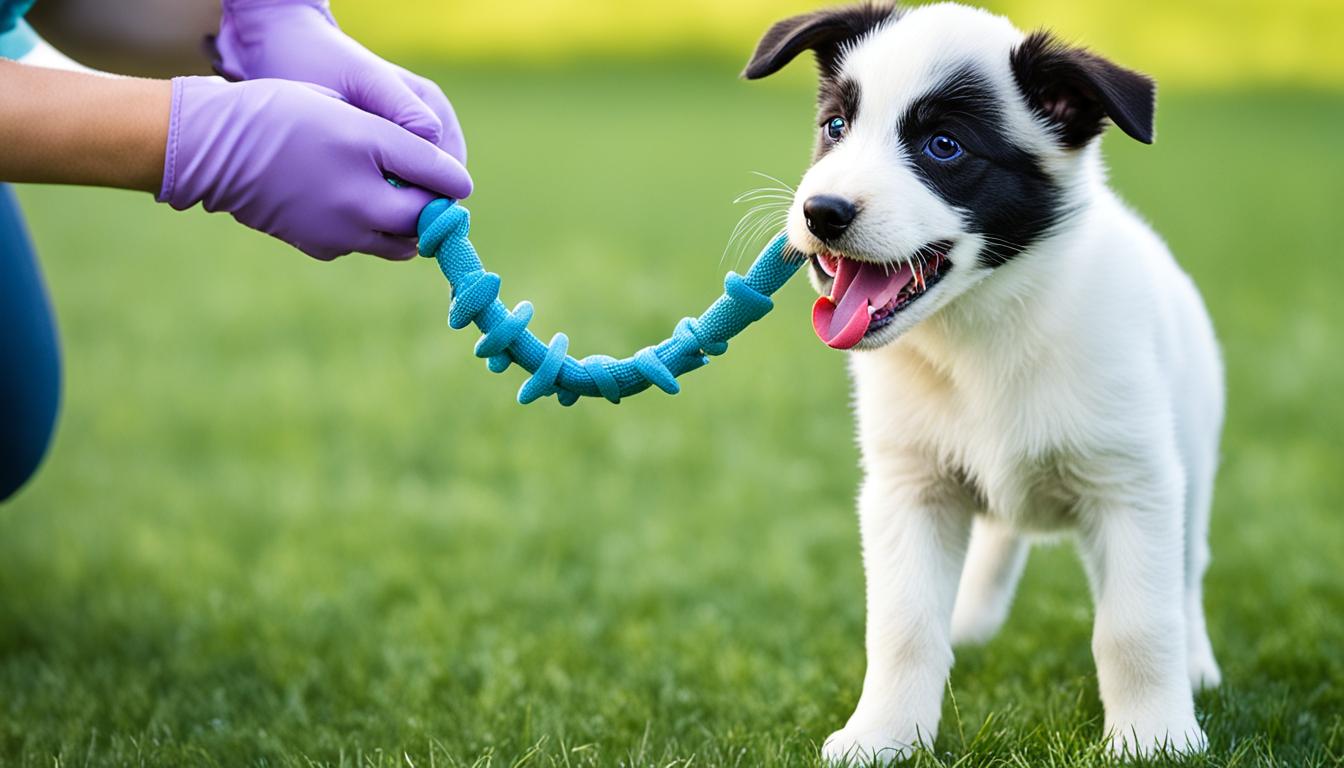

Are you having trouble with your little herder’s puppy biting? I totally get it. My Australian Shepherd, Atlas, was a ball of energy with a biting habit when he arrived. His sharp teeth would nip at everything — my hands, ankles, and even furniture. It was both frustrating and painful at times.
But there’s hope. With the right training, you can stop your herder’s puppy biting. In this article, we’ll share some great tips. These are proven methods based on expert advice and research. So, you can trust they’ll work for you and your pup.
Key Takeaways:
- Understand that puppy biting is normal behavior for little herders.
- Teach bite inhibition through positive reinforcement techniques.
- Redirect biting behavior to appropriate chew toys.
- Manage hyperactivity and excitement to prevent puppy biting.
- Consistently reward calm behavior and reinforce positive habits.
Understanding Puppy Biting Behavior
Puppies from herding breeds often nip and bite. They use their mouths to learn about their world. It’s their way of exploring and making friends with dogs and humans. Even though this is normal, it’s important to help them understand when biting is not okay.
One way to manage this is by teaching them bite inhibition. It means puppies learn to bite gently. It’s very important for herding dogs. They naturally use their mouths a lot, especially when herding.
Teaching bite inhibition helps avoid too much nipping. It makes time with their puppy safer for everyone.
Using positive steps is key for teaching them. Give rewards for playing nicely. Show them fun chew toys instead. This helps them bite less hard. Also, give them lots of different toys. It meets their need to chew and explore.
“Bite inhibition is a must for herding dogs. It stops nipping from turning into bigger problems. All puppies should learn it.”
– Dr. Sarah Johnson, Canine Behavior Specialist
Knowing about herding breeds helps manage biting. These dogs are smart, full of energy, and love to herd. Keeping their minds and bodies busy is important. This can be through learning commands, solving toy puzzles, or playing together. It keeps them from getting bored and nipping.
It’s very important to work on biting behavior early. Teach them how to bite softly. Use rewards for good behavior. Make sure they have good toys to chew on. This helps manage their biting in a positive way.
Common Herding Breeds
| Breed | Origin | Temperament |
|---|---|---|
| Border Collie | Scotland | Intelligent, Energetic, Highly Trainable |
| Australian Shepherd | United States | Loyal, Active, Versatile |
| German Shepherd | Germany | Confident, Courageous, Protective |
| Shetland Sheepdog | Scotland | Gentle, Intelligent, Energetic |
Tips for Teaching Bite Inhibition
Teaching your puppy bite inhibition is crucial. It means teaching them to control their bite so they don’t hurt anyone.
Puppies learn to be gentle first from their moms and brothers and sisters. When they play, if one puppy bites too hard, the other might yelp or stop playing. This shows the biting puppy they were too rough.
If your puppy bites you too hard, try saying “ow!” in a high voice. This is like how dogs tell each other “that hurt!”. Do this every time to help them learn not to bite so hard.
Show your puppy you like it when they play gently. Give them treats or praise when they do. Also, give them chew toys so they learn what’s okay to bite.
“Teaching bite inhibition needs you to be patient and consistent. Signal clearly, reward gentle playing, and guide them on what to bite. This will help them bite more softly.”
Being consistent is very important in teaching them this. Dogs do well with clear, repeated messages. Stick to your methods and your puppy will learn to control their biting.
Puppy biting is normal, but they have to learn not to bite too hard. With your patience, consistent training, and positive rewards, your puppy will grow up to be gentle. This makes sure you two get along well.
| Tips for Teaching Bite Inhibition |
|---|
| Use vocal cues: Make a high-pitched “ow!” sound or yelp when your puppy bites too hard. This mimics how dogs communicate and helps the puppy understand that its bite was too rough. |
| Reinforce gentle play: Reward your puppy with praise, treats, or other positive reinforcement when it engages in gentle play. This helps the puppy understand that gentle play is rewarded. |
| Redirect biting behavior: Provide appropriate chew toys to redirect your puppy’s biting instincts towards more suitable objects. This helps teach the puppy what it can bite on. |
| Be consistent: Consistency is key when teaching bite inhibition. Provide clear signals, reward gentle play, and redirect biting behavior consistently to help your puppy develop a softer, more controlled bite. |
Redirecting Biting Behavior
When a puppy bites playfully, it’s important to guide them right. Giving them different chew toys can move their biting habit to something better. This protects your hands and helps puppies learn proper chewing targets.
Offering chew toys of various sizes keeps puppies from getting bored. Make sure these toys are safe and right for puppies. Stay away from very small toys, as they could cause choking.
If a puppy still bites after getting toys, you need to teach them limits. Stop playing immediately if their biting is too hard. This shows them that biting means playtime ends.
Staying consistent is key to stop puppies from biting. When they bite, say “no” calmly and give them a toy instead. Keep doing this to teach them biting us or other things is wrong.
Training puppies to bite the right way is very important. By giving them good chew toys and guiding them often, you help them behave better as they grow.

Changing a puppy’s biting habits requires patience. With ongoing training and positive steps, your puppy will learn to chew properly. Over time, they’ll understand not to bite people or items when playing.
Managing Hyperactivity and Excitement
Hyperactivity and too much excitement can lead to puppies biting. It’s important to manage and direct their energy. This stops them from biting when they shouldn’t.
1. Providing Structured Playtime
Structured playtime is key for hyper puppies. Play games that make them think and move. This uses up their extra energy and keeps them from biting.
2. Setting Clear Boundaries
It’s vital to set clear boundaries to control hyperactivity. Teach commands like “sit” and “stay” to bring about discipline. Always stick to these rules for a calm setting.
3. Giving Breaks in a Designated Playpen or Crate
Breaks can calm an overly excited puppy. Put them in a playpen or crate to rest. This helps them relax and stops biting from too much excitement.
4. Establishing Rules and Structure
A routine is key for controlling hyper puppies. Have regular times for eating, sleeping, and playing. This makes them feel secure and calm.
Calming aids like pheromone diffusers or music can also help. They make for a peaceful space and lower their anxiety.

Using these methods in your puppy’s daily life can manage hyperactivity. This means less biting and more peace.
Rewarding Calm Behavior
Reinforcement training is important for managing puppy biting. An effective way to do this is to reward calm behavior. When your puppy is calm and quiet, give them something positive. This shows them what behavior you like and encourages them to keep being calm.
Positive reinforcement can be praise, treats, or kind words. When your puppy is calm, give them a reward. This makes them want to be calm more often. It helps with biting and also with being a good pet.
Be consistent with your rewards for calm behavior. Reward your puppy every time they are calm. This teaches them that being calm is good and makes them want to do it more.
Benefits of Positive Reinforcement
Positive reinforcement is very helpful in training puppies. It helps you and your puppy build a strong relationship based on trust. Here are some benefits of positive reinforcement:
- Enhances learning: It makes it easier for puppies to learn good behavior by linking rewards with what you want them to do.
- Encourages good behavior: Rewarding calm behavior makes your puppy want to be calm and well-behaved.
- Strengthens the bond: It creates a happy environment and makes the bond between you and your puppy stronger. This leads to trust and a willingness to please.
It’s important to focus on rewarding good behavior, not punishing bad ones. This makes training a positive experience for you and your puppy.
“Positive reinforcement is a powerful tool in puppy training. It builds a strong bond between you and your puppy based on trust and mutual understanding.”
By always rewarding calm behavior, you help stop puppy biting in the long run. Use positive reinforcement in your training, and your puppy’s behavior will get better over time.

Seeking Professional Help
If your puppy keeps biting and it gets worse, it’s time to get help from an expert. A professional dog trainer or behavior specialist has the right skills. They can find out why your puppy bites and give you special training to help.
Joining a puppy class is a great move too. Places like the AKC S.T.A.R. Puppy class are perfect for meeting other dogs and learning how to behave. With a trained pro, you’ll learn how to stop the biting and tackle other tough behaviors.
Getting help shows you care about your puppy’s happiness and your good relationship. It means you’re doing your best for your furry buddy.
| Benefits of Seeking Professional Help: | How a Professional Can Help: |
|---|---|
|
|
Remember, professional dog trainers and behavior specialists are there to support and guide you. They offer valuable insights and advice that can really help with biting and other issues.
Patience and Consistency
Training a puppy well needs patience and steady effort by the owner. Puppy training demands time and hard work. You must set clear limits, enforce rules, and keep up positive behavior. This patient and steady method helps control and stop common issues like puppy biting.
Consistency is Key
Being consistent is vital in training puppies. Dogs do best with clear rules and routines. By always encouraging good actions and correcting bad ones, owners can make a stable, peaceful home for their puppies. This includes staying the same with commands, schedules, and rewards.
“For a dog to behave well, consistent training is essential. You must be clear and strict with your rules and enforce them all the time. Dogs learn by repetition and consistency, so give clear signs and rewards for the actions you like.”
– Dr. Sarah Thompson, Certified Dog Trainer
Be Patient and Understanding
Training a puppy requires time and a lot of patience. Keep in mind that puppies are still figuring out the world. They might not get commands or behaviors fast. Stay patient and supportive, offering kind guidance and positive feedback. Getting upset or rushing can slow down training and stress both you and the puppy.
Embrace Positive Reinforcement
Positive reinforcement works wonders in puppy training. Focus on rewarding good behavior instead of punishing bad ones. When your puppy acts well, like chewing properly or being calm, give praise, treats, or playtime. This positive response makes it clear which behaviors are good, helping with the training.
| Benefits of Patience and Consistency in Puppy Training |
|---|
| Builds trust and strengthens the owner-puppy bond |
| Enables effective communication between owner and puppy |
| Establishes a foundation for long-term obedience |
| Reduces behavioral issues and promotes a well-adjusted puppy |

Conclusion
Puppy biting is normal but can be controlled with the right training. By understanding why puppies bite and using good training methods, you can build a happy relationship with your pet. Teaching them to be gentle, redirecting their biting, and reducing their hyperactivity are key.
It’s also important to praise calm behavior and get help from professionals if needed. Being consistent and patient helps a lot as you teach your puppy. By encouraging good actions and setting limits, you can stop the biting.
Remember, teaching your puppy not to bite takes time and effort. But, with the correct techniques and dedication, you can do it. Follow these tips and you’ll have a well-behaved, bite-free furry friend. Enjoy training your cute puppy and see them become a joyful and obedient family member.
FAQ
Why do puppies bite?
How can I teach my puppy bite inhibition?
What should I do when my puppy starts biting during play?
How can I manage my hyperactive puppy’s biting behavior?
How can I reinforce calm behavior in my puppy?
Should I seek professional help for my puppy’s biting behavior?
How important is consistency in puppy training?
How can I prevent puppy biting?
Source Links
- https://www.doggoneproblems.com/coby-nipping/
- https://www.bonddogtraining.com/blog/training-tips-when-puppy-nipping-grows-up
- https://www.akc.org/expert-advice/training/stop-puppy-biting/

Carlos is the passionate founder and primary author behind “CorgisCorner.com,” a website dedicated to all things related to the beloved Corgi breed. Born and raised in a small town known for its strong sense of community and love for animals, Carlos developed a deep affection for Corgis from a young age. This love was sparked by his childhood companion, a spirited and loyal Corgi named Toby, who was a constant source of joy and friendship.