

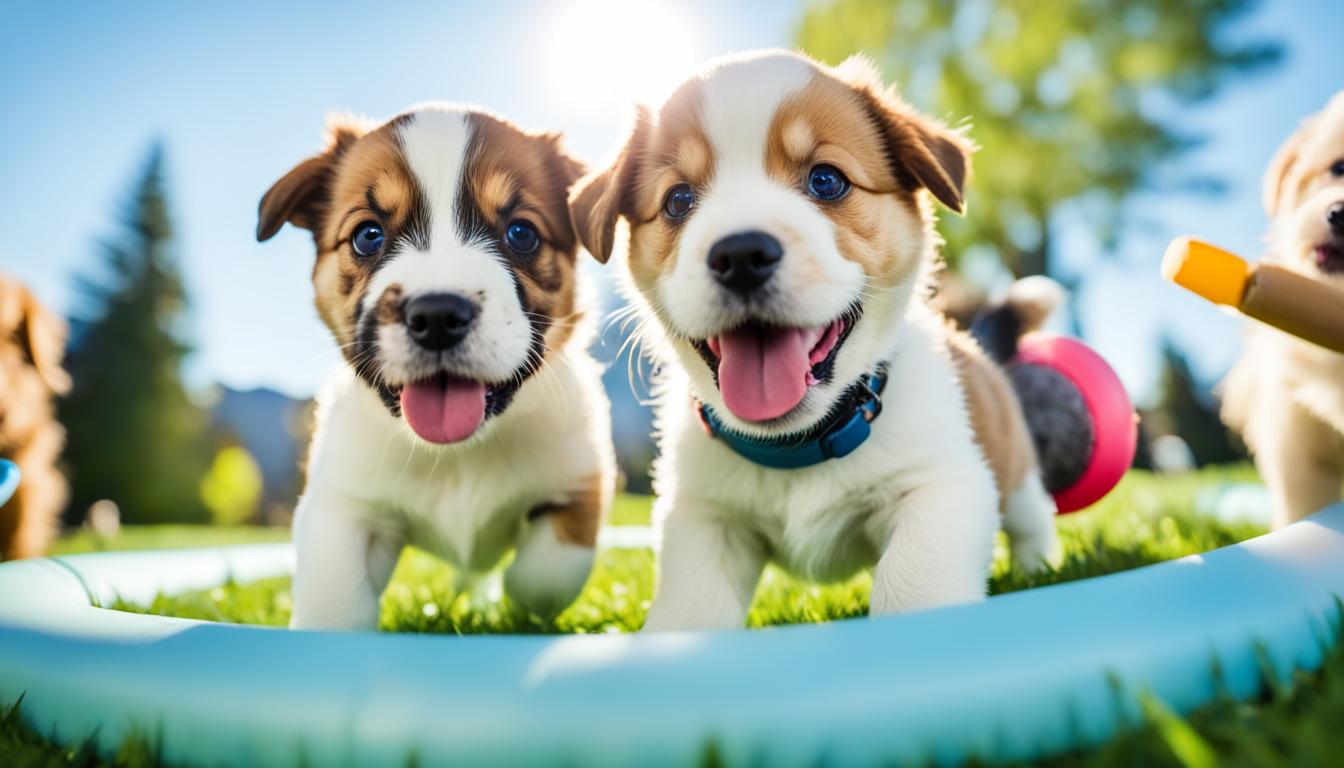

Getting a new puppy is exciting. You can’t help but love their soft fur and playful ways. It’s key to know how important it is to help your new friend learn about the world.
I’ll never forget when I brought Max home. He was full of life and ready to explore everything. I knew I had to learn about puppy socialization for his sake.
What I learned was surprising. Socializing your puppy means more than just making friends. It’s about helping them become confident and know how to act in different situations.
We can greatly influence our puppy’s life. That’s why I want to share what I’ve learned with you.
If you’re new to being a puppy parent or even if you’ve had dogs before, you’ll find something useful here. This guide has everything you need to know about making your puppy feel at home in the world.
Are you ready for this amazing journey with your new buddy? Let’s start the adventure of puppy socialization together!
Key Takeaways:
- Socializing your puppy is crucial for their joy and well-being.
- Good socialization means teaching them how to behave and be brave.
- This guide gives you smart tips and clear steps for helping your puppy.
- You can help shape a wonderful future for your puppy.
- Let’s start this fulfilling journey of socializing your puppy together!
Introducing Your Puppy to the Family Dog
When you bring a new puppy home, it’s important to introduce them to your older dog carefully. This helps both pets get along better. Here are some tips:
Puppy socialization is key to helping them bond. Let’s look at some steps to make this happen:
1. Choose a Neutral Setting
Pick a neutral place for their first meeting. This avoids the older dog feeling territorial. It creates a fair atmosphere for both.
2. Start with a Relaxed Walk
Begin with a leash walk in a calm area. It allows them to meet without stress. They can sniff and get comfortable together.
3. Outdoor Playpen for Young Puppies
Use an outdoor playpen for young puppies. It’s a safe way for them to play. It also prevents the older dog from feeling overwhelmed.
4. Gradually Move the Interaction Indoors
After a good outdoor meeting, bring them inside. Choose a small room to watch them closely. This helps you stop any problems quickly.
5. Supervised Interaction and Crate Training
Always watch the dogs when they’re together. Look for signs of tension or aggression. Use crate training for socialization. It gives them a safe place to take a break.
“Bringing a new puppy into your home takes time and patience. Move at a pace that works for your dogs. Give them positive interactions together.”
Take your time introducing your new puppy to the older dog. With supervised interaction, you’ll build a strong and happy relationship between them.
Socializing Your Puppy with People
When teaching your puppy puppy socialization with people, focus on calm greetings. It’s key to let your guests know ahead of time. You’re training your puppy for calm meet-ups.
Tell your guests to wait until your puppy calms down before interacting. This helps a lot.
If excitement is what your puppy shows, crate training is helpful. It gives a safe spot for them to relax. This helps your puppy feel better around new friends.
Not every puppy gets excited, though. Some feel nervous or anxious with new faces. For these pups, pushing them isn’t right. Try socialization through existence instead.
With existence training, your puppy watches people from afar. They learn about people without stress. Giving treats for being calm helps them make happy connections.
The Importance of Calm Greetings
“Teaching your puppy calm greetings is fundamental. It leads to manners. They learn not to jump up, making everyone’s experience better.”
Teaching calm ways to say hello and using crate or existence training helps a lot. Your puppy will be more sociable and confident with people.
| Socialization Tips | Description |
|---|---|
| Teach calm greetings | Instruct your puppy to stay calm when meeting new people. |
| Prepare your guests | Inform your guests about your puppy’s training goals and ask them to support calm greetings. |
| Use crate training | Provide a safe space for your puppy to calm down during greetings. |
| Practice existence training | Allow your puppy to observe new people from a distance and reward calm behavior. |

The Importance of Existence Training
Existence training is vital for puppy socialization. It teaches them to stay calm, boosts their confidence, and helps with engagement. This technique allows your puppy to settle and watch their environment in new places or around unfamiliar people. By staying calm and focused, your puppy learns to handle different settings and challenges confidently.
Promoting Calm Behavior
Existence training mainly focuses on teaching your puppy to stay calm. Through regular exposure to various scenarios, they learn to keep their cool in new or busy places. This training is crucial for their ability to control themselves and manage impulses, making them well-behaved and balanced.
Building Puppy Confidence
Building confidence is a key part of existence training. Introducing your puppy to new people, places, and experiences helps them form positive associations with these new encounters. As they become more confident in exploring new situations, their overall self-assurance improves. This boost in confidence affects their daily interactions and behavior positively.
Strengthening the Bond
Existence training also lets you deepen your connection with your puppy. Leading them through new experiences and aiding them in processing different stimuli teaches them to trust and lean on you. This journey of exploration and learning bolsters the trust between you and your puppy, setting a strong base for a lifelong bond.
“Existence training helps your puppy become not just well-socialized, but also well-rounded and adaptable.”
| Benefits of Existence Training |
|---|
| Promotes calm behavior |
| Builds puppy confidence |
| Strengthens the bond |
Existence training is a key part of your puppy’s learning path. It focuses on promoting calmness, building their confidence, and strengthening your relationship. This approach prepares your puppy to face the world as a well-adjusted and engaged companion.
Puppy Playtime Guidelines
Playtime is essential for your puppy’s growth. It helps them learn how to act and interact. Owners need to know what good play looks like and spot possible problems.
Puppies like to chase, bite, and wrestle during play. This teaches them social cues, improves their coordination, and uses up energy. Play also makes puppies happy and helps them bond with their owners.
Monitoring Play Sessions
Watching play sessions closely is vital for keeping playtime safe and happy. Sometimes, a puppy may get too bossy, making others upset. Also, shy pups need chances to stand up for themselves. As an owner, step in when you need to. Help guide their play to keep things fair.
Play should make every puppy happy. You want them to share and take turns in being bold and gentle.
Teaching Appropriate Behavior
Use playtime to teach your puppy what behavior is okay. If they get too rough or mean, show them what’s right. Redirect their focus to a toy or a different fun activity.
If a puppy seems stressed or scared, give them a quiet spot to relax. This teaches them to manage their feelings and find peace on their own.
Finding the Balance
As an owner, your job is to keep play balanced and set clear rules. Watch how your puppy plays and guide them to ensure the play is polite and enjoyable.

| Puppy Playtime Guidelines | Key Points |
|---|---|
| 1. Monitor play sessions | Ensure a safe and balanced play environment. |
| 2. Intervene if necessary | Redirect behaviors and create a balanced play environment. |
| 3. Teach appropriate behavior | Address unacceptable behaviors promptly and redirect their attention. |
| 4. Provide quiet spaces for breaks | Help puppies regulate their emotions and practice self-soothing techniques. |
| 5. Maintain a balanced play environment | Set clear boundaries and ensure respectful play. |
The Best Time for Puppy Socialization
The first three months of a puppy’s life are crucial for socialization. Their brains are highly open to new experiences then. During this time, introducing them to different people, places, and situations helps shape their behavior. It can make them more positive and better adjusted to their surroundings.
Puppy Developmental Stages
Puppies experience key developmental stages that affect their behavior and socialization requirements. Knowing these stages is important for offering the right social experiences:
- Neonatal Stage (0-2 weeks): Puppies rely on their mom and siblings as they can’t see or hear yet. They get to know the world through touch and smell. Early bonding with their family is what socialization is about at this stage.
- Transitional Stage (2-4 weeks): This is when puppies start exploring and learning how to walk. Their senses begin to sharpen. Gentle handling and new experiences are vital for their social growth now.
- Socialization Stage (4-14 weeks): The most crucial time for social interactions. Puppies become curious and eager to explore more. It’s key to introduce them to a variety of environments, people, and animals in a positive way.
- Adolescence Stage (14 weeks – 6 months): As they grow, puppies seek independence and may challenge rules. But, socializing must continue to ensure they learn and maintain good behaviors.
Puppy Behavior Shaping
Shaping a puppy’s behavior happens naturally through socialization. During the vital period of socialization, they learn about the world. They link new experiences with feelings. So, exposing them to different things helps them become adaptable, friendly, and confident.
“Socialization changes a puppy’s life. It shapes how they see the world. By meeting new faces and exploring new places early on, they grow into well-rounded dogs.”

| Puppy Developmental Stages | Socialization Needs |
|---|---|
| Neonatal Stage (0-2 weeks) | Bonding with mother and littermates |
| Transitional Stage (2-4 weeks) | Gentle handling and exposure to basic stimuli |
| Socialization Stage (4-14 weeks) | Positive experiences with different stimuli, people, animals, and environments |
| Adolescence Stage (14 weeks – 6 months) | Reinforcing positive behaviors and continued exposure to new experiences |
How to Socialize Your Puppy
Socializing your puppy is key to their development. It means gradually letting them see and feel new things. Starting young helps them become confident and happy. Here’s how to do it right:
Gentle Handling
From day one, be gentle with your puppy. Touch their paws, ears, and tail kindly. This helps them get used to human contact. It makes vet visits and grooming easier later on.
Positive Associations
Make new experiences fun. Give treats and praise when they face something new. This makes them see new things in a good light.
Gradual Exposure
Introduce your puppy to new things slowly. Start with easy stuff and move to harder ones. They could meet new people, hear different sounds, and explore new places.
Puppy Classes and AKC S.T.A.R. Puppy Program
Enroll in puppy classes or the AKC S.T.A.R. Puppy Program. These provide structured learning. Your puppy can meet others in a safe place. They are under professional watch.
“Puppy classes are invaluable for socialization. They offer a positive space for puppies to interact. This encourages good behavior and builds confidence.” – Dr. Sarah Johnson, Veterinarian
A well-socialized puppy will likely become a well-behaved adult. Follow these tips to help your puppy thrive. Give them positive experiences early on.

| Puppy Socialization Tips | |
|---|---|
| Gentle handling | Start by gently handling your puppy and touching sensitive areas. |
| Positive associations | Reward your puppy with treats and praise when they encounter new experiences. |
| Gradual exposure | Introduce your puppy to new stimuli gradually, starting with easier experiences. |
| Puppy classes | Consider enrolling your puppy in professional puppy classes for structured socialization. |
| AKC S.T.A.R. Puppy Program | Explore the AKC S.T.A.R. Puppy Program for additional training and socialization opportunities. |
Socialization for Older Dogs
Socialization isn’t just for puppies; older dogs need it too. Like people, dogs keep learning their whole lives. This helps them make new positive memories and face their fears.
Positive Experiences and Gradual Reintroduction
Older dogs can learn to see scary things in a new, positive light. Introduce them slowly to new sights, smells, and sounds. This can help them get over their fears. Make sure each new experience is happy and rewarding for them.
Remember, patience is key when socializing older dogs. Offer them plenty of positive reinforcement and rewards to build their confidence and create a positive association with new experiences.
The AKC Canine Good Citizen test
Want a goal for your adult dog? Try the AKC Canine Good Citizen test. It tests obedience and manners in different settings. This can also be a great way for your dog to learn and socialize more.
Making socialization a priority for adult dogs is key. It helps them live happy lives and strengthens your bond.
| Benefits of Socialization for Older Dogs | Steps for Gradual Reintroduction |
|---|---|
| 1. Improved confidence and reduced anxiety | 1. Start with calm environments |
| 2. Better social skills and adaptability | 2. Allow your dog to observe from a distance |
| 3. Strengthened bond with their owner | 3. Use positive reinforcement and rewards |
| 4. Enhanced overall well-being and happiness | 4. Gradually decrease the distance between your dog and new experiences |
Every dog is different, so their socialization needs vary. Talk to a professional to make a plan that fits your dog.
Conclusion
Socializing your puppy plays a big role in their growth. To help your puppy grow up confident, use good socialization methods. This involves showing them different places and experiences. Socialization needs patience, consistency, and praise.
The first three months are key for your puppy’s social skills. Introduce them to new people and places gently. Make sure it’s always a positive experience for them.
Puppy classes are a great way to teach your puppy how to be social. Programs like the AKC S.T.A.R. Puppy program are perfect for this. Even older dogs can learn new social skills with the right approach.
FAQ
Why is socialization important for my puppy?
How should I introduce my new puppy to my older dog?
How can I teach my puppy to calmly greet people?
What is existence training?
What are some guidelines for puppy playtime?
When is the best time to socialize my puppy?
How can I socialize my puppy?
Is socialization important for older dogs too?
What should I keep in mind when socializing my puppy?
Source Links
- https://www.thepuppyacademy.com/blog/2021/6/19/puppyhood-made-easy-for-new-owners-socializing-your-puppy-to-dogs-amp-people
- https://www.akc.org/expert-advice/training/puppy-socialization/
- https://leerburg.com/socializepuppies.htm

Carlos is the passionate founder and primary author behind “CorgisCorner.com,” a website dedicated to all things related to the beloved Corgi breed. Born and raised in a small town known for its strong sense of community and love for animals, Carlos developed a deep affection for Corgis from a young age. This love was sparked by his childhood companion, a spirited and loyal Corgi named Toby, who was a constant source of joy and friendship.