


As a devoted dog owner, your furry friend’s well-being is always a top priority. You love waking up to their wagging tail, going on long walks together, and cuddling up on the couch. But have you ever stopped to think about their dental health?
Just like humans, dogs can suffer from dental problems that can impact their overall health and happiness. In fact, according to the American Veterinary Dental College, a staggering 80% of dogs show signs of gum disease by the age of three. That’s why it’s crucial to prioritize your pup’s oral hygiene and provide them with the best dental care possible.
From choosing the right toothbrush and toothpaste to incorporating dental treats and chews into their routine, there are numerous ways to improve your dog’s dental health. By taking proactive measures today, you can ensure a lifetime of healthy smiles and wagging tails for your beloved companion.
Key Takeaways:
- Prioritize your dog’s dental health to prevent common dental problems like gum disease and tooth decay.
- Choose high-quality dental care products, such as the best dog toothbrush and toothpaste.
- Incorporate dental treats and chews into your dog’s routine for additional oral hygiene benefits.
- Introduce dental products gradually, using positive reinforcement to make the experience enjoyable for your pup.
- Maintain regular vet check-ups and consider professional dental cleanings to ensure optimal oral health.
The Importance of Dog Dental Care
Dental care plays a crucial role in your dog’s overall well-being. Without regular care, dogs may develop gum disease, toothaches, dental infections, and other health issues. Furthermore, inadequate dental care for dogs can lead to systemic problems such as heart disease, kidney disease, and respiratory problems. It is important to understand the impact of dental health on your dog and take appropriate measures to maintain their oral hygiene.
Caring for your dog’s dental health goes beyond just keeping their teeth clean. It is about safeguarding their overall well-being and preventing potential complications that could arise from dental diseases.
“Regular dental care is not only essential for maintaining a healthy mouth but also for preventing serious health issues that can arise from poor oral hygiene.”
The Link Between Dental Health and Overall Well-being
Research has shown that poor dental health in dogs can have a significant impact on their overall well-being. Dental diseases in dogs, such as gum disease and tooth decay, can cause pain, discomfort, and difficulty in chewing. This can lead to decreased appetite and malnutrition, which can have a negative impact on their immune system, energy levels, and overall quality of life.
Furthermore, the bacteria that thrive in a dog’s mouth due to poor oral hygiene can enter the bloodstream and affect vital organs such as the heart, kidneys, and liver. This can result in serious health conditions, including heart disease, kidney disease, and respiratory problems.
“By taking care of your dog’s dental health, you are not only ensuring their comfort and happiness but also reducing the risk of potentially life-threatening health issues.”
Preventing Dental Diseases in Dogs
The best way to prevent dental diseases in dogs is by implementing a regular dental care routine. This routine should include daily brushing using a dog-friendly toothpaste and toothbrush, along with regular professional dental cleanings performed by a veterinarian.
In addition to brushing, there are various dental products available that can help maintain your dog’s oral hygiene. These include dental chews, dental rinses, and water additives specifically formulated to promote dental health in dogs. However, it is important to choose these products wisely and ensure they are safe and effective for your dog.
| Benefits of Regular Dental Care for Dogs | How it Affects Your Dog |
|---|---|
| Prevents gum disease | Keeps gums healthy and prevents tooth loss |
| Reduces bad breath | Improves social interactions and bonding with your dog |
| Prevents tooth decay and cavities | Prevents pain, discomfort, and difficulty in chewing |
| Reduces the risk of systemic diseases | Protects vital organs and overall well-being |
Implementing a comprehensive dental care routine and regularly monitoring your dog’s oral health can help prevent dental diseases and ensure their overall well-being. Remember, prevention is key when it comes to maintaining your dog’s dental health, so start taking care of their teeth and gums today!
Common Dog Dental Problems
Dental disease is a common problem in dogs, especially as they age. It’s important for dog owners to be aware of the common dental problems that can affect their furry friends. By understanding these issues, you can take proactive steps to prevent and treat them.
1. Bad Breath
One of the most noticeable signs of dental problems in dogs is persistent bad breath. If your dog’s breath has a foul odor, it could be a sign of oral health issues such as gum disease or tooth decay. Regular dental care, including brushing their teeth and providing dental treats or chews, can help combat bad breath.
2. Cavities and Tooth Decay
Contrary to popular belief, dogs can develop cavities and experience tooth decay. Cavities in dogs are typically caused by a combination of factors, including poor oral hygiene and a diet high in sugar or carbohydrates. Regular brushing and a balanced, nutritious diet can help prevent cavities and tooth decay.
3. Periodontal Disease
Periodontal disease is a serious dental condition that affects the gums and supporting structures of the teeth. It is caused by a buildup of plaque and tartar, leading to inflammation, infection, and eventual tooth loss. Regular professional dental cleanings, along with daily brushing and dental products, can help prevent and manage periodontal disease.
4. Gum Disease
Gum disease, also known as gingivitis, is inflammation of the gums. It is often caused by plaque buildup and can lead to red, swollen, and bleeding gums. If left untreated, gum disease can progress to periodontal disease and pose serious health risks. Regular brushing and professional cleanings are essential in preventing and managing gum disease.
“Taking care of your dog’s dental health is crucial in preventing common problems such as bad breath, cavities, tooth decay, periodontal disease, and gum disease. Regular dental care, including brushing, professional cleanings, and providing dental products, can help keep your dog’s teeth and gums healthy.”
To provide comprehensive dental care for your dog, it’s important to establish a regular routine that includes brushing their teeth, providing dental treats or chews, and scheduling regular professional cleanings with your veterinarian. By doing so, you can help prevent the onset of dental problems and ensure your dog maintains healthy teeth and gums throughout their life.
Dog Dental Products: What’s Available
When it comes to maintaining your dog’s oral health, there are a variety of dental products available on the market. These products are specifically designed to help keep your dog’s teeth clean, fresh, and free from dental issues that can affect their overall well-being. Let’s explore the different types of dog dental products and how they can contribute to your dog’s dental care routine.
Dog Toothbrushes and Toothpaste
One of the most essential dental products for dogs is a toothbrush and toothpaste specifically formulated for canines. Dog toothbrushes are designed to fit comfortably in your dog’s mouth, reaching all the nooks and crannies. Dog toothpaste usually comes in flavors that dogs find appealing, making the brushing process more enjoyable. Regular brushing with a dog toothbrush and toothpaste is a key preventive measure for maintaining your dog’s oral health.
Dental Gels and Sprays
Dental gels and sprays are convenient alternatives for dog owners who find brushing their dog’s teeth challenging. These products typically contain enzymes and antibacterial agents that help control plaque and freshen your dog’s breath. Simply apply the gel to your dog’s teeth or spray it into their mouth as directed by the product instructions. Dental gels and sprays can be used in conjunction with brushing or as an interim solution for dogs who are resistant to direct brushing.
Dental Treats and Chews
Dental treats and chews are not only enjoyable for dogs but can also promote good dental health. These treats and chews are specifically designed to help reduce plaque and tartar buildup by stimulating chewing and scrubbing the teeth. They can help improve your dog’s breath and keep their teeth strong and clean. However, it’s important to choose dental treats and chews that are appropriate for your dog’s size, age, and dental health. Consult with your veterinarian to find the most suitable options for your furry friend.
Dental Wipes
Dental wipes provide an easy way to clean your dog’s teeth and gums. These wipes are typically textured and infused with dental cleaning solutions. Gently wiping your dog’s teeth and gums with dental wipes can help remove plaque and bacteria. Dental wipes are particularly useful for dogs who are not comfortable with toothbrushes or sprays. They can be a convenient option for maintaining your dog’s oral hygiene on a regular basis.
Natural Remedies for Dog Dental Care
In addition to commercial dental products, there are natural remedies available that can aid in your dog’s dental care routine. These remedies often contain ingredients like neem oil, coconut oil, and aloe vera, which have antibacterial and soothing properties. Natural dental products can be used as a complement to regular dental care or as an alternative for dogs with specific preferences or sensitivities.
Remember, when choosing dental products for your dog, consider their specific needs, preferences, and the advice of your veterinarian. It’s important to prioritize the safety, efficacy, and appropriateness of the products for your furry friend.
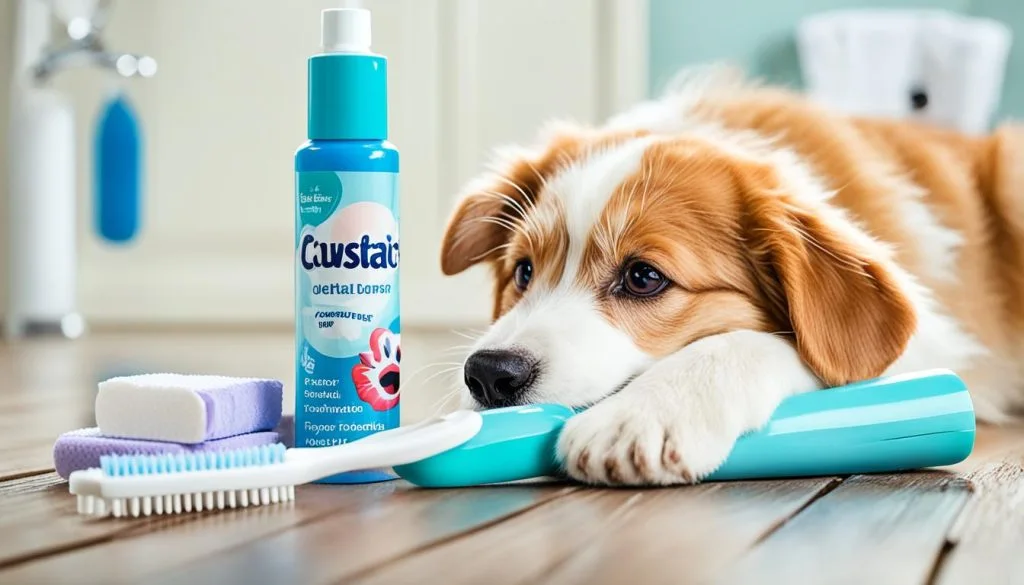
Next, we’ll explore how to choose the best dog dental products and considerations to keep in mind. But before we do that, take a look at this visual guide that showcases different dog dental products available:
 |
|
|---|---|
| Dog Toothbrush | Dental Chews |
| Dental Gel | Natural Dental Spray |
Choosing the Best Dog Dental Products
When it comes to selecting the best dog dental products, there are several factors to consider. Your dog’s size and breed, age, health and well-being, personal preferences, as well as the safety and efficacy of the products, all play a role in making the right choice.
A dog’s size and breed can determine the specific dental needs they may have. Smaller breeds may require smaller toothbrushes or dental treats to accommodate their tiny mouths, while larger breeds may need more durable dental chews. Additionally, certain breeds may be more prone to dental issues and may benefit from specific products that address their breed-specific oral health concerns.
Another crucial consideration is your dog’s age. Puppies may require softer toothbrushes and toothpaste formulated specifically for their young teeth and gums. As dogs age, their dental needs may change, and they may require more specialized dental products to address issues like tartar buildup or gum disease.
The overall health and well-being of your dog should also be taken into account. If your dog has pre-existing health conditions or is on medication, it’s important to choose dental products that are safe and suitable for their specific circumstances. Consulting with your veterinarian can provide valuable insights and recommendations tailored to your dog’s health needs.
Personal preferences, both yours and your dog’s, should also be considered. Some dogs may prefer certain flavors of toothpaste or dental treats, and finding products that your dog enjoys can make the dental care routine more enjoyable for both of you.
Furthermore, it’s essential to ensure the safety and efficacy of the dental products you choose. Look for the Veterinary Oral Health Council (VOHC) registered seal on packaging, which indicates that the product has met specific standards for effectiveness in reducing tartar or plaque. This seal provides reassurance that the product has undergone testing and has been proven to be beneficial for your dog’s dental health.
By taking into account your dog’s size and breed, age, health and well-being, as well as your personal preferences, and ensuring the safety and efficacy of the products, you can choose the best dental products to keep your dog’s teeth and gums healthy. Remember to consult with your veterinarian for personalized recommendations and advice on maintaining your dog’s dental health.
Tips for Introducing Dental Products to Your Dog
Introducing dental products to your dog can be a process that requires patience and a positive attitude. By following these tips, you can make the experience of dental care more enjoyable for both you and your pup.
- Gradual Introduction: Start by gradually introducing your dog to the taste and smell of dental products. Begin with a small amount of toothpaste on your finger and let your dog lick it off. This will help them become familiar with the product and its taste.
- Positive Reinforcement: Use positive reinforcement to associate dental care with something rewarding for your dog. Praise and reward them with treats or playtime after each successful dental care session. This will create a positive association and make them more receptive to future dental care.
- Patient Attitude: Be patient with your dog during the introduction process. It may take time for them to become comfortable with the dental products. Take breaks, if needed, and gradually increase the duration of each dental care session as your dog becomes more accustomed to the routine.
Remember, dogs are individuals, and each may have a unique response to dental products. Some may adapt quickly, while others may require more time and patience. Stay consistent, be gentle, and celebrate small milestones along the way.
“Introducing dental care to your dog is a gradual process that requires patience and positive reinforcement. Make it a positive experience and reward your dog for their cooperation.”
Maintaining Your Dog’s Oral Health
Proper oral care is essential for your dog’s overall well-being. By implementing a few simple practices, you can help maintain your dog’s oral health and prevent dental problems.
Schedule Regular Vet Check-ups
Regular veterinary check-ups are crucial for ensuring your dog’s oral health. During these visits, your vet can examine your dog’s teeth and gums, identify any potential issues, and provide necessary treatment. They can also offer guidance on proper dental care.
Brush Your Dog’s Teeth Regularly
Brushing your dog’s teeth is an important part of their oral care routine. Use a dog-specific toothbrush and toothpaste to clean their teeth gently. Aim to brush their teeth at least three times a week to remove plaque and prevent tartar buildup. Regular brushing can significantly reduce the risk of dental disease.
Consider Supplements for Dog Dental Health
In addition to regular brushing, you can consider incorporating dental supplements into your dog’s routine. These supplements can help promote healthy teeth and gums. Consult with your vet to choose the right supplement for your dog’s specific needs.
Maintain a Healthy Diet
A nutritious diet is crucial for your dog’s oral health. Offer them high-quality dog food that promotes dental health. Avoid sugary or sticky treats that can contribute to dental problems. Incorporating dental chews or toys can also help keep their teeth clean and strong.
Visit the Vet for Professional Dental Cleanings
Professional dental cleanings by a veterinarian are recommended periodically to ensure thorough oral care. During these cleanings, your vet can perform a comprehensive examination, remove tartar and plaque, and address any underlying dental issues. They may also recommend dental X-rays to assess your dog’s oral health more thoroughly.
By maintaining your dog’s oral health through regular check-ups, proper brushing, supplements, a healthy diet, and professional dental cleanings, you can ensure your furry friend has a healthy and happy smile for years to come.
The Importance of Professional Dental Cleanings
Professional dental cleanings by a veterinarian play a crucial role in maintaining your dog’s dental health. These cleanings offer numerous benefits and help prevent more serious dental problems in the long run.
During professional dental cleanings, veterinarians perform a comprehensive dental examination to assess your dog’s oral health. This examination includes a full mouth dental charting, which allows the vet to identify any areas of concern or abnormalities.
Comprehensive dental examination, full mouth dental charting
Plaque and tartar buildup are common dental issues in dogs, often leading to gum disease, tooth decay, and bad breath. Professional cleanings involve the thorough removal of plaque and tartar from your dog’s teeth, promoting better oral hygiene.
Professional plaque and tartar removal
One significant advantage of professional cleanings is the early detection of dental issues. By identifying potential problems, such as cracked teeth or oral infections, vets can address them promptly and prevent further complications.
Early detection of dental issues
Regular professional dental cleanings can help keep your dog’s teeth and gums healthy. Maintaining good dental health not only prevents dental problems but also contributes to your dog’s overall well-being and quality of life.
Consider scheduling professional dental cleanings for your dog on a regular basis to ensure their dental health remains in optimal condition.
| Benefits of Professional Dental Cleanings |
|---|
| Comprehensive dental examination |
| Full mouth dental charting |
| Professional plaque and tartar removal |
| Early detection of dental issues |
Dog Dental Care Tips for a Healthy Smile
Proper dental care plays a vital role in maintaining your dog’s overall health and well-being. Here are some essential dog dental care tips to ensure your furry friend has a healthy smile:
- Brush their teeth regularly: Just like humans, dogs need regular teeth brushing to remove plaque and prevent dental problems. Use a dog toothbrush and toothpaste specifically formulated for dogs. Start slowly and make it a positive experience for your dog by using tasty toothpaste flavors and rewarding them with treats or praise.
- Provide dental chews and toys: Dental chews for dogs can help keep their teeth clean and reduce plaque buildup. Look for dental chews that are designed to improve dental health and are safe for your dog to chew. Dental toys, such as ropes or rubber chew toys, can also help with oral hygiene by promoting chewing and saliva production.
- Consider dental food: Dental food is specially formulated to help clean your dog’s teeth as they chew. These types of dog foods often have a larger kibble size or unique texture that aids in mechanical cleaning. Consult with your veterinarian to find the best dental food for your dog’s specific needs.
- Choose safe and effective dental products: When selecting dental products for your dog, make sure to choose safe and effective options. Look for products that have the Veterinary Oral Health Council (VOHC) seal, which indicates that they have been tested and proven to be effective in reducing plaque and tartar. Avoid products that contain harmful ingredients or are not specifically designed for dogs.
By following these dental care tips, you can help maintain your dog’s oral health and contribute to their overall well-being. Remember to consult with your veterinarian for personalized advice and recommendations based on your dog’s specific needs.
Conclusion
Proper dental care is crucial for maintaining your dog’s oral health and overall well-being. By implementing regular dental care routines and choosing the right dental products, you can ensure that your furry friend enjoys a healthy and happy smile.
Remember to seek professional dental cleanings when necessary, as they play a vital role in preventing dental problems and detecting early signs of dental issues. Consulting with your veterinarian will provide you with personalized advice and guidance tailored to your dog’s specific needs.
By prioritizing your dog’s dental health, you contribute to their overall wellness and prevent the development of dental diseases that can lead to systemic issues in the future. Take care of your dog’s oral hygiene, and they will thank you with their bright and healthy smile!
FAQ
What are the most common dental problems in dogs?
What types of dental products are available for dogs?
How do I choose the best dental products for my dog?
How can I introduce dental products to my dog?
How can I maintain my dog’s oral health?
What is the importance of professional dental cleanings for dogs?
What are some dental care tips for a healthy smile for my dog?
Why is dental care important for dogs?
What are the benefits of maintaining my dog’s oral health?
How can I ensure my dog receives proper dental care?
Source Links
- https://petfriendlybox.com/resource-center/best-dental-products-for-dogs
- https://be.chewy.com/basic-dental-care-tips-for-dogs/
- https://www.akc.org/expert-advice/health/keep-dog-teeth-clean/

Carlos is the passionate founder and primary author behind “CorgisCorner.com,” a website dedicated to all things related to the beloved Corgi breed. Born and raised in a small town known for its strong sense of community and love for animals, Carlos developed a deep affection for Corgis from a young age. This love was sparked by his childhood companion, a spirited and loyal Corgi named Toby, who was a constant source of joy and friendship.