

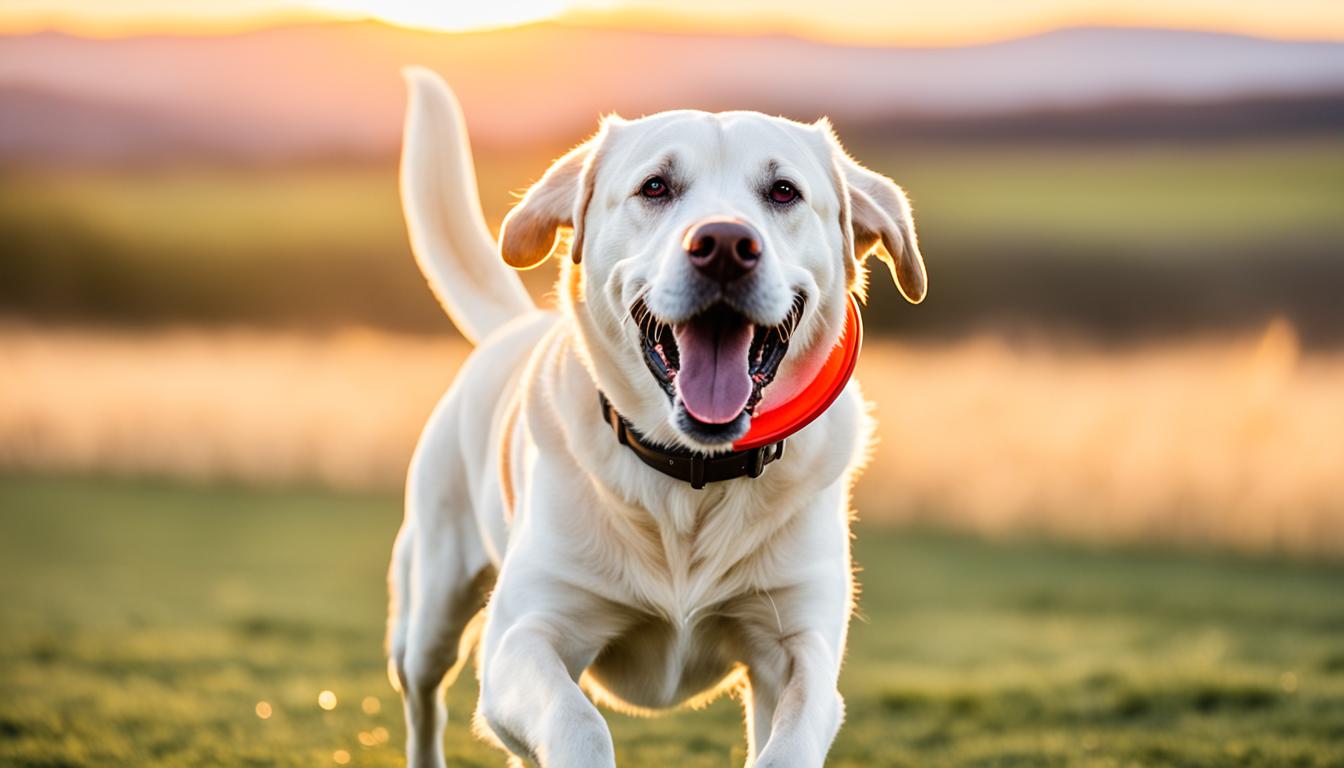

Exercise is not just beneficial for humans, but also for our furry friends. It helps keep dogs physically healthy, prevents behavioral issues, and provides mental stimulation. But have you ever wondered which workouts are vet-approved for energetic dogs? Which exercises are considered the best for our canine companions? Let’s delve into the world of vet-recommended dog workouts and discover the top options to keep your four-legged friend fit and happy.
Key Takeaways:
- Exercise is crucial for maintaining the physical and mental health of dogs.
- Top vet-approved workouts for energetic dogs include walking, jogging, hiking, swimming, doga (dog yoga), circuit training, agility, frisbee, and dancing.
- Consulting with a veterinarian will help determine the most suitable workout for your dog’s age, fitness level, and overall health.
- Gradually increase the intensity of workouts to prevent injuries and prioritize safety at all times.
- Exercise not only improves physical fitness but also strengthens the bond between you and your dog.
Walking with Your Dog
Walking is a classic and low-impact exercise that is suitable for all dogs, including those who may struggle with more intense activities. It provides physical exercise for both you and your dog at your own pace. To add variety to your walks, explore new neighborhoods and allow your dog to take their time sniffing and investigating new smells. Walking is especially beneficial for overweight pets or those looking to increase their fitness levels.
Benefits of Walking with Your Dog
Walking with your dog offers numerous benefits for both of you, including:
- Low-impact exercise: Walking is gentle on your dog’s joints and muscles, making it an ideal option for low-impact exercise.
- Neighborhood exploration: Walking allows your dog to explore new neighborhoods, stimulating their senses and providing mental enrichment.
- Bonding time: Walking together strengthens the bond between you and your furry friend, enhancing your relationship.
- Weight management: Regular walks help to maintain a healthy weight for your dog and prevent obesity.
- Stress relief: Walking releases endorphins in both you and your dog, promoting relaxation and reducing stress levels.
Tips for Walking with Your Dog
To make the most of your walks with your dog, consider the following tips:
- Start slow: If your dog is not used to regular walks, start with shorter distances and gradually increase the duration over time.
- Use a comfortable leash: Choose a leash that is easy to grip and doesn’t put strain on your hand or your dog’s neck.
- Bring water: Carry a portable water bottle and a collapsible bowl to keep your dog hydrated during your walks, especially on hot days.
- Monitor your dog’s behavior: Pay attention to your dog’s body language and energy levels during walks, ensuring they are comfortable and not showing signs of exhaustion.
- Be mindful of the weather: In hot weather, avoid walking during the hottest parts of the day and stick to shaded areas. In cold weather, protect your dog’s paws from ice and snow.
Remember, walking with your dog is not just about exercise. It’s an opportunity for both of you to enjoy the outdoors, bond, and explore new surroundings. So grab your walking shoes, leash up your pup, and embark on a walking adventure together!
| Benefits of Walking with Your Dog | Tips for Walking with Your Dog |
|---|---|
| Low-impact exercise | Start slow |
| Neighborhood exploration | Use a comfortable leash |
| Bonding time | Bring water |
| Weight management | Monitor your dog’s behavior |
| Stress relief | Be mindful of the weather |
Jogging with Your Dog
Jogging is a high-energy exercise that is ideal for active dogs with a lot of energy to burn. It provides a great cardiovascular workout for both you and your furry friend. However, it’s important to note that jogging is not suitable for all dogs. Puppies, overweight dogs, those with joint problems, and flat-faced breeds (brachycephalic breeds) should avoid jogging to prevent any potential health issues or discomfort.
If your dog is at least one year old and meets the necessary health criteria, jogging can be a fantastic way to keep them active and engaged. Jogging helps maintain a healthy weight, promotes muscle development, and boosts your dog’s overall well-being. It also allows you to bond with your dog and enjoy quality time together.
Before you start jogging with your dog, ensure you have the necessary equipment. A sturdy leash is essential to keep your dog under control and by your side throughout the run. Consider using a hands-free leash that attaches around your waist, providing a comfortable and secure running experience.
Tips for Jogging with Your Dog
- Start with a warm-up walk: Begin each jogging session with a short warm-up walk to allow your dog to stretch their muscles and prepare for the run.
- Monitor your dog’s energy levels: Pay attention to your dog’s cues during the jog. Look out for signs of tiredness or overheating, such as excessive panting, slowing down, or lagging behind. Adjust the pace or take breaks as needed.
- Pick dog-friendly routes: Choose jogging paths or trails that are suitable for dogs. Avoid areas with heavy traffic or uneven terrain that may pose a safety risk or strain your dog’s joints.
- Stay hydrated: Bring water for both you and your dog to stay hydrated during the run, especially on hot days. Consider using a portable water bottle with a built-in bowl for easy drinking.
- Observe proper leash etiquette: Keep your dog on a leash at all times to ensure their safety and the safety of others. Practice proper leash etiquette by keeping the leash loose, allowing your dog to move comfortably.
“Jogging with your dog is a wonderful way to stay active together and strengthen the bond between you and your companion.” – Dr. Emily Wilson, Veterinarian
Remember to consult with your veterinarian before starting any jogging routine with your dog. They can provide personalized guidance based on your dog’s individual needs and health condition. Additionally, gradually increase the intensity and duration of your jogs to prevent any strain or injuries.
Suitable Breeds for Jogging
| Breed | Activity Level | Suitability for Jogging |
|---|---|---|
| Border Collie | High | Yes |
| Weimaraner | High | Yes |
| Vizsla | High | Yes |
| Labrador Retriever | High | Yes |
| German Shepherd | High | Yes |
| Pug | Low | No |
| Bulldog | Low | No |
Jogging with your dog is an excellent way to keep them active and mentally stimulated. Remember to prioritize the well-being and safety of your furry companion during your jogging sessions, and enjoy the benefits of an energetic workout together.
Hiking with Your Dog
Hiking is a fantastic exercise that offers a multitude of benefits for both you and your dog. Not only does it provide a cardiovascular workout for both of you, but it also helps to improve stamina, strengthen muscles, enhance balance, and boost endurance. Whether you are a seasoned hiker or just starting out, hiking can be tailored to different fitness levels, making it an accessible and enjoyable activity for everyone.
To get started, begin with shorter hikes on easy terrain, especially if you or your dog are new to hiking. This allows both of you to gradually build up stamina and adjust to the demands of the activity. As you and your canine companion become more comfortable and confident, you can gradually progress to more challenging trails that offer varied terrains and elevation changes.
When hiking with your dog, it’s essential to consider their stamina and fitness level. Just like humans, dogs have different levels of physical endurance, and it’s important to respect their limitations. Smaller or younger dogs may tire more quickly and may benefit from breaks or the use of a dog carrier to give them a rest when needed.
While enjoying the great outdoors, it’s vital to prioritize the safety and well-being of your furry friend. Make sure to bring plenty of water for both you and your dog to stay hydrated throughout the hike. Additionally, always check the weather conditions before heading out and adjust your plans accordingly, especially during extreme heat or inclement weather.
One of the many joys of hiking with your dog is the opportunity for bonding and shared experiences. The calmness and beauty of nature provide the perfect backdrop to create lasting memories with your four-legged companion. Take the time to appreciate the sights, smells, and sounds around you, and revel in the unique connection that hiking can bring.

Hiking with your dog is not only a physical activity but also a chance to nurture a deeper bond and create unforgettable adventures together. So grab your hiking gear, lace up your boots, and embark on a hiking journey that will not only benefit your own health but also bring immeasurable joy and fulfillment to your canine friend.
Swimming with Your Dog
Swimming is an excellent exercise for water-loving dogs and provides a whole-body workout. It is particularly beneficial for seniors or dogs with arthritis, as it takes the weight off their joints. Not all dogs are natural swimmers, so it’s important to introduce them to water gradually and provide them with a life vest for safety. Always supervise your dog during swimming sessions and be cautious of water toxicity, excessive swallowing of water, and hot weather conditions.

“Swimming is not only fun for dogs, but it’s also a great way to keep them fit and healthy,” says Dr. Rebecca Johnson, a veterinarian at PetCare Hospital. “The buoyancy of water reduces stress on their joints and provides a low-impact workout that helps improve muscle tone and cardiovascular health.”
Benefits of Swimming for Dogs
- Low-impact exercise that minimizes stress on joints
- Engages multiple muscle groups, providing a whole-body workout
- Improves cardiovascular health and stamina
- Helps with weight management and reduces the risk of obesity
Swimming Safety Tips for Dogs
- Introduce your dog to the water slowly, using positive reinforcement and patience
- Consider using a life vest, especially for dogs who are not confident swimmers
- Ensure a safe swimming environment without strong currents or hazards
- Watch for signs of fatigue or overheating, such as excessive panting or difficulty breathing
- Rinse off your dog with fresh water after swimming to remove chlorine or salt
Swimming Alternatives for Non-Water-Loving Dogs
While swimming is a fantastic exercise, not all dogs enjoy being in the water. If your dog is hesitant or fearful, consider alternative exercises that provide similar benefits:
- Using a dog treadmill or aquatic therapy to simulate the effects of swimming
- Engaging in interactive play like fetch or tug-of-war to promote physical activity
- Introducing your dog to gentle hydrotherapy sessions for joint health
Doga (Dog Yoga)
Doga, or dog yoga, is a unique exercise that allows you to bond with your dog while engaging in relaxation and stretching exercises. While not an intense workout, doga provides mental relaxation and promotes a deep sense of calm for both you and your furry friend.
During your doga session, encourage your dog to stay close to you as you flow through the poses. Incorporate gentle stretches and movements that are easy for them to mimic. This shared experience creates a special bond between you and your pet, enhancing your connection both on and off the mat.
One of the key benefits of practicing doga is the release of “happy hormones” that occurs when stroking your pet during the session. This physical touch promotes feelings of warmth and relaxation, reducing stress and anxiety for both you and your dog.

With doga, you can create a peaceful and harmonious environment that fosters mental and emotional well-being. It’s important to remember that doga should always be approached with patience and respect for your dog’s comfort level. Start with simple poses and gradually progress as your dog becomes more familiar with the practice.
“Doga allows us to connect with our furry friends on a deeper level, promoting relaxation and mindfulness together. It’s a beautiful way to strengthen our bond and enhance our overall well-being.”
By incorporating doga into your routine, you can experience not only the physical benefits of gentle stretching but also the joy of bonding with your beloved canine companion. So roll out your mat, invite your four-legged friend to join you, and embark on a journey of mental relaxation and connection through doga.
Circuit Training with Your Dog
Circuit training with your dog is a fun and versatile exercise that can be tailored to any fitness level. It involves combining exercises like push-ups, lunges, squats, and sit-ups with tricks and obedience training for your dog. This workout provides mental stimulation, enhances obedience skills, and builds strength and endurance for both you and your dog.
Incorporate commands and tricks between each rep, and adjust the intensity based on your dog’s abilities. The circuit training sessions can be structured using the following format:
Example Circuit Training With Your Dog:
| Exercise | Dog Trick/Obedience Training |
|---|---|
| Push-ups | Sit command |
| Lunges | Stay command |
| Squats | Give paw command |
| Sit-ups | Roll over trick |
By combining strength-building exercises with trick training, you provide both mental and physical stimulation for your dog. Your furry companion will stay engaged and motivated, making each workout session enjoyable and rewarding.
Remember to start slowly and gradually increase the difficulty of the exercises and tricks as your dog progresses. Break down the circuit into manageable sets and give your dog breaks in between to rest and hydrate. Always ensure your dog’s safety and stop the training if you notice any signs of exhaustion or discomfort.

Engaging in circuit training with your dog not only helps keep both of you fit and healthy but also strengthens the bond between you. The mental stimulation from the tricks and obedience training adds a rewarding aspect to each workout session. Get creative, have fun, and enjoy the benefits of this dynamic and interactive exercise routine with your canine companion!
Dog Agility
Dog agility is a thrilling dog sport that challenges the physical and mental abilities of dogs. It involves navigating through various obstacles on an obstacle course while being guided by the owner. This activity is not only popular but also highly beneficial for dogs.
Agility training is particularly suitable for active and intelligent breeds (active and intelligent breeds), although almost any dog can enjoy participating to some extent. Breeds such as Border Collies, German Shepherds, and Australian Shepherds excel in agility due to their athleticism (active and intelligent breeds).
This high-energy workout provides numerous benefits for both you and your furry friend. Agility training helps improve coordination, speed, and agility, making it an ideal exercise for dogs with excess energy (dog agility).
To get started with agility training, you can look for local dog agility clubs or classes in your area. These clubs often provide access to professionally designed obstacle courses and experienced trainers who can guide you and your dog through the training process. Participating in organized agility competitions can also be a fun way to challenge your dog’s abilities and showcase their skills.
“Agility training allows dogs to use their natural instincts, builds confidence, and enhances the bond between owner and pet.” – Dr. Lisa Johnson, Canine Behavior Specialist
If you prefer a DIY approach, you can create a makeshift agility course in your own backyard using common household items. Set up obstacles such as hurdles, tunnels, weave poles, and a ramp. Incorporate challenges that test your dog’s problem-solving skills and agility, providing mental stimulation along with physical exercise (dog agility).
Remember to introduce the obstacles gradually and provide positive reinforcement when your dog successfully completes each task. Keep training sessions short and fun to keep your dog engaged and motivated.
Agility training is not only physically demanding but also mentally stimulating, which can help prevent behavioral problems that may arise due to boredom or lack of mental stimulation. It is a fantastic way to keep your active and intelligent dog physically fit, mentally sharp, and entertained.
| Benefits of Dog Agility | Summary |
|---|---|
| Enhances coordination and balance | Improves physical fitness |
| Boosts mental stimulation | Prevents boredom and destructive behavior |
| Strengthens the bond between owner and dog | Promotes obedience and listening skills |
| Provides an outlet for excess energy | Increases confidence and self-esteem |
Whether you decide to join a local club or create your own agility course, this dynamic and engaging activity offers tremendous benefits for your dog’s physical and mental well-being. So, grab your pup’s favorite toy, lace up your running shoes, and get ready to tackle some thrilling obstacles together (obstacle course)!
Conclusion
Regular exercise is crucial for maintaining the overall health and well-being of dogs. Incorporating vet-approved workouts into their routine has a plethora of benefits, ensuring that our furry friends stay healthy and happy.
Exercise helps prevent obesity, strengthens muscles and joints, and provides essential mental stimulation for dogs. It promotes better cardiovascular health, reduces the risk of chronic diseases, and helps manage weight. Engaging in activities like walking, jogging, hiking, swimming, doga, circuit training, agility, frisbee, and dancing helps fulfill their exercise needs and keeps them physically and mentally stimulated.
However, it is important to consult with a veterinarian to determine the most suitable workouts for your dog’s age, fitness level, and overall health. Safety should always be a priority during workouts, and owners should gradually increase exercise intensity to prevent injury. Remember, a happy and healthy dog is a well-exercised dog!
FAQ
Why is exercise important for dogs?
How do I know if my dog is exhausted during exercise?
How should I adjust the intensity of workouts for my dog?
What should I consider when exercising my dog during summer?
What precautions should I take when exercising my dog during winter?
Is walking a suitable exercise for all dogs?
How can I make walks more interesting for my dog?
Can I go jogging with my dog?
What are the benefits of hiking with my dog?
Can dogs swim, and why is swimming beneficial for them?
How can I introduce my dog to swimming?
What is doga (dog yoga) and what are the benefits?
What is circuit training, and why is it a fun exercise for dogs?
What is dog agility, and what are the benefits?
How can I exercise my dog safely?
What are the benefits of exercise for dogs?
Source Links
- https://www.smalldoorvet.com/learning-center/wellness/best-ways-to-exercise-with-dogs/
- https://vitalvet.org/blogs/news/muscle-building-and-strength-exercises-for-dogs
- https://vcahospitals.com/know-your-pet/healthy-exercise-for-dogs

Carlos is the passionate founder and primary author behind “CorgisCorner.com,” a website dedicated to all things related to the beloved Corgi breed. Born and raised in a small town known for its strong sense of community and love for animals, Carlos developed a deep affection for Corgis from a young age. This love was sparked by his childhood companion, a spirited and loyal Corgi named Toby, who was a constant source of joy and friendship.