

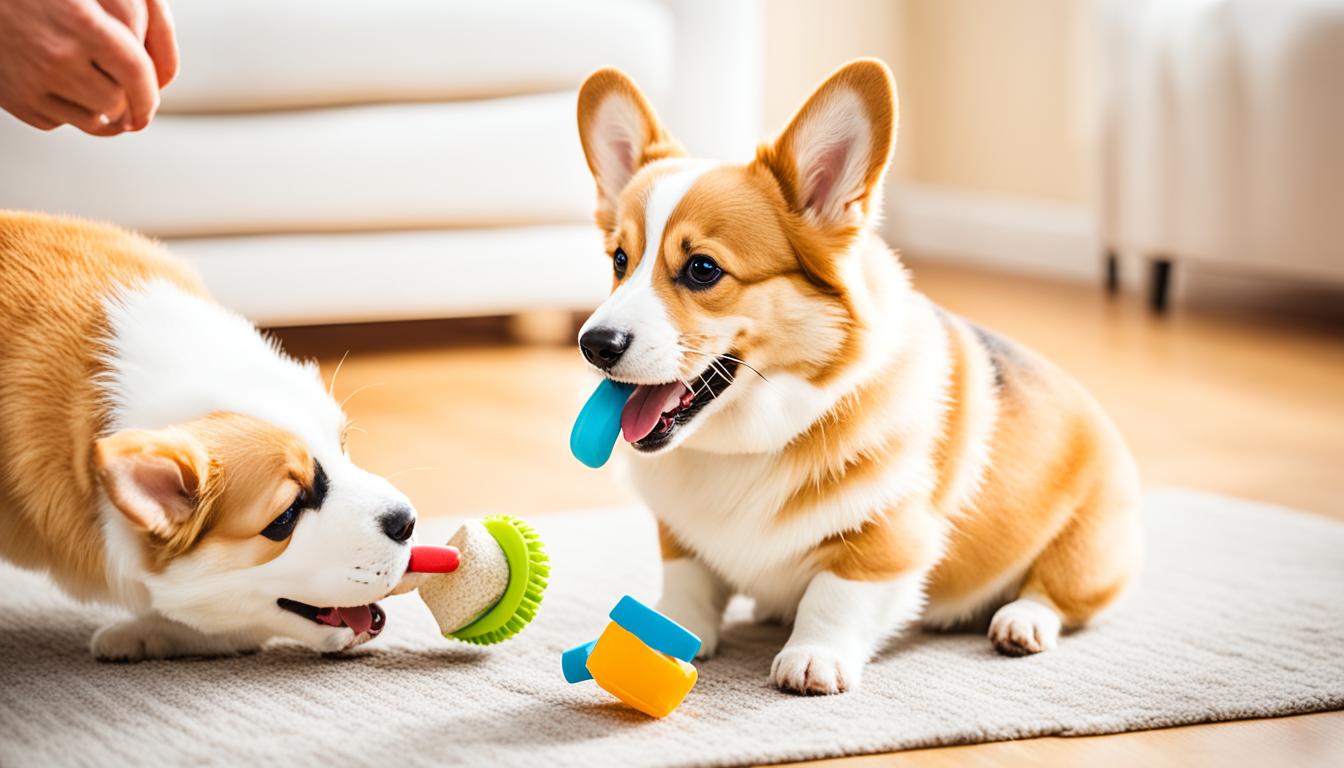

Are you tired of your cute Corgi puppy biting you? You’re not alone! Many owners face this challenge. Fortunately, with expert tips and the right approach, you can stop this behavior.
Let me tell you about my experience. I brought home Buddy, my Corgi, who was adorable. But he soon started biting my fingers and toes. It hurt every time I tried to relax!
I needed to stop Buddy’s biting before it became a bigger issue. After consulting experts, I learned how to teach him not to bite. We worked on biting inhibition and redirected his chewing to toys. Now, our time together is enjoyable and bite-free.
If you’re dealing with puppy bites and want a well-behaved Corgi, you’re in the right spot. We’ll explore how to stop puppy biting together. Ready to have a happy, bite-free life with your Corgi? Let’s start!
Key Takeaways:
- Knowing puppies’ growth stages is key to stopping biting.
- Fear, teething, and poor socialization can cause biting.
- It’s important to set clear rules to prevent biting.
- A structured environment and chew toys can redirect biting.
- Use consistent and positive methods to reduce biting.
Developmental Stages & Biting Tendencies
Puppies experience different stages that affect their biting. Knowing these stages helps solve biting issues. Right training methods are key.
The Early Weeks: Exploratory Behavior
In their first weeks, puppies explore with their mouths. They learn about the world this way. Giving them chew toys helps focus their biting.
“Introducing a variety of safe and durable chew toys not only satisfies your puppy’s natural curiosity but also helps alleviate discomfort during the teething stage.”
| Developmental Stage | Key Characteristics |
|---|---|
| Early Weeks | Exploratory behavior through mouthing |
| Teething Stage | Discomfort and relief sought through biting and chewing |
| Social Learning | Bite inhibition through interactions with littermates |
| Adolescence | Resurgence of biting tendencies |
Image:
The Teething Stage: Discomfort and Relief
Between 3 to 6 months, puppies start teething. This can hurt them. They chew more to feel better. Frozen toys can help.
Social Learning and Bite Inhibition
Puppies learn to control their bites with their siblings. If bitten too hard, they stop playing. This teaches them about biting softly. Saying “ouch” like their siblings can help teach them too.
Adolescence: Biting Tendencies Resurface
When they are 6 to 18 months old, puppies may bite more. This is part of growing up. It’s key to keep teaching them not to bite.
Knowing about these stages helps train puppies not to bite. The right toys and training can make a good, gentle pet.
Common Triggers For Puppy Biting
Puppy biting is normal but can stem from many reasons. Learning these reasons helps us train them better. This way, we tackle not just the biting but also its causes.
Fear
Fear can make a puppy bite. When they feel scared or unsure, biting is like their shield. Creating a secure space for your puppy helps. It’s about slowly showing them new things and people to build trust.
Overstimulation
Puppies can get too excited or stressed, leading to more biting. They might bite to let out energy or react to too much play. Having regular playtimes and enough exercise can keep their energy in check.
Teething Troubles
Teething causes discomfort in their gums, making puppies bite to feel better. Giving them proper teething toys, and sometimes freezing these toys, can ease their pain. It also moves their biting to safer items.
Lack of Socialization
Not enough socialization can lead to biting out of confusion or fear. Exposing your puppy to different settings and beings early on is key. This exposure should be gradual and positive to build their social skills and trust.
Attention-Seeking
Puppies crave attention and might bite to get it. If biting equals attention, they’ll keep doing it. Redirecting their focus to better behaviors, like playing with a toy or training, can stop the biting for attention.
Resource Guarding
Some puppies bite to guard what they treasure, like toys or food. Teaching them to share and using positive methods can help. Also, giving them their own toys and treats can lessen guarding behaviors.
Play and Exploration
During play, puppies naturally bite to learn and explore. It’s their way of understanding the world. Steering their biting towards toys and guiding them gently sets clear rules for playtime.
Tiredness or Overwhelm
Puppies can bite if they’re too tired or overwhelmed. They’re like babies, getting fussy to show they need a break. A quiet place to rest is vital for them to avoid biting from irritation or fatigue.
Frustration or Impatience
Challenges in training can frustrate puppies, leading to biting. Positive training, simplifying tasks, and patience can ease their stress. This reduces biting that comes from their frustration.
Understanding and working on these triggers can reduce biting. This leads to a happier relationship with your pet, without the biting.

Establish Rules & Expectations
Setting clear boundaries is crucial for stopping puppy biting. Consistency in puppy training is the secret ingredient. Applying the same rules every day helps your puppy learn right from wrong.
Biting or nipping at people or things is a big no-no. Puppies must learn to keep their teeth to themselves. This rule is fundamental.
Positive reinforcement techniques work wonders in teaching puppies. When they behave well, like sitting quietly, give them a treat or praise. Using treats, kind words, and petting as rewards encourages good behavior.
Everyone in the family needs to stick to the training rules. This avoids confusing your puppy. A consistent approach across all family members is crucial.
“Consistency is key when it comes to puppy obedience. By reinforcing the same rules and expectations consistently, you can eliminate confusion for your puppy and help them understand what is acceptable behavior.”
Patience is key with your puppy’s learning process. Understanding the rules might take them some time. Keep calm and consistent, and you’ll notice improvements.
Next, we discuss creating a structured environment for your puppy. This will help promote better behavior and reduce biting.
Create A Structured Environment For The Puppy
Creating a structured environment for your puppy is key in preventing excessive biting or chewing behaviors. By implementing a consistent routine and providing appropriate outlets for their energy and curiosity, you can effectively reduce your puppy’s desire to bite and chew on inappropriate items.
Here are some essential steps to create a structured environment for your puppy:
- Establish a schedule: Keeping a regular schedule for feeding, potty breaks, playtime, and rest helps your puppy know what to expect. This minimizes frustrations that can cause biting or chewing. Stick to this routine to give your puppy a sense of security.
- Designate safe exploration areas: Create specific areas in your home that are safe for your puppy to explore, play, and rest. These areas help your puppy learn about boundaries and give them their own space.
- Create engaging play zones: Provide interactive toys in these play areas. Choose toys made for teething puppies to help with their discomfort. Changing the toys often keeps your puppy interested and helps prevent boredom.
- Regular exercise: Regular workouts help your puppy release energy and decrease the chance of excessive biting. Take them for walks, play with them, and try stimulating games that engage their body and mind.
Following these steps helps create a structured environment. It encourages good behavior and prevents problems with biting and chewing.

Consistent Reinforcement Of Desired Behaviors
Reinforcing good behavior is vital in teaching puppies. Positive reinforcement shapes their actions and helps them control themselves. Using gentle methods can stop biting.
Push your puppy away calmly and say “no” firmly yet gently. This tells your puppy that biting won’t be tolerated. Don’t cuddle them right after correcting them, as it might make them think biting is okay.
Being consistent is crucial. Reward behaviors like playing nicely. Redirect their attention to toys. This way, they’ll learn that good behavior means rewards and attention.
“Positive reinforcement is key in teaching puppies. Rewarding them for good behavior shows them what we expect.”
Always praise, pet, or treat your puppy for good behavior. This encourages them to keep up the good work.
Creating a Positive Training Environment
Making a positive training space is important too. Find a quiet area to focus on your puppy’s learning without distractions.
“Patience and consistency matter a lot in puppy training. Being steady with what we expect and rewarding good actions is crucial for success.”
Keep distractions away to help your puppy focus. Choose a training method that fits both of you, like words, gestures, or clicking sounds. Stick to one method to avoid confusing them.
Training should be fun for you and your puppy. Keep sessions short and end on a high note, praising your puppy’s effort and improvements.
Building Trust Through Positive Reinforcement
Positive reinforcement does more than teach obedience. It also builds trust and a strong bond with your furry buddy. By rewarding good actions, you’re making training a positive experience.
Each puppy is different, and so is their learning pace. Be patient, loving, and supportive. Guide them gently through their training journey.
Summary
To sum up, always use positive reinforcement to encourage good behavior in puppy training. Avoid harsh corrections. Focus on rewarding the positive. Remember, patience, consistency, and celebration of milestones are key to a positive training experience.
Teach Your Puppy Bite Inhibition
Teaching your puppy not to bite too hard is essential. During playtime, if they bite hard, react with a yelp. This mimics how their siblings would respond. This feedback helps them learn to be gentler. If they keep biting, step away for a bit. This shows them biting means no play or attention.

Puppies need to learn to control their bite strength. By acting like their siblings would to a hard bite, you guide them. This teaches them biting too hard isn’t okay.
Being consistent is important in teaching. Everyone around the puppy should respond the same way. This avoids confusing your puppy with mixed messages.
Taking a brief time away from your puppy can stop biting, too. This time-out shows biting leads to no attention or play. Make sure to return once they stop biting so much.
Learning not to bite hard takes time and patience. Keep showing them the right bite pressure and give clear feedback. This will help them learn proper bite control and prevent too much biting.
How to Stop a Puppy from Chewing
It’s natural for puppies to chew, especially when they’re teething. To stop them from chewing bad objects, offer good ones. Let’s talk about how to keep your puppy from picking the wrong things to chew.
- Puppy Teething Solutions: Give your puppy various chew toys made for their teething phase. These help soothe their gums and keep them away from your belongings.
- Redirect Attention: If your puppy chews something off-limits, show them an appropriate toy instead. Find a fun toy to grab their focus and change their chewing habits.
- Discourage Chewing: Say “no” softly and take away the wrong item if they chew it. Right away, give them a proper chew toy. Cheer them on when they chew it. Being consistent helps teach them right from wrong.
- Puppy-Proof Your Home: Make your home safe from puppy chewing. Remove things like shoes and wires they might chew. This lowers the chance they’ll chew things they shouldn’t.
- Exercise and Mental Stimulation: Keep your puppy busy to stop boredom chewing. Regular walks, playtime, and brain games help them stay happy without the wrong chewing.
Using these steps will help stop bad chewing habits. Remember, be patient and consistent with your puppy’s training.

Why Do Dogs Chew On Things
Dogs naturally want to chew, and various reasons drive this behavior. It’s vital to know why they do it to stop it effectively. By tackling the root causes and offering healthy chewing options, you can steer your dog away from household items.
Teething
Teething is a big reason dogs chew. Puppies, like human babies, get new teeth which can be uncomfortable. They chew to ease this discomfort. To protect your belongings during this time, give them safe chew toys made for teething puppies.
Boredom and Anxiety
Chewing can also come from boredom or anxiety. If dogs aren’t kept busy, they might chew to stay entertained or feel better. Prevent this by giving them regular physical activity and brain challenges, like puzzle toys. Also, keep their environment peaceful to help lower their urge to chew out of stress.
Exploration
Dogs chew to explore their world. They use their mouths to learn about what’s around them. This is especially true for puppies who are still learning. When they chew on things they shouldn’t, give them appropriate toys instead.
Preventing Dog Chewing
To stop unwanted chewing, provide the right chew toys. Choose ones that are safe and strong. They help fulfill your dog’s need to chew and distract them from household objects. Change the toys often to keep their interest.
Make sure your dog gets enough exercise and brain activity, too. They need to use up energy and not get bored. A dog that’s physically and mentally satisfied is less likely to chew on things they shouldn’t.
If chewing persists, try deterrent sprays that taste bitter. They can make chewed objects less tempting. But, get advice from a vet or a trainer before trying any new methods or products.
Knowing why dogs chew is key to stopping it. By understanding the reasons, offering suitable chew toys, and keeping your dog active and engaged, you can guide their chewing habits and protect your belongings.
| Reasons for Dog Chewing | Prevention Tips |
|---|---|
| Teething | Provide teething chew toys |
| Boredom and anxiety | Ensure regular exercise and mental stimulation |
| Exploration | Redirect chewing behavior to appropriate chew toys |
Conclusion
Puppy biting and dog chewing are common but can be controlled. Understanding why they happen is the first step. With the right tips, you can teach your dog to behave better.
It’s important to set clear rules. This means telling your puppy what they can and cannot do. A structured environment with special play areas also prevents too much chewing and biting.
Teaching your puppy not to bite too hard is crucial. They can learn this by playing, just like they would with their brothers and sisters. Using rewards and consistent training helps them learn. They’ll see that biting and chewing the wrong things doesn’t get them what they want.
Be patient and stay consistent. If things get tough, it’s okay to ask experts for help. With the right steps and advice, you can live happily with your pet. You’ll keep your home safe from chewing damage too.
FAQ
Why do puppies bite?
How can I prevent puppy biting?
What are common triggers for puppy biting?
How do I establish rules and expectations for my puppy?
How do I create a structured environment for my puppy?
How can I consistently reinforce desired behaviors?
How do I teach my puppy bite inhibition?
How can I stop my puppy from chewing?
Why do dogs chew on things?
What are some expert tips to stop puppy biting and prevent dog chewing?
Source Links
- https://petcube.com/blog/stop-dog-chewing/
- https://suburban-k9.com/how-to-stop-puppy-biting/
- https://brightside.me/articles/why-dogs-bite-each-others-mouths-in-play-813837/

Carlos is the passionate founder and primary author behind “CorgisCorner.com,” a website dedicated to all things related to the beloved Corgi breed. Born and raised in a small town known for its strong sense of community and love for animals, Carlos developed a deep affection for Corgis from a young age. This love was sparked by his childhood companion, a spirited and loyal Corgi named Toby, who was a constant source of joy and friendship.