

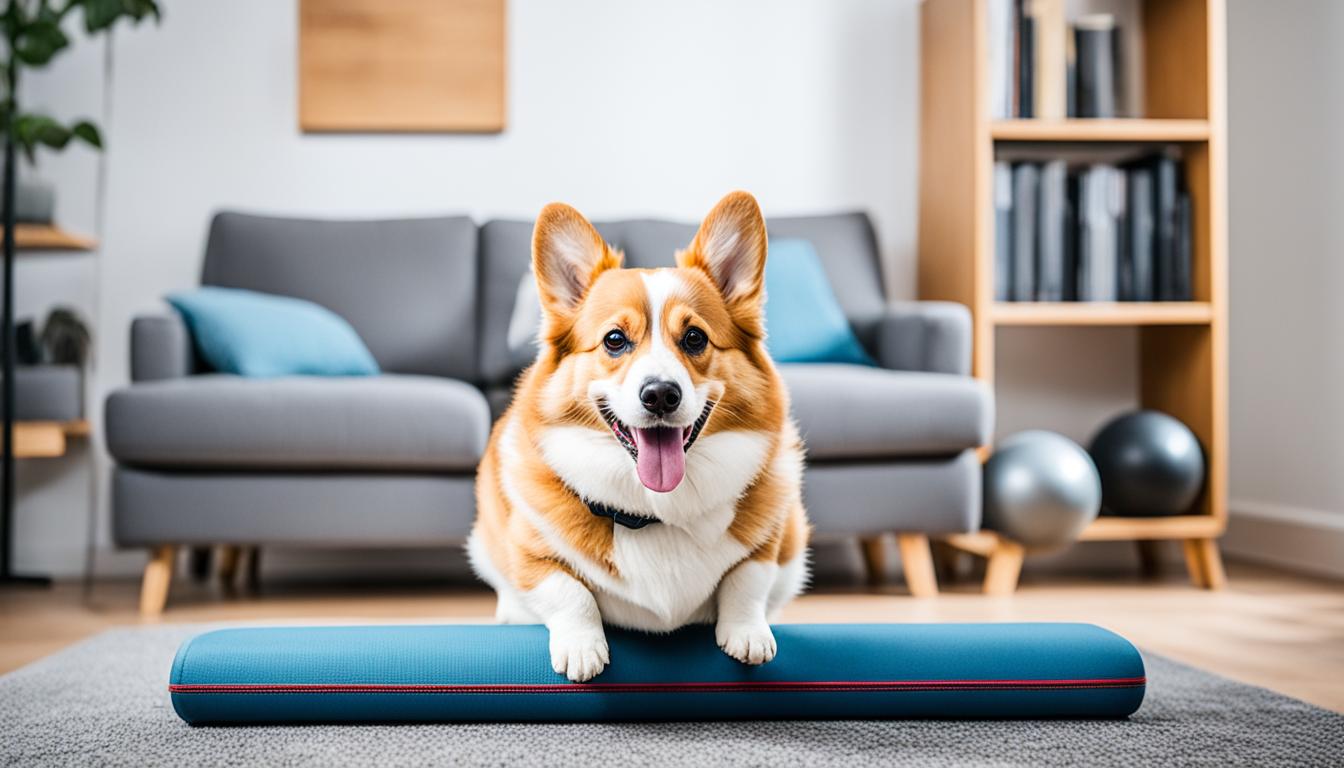

Ah, the lovable Corgi – a bundle of energy in a compact package. But what do you do when you have limited space to let your furry friend run free? Fear not! In this guide, we’ll explore safe and engaging exercises that are perfect for Corgis in small spaces. Say goodbye to doggy restlessness and hello to happy and healthy indoor workouts!
Key Takeaways:
- Even in small spaces, Corgis can get the exercise they need
- Indoor activities like fetch and puzzle toys can keep Corgis physically and mentally stimulated
- Crate training and housebreaking are important for creating a safe environment for your Corgi
- Basic commands and mental stimulation are essential for obedience and a strong bond
- Obedience classes and dog sports provide additional exercise and socialization opportunities
Training Goals for Corgis in Small Spaces
Training is an essential part of keeping your corgi happy and well-behaved, even in small spaces. By focusing on specific training goals, you can ensure that your corgi is not only a well-trained companion but also comfortable in their indoor environment.
Socialization
Socializing your corgi around other people is crucial in ensuring they feel comfortable in different situations. Introduce your corgi to friends, family, and neighbors, allowing them to interact positively with a variety of individuals. This exposure helps your corgi develop good social skills, making them more confident and relaxed in small spaces.
Grooming
Getting your corgi used to grooming is another important training goal. Start by gently handling their paws, ears, and tail, gradually introducing them to brushing, bathing, and nail trimming. Make grooming a positive experience by rewarding them with treats and praise. Regular grooming not only keeps your corgi looking their best, but it also helps prevent matting and discomfort.
Environmental Exposure
Exposing your corgi to different elements of their environment at a young age can help reduce fear and anxiety. Introduce them to various indoor spaces, different surfaces, and common household sounds. This exposure allows your corgi to adapt more easily to new environments, making them more relaxed and adaptable in small living spaces.
Training your corgi to be well-socialized, comfortable with grooming, and adaptable to their environment is essential for their overall well-being in small spaces.
Remember, training takes time and patience, so be consistent and use positive reinforcement techniques. With the right training goals and regular practice, your corgi will thrive in their small space and become a well-behaved and happy companion.
Exercising Your Corgi in a Limited Space
Limited space doesn’t have to mean limited exercise for your corgi. There are various activities you can do indoors to keep them physically and mentally stimulated, ensuring they stay happy and healthy.
- Teach them to play fetch: Playing fetch is a great way to keep your corgi active indoors. Find a soft toy or a ball that they can easily grip in their mouth and throw it for them to retrieve. Use a clear area, such as a hallway or a spacious room, and be sure to reward them with treats or praise when they bring the toy back to you.
- Use food puzzle toys: Food puzzle toys not only provide mental stimulation but also help slow down your corgi’s eating pace. Fill interactive toys with their regular kibble or small treats that they have to work to get out. This engages their mind and keeps them entertained while exercising their problem-solving skills.
- Incorporate mind exercises: Corgis are intelligent dogs and benefit from activities that challenge their minds. Hide their favorite toy or treat around the house and encourage them to find it using their sense of smell. This game provides both physical movement and mental stimulation.
“Even in small spaces, there are plenty of activities to keep your corgi happy and active. The key is to find exercises that engage their physical and mental abilities.” – Corgi expert
Remember to give your corgi regular exercise sessions, incorporating a mix of physical activities and mental challenges. This keeps them stimulated and prevents them from getting bored or restless in a limited space.

Corgi Exercise Schedule:
| Exercise Type | Duration | Frequency |
|---|---|---|
| Play fetch | 15 minutes | Twice a day |
| Food puzzle toys | 10 minutes | Once a day |
| Mind exercises | 15 minutes | Once a day |
By incorporating these corgi exercise tips into your routine, you can ensure your furry friend receives the necessary physical and mental stimulation, even within the confines of a small space.
Crate Training and Housebreaking Your Corgi
When it comes to housebreaking your corgi and creating a safe space for them, crate training is an essential tool. Not only does it help prevent accidents, but it also gives your corgi a sense of security and a designated area they can call their own. Here are some crate training tips to help you and your corgi navigate this process smoothly:
Establish a Positive Association
To ensure your corgi views their crate as a positive space, it’s important to introduce it gradually and make it a pleasant experience. Start by placing treats or their favorite toy inside, enticing them to explore. Encourage them to enter on their own without forcing or locking them in. Reward them with words of praise and treats when they willingly step inside. This helps create a positive association with the crate.
Introduce a Routine
Consistency is key when it comes to crate training. Establish a routine by feeding your corgi in or near the crate, and gradually move their food bowl inside. This creates a connection between mealtime and their crate, reinforcing the idea that the crate is a safe and comfortable space. Additionally, schedule regular potty breaks to avoid accidents and help them understand the appropriate time and place to relieve themselves.
Gradually Increase Crate Time
Start by leaving your corgi in the crate for short periods, gradually increasing the duration as they become more comfortable. Initially, stay nearby so they feel reassured and know they are not alone. As they grow accustomed to the crate, you can gradually extend the time they spend inside, making it a part of their daily routine without causing stress or anxiety.
“Crate training is an effective way to housebreak your corgi and provide them with a safe and secure space. By following a gradual introduction, establishing a routine, and increasing crate time gradually, you can help your corgi feel comfortable and confident in their crate.”

Remember, every corgi is unique, and crate training may take time and patience. Be consistent, reward positive behavior, and never use the crate as a form of punishment. With careful training and positive reinforcement, your corgi will learn to love their crate and see it as their own cozy den.
Basic Commands and Mental Stimulation for Corgis
Training your corgi to follow basic commands is fundamental to their obedience and overall mental well-being. These commands help establish boundaries, foster good behavior, and strengthen the bond between you and your furry companion. Additionally, providing mental stimulation is essential to keep your corgi engaged and prevent boredom.

Teaching Basic Commands
To begin, focus on teaching your corgi foundational commands such as sit, stay, and heel. These commands not only establish control but also ensure your corgi’s safety in various situations.
“Sit” is a simple yet powerful command that teaches your corgi to sit on command, reinforcing positive behavior and preparing them for more advanced training.
Consistency is key when training your corgi. Use treats and positive reinforcement to reward them when they successfully follow a command. Break down each command into small steps and gradually increase the level of difficulty as your corgi becomes more proficient.
Mental Stimulation Activities
Aside from basic commands, engaging your corgi in mentally stimulating activities is crucial to their overall happiness and well-being.
A fun game of hide and seek can provide mental stimulation while reinforcing the stay command. Hide treats or their favorite toy in different areas of the house and encourage them to find it. This activity not only exercises their problem-solving skills but also taps into their natural instincts.
Puzzle toys are another excellent way to mentally stimulate your corgi. These toys require them to figure out how to retrieve treats hidden inside, providing both mental and physical exercise.
Obedience Classes and Dog Sports for Corgis
Enrolling your corgi in obedience classes or dog sports is a great way to provide them with additional mental and physical exercise. Not only do these activities help keep your corgi active, but they also offer various benefits for their overall well-being.
Corgi obedience classes are structured training programs designed to teach your corgi essential commands and improve their obedience. These classes are typically conducted in a group setting, allowing your corgi to socialize with other dogs under the guidance of a professional trainer.
During corgi obedience classes, your furry friend will learn important commands such as sit, stay, and heel. These commands are not only useful in daily life but also help establish a strong bond between you and your corgi. With consistent practice and positive reinforcement, your corgi will become a well-behaved and obedient companion.
Another option for keeping your corgi active and engaged is dog sports. Popular dog sports for corgis include agility, flyball, and obedience trials. These activities allow your corgi to showcase their skills, intelligence, and athleticism while having fun.
Agility is a fast-paced sport that involves your corgi navigating an obstacle course, jumping over hurdles, weaving between poles, and going through tunnels. This sport not only challenges their physical abilities but also tests their obedience and focus.
Flyball is a team sport where your corgi races against other dogs to retrieve a ball from a box. They must jump over hurdles and return to their handler as quickly as possible. This high-energy sport is perfect for corgis who love to fetch and have a competitive spirit.
In addition to these sports, obedience trials provide an opportunity for your corgi to showcase their training and obedience skills in a controlled environment. These trials typically include a series of exercises such as heeling, recall, and stays, which are judged based on accuracy and precision.
Joining obedience classes and participating in dog sports not only keeps your corgi physically fit but also allows them to socialize with other dogs and learn new skills. These activities provide mental stimulation and challenge your corgi’s intelligence, ensuring they lead a fulfilling and enriched life.
So, whether you choose to enroll your corgi in obedience classes or explore the world of dog sports, the benefits are undeniable. These activities provide an outlet for your corgi’s energy, promote mental stimulation, and strengthen the bond between you and your beloved companion.

Comparison of Obedience Classes and Dog Sports
| Obedience Classes | Dog Sports |
|---|---|
| Structured training programs | High-energy activities |
| Focus on essential commands | Showcases skills and athleticism |
| Enhances obedience and behavior | Provides mental stimulation |
| Opportunity to socialize with other dogs | Promotes socialization |
Maintaining a Healthy Lifestyle for Your Corgi
Regular exercise is crucial for keeping your corgi healthy and preventing obesity. By creating a consistent exercise routine, taking them for daily walks, and providing mental stimulation, you can help maintain your corgi’s overall well-being.
When it comes to exercise routines, consistency is key. Designate specific times each day to engage in physical activities with your corgi. Whether it’s playing fetch in the backyard, going for a run, or participating in interactive games, regular exercise will not only keep your corgi physically fit, but also mentally stimulated.
Taking your corgi for daily walks is an excellent way to provide them with exercise and fresh air. Aim for at least 30 minutes to an hour of walking time, depending on your corgi’s level of fitness and energy. It’s also an opportunity for bonding and socialization with other dogs and people in the neighborhood.
Mental stimulation is equally important for your corgi’s well-being. Engage them in puzzle toys, hide-and-seek games, or training sessions that challenge their mind. These activities help keep their cognitive abilities sharp and prevent boredom, which can lead to destructive behaviors.
“Giving your corgi regular exercise and mental stimulation is a key aspect of their overall health and happiness.” – Dr. Emily Thompson, Corgi Expert
Preventing obesity is essential for your corgi’s long-term health. Besides exercise, monitoring their diet is crucial. Ensure that you provide them with a well-balanced, portion-controlled diet that meets their nutritional needs. Avoid excessive treats and table scraps, as they can contribute to weight gain.
| Exercise Routine | Benefits |
|---|---|
| Regular walks | Improves cardiovascular health Provides mental stimulation |
| Interactive games | Strengthens the bond with your corgi Prevents boredom and destructive behavior |
| Training sessions | Enhances cognitive abilities Improves obedience and behavior |
By maintaining a healthy lifestyle and incorporating regular exercise and mental stimulation into your corgi’s routine, you’ll help ensure that they stay happy, fit, and free from obesity-related health issues.
Source: Dr. Emily Thompson, Corgi Health and Fitness Tips
Safety Tips for Exercising Your Corgi in Extreme Weather
When it comes to exercising your corgi in extreme weather conditions, such as hot summers or cold winters, taking precautions is of utmost importance. These safety tips will help ensure that your corgi stays safe and healthy during their exercise sessions.
Carry Water for Both You and Your Corgi
Hydration is crucial, especially in hot weather. Carry a water bottle and a collapsible bowl for your corgi to drink from during breaks. Staying hydrated will prevent heat exhaustion and dehydration, allowing both of you to enjoy your exercise routine.
Watch for Signs of Heat Exhaustion
Keep an eye out for symptoms of heat exhaustion in your corgi, such as excessive panting, drooling, weakness, and pale gums. If you notice any of these signs, immediately move your corgi to a cool and shaded area, offer water, and contact your veterinarian if the symptoms persist.
Protect Their Paws
The hot pavement or cold icy surfaces can be uncomfortable and potentially harmful to your corgi’s paws. Consider investing in booties or paw wax to protect their feet from extreme temperatures.
Choose the Right Activities Based on Their Breed
Different breeds have varying tolerance levels for extreme weather conditions. Research your corgi’s breed characteristics and limitations, and choose activities that are suitable for their physical abilities. For example, swimming can be a great exercise option in hot weather, providing a refreshing and low-impact workout.
| Activity | Suitable for Extreme Weather? |
|---|---|
| Indoor agility course | Yes |
| Swimming | Yes |
| Long hikes | No |
| Outdoor fetch | Depends on temperature |
Remember, your corgi’s safety is paramount, so use these guidelines to make informed decisions when it comes to exercising them in extreme weather conditions like hot summers or cold winters. By following these safety tips, you can ensure that your corgi stays healthy, happy, and safe throughout their exercise routine.
Fun and Engaging Exercise Ideas for Your Corgi
Keeping your corgi active and entertained is essential for their overall well-being. Here are some fun and engaging exercise ideas to keep your furry friend happy:
- Let Your Corgi Choose the Walk Route: Allow your corgi to lead the way during your walks. This gives them a sense of control and makes the exercise more interesting for them. Letting them explore different routes and scents can provide mental stimulation along with physical exercise.
- Incorporate Mind Exercises: Engage your corgi’s mind with interactive games. One idea is to hide their favorite toy and encourage them to find it. You can also use puzzle toys that require them to solve a task to get a treat. These activities stimulate their problem-solving skills and keep them mentally sharp.
- Try Different Activities: Mix up your corgi’s exercise routine by trying different activities. Take them for a hike in a nearby park or go trail running with them. Swimming is another great exercise option for corgis, as it is gentle on their joints and provides a full-body workout. You can even try practicing yoga with your corgi for a unique bonding experience.
These exercise ideas will not only keep your corgi physically fit but also mentally stimulated. Remember to choose activities that suit your corgi’s abilities and preferences. By incorporating variety and fun into their exercise routine, you can ensure that your corgi remains active and happy.
Playing Tennis and Sled Pulls for Exercise
Playing tennis with your corgi is not only a fun way to bond, but it also provides a great opportunity for exercise. The game of tennis involves throwing a ball and having your corgi fetch it, which is a fantastic cardiovascular workout for both you and your furry friend. It allows them to burn off energy and keep their muscles active.
Tennis provides a fun game of fetch and allows you to work on your swings.
While playing tennis, you can also incorporate training commands such as “fetch” or “drop it,” which helps to further strengthen your corgi’s obedience skills. Take turns with your corgi, allowing them to retrieve the ball and then practicing your own swings. This activity not only exercises their body but also engages their mind as they learn to respond to commands and track the ball’s movements.
In addition to tennis, another exercise that corgis enjoy is sled pulling. This activity taps into their natural pulling instincts and allows them to engage in a challenging and rewarding workout.
Sled pulling is another activity that can strengthen your bond with your corgi and provide an outlet for their natural desire to pull.
To get started with sled pulling, you will need a specially designed harness and a sled or weighted cart. Begin by attaching the harness to your corgi and gradually introduce them to the concept of pulling by adding lightweight objects to the sled or cart.
As your corgi becomes more comfortable and confident, gradually increase the weight they pull. This activity not only provides physical exercise but also mental stimulation as they learn to navigate and overcome obstacles while pulling.
Benefits of Playing Tennis and Sled Pulls
Playing tennis and engaging in sled pulls offer numerous benefits for both you and your corgi:
- Physical exercise: Both activities provide a full-body workout, helping to build strength, endurance, and flexibility.
- Bonding: Participating in these activities strengthens the bond between you and your corgi, as you both work together and have fun.
- Mental stimulation: Playing tennis and sled pulling require your corgi to think and problem-solve, keeping their mind sharp and engaged.
- Energy release: Corgis are an energetic breed, and these activities provide an outlet for their energy, reducing the risk of boredom and destructive behaviors.
- Varied exercise: Incorporating different forms of exercise, such as tennis and sled pulls, helps prevent boredom and keeps your corgi mentally and physically stimulated.
Remember to start slowly and gradually increase the intensity of both activities. Always prioritize your corgi’s safety and consult with a professional trainer if needed.
Playing tennis and engaging in sled pulls are excellent ways to keep your corgi active, healthy, and happy. These activities provide both physical exercise and mental stimulation, ensuring that your furry companion remains fit and mentally sharp. Incorporate these exercises into your routine and enjoy the benefits of a strong bond with your corgi while maintaining their overall well-being.
The Benefits of Doggy Daycare for Exercise
When it comes to providing exercise for your corgi, doggy daycare can be a game-changer. Especially on hot days or when you need some alone time, doggy daycare offers a convenient option for keeping your corgi active and engaged. Not only does it provide them with physical exercise, but it also offers a range of benefits that go beyond just burning off extra energy.
One of the significant advantages of doggy daycare is the opportunity for socialization. Corgis are social animals, and spending time with other dogs in a supervised environment can enhance their social skills and reduce behavioral issues. By interacting with other dogs, they can learn how to communicate, share toys, and take part in group activities. This socialization plays an important role in their overall development and well-being.
Group exercises are another valuable aspect of doggy daycare. While individual walks are beneficial, group exercises can provide a different level of stimulation and engagement for your corgi. They can join other dogs in games of fetch, participate in obstacle courses, or enjoy supervised playtime. These activities not only keep them physically active but also mentally stimulated, helping to prevent boredom and the associated behavioral problems that may arise.
“Doggy daycare allows corgis to socialize with other dogs and engage in group activities under supervision.”
Additionally, doggy daycare provides a safe and controlled environment for your corgi. With trained staff on hand, you can have peace of mind knowing that your furry friend is well looked after and cared for. The staff can ensure that all the dogs at the daycare are vaccinated, making it a safe space for your corgi to interact and play with their peers.
Overall, doggy daycare offers a range of benefits that contribute to your corgi’s physical and mental well-being. It provides exercise options in a supervised environment, allows for socialization with other dogs, and ensures the safety and care of your beloved pet. So, consider doggy daycare as an excellent addition to your corgi’s exercise routine and overall lifestyle.
Benefits of Doggy Daycare for Corgis
| Benefits | Description |
|---|---|
| Socialization | Opportunity to interact and learn from other dogs |
| Group Exercises | Engagement in activities like fetch, obstacle courses, and supervised playtime |
| Safe Environment | Supervised space with trained staff and vaccinated dogs |
Conclusion
Keeping your corgi active and happy doesn’t have to be a challenge, even in small spaces. By implementing safe corgi exercises for small spaces, exercising your corgi indoors, and keeping your corgi active, you can ensure that your furry friend remains healthy and fulfilled.
Remember to incorporate training into your routine, providing mental stimulation and engaging exercise ideas for your corgi. This combination of activities will not only keep them physically fit but also mentally stimulated, preventing boredom and destructive behavior.
Whether it’s teaching your corgi basic commands or enrolling them in obedience classes, it’s important to prioritize their training. Along with mental stimulation, physical exercise is essential. Utilize small space corgi activities, such as food puzzle toys, hiding their favorite toy, and even incorporating fun activities like playing tennis or sled pulling.
With these strategies, you can create a stimulating environment for your corgi, promoting their well-being and happiness, even without a large outdoor area. Remember to always prioritize their safety, health, and enjoyment in all exercise activities.
FAQ
What are some safe exercises for corgis in small spaces?
How can I train my corgi in a small space?
What is crate training and why is it important for corgis in small spaces?
What are some basic commands I can teach my corgi for mental stimulation?
Are obedience classes or dog sports beneficial for corgis in small spaces?
How can I maintain a healthy lifestyle for my corgi in a small space?
What precautions should I take when exercising my corgi in extreme weather conditions?
How can I make exercise fun and engaging for my corgi?
What are some unique exercise ideas for corgis?
Is doggy daycare a good option for providing exercise for corgis?
How can I keep my corgi active in a small space?
Source Links
- https://www.akc.org/expert-advice/training/train-corgi-corgi-puppy-training-timeline/
- https://assets.ctfassets.net/82d3r48zq721/22nWe0saMAC9LYTCfAGdHZ/74d38778d3eb51128bb52734be5339ff/Small-Door-Veterinary-Dog-Parenting-101.pdf
- https://www.houndslounge.com/blog/dog-exercise-10-fun-ways-to-keep-your-dog-active/

Carlos is the passionate founder and primary author behind “CorgisCorner.com,” a website dedicated to all things related to the beloved Corgi breed. Born and raised in a small town known for its strong sense of community and love for animals, Carlos developed a deep affection for Corgis from a young age. This love was sparked by his childhood companion, a spirited and loyal Corgi named Toby, who was a constant source of joy and friendship.