

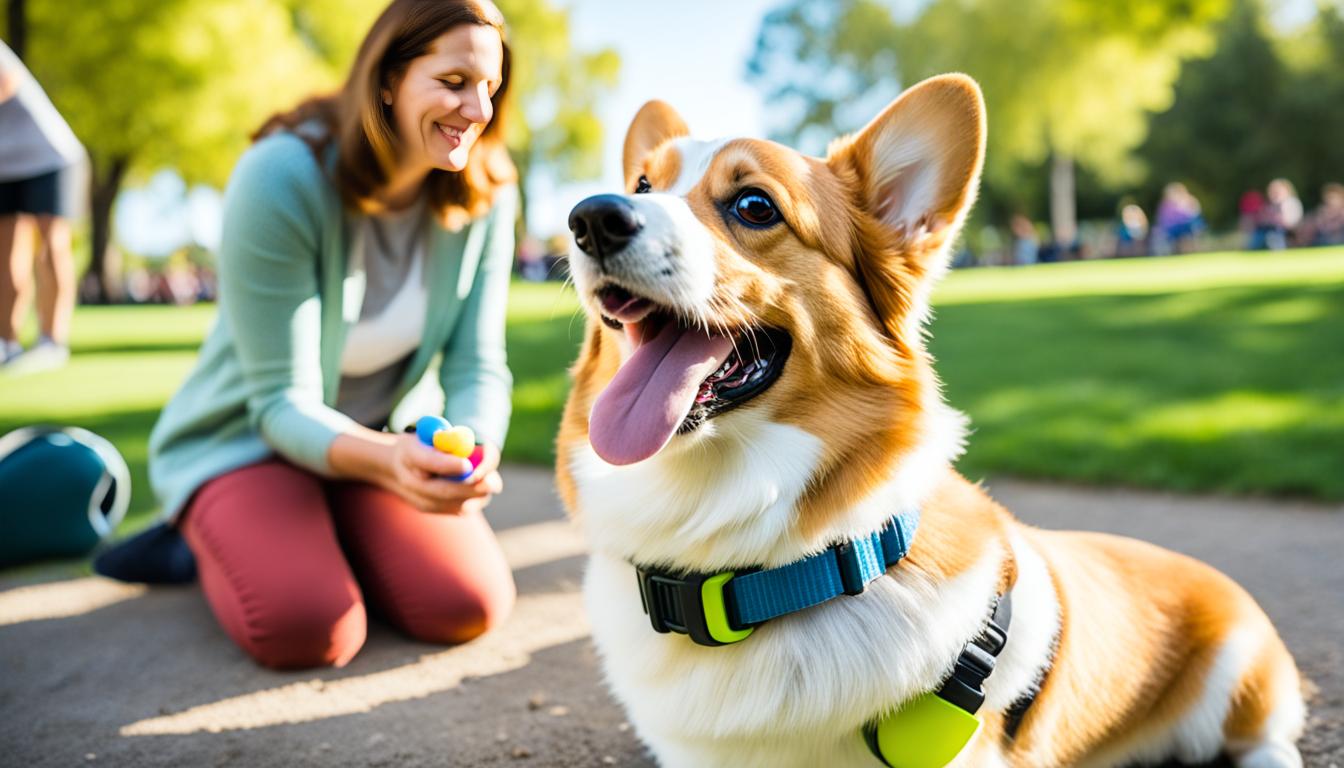

Are you tired of your Corgi’s constant barking? Do you find yourself wondering what can be done to address this behavior? Well, you’re not alone. Many Corgi owners struggle with excessive barking in their furry friends. But fear not! There are effective solutions to manage and reduce your Corgi’s barking habits.
Corgis are known for their talkative nature, but when their barking becomes excessive, it can be a challenge to deal with. Understanding the underlying reasons behind their barking is the first step in finding the right solutions. From stress and separation anxiety to excitement and boredom, a variety of factors can contribute to excessive barking in Corgis.
Key Takeaways:
- Excessive barking in Corgis can be managed and reduced through effective training methods.
- Identifying the specific cause behind your Corgi’s barking is crucial in addressing the behavior.
- Positive reinforcement, distraction, and teaching commands like “bark” and “quiet” can help curb excessive barking.
- Providing adequate exercise and mental stimulation is essential in reducing Corgi’s barking tendencies.
- Patience, consistency, and positive reinforcement are key in training your Corgi to control its barking.
Do Corgis Bark A Lot?
When it comes to barking, Corgis are known for their expressive nature. While not every Corgi barks excessively, it’s safe to say that many of them enjoy using their voice to communicate. Their breed history as working dogs bred to herd makes them naturally inclined to bark. Understanding and managing your Corgi’s barking tendencies is key to maintaining a harmonious relationship.
While Corgis may have a reputation for being excessive barkers, it’s important to note that not all Corgis exhibit this behavior to the same degree. Each individual dog is unique and may have different barking patterns and triggers. Some Corgis may be more talkative than others, while some may bark only when necessary.
“Corgis have a lot to say, and they’re not afraid to say it!”
When trying to determine whether Corgis bark a lot, it’s essential to consider their personality, upbringing, and environment. Proper training and socialization can play a significant role in managing their barking tendencies. Corgis that have undergone obedience training and have been exposed to different environments from a young age are more likely to have better control over their barking.
It’s worth noting that Corgis are intelligent and adaptable dogs. With consistent training and positive reinforcement, you can help your Corgi understand when it’s appropriate to bark and how much barking is acceptable. By teaching them the commands for “bark” and “quiet,” you can establish clear boundaries and encourage desired behavior.
While Corgis may have a predisposition towards barking, it doesn’t mean that it’s an unmanageable behavior. With the right training and understanding, you can strike a balance between allowing your Corgi to express themselves and keeping their barking under control.
Reasons Why Corgis Bark
Corgis are known for their adorable looks, playful nature, and… barking. Yes, Corgis are notorious for their barking tendencies. But what are the reasons behind all that vocalization? Let’s explore the various reasons why Corgis bark and how to address this behavior effectively.
Stress and Separation Anxiety
One of the primary reasons Corgis bark is due to stress and separation anxiety. These intelligent and social dogs thrive on human companionship, and when left alone for extended periods, they may become anxious and exhibit excessive barking as a way to seek attention or alleviate their distress.
Excitement and Boredom
Corgis are high-energy dogs that thrive on mental and physical stimulation. When they feel excited or bored, they may resort to barking as a way to release their pent-up energy or seek stimulation. Ensuring they receive regular exercise, engaging playtime, and mental enrichment activities can help reduce their urge to bark.
Fear and Aggression
Like any other dog, Corgis may bark out of fear or aggression. Fear-induced barking usually occurs when they encounter unfamiliar people, animals, or environments. Meanwhile, aggression-induced barking may stem from territorial behavior or guarding instincts. Identifying the triggers behind their fear or aggression and implementing appropriate counter-conditioning techniques can help manage their barking in such situations.
Attention-Seeking Behavior
Corgis are smart and can quickly learn that barking gets them attention. Whether they want to be petted, play, or have their favorite treat, they may resort to barking as a way to communicate their desires. Teaching them alternative ways to seek attention and rewarding them when they engage in quiet behavior can help curb their attention-seeking barking habits.
Barking for Fun
Finally, some Corgis simply enjoy barking for the sheer fun of it. They may find delight in hearing their own voice or engage in barking as a form of self-amusement. While it may be challenging to completely eliminate this type of barking, redirecting their attention to more appropriate activities and providing mental stimulation can help reduce excessive barking for fun.
By understanding the reasons behind a Corgi’s barking, owners can address the behavior more effectively. Now that we’ve explored the triggers for Corgi barking, let’s move on to Section 4 where we’ll discuss how to stop your Corgi from barking and find the peace and quiet you desire.

How to Stop Your Corgi from Barking
It is natural for Corgis to bark, but excessive barking can be bothersome to both the owner and those around them. While completely eliminating a Corgi’s barking may not be realistic, there are effective methods to train them and reduce excessive barking. Punishing a Corgi for barking is not recommended as it can send the wrong message. Instead, it is important to focus on understanding the cause of the barking and implementing positive reinforcement training methods.
Determining the underlying cause of your Corgi’s excessive barking is the first step in developing an effective bark control plan. Is your Corgi barking out of stress, excitement, boredom, fear, or aggression? By identifying the specific trigger, you can address it through training techniques that cater to their individual needs.
Providing suitable distractions can be a valuable tool in reducing your Corgi’s barking. For example, if your Corgi tends to bark at external stimuli like other dogs or people passing by, redirect their attention by offering a favorite toy or engaging them in a game. This will help shift their focus away from barking and onto a more positive activity.
Positive reinforcement training methods are highly effective in teaching Corgis appropriate barking behaviors. When your Corgi remains quiet in situations where they would typically bark excessively, reward them with praise or treats. This positive association will reinforce their understanding of when barking is acceptable and when it is not.
Consistency and patience are key throughout the training process. It may take time for your Corgi to fully understand and abide by the training methods. Stay calm and consistent in your approach, and celebrate even the smallest progressions. By providing clear guidelines and rewards, you can help your Corgi develop healthy barking habits.
Remember, the goal is not to completely eliminate your Corgi’s barking, but rather to teach them appropriate barking behaviors. With time and dedication, you can establish a harmonious living environment for both you and your Corgi.

| Methods to Stop Corgi Barking | Description |
|---|---|
| Identify the cause | Determine why your Corgi is barking excessively, such as stress or excitement. |
| Provide suitable distractions | Redirect your Corgi’s attention with toys, games, or other engaging activities. |
| Use positive reinforcement | Reward your Corgi when they remain quiet in situations where they would typically bark. |
| Stay consistent and patient | Consistently follow the training methods and be patient with your Corgi’s progress. |
Tiring Out Your Corgi
One effective way to reduce excessive barking in Corgis is to ensure they receive adequate exercise and mental stimulation. Corgis are active dogs that require daily physical and mental activities to expend their energy. Engaging in playtime, providing attention, and taking them for regular walks can help tire them out and decrease their urge to bark.
Corgis thrive on physical exercise, and a tired Corgi is less likely to bark excessively. Taking your Corgi for a daily walk not only provides them with physical activity but also allows them to explore their surroundings and satisfy their curious nature. Aim for at least 30 minutes to an hour of exercise per day to keep your Corgi physically and mentally stimulated.
In addition to walks, incorporate interactive play sessions into your Corgi’s routine. Playing games like fetch or engaging in puzzle toys can help keep their minds engaged and tiresome. These activities require focus and problem-solving skills, providing mental stimulation that can alleviate boredom and reduce the urge to bark.
Furthermore, consider enrolling your Corgi in agility training classes or other dog sports. These activities not only provide physical exercise but also challenge their intelligence and problem-solving abilities. By participating in these stimulating activities, your Corgi can expend their energy, leading to a calmer and less barking-prone demeanor.
“Physical exercise and mental stimulation are key factors in reducing excessive barking in Corgis. By ensuring their needs for exercise and play are met, you can tire them out and provide an outlet for their energy.”
Creating a Structured Routine
In addition to regular exercise, establishing a structured routine can help manage your Corgi’s energy levels and minimize excessive barking. Corgis thrive on consistency and predictability, as it helps provide them with a sense of stability and security.
Create a daily schedule for feeding, exercise, playtime, and rest. Routine walks at the same time each day can help your Corgi anticipate and channel their energy appropriately. Incorporate interactive play sessions into their schedule to provide mental stimulation throughout the day. By establishing a routine, you can help regulate your Corgi’s energy levels and reduce the likelihood of excessive barking due to frustration or boredom.
The Importance of Mental Stimulation
Corgis are intelligent dogs that require mental stimulation to keep their minds engaged and active. Providing them with puzzles, interactive toys, and training sessions can keep them mentally stimulated and prevent boredom, which often leads to excessive barking.
Consider using food-dispensing toys or puzzle feeders to make mealtime more engaging for your Corgi. These toys require problem-solving skills, and the act of working for their food provides mental stimulation. You can also teach your Corgi new tricks or commands, challenging their minds and keeping them focused on learning rather than barking.
A mentally stimulated Corgi is more likely to be content and less inclined to bark excessively. By incorporating activities that engage their minds and challenge their intelligence, you can provide an outlet for their mental energy and reduce the urge to bark.
| Benefits of Exercise and Mental Stimulation | How It Helps Reduce Excessive Barking |
|---|---|
| Physical exercise | Tires out your Corgi, reducing excess energy that can lead to barking |
| Interactive play sessions | Provides mental stimulation and keeps your Corgi engaged |
| Agility training or dog sports | Challenges their intelligence and problem-solving abilities, reducing boredom-induced barking |
| Establishing a structured routine | Regulates your Corgi’s energy levels and provides a sense of stability |
| Providing mental stimulation | Prevents boredom and redirects your Corgi’s focus away from excessive barking |
To reduce excessive barking in Corgis, it is essential to address both their physical and mental needs. By providing adequate exercise, engaging in interactive play, and challenging their minds, you can tire out your Corgi and promote a calmer, quieter environment.

Ignoring Barking and Rewarding Silence
Excessive barking in Corgis can often be attention-seeking behavior. One effective method to reduce this behavior is by ignoring their barking and rewarding silence. By not giving any attention or interaction while they are barking and praising them when they are quiet, owners can teach their Corgis that barking does not result in any desired outcome. This method requires patience and consistency to achieve the desired results.
When your Corgi starts barking, it can be tempting to respond immediately and try to quiet them down. However, engaging with them during this time may inadvertently reinforce their barking habits. Instead, remain calm and ignore the barking completely. Avoid eye contact, verbal cues, or any other form of attention that might encourage them to continue barking.
Once your Corgi stops barking and becomes quiet, it’s important to reward their silence with praise and treats. Let them know that being quiet is the behavior you desire. By doing so, you reinforce the idea that calm behavior is rewarded, encouraging them to choose silence over excessive barking.
Remember, consistency is key. Ignoring barking and rewarding silence requires patience and perseverance. Continue this method consistently, and over time, your Corgi will learn that excessive barking is not an effective way to get attention.
Creating a Quiet Environment
In addition to ignoring barking and rewarding silence, creating a calm and peaceful environment for your Corgi can further reinforce quiet behavior. Reduce external triggers that may provoke excessive barking, such as loud noises or visual stimuli. Provide your Corgi with a designated quiet space where they can retreat when they need a break.
Consider using background noise, such as white noise or soft music, to help drown out external sounds that may trigger your Corgi’s barking. This can create a soothing atmosphere and minimize their tendency to bark unnecessarily.
Remember to be patient with your Corgi during this training process. Each dog is unique, and it may take time for them to understand the desired behavior. With consistency, positivity, and by ignoring barking while rewarding quiet moments, you can help your Corgi develop better barking habits and create a harmonious living environment for the both of you.
Teaching the “Quiet” Command
Addressing excessive barking in Corgis can also be achieved by teaching them the “quiet” command. This method allows owners to control their Corgi’s barking in situations where it is unnecessary or undesirable.
The process involves triggering the Corgi’s barking, such as using a doorbell, and then giving the command to be quiet. Through repetition and reward-based training, Corgis can learn to associate the command with stopping their barking.
When implementing this training method, it’s essential to remain calm and patient. Here are the steps to teach your Corgi the “quiet” command:
- Choose a trigger that reliably elicits your Corgi’s barking, such as a doorbell or a knock on the door.
- When the trigger occurs and your Corgi starts barking, calmly and confidently say the command “quiet.”
- At the same time as giving the command, use a hand signal, such as holding your index finger to your lips, to reinforce the visual cue.
- Wait for your Corgi to stop barking, even if it’s just for a few seconds, and immediately reward them with praise, treats, or their favorite toy.
- Repeat this process consistently and gradually increase the duration of quietness before giving the reward.
- Eventually, your Corgi will associate the “quiet” command with the act of stopping their barking and understand that quiet behavior is rewarded.
Remember, consistency and positive reinforcement are key to successfully teaching your Corgi the “quiet” command. Avoid scolding or punishing your Corgi for barking, as this can create confusion and may worsen their barking behavior.
With practice and reinforcement, your Corgi will learn to respond to the “quiet” command and stop barking on command. This command can be particularly useful in situations where you need your Corgi to remain calm and quiet, such as when guests arrive or during nighttime hours.

Tips for Successful “Quiet” Command Training:
- Start in a quiet, distraction-free environment and gradually increase the level of distractions as your Corgi becomes more proficient.
- Keep training sessions short and frequent to maintain your Corgi’s focus and avoid overwhelming them.
- Use positive reinforcement techniques such as treats, praise, and play to reward your Corgi for being quiet.
- Be patient and consistent in your training efforts, as it may take time for your Corgi to fully understand and obey the “quiet” command.
- Seek professional help or consult a professional dog trainer if you’re facing challenges or if your Corgi’s excessive barking persists despite training efforts.
Addressing Specific Triggers
Understanding the specific triggers for a Corgi’s barking can greatly assist in finding targeted solutions to address this behavior. Corgis may bark at various triggers, such as cars passing by, people walking past their territory, or feeling anxious when left alone at home. By identifying these triggers, owners can implement strategies to reduce or even eliminate the barking.
For example, if a Corgi barks excessively at cars, one possible solution is to place a film on windows to limit outside stimuli. This can help create a calmer environment for the Corgi, reducing the need to bark at passing vehicles.
Another approach is to train Corgis to go to their crate or bed when the doorbell rings. This redirection technique helps prevent them from barking at the door and instead fosters calm behavior in response to the sound.
“By understanding and addressing the specific triggers, owners can create a more peaceful and harmonious environment for both themselves and their beloved Corgis.” – Corgi Training Expert
Tips for Preventing Specific Barking Triggers:
- Identify the specific triggers for your Corgi’s barking.
- If your Corgi barks at cars, consider placing a film on windows to limit outside stimuli.
- Train your Corgi to redirect their behavior to their crate or bed when the doorbell rings.
- Seek professional guidance or consult with a dog behaviorist for targeted solutions.
- Be consistent and patient in implementing the strategies to address specific triggers.
By employing these techniques and addressing the specific triggers, you can help your Corgi overcome excessive barking and create a more peaceful and enjoyable living environment for both you and your furry friend.
Addressing Boredom and Anxiety
Corgis are intelligent and energetic dogs that thrive on mental and physical stimulation. When they become bored or anxious, they may resort to excessive barking. To prevent this behavior, it is crucial to address their boredom and anxiety through various coping mechanisms.
One effective way to combat Corgi boredom is by providing them with mental stimulation. Engage their minds with interactive toys, puzzle games, and treat-dispensing toys. These activities not only entertain them but also challenge their cognitive abilities, keeping their minds sharp and focused.
To alleviate Corgi anxiety, establishing a structured routine can be beneficial. Dogs thrive when they have a predictable schedule that includes regular feeding times, exercise sessions, and playtime. This routine provides them with a sense of security and reduces anxiety triggers.
Leaving Corgis with comforting items, such as a favorite blanket or a piece of clothing with their owner’s scent, can help reduce anxiety when they are alone. These familiar scents provide them with a sense of comfort and reassurance.
Another effective strategy is playing background noise, such as calming music or nature sounds, to mask external stimuli that may trigger anxiety in Corgis. This can help create a soothing environment and promote relaxation.
“Providing Corgis with mental stimulation and a structured routine can help alleviate their boredom and anxiety.”
Rotating their toys regularly can also prevent boredom and keep them engaged. Introducing new toys every few days keeps their interest piqued and prevents them from getting bored with the same toys.
Corgis, like any other breed, require social interaction and exercise. Playdates with other dogs or visits to the dog park provide the opportunity for them to socialize, burn off energy, and combat feelings of isolation and anxiety.
Summary:
Corgis are prone to excessive barking when they experience boredom or anxiety. Addressing these issues through mental stimulation, structured routines, comforting items, background noise, and socialization can help alleviate their boredom and anxiety, reducing their need to engage in excessive barking.
Conclusion
Managing and reducing excessive barking in Corgis may require patience and understanding, but it is certainly achievable. By implementing proper training techniques, identifying the root causes of barking, and providing adequate physical and mental stimulation, owners can create a harmonious environment for their Corgis. Remember to approach training with consistency and positive reinforcement, avoiding punishment or negative methods that can worsen the behavior.
Understanding the natural inclination of Corgis to express themselves through barking and addressing their specific triggers can significantly help in controlling their excessive barking. By ensuring their needs for exercise, mental stimulation, and routine are met, owners can help alleviate boredom and anxiety, reducing the frequency of barking episodes.
In conclusion, by taking the time to understand their Corgis and working with them through training and environmental modifications, owners can enjoy a quieter and happier relationship with their beloved pets. With commitment and dedication, managing Corgi barking is well within reach, allowing both dogs and their owners to lead a more peaceful and enjoyable life together.
FAQ
What are some solutions for excessive barking in Corgis?
Do Corgis bark a lot?
What are the reasons why Corgis bark?
How can I stop my Corgi from barking?
How can I tire out my Corgi?
Should I ignore my Corgi’s barking and reward silence?
How can I teach my Corgi the “quiet” command?
How can I address specific triggers for my Corgi’s barking?
How can I address my Corgi’s boredom and anxiety?
What are some final thoughts on Corgi barking?
Source Links
- https://www.quora.com/What-suggestions-do-you-have-to-deter-a-Corgi-from-barking-constantly-Should-I-try-a-no-shock-vibrating-beeping-collar-A-Corgi-that-boards-w-me-barks-a-lot-especially-constantly-when-chasing-one-of-my-dogs-It
- https://stumpsandrumps.com/corgi-barking/
- https://www.hepper.com/how-to-train-a-corgi-not-to-bark/

Carlos is the passionate founder and primary author behind “CorgisCorner.com,” a website dedicated to all things related to the beloved Corgi breed. Born and raised in a small town known for its strong sense of community and love for animals, Carlos developed a deep affection for Corgis from a young age. This love was sparked by his childhood companion, a spirited and loyal Corgi named Toby, who was a constant source of joy and friendship.