

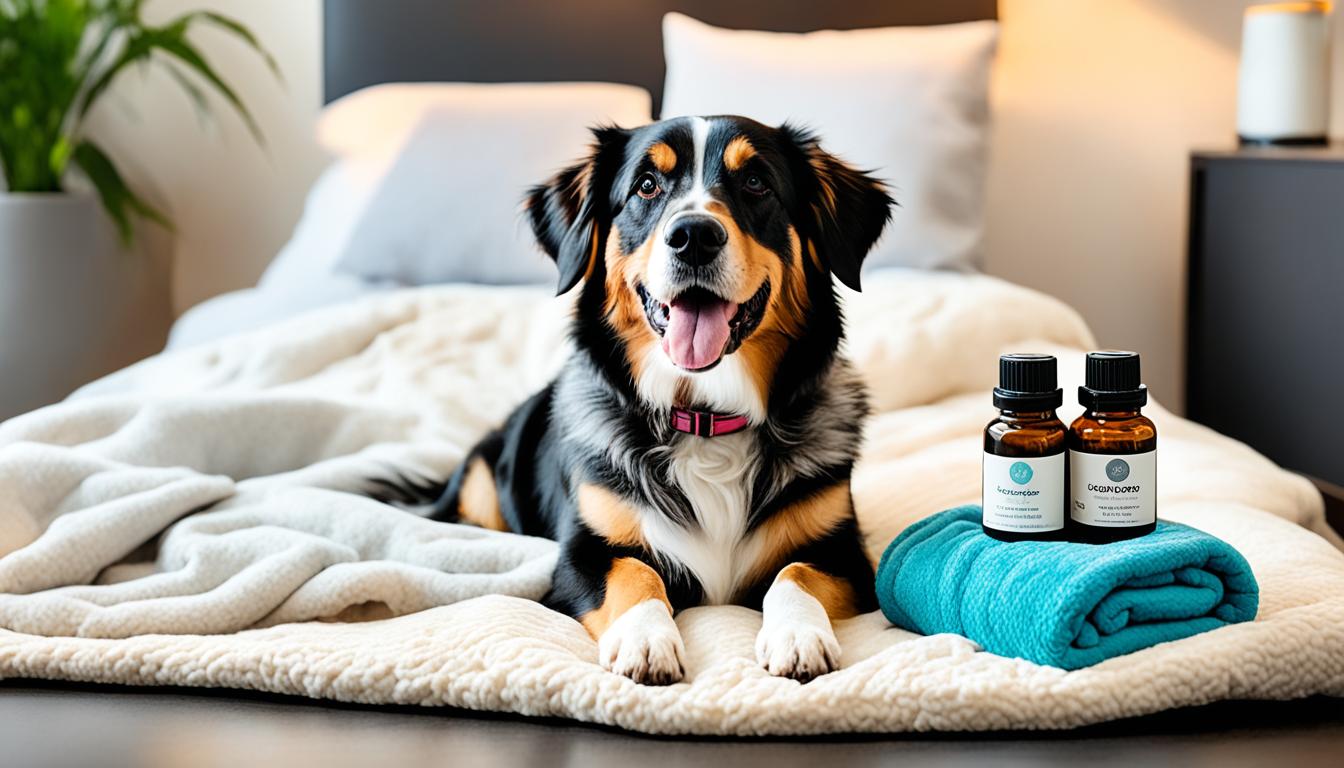
Is your dog experiencing anxiety? If so, you’re not alone. Many dogs face anxiety, which can lead to problem behaviors and distress for both the dog and their owner. But what strategies can you use to calm an anxious dog and provide them with the relief they need? In this article, we will explore effective techniques and practical tips to help soothe your dog’s anxiety, allowing them to live a happier and more peaceful life.
Key Takeaways:
- Understanding the underlying causes of your dog’s anxiety is key to addressing the issue effectively.
- Recognizing early signs of anxiety in dogs can help you intervene and provide relief before the anxiety escalates.
- Building your dog’s confidence through consistent routines and positive experiences can help them cope with anxiety-triggering situations.
- Training your dog to settle on cue can be a useful tool in managing their anxiety and helping them regain control of their emotions.
- Providing a safe and calm space for your dog can help alleviate their anxiety and give them a sense of security.
Understanding Why Your Dog Is Anxious
Many dogs experience anxiety, which can manifest in various ways and impact their overall well-being. To effectively address and manage dog anxiety, it is crucial to understand the underlying causes and triggers that contribute to their distress.
One common reason for dog anxiety is a lack of socialization. Dogs that haven’t been exposed to different environments, people, and other animals may feel overwhelmed or fearful in new situations. Proper socialization from a young age is vital in helping dogs develop confidence and adaptability.
Traumatic experiences can also contribute to anxiety in dogs. Previous incidents such as accidents, abuse, or abandonment can leave a lasting impact, causing fear and anxiety in similar situations. It is important to be patient and provide a safe and loving environment for these dogs while gradually helping them rebuild trust and confidence.
In senior dogs, anxiety may be linked to cognitive decline. As dogs age, they can experience changes in their cognitive function, which can lead to uncertainty and anxiety. Providing a predictable routine, mental stimulation, and veterinary care can help manage anxiety in senior dogs.
To effectively address your dog’s anxiety, it is essential to identify the specific triggers that cause distress. These triggers can vary from loud noises like fireworks or thunderstorms, being left alone, or specific situations that remind them of past traumas. Pay attention to your dog’s behavior and body language to gain insights into what may be causing their anxiety.
Understanding your dog’s past experiences is crucial in developing effective calming techniques. By knowing what they have been through, you can tailor your approach and provide the necessary support to help them feel secure and at ease.
By taking the time to understand the underlying causes of your dog’s anxiety, you can implement a holistic approach to anxiety relief. From socialization to addressing traumatic experiences and cognitive decline in senior dogs, each dog’s needs are unique. This understanding will guide you in selecting the most suitable calming techniques and creating a safe and comfortable environment for your beloved canine companion.
Recognizing Early Signs of Anxiety
Anxiety in dogs can manifest in various ways, and it’s essential for pet owners to be able to recognize the early signs. Identifying these signs early allows for proactive steps to be taken in order to alleviate anxiety and provide relief for your furry friend.
Some common signs of anxiety in dogs include:
- Lip licking
- Pulled back ears
- Pacing
- Panting excessively
- Tail tucking
- Trembling
- Excessive yawning
- Excessive barking or whining
- Restlessness
These signs can often be observed through changes in body language or behavior. By closely observing your dog’s demeanor, you can quickly spot any indications of anxiety and take appropriate action.
Additionally, it’s important to note that dogs may exhibit different signs of anxiety depending on their individual personality and the cause of their anxiety. By understanding your dog’s unique behavior, you can better identify their specific signs of distress.
Why Early Recognition is Important
Early recognition of anxiety in dogs enables you to intervene before the anxiety escalates. By addressing the issue at the onset, you can prevent your dog from experiencing prolonged anxiety and potential negative outcomes such as destructive behavior, aggression, or health problems.
Furthermore, recognizing early signs of anxiety allows you to implement appropriate calming techniques and provide your dog with the relief they need. By taking timely action, you can create a supportive environment that promotes your dog’s well-being and helps them feel more secure.

Building Your Dog’s Confidence
Building your dog’s confidence is a crucial step in helping them cope with anxiety-triggering situations. By providing them with a sense of security and empowerment, you can help reduce their anxiety levels and improve their overall well-being.
Consistency and Routine
Establishing a consistent routine for your dog can create a sense of stability and predictability in their daily life. Dogs thrive on routine, and knowing what to expect can help alleviate their anxiety. Develop a schedule for feeding, exercise, and playtime, and try to stick to it as closely as possible.
Additionally, consistency in your interactions with your dog is important. Use positive reinforcement techniques such as treats, praise, and gentle physical touch to reward good behavior. This reinforcement helps build their confidence as they learn what behaviors are expected of them.
Positive Reinforcement and Obedience Training
Engaging in obedience training with your dog can be an excellent way to boost their confidence. Teaching them basic commands such as sit, stay, and come can give them a sense of accomplishment and control over their environment.
“Training gives dogs a mental challenge and a job to do, which can boost their confidence and reduce anxiety,” says Dr. Jane Smith, a renowned canine behavior specialist.
Positive reinforcement is key during training. Use rewards such as treats, toys, or verbal praise to reward your dog for their successful performance. This positive association builds their self-esteem and encourages them to continue learning and participating in training exercises.
Engaging in Dog Sports and Activities
Participating in dog sports and activities, such as agility or obedience trials, can have a profound impact on your dog’s confidence and anxiety levels. These activities provide mental stimulation, physical exercise, and an opportunity for socialization.
Agility courses, for example, require dogs to navigate various obstacles, boosting their problem-solving skills and self-assurance. It also builds trust between the dog and their owner as they work together as a team.


| Ways to Soothe an Anxious Dog: | Anxiety Relief Techniques: | Calming Techniques for Dogs: |
|---|---|---|
| Consistency and Routine | Positive Reinforcement | Obedience Training |
| Engaging in Dog Sports | Environmental Enrichment | Socialization |
| Creating a Safe Space | Desensitization and Counterconditioning | Relaxation Techniques |
Note: The table above summarizes various techniques and methods to ease anxiety in dogs. It is important to incorporate a combination of these strategies based on your dog’s individual needs and preferences.
Environmental Enrichment
Providing your dog with a stimulating and enriching environment can help boost their confidence. Interactive toys, puzzle feeders, and treat-dispensing toys can keep their mind engaged and distract them from anxious thoughts.
Introduce new experiences and objects gradually to avoid overwhelming your dog. Gradual exposure allows them to build confidence at their own pace while associating positive experiences with new stimuli.
Socialization
Socialization is essential for dogs to develop confidence and feel comfortable in various situations. Expose your dog to different environments, people, and other dogs in a controlled and positive manner.
Arrange playdates with other well-socialized dogs or enroll your dog in a supervised group class to improve their social skills. These interactions can help them overcome anxiety when encountering new experiences or interactions in the future.
Remember, building your dog’s confidence takes time and patience. Be consistent in your approach, and if needed, consult with a professional dog trainer or behaviorist for personalized guidance.
Teaching Your Dog to Settle
One of the most effective calming techniques for dogs is teaching them to settle on cue. This command can help your dog regain control of their emotions in stressful situations and provide them with a sense of security. By starting in calm settings and gradually adding distractions, you can help your dog learn to settle even in more challenging environments.
Training your dog to settle involves creating a designated space where they can relax and teaching them a verbal or visual cue that signals it’s time to settle down. Here are some steps to get you started:
- Choose a comfortable area: Set up a cozy spot with a comfortable bed or blanket where your dog can unwind.
- Introduce the settling cue: Use a consistent verbal cue such as “settle” or a specific hand signal to indicate that it’s time for your dog to relax.
- Start in a calm environment: Begin the training in a quiet room with minimal distractions.
- Guide your dog to the designated spot: Lead your dog to their designated settling area using the settled cue.
- Encourage relaxation: Use gentle petting or soothing words to help your dog associate the settling spot with relaxation.
- Use positive reinforcement: Reward your dog with praise, treats, or their favorite toy when they successfully settle in the designated spot.
With consistent practice, your dog will start to understand the cue and associate it with relaxation. As they become more comfortable, you can introduce distractions gradually, such as noises or mild movements.
Remember, patience and positive reinforcement are key when teaching your dog to settle. By implementing this calming technique, you can provide your anxious dog with a valuable tool for managing their anxiety and creating a sense of peace.
Expert Tip:
“When teaching your dog to settle, it’s crucial to start in a calm environment and gradually increase distractions. This way, your dog will learn to relax in various settings and have the skills to manage their anxiety.”
– Dr. Emily Thompson, Canine Behavior Specialist
Now, let’s take a look at a user-friendly table that summarizes the key steps for teaching your dog to settle:
| Steps for Teaching Your Dog to Settle |
|---|
| 1. Choose a comfortable area |
| 2. Introduce the settling cue |
| 3. Start in a calm environment |
| 4. Guide your dog to the designated spot |
| 5. Encourage relaxation |
| 6. Use positive reinforcement |
By following these steps and consulting with a professional dog trainer if needed, you can successfully teach your dog to settle and provide them with an effective tool for managing their anxiety.

Creating a Safe, Calm Place for Your Dog
Providing a safe and calm space for your dog can greatly contribute to alleviating their anxiety. One effective way to achieve this is by offering them a designated dog bed or mat that they associate with positive experiences. This special place can become their go-to spot for relaxation and a retreat from stressful situations.
Training your dog to go to their safe place on cue can give them a sense of security during anxious moments. By using positive reinforcement techniques, such as treats or praise, you can encourage them to seek out their safe space when they feel overwhelmed. This training provides them with a reliable comfort zone where they can find solace and regain their composure.

The beauty of creating a safe, calm place for your dog is the portability it offers. Whether you’re visiting the vet’s office, going on a trip, or visiting friends, their relaxation station can accompany them, providing a familiar and secure environment wherever they go. This consistency can be incredibly beneficial in reducing their anxiety levels and promoting a sense of well-being.
Keeping Your Dog Occupied When Alone
Dogs that experience separation anxiety can greatly benefit from having plenty of activities to engage in when they are alone. By providing them with stimulating and interactive options, you can help distract them from their anxiety and create a positive environment for them.
One effective way to keep an anxious dog occupied is by providing them with calming products designed specifically for anxious dogs. These products, such as interactive puzzle toys or food-stuffed toys, can keep them mentally engaged and help redirect their focus. They can spend their time trying to extract treats from the toys, which provides both mental and physical stimulation.
“Interactive puzzle toys or food-stuffed toys can provide mental and physical stimulation for anxious dogs, helping divert their attention from anxiety.”
In addition to toys, some dogs find comfort in the background noise of a TV or radio when they are alone. The familiar sounds can make them feel less alone and provide a sense of security. Leaving on some soft music or a soothing TV program can create a calming atmosphere for your dog.
It’s important to note that not all dogs will respond to the same activities, so it may take some trial and error to find what works best for your anxious dog. Some dogs may prefer interactive toys, while others may enjoy the background noise of a TV or radio. Listen to your dog’s preferences and adjust accordingly.
| Calming Products for Anxious Dogs | Tips for Anxious Dogs | Anxiety Relief for Dogs |
|---|---|---|
| Interactive puzzle toys | Provide a safe and comfortable space | Consult a veterinarian or professional trainer |
| Food-stuffed toys | Settle on cue training | Identify triggers and past experiences |
| TV or radio background noise | Desensitization and counterconditioning techniques | Building confidence through consistent routines |
Remember, keeping your dog occupied when they are alone is just one aspect of managing their anxiety. It’s important to combine these strategies with other calming techniques and seek guidance from professionals if necessary. By providing a stimulating and comforting environment, you can help reduce your dog’s anxiety and improve their overall well-being.
Playing Calming Games
Engaging in soothing games can provide anxiety relief for dogs and help redirect their focus. These activities can be a fun and effective way to stimulate your dog’s mind and promote relaxation. By incorporating calming games into your dog’s routine, you can help alleviate their anxiety and create a positive environment for them to thrive.
Hiding Treats Game
One way to soothe an anxious dog is to play the hiding treats game. This game combines mental stimulation and reward, providing a calming effect on your dog. Start by hiding small treats or toys around the house or in a designated play area. Encourage your dog to use their sense of smell to find the hidden treasures. This game not only engages their mind but also helps distract them from their anxiety and redirects their focus.
Hide-and-Seek with Treats or Toys
Another game that can bring anxiety relief for dogs is hide-and-seek with treats or toys. Begin by letting your dog see you hide a treat or toy in a nearby location. Once hidden, give your dog the command to “find it.” This game not only provides mental stimulation but also helps build your dog’s confidence as they successfully locate the hidden item. Playing hide-and-seek can be a great way to distract your dog from their anxiety and create a positive association with finding hidden objects.
Incorporating Training Exercises
Integrating training exercises into a game can be an effective way to calm an anxious dog. By incorporating basic obedience commands and tricks into playtime, you can provide mental stimulation and a sense of accomplishment for your dog. For example, you can ask your dog to perform simple tasks such as sit, stay, or shake paw before tossing a ball or engaging in other active games. This combination of training and play helps reduce anxiety by redirecting your dog’s focus and giving them a purposeful activity to participate in.
Playing calming games with your dog not only provides anxiety relief but also helps strengthen the bond between you and your furry companion. Remember to tailor the games to suit your dog’s preferences and abilities. Each dog is unique, so experiment with different games and observe how your dog reacts to find the ones that work best for them. By engaging in these calming games, you can create a relaxing environment and promote your dog’s overall well-being.
Desensitization and Counterconditioning
Desensitization and counterconditioning are highly effective techniques for managing dog anxiety. These methods involve gradually exposing dogs to triggers that cause anxiety and helping them develop a more positive association with those triggers.
Desensitization works by slowly and incrementally introducing the trigger to the dog in a controlled environment. The goal is to expose the dog to the trigger at a level where they feel calm and relaxed, gradually increasing the intensity or proximity over time. This gradual exposure can help the dog build tolerance and reduce anxiety.
Counterconditioning is the process of pairing the trigger that causes anxiety with something positive, such as treats, praise, or play, to create a positive association. By doing this, the dog learns to associate the trigger with pleasant experiences, which helps change their emotional response from fear or anxiety to calmness.
It’s important to note that desensitization and counterconditioning should be done under the guidance of a professional dog trainer or animal behaviorist, especially if the trigger is severe or if the dog’s anxiety is intense. These professionals can provide proper guidance, create a tailored desensitization and counterconditioning plan, and ensure the safety and effectiveness of the process.
Steps for Desensitization and Counterconditioning:
- Identify the trigger: Determine what specific trigger(s) cause anxiety in your dog.
- Create a gradual exposure plan: Break down the trigger into smaller, manageable steps that gradually increase in intensity.
- Begin at a comfortable level: Start with the least intense or distant version of the trigger and allow your dog to relax in its presence while offering positive reinforcement.
- Gradually increase exposure: Slowly progress through each step, ensuring your dog remains calm and relaxed at each level before moving on to the next. Offer rewards and positive reinforcement at each step.
- Monitor your dog’s response: Observe your dog’s behavior and body language during each session. If signs of anxiety or stress increase, go back to the previous step and continue working at that level until your dog is comfortable.
- Celebrate progress: Acknowledge and reward your dog’s progress throughout the desensitization and counterconditioning process. This will help reinforce positive associations and build confidence.
Desensitization and counterconditioning are powerful techniques that can significantly improve your dog’s ability to cope with anxiety-triggering situations. With patience, consistency, and the guidance of a professional, you can help your dog develop new, positive associations and diminish their anxiety over time.
Conclusion
Successfully calming an anxious dog requires a comprehensive understanding of the underlying causes of their anxiety and the implementation of effective strategies to help them cope. By building their confidence, providing a safe space for relaxation, and engaging in calming activities, you can significantly alleviate their anxiety and improve their overall well-being.
One crucial aspect of anxiety relief for dogs is to consult with a trusted veterinarian or professional trainer who can provide personalized advice and guidance. They can help identify the specific triggers that cause anxiety in your dog and suggest tailored calming techniques. Remember that every dog is unique, and what works for one may not work for another, so obtaining professional advice is essential.
Through confidence-building activities, such as obedience training, agility, and establishing a consistent routine, you can help your dog better cope with anxiety-triggering situations. Creating a safe and calm space for your dog, where they can retreat and relax, is also significant in reducing their anxiety levels. Additionally, engaging in calming games and providing mental stimulation can redirect their focus and promote relaxation.
Remember, calming an anxious dog is a gradual process that requires patience and persistence. By implementing these strategies and seeking professional guidance when needed, you can significantly improve your furry friend’s quality of life and create a harmonious environment.
FAQ
What are some strategies to calm an anxious dog?
Why is it important to understand why my dog is anxious?
What are the early signs of anxiety in dogs?
How can I build my dog’s confidence to help them cope with anxiety?
How do I teach my dog to settle on cue?
How can I create a safe and calm place for my dog?
What can I do to keep my dog occupied when they are alone?
How can playing calming games help ease my dog’s anxiety?
What are desensitization and counterconditioning, and how can they help with dog anxiety?
How do I calm an anxious dog overall?
Source Links
- https://www.akc.org/expert-advice/training/soothe-dog-anxiety/
- https://www.poochandmutt.co.uk/blogs/lifestyle/how-to-calm-anxious-dogs
- https://ccspca.com/blog-spca/education/anxious-dog/

Carlos is the passionate founder and primary author behind “CorgisCorner.com,” a website dedicated to all things related to the beloved Corgi breed. Born and raised in a small town known for its strong sense of community and love for animals, Carlos developed a deep affection for Corgis from a young age. This love was sparked by his childhood companion, a spirited and loyal Corgi named Toby, who was a constant source of joy and friendship.