

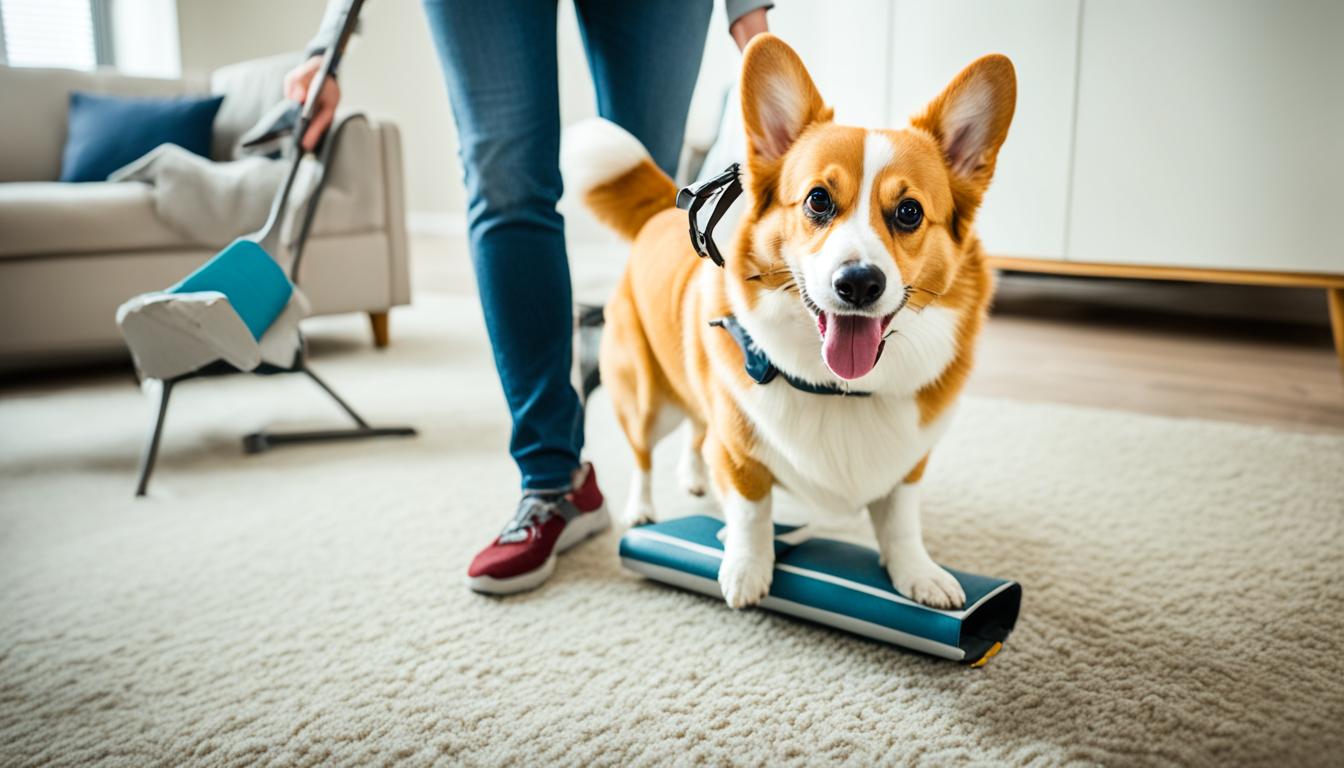

Why do Corgis misbehave? If you’ve ever owned or interacted with a Corgi, you may have experienced some of their common behavior problems. From stubbornness to aggression, Corgis can sometimes challenge even the most patient and dedicated owners. But what causes these misbehaviors, and how can you address them effectively?
In this article, we delve into the world of Corgi behavior to uncover the reasons behind their misbehavior and provide you with practical solutions to correct it. Whether you’re struggling with aggression, obedience, or other behavioral issues, we’ve got you covered with expert advice and proven training techniques.
Key Takeaways:
- Corgis may misbehave due to a lack of training, poor socialization, dominance issues, fear, or pain.
- Aggression in Corgis can be triggered by factors such as fear, dominance, resource guarding, territorial behavior, or pain.
- Recognizing signs of aggression in Corgis is crucial for early intervention and effective behavior modification.
- Consulting a professional dog trainer or behaviorist can help address and correct aggression in Corgis.
- Using positive reinforcement techniques and avoiding punishment is key to disciplining an aggressive Corgi puppy.
Why Corgis Become Aggressive
Corgis, typically known for their friendly and affectionate nature, can exhibit aggression due to various reasons. Understanding these factors is crucial in addressing and correcting their aggressive behavior effectively. Let us explore the primary triggers for corgi aggression:
Fear Aggression in Corgis
Fear is a common factor that can lead to aggression in corgis. Loud noises, unfamiliar people, or other dogs can trigger fear aggression, causing the corgi to react defensively.
Dominance Aggression in Corgis
Intact male corgis are more prone to displaying dominance aggression. This behavior stems from a desire to establish dominance over their environment, other animals, or even humans.
Resource Guarding in Corgis
Corgis may exhibit aggression when they feel their resources, such as food, toys, or favorite spots, are being threatened. This behavior is known as resource guarding and can manifest as growling or snapping to protect their possessions.
Territorial Aggression in Corgis
Due to their strong instincts, corgis may develop territorial aggression if they perceive their living space as their own. They display defensive behavior to protect what they consider their domain.
Pain Aggression in Corgis
Corgis experiencing pain or discomfort may display aggression if touched or approached in sensitive areas. They react defensively to avoid further pain or discomfort.
Understanding these trigger factors and their associated behaviors can help corgi owners identify the root cause of aggression in their pets. By recognizing the underlying reasons, appropriate measures can be taken to address and modify their behavior, ensuring a harmonious and safe environment for both the corgi and their human companions.
Recognizing Signs of Aggression in Corgis
As a corgi owner, it is important to be able to recognize the signs of aggression in your furry friend. By identifying these behaviors, you can take appropriate action and address them as soon as possible. Aggression in corgis can manifest in various ways, including:
- Corgi growling: Growling is a clear indication that your corgi is feeling threatened or uncomfortable.
- Corgi snarling: Snarling is a defensive behavior displayed when a corgi is agitated or feels the need to protect itself.
- Corgi biting: Biting is a more serious form of aggression and can occur when a corgi feels cornered or fearful.
- Corgi lunging: Lunging refers to when a corgi suddenly jumps forward aggressively, often accompanied by growling or barking.
- Corgi snapping: Snapping is a quick, aggressive bite intended to intimidate or ward off a perceived threat.
- Corgi raised hackles: The hair along a corgi’s back and neck may stand on end when it is feeling defensive or threatened.
- Corgi staring: Intense staring, accompanied by a stiff body posture, can be a sign of aggression in corgis.
- Corgi growling at other animals: When a corgi growls at other animals, it may be displaying territorial or dominance aggression.
- Corgi growling at people: Growling at people can be a sign of fear, discomfort, or a warning of potential aggression.
It is important to note that these behaviors can be triggered by various factors, including anxiety, frustration, fear, or previous negative experiences. By understanding your corgi’s body language and recognizing these signs of aggression, you can address the underlying issues and work towards modifying their behavior.

Recognizing the signs of aggression in your corgi is the first step towards resolving the issue. In the following sections, we will explore effective strategies for addressing and correcting corgi misbehavior, ensuring a harmonious and safe relationship with your beloved pet.
Stopping Aggression in Corgis
Aggression in corgis can be a concerning behavior, but with the right approach, it can be addressed effectively. It is highly recommended to seek guidance from a professional dog trainer or behaviorist who specializes in addressing corgi aggression. They have the expertise to identify the source of aggression and provide tailored strategies to address it.
One of the key strategies in stopping aggression is socializing corgis with other dogs and humans. By exposing them to positive interactions in controlled environments, corgis can learn appropriate social behaviors and reduce their aggressive tendencies. It’s essential to start socialization early and gradually expose them to different situations.

Positive reinforcement training techniques are highly effective in correcting aggression in corgis. Offering rewards and praise for desired behaviors helps reinforce positive associations and encourages them to exhibit appropriate behavior. By focusing on rewarding good behavior rather than punishing aggressive behavior, corgis can learn alternative ways to express themselves.
Avoiding triggering situations is another crucial aspect of stopping aggression in corgis. Identifying the specific situations or stimuli that provoke aggression and taking steps to avoid or manage those situations can significantly reduce episodes of aggression. This may involve managing their environment, providing a safe space, or using distractions to redirect their attention.
Additionally, it is important to rule out any underlying pain issues that may be contributing to the aggression. A thorough veterinary checkup can help identify if the corgi is experiencing any physical discomfort or medical conditions that may be causing them to behave aggressively. Treating any underlying pain can contribute to a calmer and more balanced behavior.
Overall, by working with a professional, socializing corgis, implementing positive reinforcement training, avoiding triggering situations, and addressing potential pain issues, owners can effectively stop aggression in corgis and promote harmonious relationships with their furry companions.
Disciplining an Aggressive Corgi Puppy
When it comes to correcting the behavior of an aggressive corgi puppy, positive reinforcement techniques are highly recommended. This approach focuses on rewarding good behavior rather than using discipline or punishment. By avoiding aversive methods that rely on force, pain, or discomfort, you’ll establish a positive bond with your corgi and create a conducive learning environment.
The American Veterinary Society of Animal Behavior (AVSAB) advocates for reward-based methods when training and addressing unwanted behaviors. This stance underlines the effectiveness of positive reinforcement techniques in promoting desired behavior changes in corgis.
Instead of resorting to alpha dog theory or dominance training, positive reinforcement allows you to correct corgi behavior in a humane and compassionate way.
Positive reinforcement involves providing rewards such as treats, praise, or play when your corgi behaves appropriately. By associating these rewards with good behavior, you encourage your corgi to repeat those actions in the future.
It’s important to note that punishment-based methods can have adverse effects, potentially exacerbating aggressive behavior or causing fear and anxiety in your corgi. Following a positive reinforcement approach ensures a more harmonious relationship with your furry companion.
| Benefits of Positive Reinforcement Techniques: |
|---|
| 1. Effective Training: Positive reinforcement has proven to be more effective in the long run compared to punishment-based methods. It encourages your corgi to enjoy the training process and willingly engage in desired behaviors. |
| 2. Strong Bond: Positive reinforcement creates a positive association between you and your corgi, strengthening your bond and enhancing trust and cooperation. |
| 3. Avoidance of Punishment: By using positive reinforcement, you can correct corgi aggression without resorting to aversive techniques that may harm or distress your pet. |
Remember, consistency is key when implementing positive reinforcement techniques. Ensure that you reward good behavior consistently and avoid inadvertently reinforcing unwanted behavior. With patience and dedication, you can effectively discipline your aggressive corgi puppy using these humane and scientifically-backed methods.
Preventing Corgi Bites
Corgi bites can be a common issue that owners may need to address. These bites can be due to the corgi’s herding instinct or poor handling techniques. To prevent or correct corgi bites, it’s important to provide them with sufficient exercise and mental stimulation. Corgis are a working breed and need at least an hour of physical and mental activity every day.
Engaging in activities such as walks, training sessions, and puzzle toys can help prevent bites and redirect their energy in a positive way.

Exercise and Mental Stimulation for Corgis
Corgis have high energy levels and require regular exercise to keep them physically and mentally satisfied. Daily walks or jogs provide an outlet for their energy and help prevent them from becoming bored or frustrated.
In addition to physical exercise, corgis benefit from mental stimulation to keep their minds sharp and engaged. Implementing enrichment activities such as puzzle toys, treat dispensers, or interactive games can provide mental challenges and prevent behavioral issues caused by boredom.
It’s important to note that corgis have a natural herding instinct, which can manifest as nipping or biting behaviors. Providing appropriate outlets for this instinct, such as herding or agility training, can help channel their energy in a positive and controlled manner.
Prevention Techniques
Preventing corgi bites involves a combination of proper training, socialization, and positive reinforcement:
- Socialization: Expose your corgi to various people, animals, and environments from an early age to help them develop positive associations and reduce fear or anxiety-driven aggression.
- Training: Use positive reinforcement techniques, such as rewards and praise, to teach your corgi appropriate behavior and discourage biting. Consult a professional dog trainer for guidance if needed.
- Setting Boundaries: Establish clear boundaries and consistent rules for your corgi. Teach them appropriate play behaviors and provide them with appropriate chew toys.
- Supervision: Always supervise interactions between your corgi and children, other pets, or unfamiliar individuals to ensure everyone’s safety.
By implementing these prevention techniques and meeting their exercise and mental stimulation needs, you can help reduce the likelihood of corgi bites and create a harmonious environment with your furry companion.
| Prevention Tips | Benefits |
|---|---|
| Proper exercise and mental stimulation | Reduce excess energy that may contribute to biting behavior |
| Socialization and training | Create positive associations and teach appropriate behavior |
| Establishing clear boundaries | Help your corgi understand and respect limits |
| Supervision during interactions | Ensure safety for everyone involved |
The Principles of Behavior Modification
Behavior modification techniques play a crucial role in addressing corgi misbehavior effectively. By understanding and implementing these techniques, owners can modify their corgis’ behavior and promote a harmonious relationship. Let’s explore some key principles of behavior modification:
Habituation
Habituation involves exposing a corgi to a specific stimulus repeatedly until it becomes less responsive to it. This technique is particularly useful for reducing the corgi’s sensitivity or fear towards certain situations or objects.
Conditioning
Conditioning refers to the process of associating a specific behavior with a particular stimulus. Through classical conditioning, corgis can learn to respond to cues and commands, enabling owners to shape desired behaviors and discourage unwanted actions.
Reinforcement
Reinforcement plays a vital role in behavior modification. Positive reinforcement involves rewarding desirable behaviors to increase their frequency, while negative reinforcement involves removing or avoiding unpleasant stimuli to encourage behaviors. Both types of reinforcement can shape and guide a corgi’s behavior effectively.
Second-Order Reinforcers
Second-order reinforcers are associated with primary reinforcers, such as food or toys. By pairing secondary reinforcers, such as verbal praise or a clicker sound, with primary reinforcers consistently, owners can condition a corgi to associate these secondary reinforcers with positive outcomes, enhancing the effectiveness of training.
Extinction
Extinction refers to the gradual reduction or elimination of a specific behavior by withholding reinforcement. When a previously rewarded behavior no longer receives reinforcement, the corgi learns that the behavior is no longer effective and becomes less likely to exhibit it over time.
Overlearning
Overlearning involves repeated training sessions to ensure that the desired behaviors become deeply embedded. By practicing behaviors beyond proficiency, corgis are more likely to display the learned behaviors consistently, even in challenging or distracting situations.
Shaping
Shaping is a technique that involves rewarding successive approximations towards a desired behavior. By breaking down complex behaviors into small, achievable steps, owners can gradually shape and reinforce the corgi’s behavior towards the ultimate goal.
Desensitization
Desensitization aims to reduce a corgi’s fear or anxiety towards specific stimuli by gradually exposing them to those stimuli in a controlled and positive manner. This technique helps the corgi develop a more relaxed and comfortable response, reducing unwanted behaviors.
Counterconditioning
Counterconditioning focuses on replacing undesired behaviors with more favorable ones by associating positive experiences with the previously fear-inducing or anxiety-provoking stimuli. This technique helps corgis build new positive associations and responses to previously challenging situations.
Flooding
Flooding involves exposing a corgi to an overwhelming or highly fear-inducing stimulus continuously until the fear or anxiety subsides. This technique aims to extinguish the corgi’s fear response by providing a prolonged exposure to the perceived threat in a controlled and safe environment.
Punishment
Punishment should be used sparingly and as a last resort in corgi behavior modification. Physical or verbal punishment can have unintended negative consequences, such as fear, aggression, or anxiety. It’s essential to focus on positive reinforcement techniques and seek professional guidance when addressing challenging behaviors.
By applying these behavior modification principles, owners can effectively address and modify their corgis’ behavior, creating a happy and well-behaved companion.

The Benefits of Positive Reinforcement
When it comes to corgi training, positive reinforcement is a highly effective and recommended approach. This training method focuses on rewarding good behavior rather than relying on punishment, creating a positive association between desired behaviors and rewards. By using reward-based techniques, corgi owners can cultivate a positive relationship with their furry companions and address misbehavior effectively.
One of the key advantages of positive reinforcement is its ability to establish a positive association with good behavior. By rewarding desired behaviors such as sitting, staying, or walking politely on a leash, corgis learn to repeat those actions in anticipation of a reward. This creates a harmonious bond between the corgi and their owner, as the dog associates the owner’s presence and guidance with positive experiences.
Another benefit of positive reinforcement is its effectiveness in the long term. Unlike punishment-based methods that may suppress unwanted behaviors temporarily, positive reinforcement techniques encourage corgis to willingly engage in desired behaviors consistently. This maintains a positive learning environment and enhances the corgi’s ability to learn and respond to training.
Positive reinforcement techniques are based on the principles of operant conditioning, where the corgi learns to associate their actions with pleasant consequences. This approach aligns with the corgi’s natural instincts and desires, making the training process more enjoyable and engaging for both the corgi and their owner.
Avoidance of punishment is another significant advantage of positive reinforcement in corgi training. Punishment-based methods can lead to fear, anxiety, and even aggression in corgis. Positive reinforcement, on the other hand, focuses on building trust and confidence, creating a safe and nurturing environment for the corgi to thrive.
Ultimately, positive reinforcement techniques offer an effective and humane way to correct corgi misbehavior. By utilizing reward-based methods, corgi owners can build a strong foundation of obedience and good behavior while fostering a positive and loving relationship with their furry companions.
Comparison of Training Methods
| Training Method | Advantages |
|---|---|
| Positive Reinforcement | – Builds a positive association with desired behaviors – Promotes a stronger bond between corgi and owner – More effective in the long term – Avoids fear and aggression in training |
| Punishment-Based | – May temporarily suppress unwanted behaviors – Can cause fear, anxiety, and aggression – Damages the trust and bond between corgi and owner – Less effective in the long term |
Understanding Desensitization and Counterconditioning
Desensitization and counterconditioning are two powerful techniques in behavior modification for corgis. These techniques play a crucial role in correcting unwanted behaviors and creating positive associations with desirable behaviors. Let’s explore how desensitization and counterconditioning work:
Desensitization
Desensitization involves gradually exposing your corgi to a stimulus that triggers undesirable behavior. The goal is to help your corgi become less sensitive or reactive to that specific stimulus over time.
Start with a low-intensity version of the stimulus that elicits a mild or manageable response from your corgi. This could be a recording of a doorbell sound if your corgi reacts aggressively to visitors, for example. Gradually increase the intensity or duration of exposure as long as your corgi remains calm and displays no signs of fear or aggression.
The key to successful desensitization is to progress at a pace that is comfortable for your corgi. Pushing too fast may trigger a negative response and hinder progress. Remember to reward your corgi for remaining calm during desensitization exercises, reinforcing the idea that the stimulus is not something to fear or react negatively to.
Counterconditioning
Counterconditioning focuses on replacing unwanted behavior with a more favorable one by rewarding the desired behavior. This technique helps your corgi develop a positive association with the stimulus or situation that previously triggered the unwanted behavior.
For example, if your corgi becomes anxious or aggressive when encountering other dogs on walks, you can practice counterconditioning by redirecting their attention to you and rewarding calm behavior. Start by keeping a safe distance from other dogs and begin training exercises that engage your corgi’s focus and reward them for staying calm and attentive. Gradually decrease the distance between your corgi and other dogs while continuing to reinforce positive behavior.
Consistency and repetition are key in counterconditioning. Regular training sessions and exposure to the stimulus in controlled environments will help your corgi form new, favorable associations.
Repetition and Consistency
Incorporating repetition and consistency is crucial when implementing desensitization and counterconditioning techniques. Consistency ensures that your corgi understands what is expected of them and reinforces the new behaviors you are trying to teach.
Repetition allows your corgi to practice and reinforce the desired behaviors, making them more natural and automatic over time. Be patient and persistent in your training efforts, as behavior modification takes time and dedication.
Desensitization and Counterconditioning Summary
Desensitization and counterconditioning are powerful tools in behavior modification for corgis. By gradually exposing your corgi to triggers and replacing unwanted behavior with desirable alternatives, you can effectively correct misbehaviors and foster a positive environment for your furry friend.
Remember to be patient, consistent, and reward your corgi for displaying the desired behaviors. With repetition and dedication, you can help your corgi overcome their behavioral challenges and create a harmonious bond between you and your beloved pet.
Conclusion
Corgis are delightful and popular dogs known for their big personalities and adorable looks. However, like any other breed, they can develop behavior issues, including aggression. It is important for corgi owners to understand the reasons behind their misbehavior and have effective strategies in place for managing and correcting these behaviors.
One key aspect of corgi behavior management is socialization. By exposing your corgi to different environments, people, and animals from a young age, you can help them become well-adjusted and confident. Socialization not only reduces the risk of aggressive behavior but also fosters positive interactions with others.
Another essential element is training corgis effectively. Using positive reinforcement methods, such as rewarding good behavior and redirecting unwanted behavior, can create a harmonious relationship between you and your corgi. Setting clear boundaries and consistently enforcing them also helps establish expectations and prevent misbehavior.
While addressing misbehavior in corgis, it’s important to educate yourself on proper training techniques, seek professional help if needed, and invest time and effort into training exercises. Remember that every corgi is unique, and some may require more patience and consistency during the training process. By implementing these strategies and taking a proactive approach, you can prevent and correct corgi misbehavior, ensuring a happy and well-behaved companion for years to come.
FAQ
Why do corgis become aggressive?
What are the signs of aggression in corgis?
How can I stop aggression in my corgi?
How should I discipline my aggressive corgi puppy?
How can I prevent corgi bites?
What are the principles of behavior modification for corgis?
Why is positive reinforcement important in corgi training?
How does desensitization and counterconditioning help in corgi training?
How can I effectively manage corgi misbehavior?
Source Links
- https://www.merckvetmanual.com/dog-owners/behavior-of-dogs/behavior-modification-in-dogs
- https://stumpsandrumps.com/corgi-aggressive/
- https://www.reddit.com/r/corgi/comments/zfdqdw/is_anyones_corgi_very_well_behavedobedient_or_are/

Carlos is the passionate founder and primary author behind “CorgisCorner.com,” a website dedicated to all things related to the beloved Corgi breed. Born and raised in a small town known for its strong sense of community and love for animals, Carlos developed a deep affection for Corgis from a young age. This love was sparked by his childhood companion, a spirited and loyal Corgi named Toby, who was a constant source of joy and friendship.