

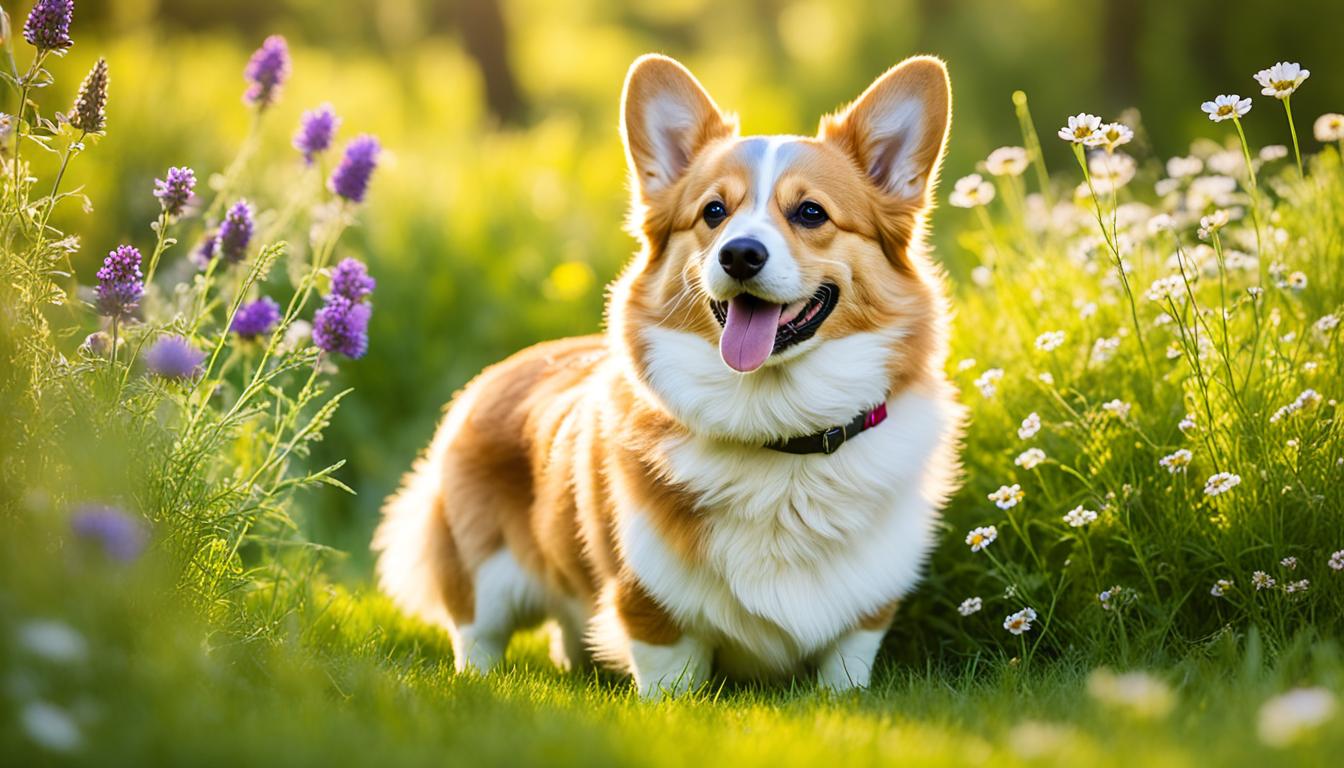

Have you ever wondered why your corgi has a luscious blonde coat? Corgis, like other breeds, can come in a variety of fur colors, including blonde. While it may seem like a simple aesthetic preference, the genetics behind a corgi’s coat color can be fascinating and complex. Understanding the factors that contribute to a blonde corgi’s unique color can help unravel the mystery and deepen your appreciation for these adorable pups.
Key Takeaways:
- Corgis, like other breeds, can have a variety of coat colors, including blonde.
- The genetics behind a corgi’s fur color are complex and involve various genetic factors.
- Coat color in corgis is determined by genes such as the E locus, which affects base coat color.
- Eumelanin and phaeomelanin are the two types of pigments responsible for coat color in corgis.
- The interplay of genes at the E, K, A, B, and D loci contributes to the wide range of coat color variations seen in corgis.
Corgi Coat Genetics: Exploring the Basics
Coat color in corgis is determined by a fascinating interplay of various genetic factors. Understanding corgi coat genetics is key to unraveling the mysteries behind their unique and diverse colorations.
The E locus (MC1R), commonly referred to as the Extension locus, holds significant influence over a corgi’s base coat color. This locus encompasses alleles such as Em, Eg, E, and e, which contribute to the different variations in coat color observed among corgis. The presence or absence of these alleles determines whether a corgi’s coat will be black, red, sable, or other shades.
In addition to the E locus, the K locus (CBD103) and A locus (ASIP) also play crucial roles in determining coat color patterns and intensity. The K locus takes part in regulating the distribution of color by suppressing or permitting the expression of certain alleles at the A locus. Together, these loci work in harmony to create the intricate coat color variations observed in corgis.
To better visualize the complexity of corgi coat genetics, refer to the table below:
| Genetic Locus | Key Alleles | Contribution to Coat Color |
|---|---|---|
| E locus (MC1R) | Em, Eg, E, e | Determines base coat color |
| K locus (CBD103) | KB, kbr | Regulates coat color patterns |
| A locus (ASIP) | ay, aw | Influences coat color variations |
By delving into the basics of corgi coat genetics, we gain a deeper understanding of how these genes interact, leading to the beautiful coat colors and patterns that make each corgi unique. The next section will focus on the specific role of eumelanin and phaeomelanin in creating the wide array of coat color variations seen in corgis.
The Influence of Eumelanin and Phaeomelanin
When it comes to the coat color of corgis, two types of pigments play a significant role – eumelanin and phaeomelanin. Eumelanin is responsible for producing black or brown coloration, while phaeomelanin contributes to the reddish-yellow hues that we often associate with blonde corgis.
The distribution and interaction of these pigments are influenced by various genes, ultimately determining the final coat color of a corgi. In the case of blonde corgis, they have a lighter expression of eumelanin and a higher proportion of phaeomelanin, which results in their distinct light-colored fur.
Inheritance of Corgi Coat Color
The inheritance of coat color in corgis is a fascinating process that involves the passing down of genes from parent to offspring. Various genes at different loci, such as the E locus, K locus, A locus, B locus, and D locus, contribute to the wide range of coat color variations seen in corgis. These genes interact with each other and determine the expression and distribution of eumelanin and phaeomelanin, leading to the diverse coat colors observed in this breed.

Understanding Genetic Influences
Genetic factors influence the distribution and intensity of eumelanin and phaeomelanin in a corgi’s coat. Different combinations of alleles at these genetic loci can result in variations such as solid colors, spotting patterns, or dilutions of eumelanin pigmentation. By unraveling the complex interplay of these genetic influences, we can gain a deeper understanding of the vast array of coat color variations observed in corgis.
Here is a table summarizing the primary genetic loci involved in corgi coat color inheritance:
| Genetic Locus | Role in Coat Color |
|---|---|
| E locus (MC1R) | Determines base coat color and expression of eumelanin |
| K locus (CBD103) | Influences coat color patterns and intensity |
| A locus (ASIP) | Modulates coat color patterns and intensity |
| B locus | Dilutes eumelanin pigmentation |
| D locus | Controls dilution of eumelanin pigmentation |
Understanding the intricate relationship between eumelanin, phaeomelanin, and genetic influences is key to comprehending the fascinating coat color variations exhibited by corgis. The combination of these pigments and their genetic interactions creates the unique charm and visual diversity seen in blonde corgis.
The Role of the E Locus in Blonde Corgis
One of the key factors influencing the unique coat color of blonde corgis is the E locus (MC1R). This locus plays a significant role in determining the base coat color of corgis. Among the alleles found at this locus, the Em allele, also known as melanistic or dark mask, is dominant and produces a distinct facial mask in some corgis. While the Em allele is not directly responsible for blonde coat color, other alleles at the E locus, such as Eg, can influence coat color patterns when combined with specific genotypes at the K and A loci.
Blonde corgis typically carry the E allele, which allows for the production of phaeomelanin, the pigment responsible for their light-colored fur. The E allele affects the expression of eumelanin, the pigment responsible for black or brown coloration in corgis’ coats. Therefore, in blonde corgis, the lighter expression of eumelanin coupled with a higher proportion of phaeomelanin contributes to their distinctive blonde coat.

Genetic Factors
The combination of genetic factors at the E, K, and A loci contributes to the diversity of coat colors seen in corgis. The E locus plays a particularly crucial role in determining the specific coat color variations, including blonde. By understanding the role of the E locus in blonde corgis, we can further appreciate the genetic complexity and beauty of these adorable dogs.
| E Locus Allele | Coat Color Influence |
|---|---|
| Em | Produces a dark facial mask |
| Eg | Influences coat color patterns in combination with genotypes at K and A loci |
Understanding the genetic mechanisms at play in determining coat color in corgis is a fascinating endeavor. By unraveling the mysteries behind these genetic factors, we gain a better understanding of the characteristics that make blonde corgis so unique. Let’s explore further to discover more about the complex world of corgi coat genetics and the factors that contribute to their stunning variations in coat color.
Understanding the K and A Loci in Coat Color Expression
In addition to the E locus, the K locus (CBD103) and A locus (ASIP) also play a significant role in determining the coat color patterns and intensity in corgis. These genetic factors contribute to the breed’s beautiful variations, including blonde corgis.
The main allele at the K locus, known as the KB allele, is responsible for a dominant black coat color in corgis. This allele suppresses the effects of the A locus, leading to a solid black coat. However, the A locus has several alleles that interact with other genes to produce different coat color variations. For instance, the ay allele results in fawn or sable coat color, while the aw allele produces agouti or wolf sable coat patterns.
Breed standards often specify particular coat colors for corgis, including blonde. These standards consider the presence or absence of certain alleles at the K and A loci, along with other genetic factors, to ensure consistency and conformity within the breed. Breeders and enthusiasts alike appreciate blonde corgis for their unique and striking appearance.
Coat Color Variations Associated with the K and A Loci
| Allele | Coat Color |
|---|---|
| KB | Dominant black |
| ay | Fawn or sable |
| aw | Agouti or wolf sable |
| Other alleles | Additional coat color variations |
A thorough understanding of the genetic mechanisms at the K and A loci contributes to unraveling the mystery behind the formation of blonde corgis and their distinct coat color. By respecting and adhering to breed standards, breeders can maintain the desired coat variations, including the stunning blonde hue, ensuring the continuation of this beloved corgi trait.
The Influence of the B and D Loci on Coat Color Dilution
Corgis are known for their stunning coat colors, including variations in corgi fur color. The B and D loci play a significant role in diluting the pigmentation of their coat, resulting in different shades and hues. Let’s explore how these loci contribute to the coat color variations seen in corgis.
The D Locus: Dilution of Eumelanin
At the D locus, the recessive d allele is responsible for the dilution of eumelanin, the pigment that produces black or brown coloration. When a corgi inherits two copies of the d allele, it leads to the dilution of eumelanin, resulting in unique coat colors such as blue or isabella. These coats have a lighter appearance due to the reduced expression of eumelanin.
The B Locus: Lightening of Black Pigmentation
Another important locus is the B locus, where the recessive b allele lightens black pigmentation to brown, often referred to as liver or chocolate. When a corgi carries two copies of the b allele, it affects the production of eumelanin, resulting in a coat color that differs from the typical black found in some corgis.
| Genotype | Phenotype |
|---|---|
| BB | Black |
| Bb | Black or brown (liver or chocolate) |
| bb | Brown (liver or chocolate) |
Combining different alleles at the B and D loci can give rise to various coat color variations in corgis, including shades of brown and blue.

“The B and D loci collaborate to create a mesmerizing array of coat colors in corgis, showcasing their genetic diversity and beauty.”
Understanding the influence of the B and D loci provides valuable insights into the genetic factors behind corgi coat color variations. These loci interact with other genes and alleles, resulting in the wide range of colors observed in corgis, including the stunning blonde coat seen in some individuals. It truly exemplifies the intricacies of coat color genetics and the unique charm of corgis.
The S Locus and White Spotting in Corgis
When it comes to the coat variations of a corgi, the S locus (MITF) plays a crucial role in controlling the production of pigment in the corgi’s coat and skin. This locus can give rise to unique patterns, including white spotting or markings, on a corgi’s coat. One particular allele at the S locus that contributes to white spotting is the sp (insertion variant).
White spotting patterns can enhance the overall appearance of a corgi, adding an extra touch of charm and personality. However, it’s important to note that white spotting is not solely determined by the S locus. There are other genetic variants and factors that contribute to the development of these patterns, and ongoing research is dedicated to unraveling the complexities surrounding white spotting in corgis.
To gain a deeper understanding of how the S locus and other genetic variants influence coat color variations and white spotting in corgis, let’s take a look at the following table:
| Genetic Variant | Effect on Coat Color |
|---|---|
| S locus: sp allele | Causes white spotting or markings on the coat |
| Other genetic factors (yet to be fully understood) | Contribute to additional white spotting patterns |
Note: The above table provides a simplified overview and only includes the sp allele as an example of a genetic variant that influences white spotting in corgis. There may be additional genetic factors and complexities involved in white spotting patterns.

As ongoing research delves deeper into the complexities of corgi coat variations and the influence of genetic factors like the S locus, our understanding of white spotting patterns in corgis continues to evolve. By unraveling these mysteries, we can appreciate the unique and fascinating features that make each corgi truly one-of-a-kind.
Personal Stories of Blonde Corgis
Corgi owners often have heartwarming and entertaining stories to share about their blonde corgis. These stories not only provide a glimpse into the unique characteristics and behavior of these dogs but also showcase the strong bond between corgis and their owners.
“My blonde corgi, Bella, is the most intelligent dog I’ve ever had. She quickly learns new tricks and always impresses everyone with her problem-solving skills. It’s fascinating to see her figure out puzzles and challenges with ease.”
“Riley, my blonde corgi, is a true outdoor enthusiast. He absolutely loves going on hikes and exploring nature trails. His energy and enthusiasm are contagious, making every adventure with him an absolute joy.”
“When it comes to other dogs, my blonde corgi, Max, is incredibly friendly and playful. He has a special knack for making friends with dogs of all sizes. Many local dog owners know Max by name, and he’s become a beloved member of our neighborhood.”
These personal stories showcase the individual personalities and preferences of blonde corgis. From their intelligence and love for outdoor activities to their friendly nature and special relationships with other dogs, blonde corgis bring joy and companionship to their owners’ lives.
Let’s take a closer look at the wonderful world of blonde corgis through the lens of their individual stories and experiences.
Blonde Corgi Characteristics
| Characteristic | Description |
|---|---|
| Intelligence | Blonde corgis are known for their intelligence and quick learning ability. They excel in obedience training and problem-solving tasks. |
| Love for Outdoor Activities | Blonde corgis have a natural affinity for outdoor adventures. They enjoy activities like hiking, running, and playing fetch. |
| Friendliness | Blonde corgis are typically friendly and sociable. They get along well with other dogs, making them ideal companions for dog parks and social gatherings. |
| Special Relationships with Other Dogs | Blonde corgis have a unique ability to form strong bonds with other dogs. Their playful and loving nature helps them establish lasting friendships. |
Conclusion
Understanding the genetics behind a blonde corgi’s coat color is key to appreciating these unique and beautiful dogs. The diverse range of coat color variations seen in corgis is a result of the interplay between various genes and alleles, specifically those at the E, K, A, B, and D loci. By delving into the fascinating world of corgi coat genetics, we can unravel the mystery of why some corgis are blonde and gain a deeper understanding of the intricate nature of canine genetics.
The E locus, with alleles such as Em, Eg, E, and e, plays a significant role in determining base coat color, while the K and A loci contribute to coat color patterns and intensity. Additionally, the B and D loci are responsible for diluting eumelanin pigmentation in corgis, resulting in various coat color variations.
Exploring the intricate mechanisms behind corgi color genetics allows us to appreciate the beauty and complexity of nature’s designs. Whether your corgi is blonde, sable, black, or any other color, each coat hue is a testament to the marvels of genetic inheritance. Next time you see a blonde corgi, you can marvel at the fascinating combination of genes that contribute to their stunning fur color.
FAQ
Why do some corgis have blonde fur?
What determines the coat color of corgis?
How do eumelanin and phaeomelanin contribute to corgi coat color variations?
What is the role of the E locus in the coat color of blonde corgis?
Do breed standards specify certain coat colors for blonde corgis?
How do the B and D loci contribute to coat color dilution in corgis?
What is the role of the S locus in corgi coat color?
Can you share personal stories about blonde corgis?
What can understanding corgi coat genetics teach us about blonde corgis?
Source Links
- https://corgicapers.com/category/character/
- https://embarkvet.com/resources/science-corner-coat-color-genetics-101-2/
- https://thedailycorgi.com/2010/06/servo-and-gypsy.html

Carlos is the passionate founder and primary author behind “CorgisCorner.com,” a website dedicated to all things related to the beloved Corgi breed. Born and raised in a small town known for its strong sense of community and love for animals, Carlos developed a deep affection for Corgis from a young age. This love was sparked by his childhood companion, a spirited and loyal Corgi named Toby, who was a constant source of joy and friendship.