

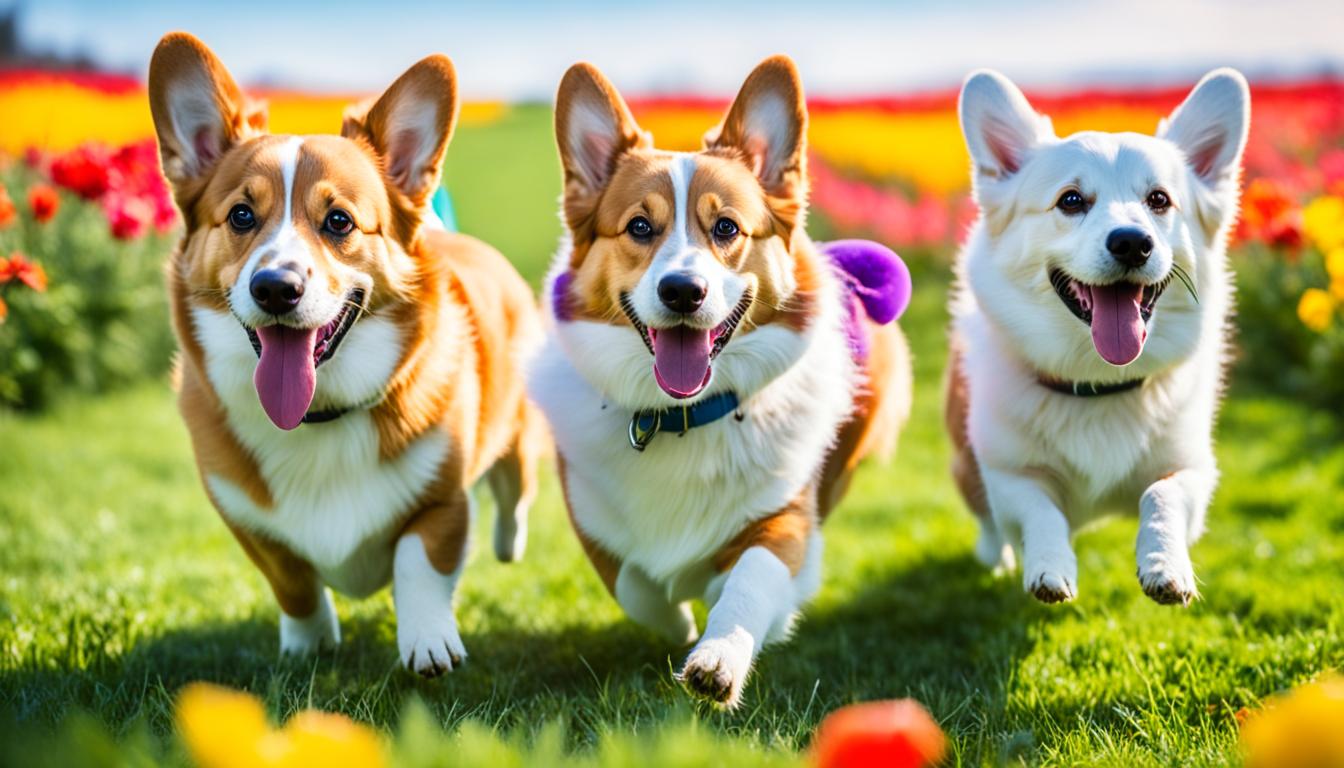

Living in a household with multiple dogs and cats can be a rewarding experience, but it can also present unique challenges. How can you ensure a harmonious multi-pet home with Corgis in 2024? Is it possible for these lovable, short-legged pups to coexist peacefully with other furry friends? In this article, we will explore proven strategies that will help you maintain pet harmony in your home, even with Corgis as part of the mix.
- Create a stable routine for all pets and include individual time with each pet.
- Set aside dedicated one-on-one play and bonding time for each pet.
- Train pets separately to ensure effective learning and prevent distractions.
- Provide private areas for each pet to have their own space for rest and alone time.
- Make the crate a happy place for your Corgi and other pets.
Establishing a Stable Routine
Establishing a stable routine is essential for promoting harmony in multi-pet homes. Dogs thrive on routine, so it’s crucial to create a structured schedule that caters to their needs and contributes to a harmonious living environment. By establishing consistent mealtimes, exercise sessions, playtime, and alone time for young dogs, you can help ease their anxiety and boost their confidence in the household.
A well-planned routine is the key to maintaining a peaceful and balanced atmosphere in your home.
Consistency is key in establishing a stable routine for multi-pet homes. By feeding your pets at the same times every day, they will come to expect and anticipate their meals, reducing their anxiety levels. Additionally, structured exercise sessions not only keep your pets physically active but also provide mental stimulation, contributing to their overall well-being and preventing behavioral issues.
H3: Mealtimes, Exercise, and Playtime
Mealtimes: Feed your pets at the same times every day. This will help regulate their eating habits and prevent them from feeling anxious or agitated.
Exercise: Incorporate daily exercise sessions into your routine. Take your dogs for walks or engage them in fun activities that allow them to burn energy and maintain a healthy lifestyle.
Playtime: Set aside dedicated playtime for your pets. Engage in interactive games or provide them with toys to keep them mentally stimulated and entertained.
While creating a routine, it’s important to allocate alone time specifically for young dogs. This promotes independence and prevents separation anxiety. Having time alone allows them to develop confidence and learn to be comfortable on their own. Balancing interactions with individual time is essential for a harmonious household.
Incorporating daily interaction with each pet is crucial for establishing a stable routine. Ensure that you spend quality time with each pet, catering to their specific needs and providing them with attention and affection. This helps create a bond between you and your pets and fosters a sense of security within the household.
Take the time to develop a routine that suits your lifestyle while meeting the needs of each pet.
Remember, harmonious multi-pet homes require effort and consistency. By establishing a stable routine, you can ensure that each pet receives the attention and care they deserve, creating a peaceful and balanced living environment for all.
Setting Aside Time for Each Pet
When you have multiple pets, it’s essential to ensure that each furry friend receives quality time and attention every day. Balancing attention between pets is crucial for their overall well-being and to prevent any feelings of jealousy or behavioral issues. By setting aside dedicated bonding time for each pet, you can strengthen your relationship with them and create a harmonious multi-pet home.
- Pet bonding time: Plan activities that cater to each pet’s individual needs and interests. Whether it’s playtime, grooming, or cuddling, make sure to focus on activities that your pet enjoys the most. This dedicated time together will not only strengthen your bond but also provide mental and physical stimulation for your pets.
- Individual attention: Incorporate bonding time with your pets into your daily routine. For example, during your evening unwind session, spend quality time with your cat, engaging in interactive play or simply relaxing together. Similarly, take your dog for a walk individually, allowing for special one-on-one time to cater to their exercise and attention needs.
- Equal distribution of attention: Avoid favoring one pet over the other. Each pet should feel equally loved and valued. Be mindful of any preferences or special needs that your pets may have and strive to balance your attention accordingly.
Remember, pets thrive on affection and interaction. By prioritizing time for each pet, you can strengthen your relationship, reduce behavioral issues, and promote a harmonious environment in your multi-pet home.
Benefits of Setting Aside Time for Each Pet
Setting aside time for each pet has numerous benefits:
- Bonding and trust: Regular one-on-one time builds a strong bond of trust and helps your pets feel secure and loved.
- Behavioral well-being: Providing individual attention reduces attention-seeking behaviors and minimizes the likelihood of jealousy or conflicts between pets.
- Mental and physical stimulation: Dedicated bonding time allows for mental stimulation, exercise, and emotional enrichment, promoting a healthier and happier lifestyle for your pets.
Incorporating these strategies into your daily routine will not only benefit your pets but also create a balanced and fulfilling experience for you as a pet owner.
Spending quality time with each pet helps create a harmonious environment in your multi-pet home.
Providing One-on-One Play and Bonding Time
In addition to training, exercise, and grooming, it’s important to schedule one-on-one play and bonding time with each pet. Building a strong bond with your pets through individual activities is crucial for their emotional well-being and the overall harmony of your multi-pet home. By dedicating quality time to each pet, you can cater to their unique needs and strengthen the connection you share.
Bonding time allows you to focus solely on one pet, providing them with undivided attention and affection. This dedicated interaction helps build trust, deepen the bond, and enhance their overall happiness. During this time, you can engage in various activities that your pet enjoys, catering to their interests and preferences.
Playtime for pets is not only fun but also essential for their physical and mental stimulation. It provides an outlet for their energy and helps prevent boredom and destructive behaviors. Incorporate activities that align with their natural instincts and breed characteristics. For example, if you have a retriever, playing fetch can be a great way to keep them active and entertained.
It’s important to prioritize individual activities for pets to ensure each pet feels valued and loved. Consider the following ideas for one-on-one bonding and playtime:
- Take your dog for a leisurely walk or run, exploring new trails or parks together.
- Engage in interactive play sessions with toys that stimulate their natural instincts, such as puzzle toys for cats or tug-of-war ropes for dogs.
- Teach your pets new tricks or obedience commands using positive reinforcement training methods.
- Set up an obstacle course or agility training area in your backyard or living space for your pets to enjoy.
- Create a cozy reading nook and spend time reading or relaxing while your pet lounges with you.
| Activity | Description |
|---|---|
| Fetch | A classic game that keeps dogs active and entertained as they retrieve and return toys or balls. |
| Interactive Puzzle Toys | Engaging toys that challenge your cat’s problem-solving skills and provide mental stimulation. |
| Tug-of-War | A game that strengthens the bond with your dog while providing physical exercise. |
| Training Sessions | Teach your pet new tricks or commands, fostering communication and mutual understanding. |
During one-on-one play, it’s crucial to ensure the other pet receives appropriate attention and entertainment. Providing a safe and comfortable space, such as a gated area or a crate, equipped with toys and treats can keep them occupied and content while you focus on bonding with the other pet.
Remember, individual activities for pets not only strengthen the bond between you and your furry friends but also promote their overall well-being. By making time for personalized play and bonding experiences, you’re helping each pet feel loved, valued, and fulfilled.

Training Pets Separately
When it comes to training your pets, it’s important to recognize that each pet has unique needs and learning styles. To ensure effective training, it’s best to work with each pet separately, eliminating distractions and allowing for individual attention and focus. Here are some key considerations for separating training sessions:
Minimizing Distractions for Puppies
Distractions can make it challenging for puppies to concentrate during training sessions. By keeping them separate from other pets, you can create a quiet and controlled environment that promotes focused learning. Use crates, separate rooms, or leashes to prevent other dogs from interfering with your puppy’s training.
Individual Attention for Optimal Learning
Training pets separately allows you to provide individual attention and tailor your approach to each pet’s specific needs. Each pet has their own learning pace and preferences, and by working with them individually, you can customize training methods accordingly. This ensures that your pets receive the attention and guidance they require to succeed.
“Training pets separately allows for individual attention and tailored approaches, enabling optimal learning for each pet.”
– Pet Training Expert, Sarah Thompson
Capturing Your Pet’s Full Attention
During training sessions, it’s crucial to have your pet’s undivided attention. Separating them from other pets helps eliminate potential distractions and allows you to fully engage with your pet. This focused interaction fosters better communication and strengthens the bond between you and your furry companion.
Creating Training Plans for Each Pet
By training pets separately, you can develop personalized training plans that address each pet’s unique challenges and behavior goals. Whether it’s teaching obedience commands, addressing specific behavioral issues, or mastering new tricks, individual training sessions enable you to tailor the curriculum to your pets’ specific needs.
By following these guidelines and training pets separately, you can provide the focused attention necessary for effective training. Remember to create a distraction-free environment, offer individual attention, capture your pet’s full focus, and develop tailored training plans. Your pets will appreciate the dedicated time and effort put into their training, and you’ll see the positive results in their behavior and overall development.
Feeding Pets Separately
Food can be a source of competition and resource guarding among pets. To prevent any issues, it’s important to feed pets in separate areas. By separating mealtime, you can ensure that each pet has a stress-free eating experience and prevent any conflicts that may arise.
Consider feeding each dog in their own designated space, such as their individual crate or on an elevated surface. This separation helps to keep them away from each other, reducing the chance of resource guarding behaviors.
Feeding pets in separate areas also offers additional benefits. It allows you to carefully monitor each pet’s appetite and ensure they are receiving the right amount of food. This individualized feeding approach makes it easier to manage their weight and nutrition, promoting a healthy and balanced diet.
“Separate feeding areas ensure that each pet can eat at their own pace without feeling rushed or threatened, promoting a calm and stress-free environment during mealtimes.”
Furthermore, separating pets during mealtimes can help prevent the development of resource guarding behaviors. When pets are allowed to eat without feeling the need to protect their food, they are less likely to exhibit aggressive or possessive behaviors towards their food or food-related items.
In addition to separate feeding areas, it’s also important to separate high-value treats and food-stuffed toys. This prevents any potential conflicts or competition over these highly desirable items. By providing each pet with their own treat or toy in a separate area, you ensure that they can enjoy their special treat without any interruptions or potential conflicts.
Feeding pets separately not only ensures a peaceful mealtime experience but also helps to promote healthy eating habits and prevent any resource guarding behaviors. By providing each pet with their own designated feeding area, you can create a harmonious environment where all pets can enjoy their meals without any stress or conflicts.

Providing Private Areas for Each Pet
In order to maintain harmony and prevent conflicts in a multi-pet household, it is essential to provide private areas for each pet. These personalized spaces serve as personal retreats where pets can relax and recharge, away from the hustle and bustle of the home. Creating individual spaces for pets not only helps alleviate conflicts but also promotes their overall well-being and happiness. Here are some tips on how to create private areas for your furry friends:
-
Designate separate rooms or areas: Assign specific rooms or areas in your home where each pet can have some alone time. This could be a spare bedroom, a cozy corner with a comfy bed, or a designated spot with their favorite toys and blankets.
-
Create elevated areas for cats: Cats love to have a bird’s-eye view of their surroundings. Install a cat tree, wall shelves, or windowsill perches in different rooms to provide vertical spaces where they can retreat and observe without being bothered by dogs.
-
Make the crate a welcoming haven for dogs: Dog crates can provide a safe and private space for relaxation and rest. Place the crate in a quiet area away from high-traffic zones and line it with soft bedding and familiar scents. Make sure the crate door is always open so your dog can enter or exit as they please.
-
Invest in pet gates: Install pet gates to create separate sections of your home, allowing each pet to have their own space. This not only promotes privacy but also prevents unwanted interactions or conflicts between pets.
By providing private areas for each pet, you are ensuring that they have a personal retreat where they can unwind and have some alone time whenever they need it. This helps maintain harmony in your multi-pet household and creates a peaceful environment for all. Remember, pets thrive when they have their own space to relax and recharge.

Making the Crate a Happy Place
Crates provide many benefits, especially in a multi-pet home. They serve as a safe and secure space for your dogs, where they can retreat and feel calm. However, it’s important to ensure that your dogs have positive associations with their crates. By creating a comfortable crate environment, you can make their crates a happy place they willingly go to.
One effective way to create positive associations is by using crate training. Start by introducing your dogs to their crates gradually and making it a positive experience. Place treats or toys inside the crate to entice them to enter willingly. You can also provide a soft and comfortable bedding for them to lay on. This will help them associate their crates with relaxation and comfort.
When your dogs are in their crates, make sure to provide them with engaging toys or long-lasting treats that will keep them occupied. This will help prevent boredom and negative associations with crate time. You can use interactive toys or food-dispensing puzzles to keep them mentally stimulated.
To further enhance the comfort of the crate, consider placing it in a quiet and secluded area of your home. This will minimize distractions and create a peaceful environment for your dogs to rest and relax. It’s important to move the crate to an area where your dog won’t be distracted by the activities of other pets, allowing them to fully enjoy their crate time.
Remember to always give your dogs positive reinforcement when they enter and stay in their crates. Use verbal praise, a gentle pat, or a treat to reward their good behavior. This will reinforce their positive associations and make them more likely to willingly use their crates in the future.
| Benefits of Creating a Comfortable Crate Environment |
|---|
| 1. Provides a safe and secure space for dogs |
| 2. Helps dogs feel calm and relaxed |
| 3. Prevents negative associations with crates |
| 4. Reduces boredom and keeps dogs mentally stimulated |
| 5. Provides a quiet and secluded area for dogs to rest |
| 6. Reinforces positive associations with crate training |
By making the crate a happy place, you are creating a positive and comfortable environment for your dogs. This will not only benefit their overall well-being but also contribute to the harmony of your multi-pet home. With time, patience, and a little effort, your dogs will come to love their crates and see them as their own personal retreat.

Supervising Interactions Between Pets
While you can foster harmony between your pets, it’s important to remember that not all animals will get along. Supervising pet interactions is essential to ensure a peaceful coexistence and prevent conflicts or territorial disputes. By monitoring pet behavior and paying attention to their dynamics, you can intervene when necessary to prevent conflicts between pets.
Observing and Assessing
When introducing a new pet or during initial interactions, it’s crucial to supervise pet interactions closely. Observe their body language, facial expressions, and vocalizations to gauge their comfort level and intentions. Look out for signs of aggression, anxiety, or fear, such as growling, bared teeth, raised hackles, flattened ears, or defensive postures.
“Supervising pet interactions allows you to catch early warning signs and intervene before conflicts escalate.” – Dr. Sarah Brown, Animal Behaviorist
Creating a Controlled Environment
To minimize potential conflicts, it’s helpful to create a controlled environment for pet interactions. Start with short, supervised sessions in a neutral space where neither pet feels territorial. Gradually increase the duration of interactions as pets become more comfortable with each other.
Diverting Attention and Resources
Prevent fights over resources or attention by providing an abundance of toys, treats, and positive stimuli. Ensure each pet has their own space, bed, and feeding area to minimize competition. Divert their attention with puzzle toys, interactive games, or individual play sessions to keep them engaged and mentally stimulated.
Training and Desensitization
Use positive reinforcement training techniques and desensitization exercises to teach pets to coexist peacefully. Training pets to follow basic commands, such as “sit,” “stay,” “leave it,” and “come,” can help manage their behavior during interactions. Gradual exposure to each other’s scents, sounds, and presence can help desensitize pets and build positive associations.
Seeking Professional Guidance
If you’re struggling to manage pet interactions, consult with a professional animal behaviorist or a certified dog trainer. They can provide personalized advice and strategies to address specific challenges and help foster a harmonious environment for your pets.
Separating Pets During Times of High Activity
During times of high activity and commotion, such as holiday visits or parties, it can be challenging to supervise your pets. The excitement and unfamiliar faces can overwhelm them, leading to stress and potential conflicts. To ensure the safety and well-being of your furry friends, it’s best to separate them during these busy times.
Managing stress during busy times is crucial for maintaining a peaceful environment for both your pets and your guests. Separating them into different areas of your home not only helps prevent conflicts but also allows each pet to find a space where they can feel calm and comfortable.
Avoiding conflicts during commotion is essential. Each pet has their own unique personality and may react differently to high activity situations. Some pets may become anxious or territorial, while others may become overly excited and prone to overstimulation. By separating them, you can minimize the risk of altercations and ensure a more harmonious atmosphere.
Separation Strategies
Here are some effective strategies to separate your pets during times of high activity:
- Set up designated areas for each pet: Create separate spaces within your home where each pet can stay during busy times. This can be a spare room, a gated area, or even separate floors if available. Make sure each area is comfortable and includes their essential needs, such as food, water, and a cozy bed.
- Rotate their time out of the designated area: While it’s important to separate your pets, it’s also essential to provide them with individual attention and exercise. By rotating their time out of their designated area, you can ensure that they still receive the attention they need while preventing potential conflicts.
- Utilize baby gates or pet barriers: Baby gates or pet barriers can be effective tools to physically separate pets without isolating them completely. This allows them to see and interact with each other to some extent while maintaining a safe distance.
Remember, it’s essential to monitor your pets’ behavior even when they are separated. While they may be in different areas, they may still be able to sense each other’s presence, which can impact their stress levels. Keep an eye out for signs of distress or any aggressive behaviors and intervene if necessary.
Separating your pets during times of high activity is a proactive approach to managing stress and avoiding conflicts. It creates a more peaceful environment for everyone involved and allows each pet to feel safe and secure. By implementing these separation strategies, you can ensure that your pets remain happy, relaxed, and well-adjusted during busy times.
Conclusion
Achieving harmony in a multi-pet home with Corgis in 2024 requires a thoughtful approach and consideration of each pet’s individual needs. By implementing a range of strategies, including establishing a stable routine, setting aside quality time for each pet, providing one-on-one play and bonding experiences, training the pets separately, feeding them in separate areas, creating private spaces for each pet, making the crate a happy place, supervising interactions, separating pets during periods of high activity, and limiting intense play, you can create a harmonious environment for all your furry friends.
Remember that every pet is unique and may have different preferences and personalities. It’s important to adapt these strategies to suit each pet’s specific needs. Consistency and patience are key to building a loving and balanced family where Corgis and other pets can coexist peacefully.
By following these strategies and paying attention to your pets’ well-being, you can create a happy and harmonious multi-pet home that brings joy to all members of your furry family.
FAQ
How can I achieve a harmonious multi-pet home with Corgis in 2024?
How important is establishing a stable routine for multi-pet homes?
How do I set aside time for each pet?
Why is one-on-one play and bonding time important?
Is it necessary to train pets separately?
Why should I feed pets separately?
How can I provide private areas for each pet?
How can I make the crate a happy place?
Why is it important to supervise interactions between pets?
Should I separate pets during times of high activity?
What are the key strategies for harmonious multi-pet homes with Corgis?
Source Links
- https://www.akc.org/expert-advice/training/multiple-pet-issues/
- https://www.petlandcleveland.com/dog-breeds-that-are-most-compatible-with-each-other/
- https://www.facebook.com/valhallk9/?locale=es_LA

Carlos is the passionate founder and primary author behind “CorgisCorner.com,” a website dedicated to all things related to the beloved Corgi breed. Born and raised in a small town known for its strong sense of community and love for animals, Carlos developed a deep affection for Corgis from a young age. This love was sparked by his childhood companion, a spirited and loyal Corgi named Toby, who was a constant source of joy and friendship.