

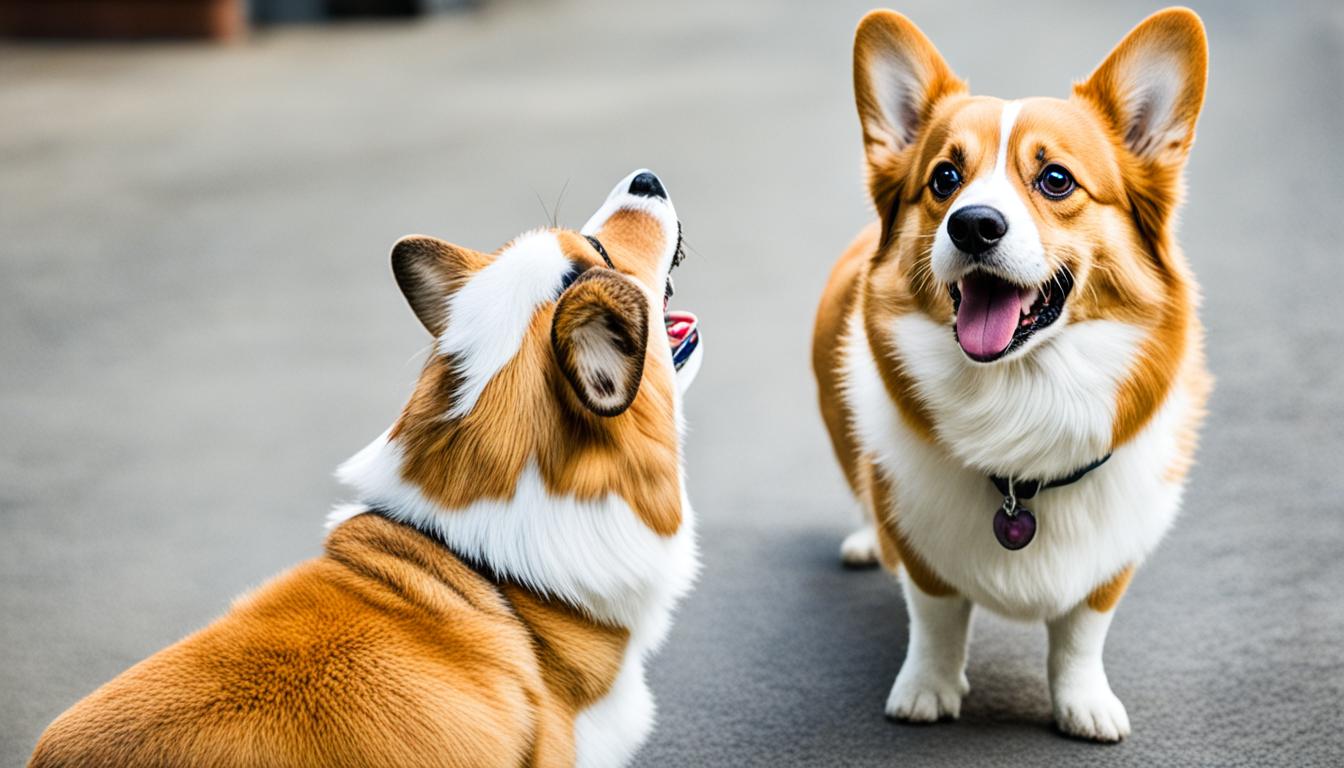

Do you ever wonder what your Corgi is trying to tell you? Are you missing out on important cues and signals that could deepen your bond with your furry friend? In 2024, deciphering Corgi body language is more important than ever, as our understanding of their behavior cues and expressions continues to evolve. So, are you ready to unlock the secrets behind those adorable, expressive eyes?
Key Takeaways:
- Understanding Corgi body language is crucial for effective communication and building a strong bond.
- Pay attention to tail wagging, ear positions, eye contact, and posture to interpret your Corgi’s emotions.
- Vocalizations such as barking, whining, growling, and howling can convey different messages.
- Behavioral signals like play bows, nudging, licking, and yawning provide insights into your Corgi’s intentions.
- Observing your Corgi’s reactions to the environment and their interactions with others can help you understand their social communication style.
Deciphering Body Language
Understanding Corgi body language can greatly enhance your ability to communicate with your furry companion. Corgis, with their expressive nature, use a variety of cues to convey their emotions and intentions. By paying attention to their body language, you can gain valuable insights into their state of mind and provide the care and attention they need. Here are some key body language cues to look out for:
Tail Wagging
The way a Corgi wags its tail can provide important clues about its emotional state. A broad, loose wag generally indicates happiness and excitement, while a stiff or fast wag could indicate aggression or anxiety. Pay attention to the speed and direction of the wag to better understand your Corgi’s emotions.
Ear Positions
Corgis communicate a lot through their ears. When their ears are erect and forward, it usually means they are alert or interested in something. On the other hand, flattened ears or ears pulled back indicate fear or submission. Understanding their ear positions can help you gauge their level of comfort in different situations.
Eye Contact
Eye contact plays a significant role in Corgi communication. Maintaining direct eye contact with you demonstrates attentiveness and trust. However, prolonged or intense eye contact can also be a sign of aggression or challenge. It’s important to interpret eye contact in conjunction with other body language cues.
Posture
A Corgi’s posture can reveal a lot about their overall comfort and state of mind. When they are relaxed, their body will appear loose and their weight evenly distributed. On the other hand, a tense body, hunched back, or tucked tail can indicate discomfort or fear. Being aware of your Corgi’s posture will help you respond appropriately and provide them with the support they need.
| Body Language Cue | Meaning |
|---|---|
| Tail Wagging | Happiness, excitement: Broad, loose wag |
| Aggression, anxiety: Stiff, fast wag | |
| Ear Positions | Alert, interested: Erect and forward |
| Fear, submission: Flattened or pulled back | |
| Eye Contact | Attentiveness, trust: Direct eye contact |
| Aggression, challenge: Prolonged or intense eye contact | |
| Posture | Relaxed: Loose body, even weight distribution |
| Discomfort, fear: Tense body, hunched back, tucked tail |
Being able to decipher your Corgi’s body language is a valuable skill that can deepen your bond and improve your communication. Remember to observe their tail wagging, ear positions, eye contact, and posture to better understand their emotions and needs. By doing so, you can provide a safe and supportive environment for your Corgi.
Vocalizations and Their Meanings
Corgis are known for their expressive nature, using vocalizations to effectively communicate their needs and emotions. Understanding these vocal cues is a key aspect of building a strong relationship with your Corgi.
Barking: Expressing Excitement, Warning, Fear, or Attention-Seeking
Barking is a common vocalization used by Corgis to convey different messages. It can signify excitement when they see their favorite toy or when anticipating playtime with their human companions. Barking can also serve as a warning signal, alerting you to potential threats or unfamiliar situations. In some cases, Corgis may bark out of fear, expressing their discomfort or anxiety. Additionally, Corgis may bark to seek attention, wanting to engage with their owners or indicate a desire for play.
Whining or Whimpering: Indicators of Excitement, Anxiety, and Needs
Whining or whimpering is another form of vocalization used by Corgis. This behavior can occur when they are excited, such as when anticipating a walk or mealtime. It can also be a sign of anxiety or stress, particularly in unfamiliar or overwhelming situations. When your Corgi whines or whimpers, it may indicate a need for something, such as going outside, hunger, or wanting affection.
Growling: Warning or Sign of Fear
Corgis may growl as a form of communication, signaling their boundaries or discomfort. It can serve as a warning to deter potential threats or assert their dominance. Growling can also be a manifestation of fear, expressing their unease or distress in specific situations. Understanding the context and body language accompanying the growling is important in interpreting its meaning.
Howling: Response to Sounds or Communication
Some Corgis exhibit howling or singing behavior, especially in response to certain sounds or as a form of communication. Howling can be their way of expressing excitement or joining in when they hear other dogs howling or sirens in the distance. This behavior is normal for some Corgis and allows them to communicate and express themselves in their unique way.

Understanding Corgi vocalizations, such as barking, whining, growling, and howling, is essential for effective communication and a deeper connection with your furry companion. By paying attention to their vocal cues and considering the context, you can better interpret their needs, emotions, and intentions.
Behavioral Signals
Corgis are known for their expressive behavior, using various cues to communicate their intentions and desires. Understanding these behavioral signals is key to strengthening your bond with your furry friend. Let’s explore some common behavioral cues exhibited by Corgis:
Play Bows
One of the most recognizable cues is the play bow, where a Corgi stretches their front legs forward and raises their rear end in the air. This posture invites play and signals their desire for interaction and fun.
Nudging and Pawing
When your Corgi nudges or paws at you, it’s their way of seeking attention or indicating they want something you have. They may gently push against you or use their paws to tap you, showing their desire to engage with you or acquire an object.
Licking
Corgis often use licking as a form of communication. It can signify affection, as they show their love and adoration through gentle licks. Licking can also indicate submission or a preference for certain tastes. Pay attention to the context to understand its meaning.
Yawning and Lip Licking
Yawning and lip licking in Corgis can be signs of anxiety or stress in specific situations. They may yawn or lick their lips when they feel uncomfortable or overwhelmed. Observing these cues can help you identify when your Corgi may need support or when they require a calming environment.
| Behavioral Signal | Meaning |
|---|---|
| Play Bows | Invitation to play and interact |
| Nudging and Pawing | Desire for attention or something you have |
| Licking | Affection, submission, or preference for tastes |
| Yawning and Lip Licking | Anxiety or stress in specific situations |
Understanding and interpreting these behavioral signals will enable you to communicate effectively with your Corgi. By paying attention to their unique cues, you can build a stronger connection and provide them with the care they need. Now that we’ve explored behavioral signals, let’s move on to the next section: Environmental and Contextual Cues.

Environmental and Contextual Cues
Paying close attention to how your Corgi reacts to different environments and situations can provide valuable insights into their feelings and preferences. The way they behave and respond can give you a deeper understanding of their emotions and overall well-being. By observing their interactions with other dogs and people, you can also gain insights into their social communication styles and tendencies.
Corgis are known for their intelligence and strong social nature. They often display a range of reactions to different environments, which can include excitement, curiosity, caution, or even anxiety. Some Corgis may thrive in bustling and energetic environments, while others may prefer quieter and more peaceful settings. It is important to take note of your Corgi’s reactions and body language in various situations to better understand their needs and ensure they are comfortable.
When introducing your Corgi to new environments or social situations, it is essential to proceed gradually and provide plenty of positive reinforcement. This will help your Corgi feel safe and secure while adapting to new surroundings. Keep in mind that every Corgi is unique and may have individual preferences and sensitivities. By being aware of their reactions and respecting their boundaries, you can create a supportive and enriching environment for them.
“Understanding your Corgi’s reactions to their environment is key to creating a harmonious living space for them. By observing their interactions and adjusting their surroundings accordingly, you can help ensure their overall well-being and happiness.”
Key Takeaways:
- Pay attention to how your Corgi responds to different environments and situations.
- Observe their interactions with other dogs and people to discover their social communication styles.
- Respect your Corgi’s preferences and sensitivities by creating a supportive and enriching environment.

Examples of Corgi Reactions to Different Environments
| Environment | Corgi Reaction |
|---|---|
| Park | Excited tail wagging, eager exploration, friendly social interactions. |
| Busy City Street | Alertness, cautious behavior, tendency to stay close to their owner. |
| Crowded Party | Excitement, high energy levels, social interactions with humans and other dogs. |
| Quiet Home | Relaxed body language, calm behavior, preference for quiet and cozy spots. |
Tips for Effective Communication With Your Corgi
Effective communication with your Corgi is essential for building a strong and harmonious relationship. By understanding their unique communication style, you can ensure clear and meaningful interactions. Follow these tips to enhance your communication with your Corgi:
1. Observe the Context
Always pay attention to the context when communicating with your Corgi. Different situations may elicit different responses, so understanding the environment and your Corgi’s state of mind is crucial. For example, your Corgi may exhibit different behaviors when meeting new people or animals compared to being at home.
2. Consistency is Key
Consistency in the signals and commands you use is essential for clear communication. Teach your Corgi specific cues and commands and use them consistently to reinforce their understanding. This will help avoid confusion and enhance your ability to effectively communicate your expectations.
3. Pay Attention to Tone and Body Language
Corgis are sensitive to their owner’s tone of voice and body language. They can pick up on subtle cues, so it’s important to be aware of how you communicate non-verbally. Use a calm and reassuring tone when giving commands or providing praise. Maintain an open and relaxed posture to encourage positive interactions.
4. Obedience Training
Incorporating obedience training into your Corgi’s routine can greatly improve communication. Training sessions not only teach your Corgi new commands but also establish a stronger bond between you. Positive reinforcement techniques, such as treats and praise, can help reinforce desired behaviors and make training enjoyable for both you and your Corgi.
5. Patience and Understanding
Developing effective communication with your Corgi takes time and patience. Understand that each Corgi is unique, with their own personality and communication style. Be patient while learning to understand their cues and always approach interactions with kindness and understanding.
By implementing these tips, you can foster effective communication with your Corgi and build a deeper bond based on trust and understanding.
Relaxed Body Language
When observing a Corgi, it’s important to pay attention to their body language to understand their state of mind. When a Corgi is relaxed, there are several key indicators to look out for.
Ears:
Their ears are usually in a neutral position, neither pinned back nor fully erect. If they are attentive to something, their ears may be slightly forward, showing engagement and focus.
Eyes:
A relaxed Corgi will have soft, gentle eyes. Their gaze will be calm, without fixating on any specific object or showing signs of tension.
Tail:
The position of a Corgi’s tail is a good indicator of their relaxation. A relaxed Corgi will hold their tail in a neutral position, neither tucked too tightly nor held high in a rigid manner. When they are particularly content or excited, their tail may wag widely from side to side.
Mouth:
An important aspect of a relaxed Corgi’s body language is their mouth. The muscles around their mouth are relaxed, and their lips will be loose and not tense. This signifies a lack of stress or discomfort.
By understanding these signs of relaxation in Corgis, you can enhance your ability to communicate and connect with your furry companion. Remember, each Corgi is unique, so take the time to observe and learn their individual body language cues.

Fearful Body Language
Fear can manifest in various ways in Corgis, and understanding their fearful body language is essential for their well-being. By recognizing the signs of fear, you can help your Corgi feel safe and secure in challenging situations.
Subtle Signs of Fear
When a Corgi is fearful, they may display subtle body language cues. These signs include lip licking, facial tensing, raised hair along the midline of the back, ears positioned backward and flattened, and wide-open eyes. These subtle signals indicate that your Corgi is experiencing a level of discomfort or unease.
“It’s important to pay attention to these initial signs of fear as they can indicate the need for reassurance and support.”
Obvious Signs of Fear
If the fear intensifies, your Corgi may display more obvious signs of fear. These signs may include a tucked tail, freezing in place, or even attempting to flee from the situation. These behaviors are clear indicators that your Corgi is feeling highly stressed and overwhelmed by their surroundings.
Supporting a Fearful Corgi
When you notice signs of fear in your Corgi, it’s important to create a safe and comforting environment for them. Allow your Corgi to retreat to a quiet space where they can feel secure. Avoid pushing them into uncomfortable situations, as this may exacerbate their fear.
Additionally, consider seeking guidance from a professional dog trainer or behaviorist who specializes in working with fearful dogs. They can provide you with specialized techniques and strategies to help your Corgi overcome their fears and build confidence.
Remember, every Corgi is unique, so it’s crucial to be patient and understanding as you support your furry friend through their fear. With time, love, and support, your Corgi can learn to manage their fears and thrive in various environments.
Key Takeaways
- Corgis exhibit specific body language cues when they are fearful.
- Subtle signs of fear include lip licking, facial tensing, raised hair along the midline of the back, ears positioned backward and flattened, and wide-open eyes.
- Obvious signs of fear may include a tucked tail, freezing, or attempting to flee.
- Creating a safe and comforting environment for your fearful Corgi is crucial.
- Consider seeking guidance from a professional trainer or behaviorist experienced in working with fearful dogs.
Conclusion
Understanding and interpreting Corgi body language plays a vital role in developing a strong bond with your furry companion. By paying close attention to their cues and signals, you can effectively communicate with them and provide the best care possible. Each Corgi has their own unique communication style, so take the time to learn and understand your individual Corgi’s specific body language.
Deciphering Corgi body language in 2024 allows you to establish a deeper connection with your beloved pet. Through careful observation, you can identify their relaxed and comfortable demeanor, marked by neutral ears, soft eyes, and a relaxed tail. On the other hand, recognizing signs of fear, such as lip licking, tenseness, and flattened ears, enables you to provide the necessary support and reassurance.
Developing a bond with your Corgi goes beyond words. It is a language of understanding their non-verbal cues and behavioral expressions. By enhancing your knowledge of Corgi body language, you become attuned to their needs, emotions, and desires, fostering a harmonious and fulfilling relationship. Invest your time into deciphering Corgi body language in 2024, and witness the beautiful connection that can blossom between you and your loyal companion.
FAQ
What are some cues to decipher Corgi body language?
How do Corgis use vocalizations to communicate?
What are some behavioral signals displayed by Corgis?
How can environment and context affect a Corgi’s behavior?
What are some tips for effective communication with Corgis?
What are the signs of relaxation in a Corgi’s body language?
What are the signs of fear in a Corgi’s body language?
How can understanding Corgi body language strengthen the bond with your pet?
Source Links
- https://www.dogster.com/lifestyle/dog-body-language
- https://cattledogpublishing.com/blog/understanding-your-dogs-body-language/
- https://corgicult.com/mastering-the-art-of-corgi-communication-understanding-your-dogs-signals/

Carlos is the passionate founder and primary author behind “CorgisCorner.com,” a website dedicated to all things related to the beloved Corgi breed. Born and raised in a small town known for its strong sense of community and love for animals, Carlos developed a deep affection for Corgis from a young age. This love was sparked by his childhood companion, a spirited and loyal Corgi named Toby, who was a constant source of joy and friendship.