

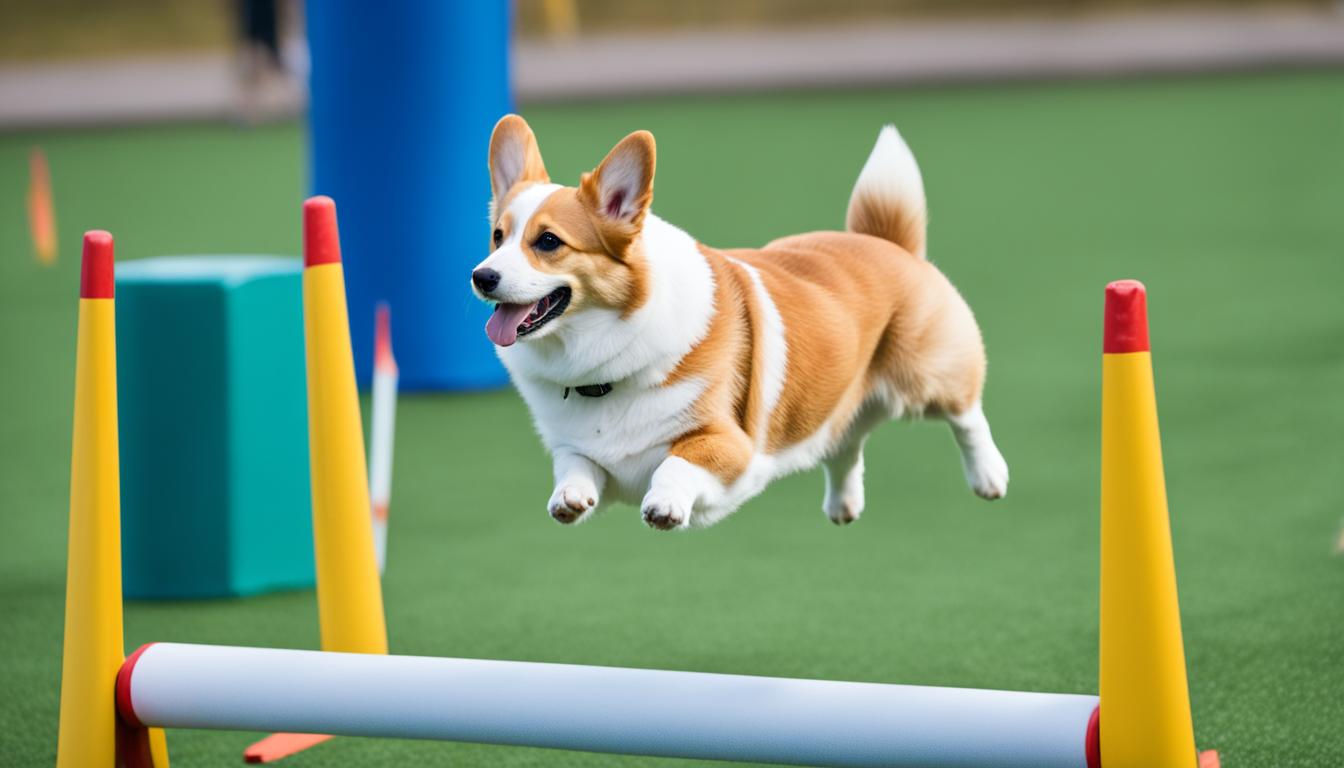

Do you have a Corgi and love to see them win? Training your Corgi in agility, obedience, or dog sports is key. Corgis are smart and active, making them great in competitions.
Wondering how to start? We’ll show you how to get your Corgi competition-ready. Learn about socializing, grooming, crate training, and basic commands. We’re here to help your Corgi shine.
Picture this: you and your Corgi are at an agility trial. The crowd cheers as you both tackle the course. Your Corgi jumps and weaves perfectly. It’s amazing!
This level of performance takes time and lots of training. It comes from hours of practice and a strong bond with your pet.
Corgis are smart and need lots of love, especially in training and grooming. Their playful spirit and cute smiles win hearts everywhere.
Ready to train your Corgi for competitions? Whether you’re experienced or new, our guide has all you need. Learn to unlock your Corgi’s true potential in the competitive world.
Key Takeaways:
- Socialize your Corgi around other people and dogs to build confidence and a friendly demeanor.
- Get your Corgi used to grooming early on to make the process enjoyable and stress-free.
- Expose your Corgi to various environments and experiences to help them adapt and stay calm in different situations.
- Teach your Corgi to play fetch for physical and mental stimulation.
- Crate train and housebreak your Corgi for security and cleanliness.
Training Goal #1: Socialize Corgis Around Other People
Training your Corgi is vital, especially in teaching them to be around others. This helps your Corgi become a good friend and behave well.
Start by taking your Corgi to different places while they’re young. Busy parks or streets are great. They can meet people, see cars, and be around other dogs. Socialize Corgis Around Other People is about introducing them to new experiences.
Always stay relaxed during these times. Your Corgi feels what you feel. Use treats to encourage them when they act friendly or stay calm around new things.
Here are some tips for Corgi socialization training:
- Begin socializing your Corgi early, best when they’re still puppies.
- Let them meet different people, like men, women, and kids of all ages.
- Slowly introduce them to busier and louder places.
- Have strangers pet your Corgi gently and give treats for good behavior.
- Watch over your Corgi’s safety when they meet new people.
Each Corgi is different, so their learning pace will vary. Be patient and keep at it. Always think of your Corgi’s happiness and health.
Training Goal #2: Get Corgis Used to Grooming
Corgis sport a beautiful double coat that needs regular care. Starting early makes grooming a breeze for your furry friend. Introduce grooming gently to create a positive vibe.
First, show your Corgi the grooming tools. Let them sniff and explore. Offer treats for good behavior. Start with short brushings, then slowly do it longer as they get used to it. Remember to be gentle, especially around sensitive spots.
Introduce other grooming tasks like nail trimming and ear cleaning. Touch their paws often and give treats for cooperation. Clean their ears gently with a vet-approved product and praise them for staying calm.
“Corgis have a beautiful double coat that requires regular grooming to keep it healthy and looking its best.”
Using lots of praise and treats is key. This makes grooming a happy time for your Corgi. They’ll start to connect grooming with fun moments.
Patience and steady progress are important. Begin with brief sessions and increase the time gently. If they seem stressed, take a break. With time, grooming will be easy for both of you.
Grooming is more than upkeep; it’s about bonding. So, make grooming calm and enjoyable. It’s a special time to connect with your Corgi.
Grooming Tips for Corgis:
- Introduce grooming tools gradually, allowing your Corgi to become familiar with them.
- Use positive reinforcement, such as praise and treats, to create a positive association with grooming.
- Start with short grooming sessions and gradually increase the duration.
- Be gentle and patient, taking breaks if your Corgi becomes stressed or uncomfortable.
- Make grooming a bonding experience by providing a calm and relaxing environment.
| Grooming Essentials for Corgis | Description |
|---|---|
| Grooming Brushes | A variety of brushes, such as slicker brushes and shedding blades, will help control shedding and keep your Corgi’s coat looking neat. |
| Grooming Comb | A comb with both wide and narrow teeth is useful for detangling and removing any stubborn mats or tangles. |
| Nail Clippers | Invest in high-quality nail clippers designed specifically for dogs. Regular nail trims are essential to prevent overgrowth and discomfort. |
| Ear Cleaning Solution | Choose a gentle ear cleaning solution recommended by your veterinarian to keep your Corgi’s ears clean and free from infections. |
| Toothbrush and Toothpaste | Corgis are prone to dental issues, so regular brushing with a dog-friendly toothbrush and toothpaste is vital for maintaining their oral hygiene. |
Training Goal #3: Expose Them to Their Environment
As a Corgi owner, showing your furry friend different places and things is a must. This will help them grow into well-rounded and adaptable adult dogs. It’s important to let Corgi puppies experience a variety of situations early on.
This helps them become confident and ready to face the world.
Getting your Corgi used to car rides is key. Start with short drives, then go longer as they get used to it. Use treats and praise to make car rides fun. And always use a harness or crate to keep them safe.
Boat trips are great for Corgis too. If you have a boat, slowly introduce them to life on the water. Begin with short outings. Make sure they have a life jacket that fits right. Use rewards and kind words to make them love the experience.
Loud sounds can scare Corgis. Slowly introduce them to noises like vacuum cleaners and doorbells. Begin with soft sounds, then get louder slowly. Link these sounds with treats or play. This shows them there’s nothing to fear.
Getting Corgis used to their world early on is key. Slowly introduce them to car and boat rides, and loud noises. This builds their confidence and helps them face fears.
Benefits of Exposing Corgis to Their Environment
- Increased adaptability to new environments
- Reduced fear and anxiety in unfamiliar situations
- Improved socialization skills with people and other animals
- Developed resilience and confidence
It’s important to be patient and supportive with your Corgi. Each dog is different and might need more time to get used to new things. By being consistent and using positive reinforcement, your Corgi will become confident and well-adapted.

Training Goal #4: Teach Your Corgi to Play Fetch
Playing fetch is great for keeping your Corgi active and sharp. They get to move and think as they bring back toys. It’s also loads of fun and helps you both grow closer.
This game taps into your Corgi’s natural habits and fights obesity. They can use up extra energy and stay fit. It benefits you both greatly!
Picking the right toy is key when starting fetch. Choose something safe, resilient, and easy for your Corgi to carry. Tennis balls or dog-fetch toys are perfect.
To begin with fetch, try these steps:
- Let your Corgi get to know the new toy.
- Throw the toy a little way and cheer your Corgi on to fetch it. Use a clicker or say well done for any effort.
- Celebrate with lots of praise and a reward when they bring the toy back.
- As they get better, you can throw the toy farther.
- Keep practicing to make fetch a fun habit.
Keep each training short and sweet, and always end on a high note. With time, fetch will become a game you both love.
“Fetch is more than exercise. It’s a chance to connect and challenge your Corgi. Enjoy playing together!”
Tips for Successful Fetch Training:
- Start in a quiet, safe spot without distractions.
- Reward your Corgi with treats and praise to encourage them.
- Stay patient and keep at it. Fetch might take some Corgis longer to learn.
- Switch up the toys to keep things interesting.
- If you need extra help, think about a dog training class or a pro trainer.
Teach your Corgi fetch and watch them run, bring back toys, and wag eagerly. It’s a joy to see!
| Benefits of Fetch Training for Corgis | How it Helps |
|---|---|
| Physical Exercise | Keeps Corgis active and helps maintain a healthy weight. |
| Mental Stimulation | Challenges their mind as they figure out how to fetch and bring back items. |
| Bonding Opportunity | Makes your bond with your Corgi stronger through play. |
| Instinctual Behavior | Lets Corgis follow their natural urge to retrieve. |

Training Goal #5: Crate Train and Housebreak Your Corgi
Crate training and housebreaking your Corgi are key. They help make a well-behaved Corgi. Crate training gives them a safe spot. It stops accidents because dogs don’t like to mess where they sleep.
Housebreaking teaches your Corgi the right places to go to the bathroom. It needs you to be consistent, patient, and use positive rewards.
“Crate training and housebreaking are essential for Corgi puppies. Establishing a safe and comfortable crate space for your Corgi not only helps with housebreaking but also provides them with a den-like environment that satisfies their natural instincts.”
To crate train, make the crate welcoming. Introduce your Corgi to the crate slowly. Start with short times and increase them. Reward them with treats and praise for good behavior in the crate.
For housebreaking, have a regular schedule. Take them outside to the same spot often, like after eating or playing. Reward them when they go in the right spot.
Accidents will happen at first. Stay patient and don’t punish them. Focus on rewarding good actions and guide them to the right spot.
Benefits of Crate Training and Housebreaking
These training steps offer big benefits:
- They give your Corgi a secure spot.
- They keep your home clean.
- They help your Corgi feel safe when alone.
- They teach your Corgi good bathroom habits.
With positive training, your Corgi will see their crate as safe and know where to go to the bathroom.
| Training Goal | Benefits |
|---|---|
| Crate Training | Provides a safe and secure den-like space for your Corgi Prevents accidents by leveraging a dog’s instinctual aversion to soiling their sleeping area Eases separation anxiety when you’re away |
| Housebreaking | Establishes good bathroom habits and routines for your Corgi Keeps your home clean and reduces the risk of accidents Promotes a healthy and hygienic living environment |

By focusing on crate training and housebreaking, you help your Corgi succeed. These steps form a firm base for their behavior and listening skills.
Training Goal #6: Teach Your Corgi Basic Commands
Teaching your Corgi basic commands is key in their training. Commands like sit, stay, heel, and down create order. They build a bond between you and your pet. These commands are the ground work for harder tasks. They make sure your Corgi listens and follows what you say. Commands like leave it and drop it also keep them safe. They stop your Corgi from eating what they shouldn’t.
To teach these commands well, use positive ways and be patient. Treats, kind words, and love can push your Corgi to listen. These ways link commands to good things. Being consistent and repeating the training helps. This makes good behavior stick and clarifies what you expect.
Start with one command at a time and add more as your Corgi gets better. Break each command into easy steps. Use hand signals and words to show what you want. Make sure to use the same signals to avoid mix-ups.
Here’s a guide to start teaching your Corgi basic commands:
- Sit: Get your Corgi to sit by holding a treat high and gently pushing their backside down.
- Stay: Train your Corgi to stay put using hand signs and words. Start with short times and slowly wait longer before you let them go.
- Heel: Get your Corgi to walk nicely beside you without pulling. Use treats and positivity to reward good walking.
- Down: Teach them to lie down by using a treat to guide them into position, then slowly stop using the treat.
- Leave it: Train your Corgi to ignore or drop something they shouldn’t have. Begin with items of low value and give a treat when they listen.
- Drop it: Make your Corgi let go of something in their mouth with a command like “drop it.” Use toys or liked items to practice this command.
Remember, staying consistent, using positive reinforcement, and being patient are key to training your Corgi. Praise their achievements and end training on a happy note. With dedication, your Corgi will learn these commands and be well-behaved.

Training Tips:
Start training in a place with no distractions. It helps your Corgi focus and learn the commands better.
Training Goal #7: Keep Your Corgi Active
Corgis are full of energy and love to play. They need regular exercise to stay happy and healthy. Including exercise and training in their day keeps them fit and sharp.
Corgi Exercise Routines
Daily walks are essential for keeping your Corgi lively. At least 30 minutes of walking every day is ideal for their health. Try new paths or visit parks to make walks exciting.
For brain exercise, add interactive toys or puzzles to their routine. These can make your Corgi think and stay interested.
Corgi Training Classes
Training classes are great for exercise and learning. They improve your Corgi’s obedience and help them get along with others. Your Corgi will learn commands and interact in a positive setting.
Classes teach important commands like sit, stay, and come. They use rewards to encourage good behavior and listening skills.
Advanced programs, like Canine Good Citizen, offer more challenges. They test your Corgi in different situations, boosting their obedience.
Training classes not only provide physical exercise but also stimulate your Corgi’s mind and strengthen the bond between you and your furry companion.
Active routines and training prevent boredom and bad behavior. They channel your Corgi’s energy into something good.
Always check with a pro about the best exercise for your pet. This depends on their age, health, and needs.
Conclusion
Training a Corgi for competitions takes dedication, consistency, and patience. Follow the guide in this article to prepare your Corgi for success in competitions. Socializing, grooming, basic training, and staying active are key steps.
Socializing Corgis with strangers is crucial. It helps them get comfortable in various settings. Early grooming makes grooming sessions easier for both the dog and owner.
Letting Corgi puppies explore different places and play fetch is beneficial. It keeps their minds active and helps maintain a healthy weight. Crate training, potty training, and basic commands ensure they learn structure. It also strengthens the bond between dogs and their owners.
Regular exercise and joining training classes keep Corgis excited and involved. By doing this, owners can ready their dogs for competitions. They can also enjoy the benefits of having a well-trained Corgi companion.
FAQ
How important is socializing my Corgi around other people?
How can I get my Corgi used to grooming?
Why is it important to expose my Corgi to their environment?
How can I teach my Corgi to play fetch?
What are the benefits of crate training and housebreaking?
Which basic commands should I teach my Corgi?
How can I keep my Corgi active?
What is the importance of training my Corgi for competitions?
Source Links
- https://www.akc.org/expert-advice/training/train-corgi-corgi-puppy-training-timeline/
- https://www.dogster.com/dog-training/corgi-training
- https://willothecorgi.com/blog/tips-for-first-time-corgi-owners

Carlos is the passionate founder and primary author behind “CorgisCorner.com,” a website dedicated to all things related to the beloved Corgi breed. Born and raised in a small town known for its strong sense of community and love for animals, Carlos developed a deep affection for Corgis from a young age. This love was sparked by his childhood companion, a spirited and loyal Corgi named Toby, who was a constant source of joy and friendship.