

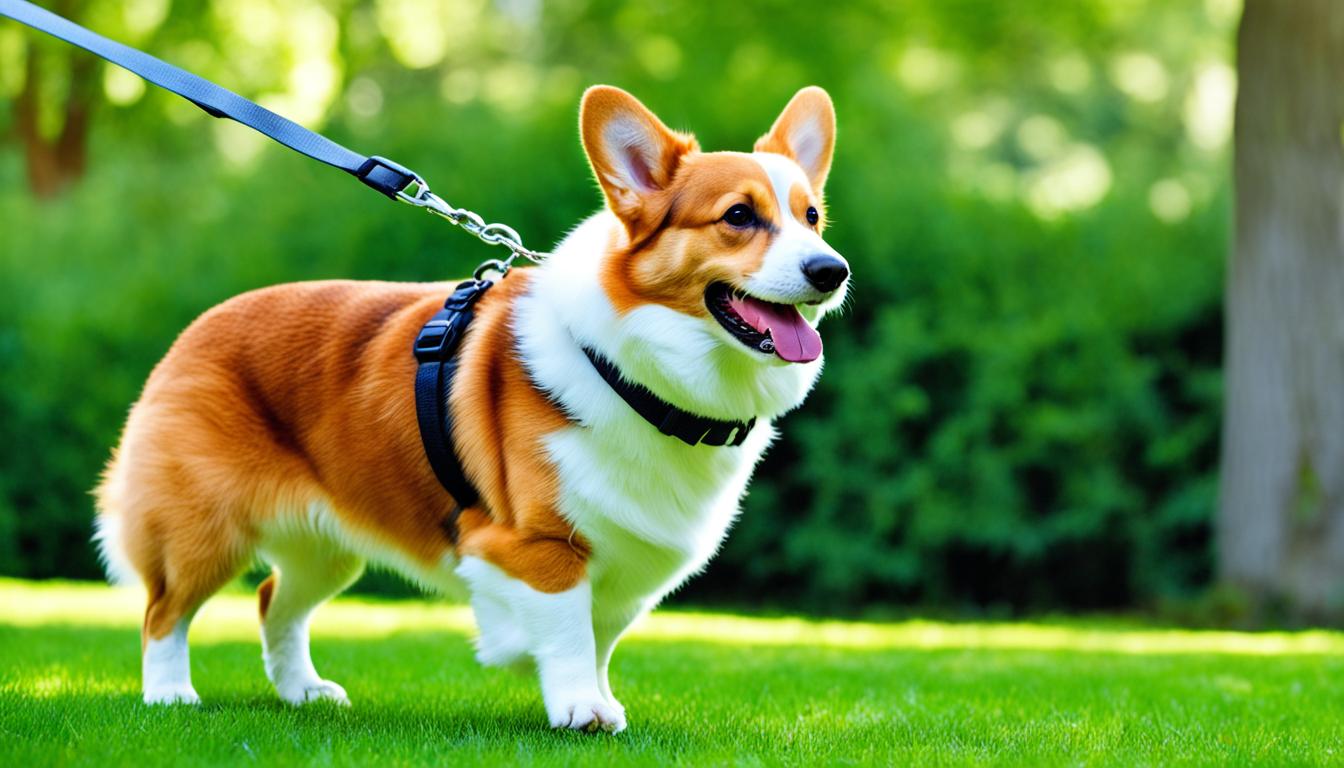

Sarah just brought her Pembroke Welsh Corgi, Max, home. Excited to train him, she knew leash training was vital. It would make their walks safe and fun.
Max, at eight weeks old, was curious and full of energy. Sarah knew Corgis can be stubborn. So, she needed to be a kind leader for effective leash training.
Sarah used patience and was consistent. She started Max on a collar and leash, giving him treats for calm walks beside her. If Max nipped or pulled, she corrected him gently. She showed him those actions weren’t okay.
Gradually, Max got the hang of leash training. He grew used to the collar and leash without nipping or pulling much. Sarah was happy with their progress.
Now, Sarah and Max have fun walks in the park. Max walks nicely on his leash, happy and exploring. Sarah is thankful for the time spent mastering leash training. It made their bond stronger and walks happier.
Key Takeaways:
- Leash training is crucial for Pembroke dogs for safe and fun walks.
- Start collar and leash training early, use treats and corrections as needed.
- Being patient and a friendly leader is key to leash training success.
- Puppies as young as eight weeks old can start leash training.
- Walks with your leash-trained Pembroke enhance your bond.
The Importance of Leash Training for Pembroke Puppies
Leash training is crucial for Pembroke puppies. It helps them learn to walk nicely on a leash. Plus, it makes walking safe and fun. You should start leash training early. This builds good habits and stops bad ones from forming. There are several ways to train your puppy successfully.
Using positive reinforcement is one of the top methods. Give your puppy treats and praise when they walk well on a leash. This not only encourages them but also makes your bond stronger.
Choosing the right gear is another key method. You’ll need a collar or harness that’s comfy and safe. Make sure it fits well and doesn’t hurt your puppy.
“Leash training is a crucial skill that every Pembroke puppy should learn. It not only helps ensure their safety but also enhances the overall walking experience for both the dog and the owner.”
Rewarding with treats is very effective. Treats are a great way to encourage good behavior. Use treats that your puppy really loves. This will keep them interested in the training.
Being consistent is important in leash training. Have a regular training routine and follow it. Doing this teaches your puppy what you expect and strengthens good behavior.
Leash training is key for a well-behaved Pembroke puppy. Effective methods include positive reinforcement and using the right gear. This teaches your puppy to walk nicely on a leash. Always be patient, consistent, and reward good behavior. Besides practical benefits, leash training also deepens your bond with your puppy.
Steps for Introducing Your Pembroke to a Leash
Introducing your Pembroke to a leash is a key first step in training. Take it slow and use positive reinforcement. This way, your puppy will feel comfortable and confident on a leash.
1. Start with a Quick-Release Buckle Collar
First, get your Pembroke used to a quick-release buckle collar. This collar is safe and simple to use. Introduce it gradually. Let your puppy wear it for short times at home. Use treats and praise to make the collar feel good.
2. Attach a Lightweight Leash
When your puppy likes the collar, introduce a lightweight leash. Attach it to the collar and let your puppy drag it around safely. Watch your puppy during this time to keep them safe and stop accidents.
3. Encourage Your Puppy to Follow You
Use treats to get your puppy to follow you on the leash. Keep the leash loose. Praise your puppy for walking beside you. Start with short sessions and slowly walk farther together. Always use positive reinforcement to make walking fun for your puppy.
4. Gradually Increase Distance and Duration
As your puppy gets better with the leash, walk farther and longer. Slowly introduce new places and distractions. This helps your Pembroke feel confident on the leash. Always reward good behavior. Be patient as they learn.
“The key to success is to take it slow and make it a positive experience for your Pembroke. Patience and consistency are key in leash training small dogs like Pembroke Welsh Corgis.”
Follow these steps and always reinforce good behavior to teach your Pembroke leash basics. Be patient, reward often, and make it fun for your puppy.
Managing Nipping Behavior During Leash Training
Nipping is common in puppies. It’s important to handle it during leash training. Giving them chew toys or distractions can help change their nipping behavior. If they keep nipping, you must show them that biting is wrong.
To stop nipping, try a method that puppies learn from playing with siblings. If your puppy nips, yelp loudly to surprise them. This teaches them that their actions hurt. Also, squeezing their neck skin gently can help stop them from nipping.
“Nipping is a natural behavior in puppies, but it’s crucial to teach them that biting is not acceptable.”
Remember, any correction should be gentle and never hurt the puppy. Being consistent is crucial in stopping nipping. Use the correction method every time they nip. By doing this regularly, your puppy will link nipping with bad results and stop the behavior.
It’s also vital to use positive reinforcement. Praise, treats, and love should be given when they walk nicely without nipping. This teaches them that good behavior during leash walks is rewarded. It makes them more likely to behave properly.
Summary:
Addressing nipping in puppies during leash training is essential. Start by redirecting their nipping to chew toys or distractions. If they continue, a loud yelp and gentle neck squeeze can help. Consistency in corrections and rewarding good behavior are key to stopping nipping.
| Managing Nipping Behavior During Leash Training | Summary |
|---|---|
|
Address nipping behavior with appropriate chew toys and distractions. If nipping persists, make a sudden exclamation of pain and gently squeeze some loose skin on their neck. Consistency is key in correcting nipping behavior. Positive reinforcement for desired behavior enhances training success. |
During leash training, it’s crucial to address nipping behavior in puppies. Redirecting biting behavior using appropriate toys and distractions is the first step. If nipping persists, making a sudden exclamation of pain and gently squeezing loose skin on their neck can deter them. Consistency in applying corrective actions and positive reinforcement for desired behavior is crucial for successful leash training. |
Correcting Leash Problems in Older Pembroke Dogs
If you have an older Pembroke dog who hasn’t learned to walk on a leash, don’t worry. It’s never too late to start. Older dogs might have picked up some bad leash habits. With patience and regular training, you can teach them to walk nicely on a leash.
Common Leash Problems and Solutions
Older Pembroke dogs might pull, bolt, or bark on the leash. To fix these issues, learn why they happen and use good training methods.
“Leash issues often come from not enough training,” says dog trainer Sarah Johnson. “Positive reinforcement and good leash manners can solve these problems.”
Here are some ways to fix common leash issues in older Pembroke dogs:
- Standing Still: If your dog pulls, stop walking. This shows them pulling won’t work. Only move again when they calm down.
- Distraction: Keep your Pembroke busy to avoid leash problems. If they bark at other dogs, give them a treat or play a fun game instead.
- Rewarding Desired Behavior: Praise and treat your Pembroke when they walk well. This positive feedback encourages them to keep up the good work. Always be patient and consistent.
Use these methods regularly and reward your dog for good behavior. This will help your older Pembroke learn to enjoy walks more.
| Leash Problem | Solution |
|---|---|
| Pulling | Stop and wait till your dog calms down before you keep walking |
| Bolting | Use a shorter leash and work on coming when called |
| Barking at things | Distract your dog and reward them for being quiet |
Keep using these techniques and give positive feedback. This way, your older Pembroke dog will get past leash issues. You’ll both enjoy walks more as companions.

Every dog is different, and your older Pembroke might need time to unlearn old habits and learn new ones. Be patient and consistent. Consider getting help from a dog trainer if necessary.
Using Positive Reinforcement for Leash Training
Positive reinforcement is a top method for leash training dogs. It rewards your Pembroke for the good behavior of walking nicely on a leash.
Being consistent with rewards is key in leash training. Give treats, praise, or affection right after your Pembroke does well.
Begin with treats your Pembroke can’t resist. These treats make training more fun and rewarding.
“Positive reinforcement changes your Pembroke’s behavior during leash training. It turns training into fun for both of you by linking rewards to good behavior.”
Reduce treat rewards slowly as your Pembroke gets better. Keep up with praise and love. This way, your dog learns to enjoy walks without always expecting treats.
Patience and consistency matter in using positive reinforcement. It might take time for your Pembroke to learn leash training. Celebrate every little progress to stay motivated.
Benefits of Using Positive Reinforcement for Leash Training
Positive reinforcement in leash training has many benefits:
- Creates a positive association: It links leash walking with rewards and good times, making training fun.
- Strengthens the bond: It builds trust, making your relationship with your dog stronger and more positive.
- Encourages desired behaviors: Rewarding calm leash walking makes your Pembroke want to do it more, improving their leash skills.
- Motivates your dog: Treats, praise, and affection push your Pembroke to join in on training and work with you.
Using positive reinforcement sets your Pembroke up for success. It lays the groundwork for a well-mannered, leash-trained pet.
Tips for a Successful Leash Training Session
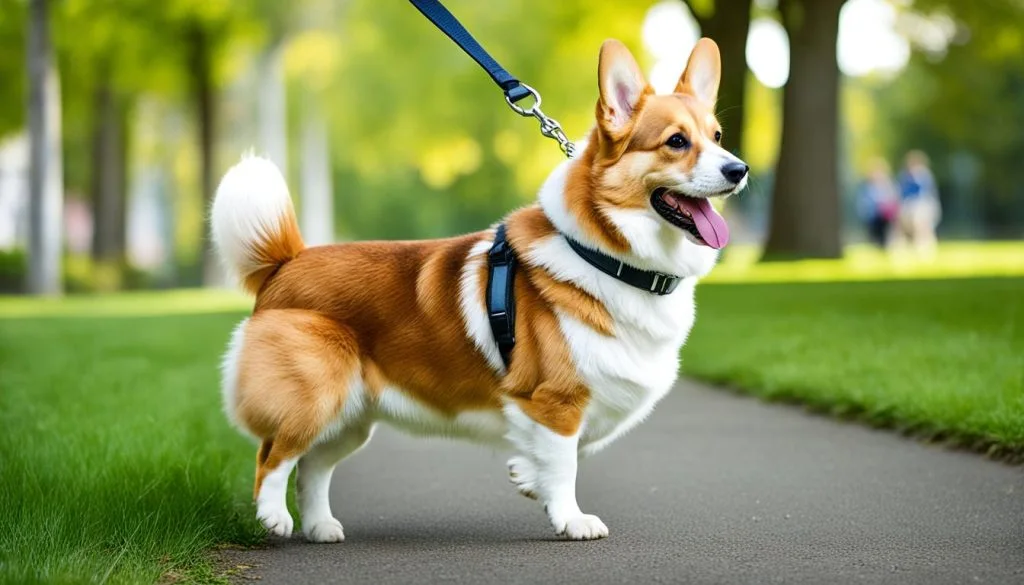
Leash training your Pembroke can be fun and rewarding. By following important tips, you and your pet will enjoy the process. These tips and techniques will help you master leash training.
- Choose the right location: Select a quiet and familiar area for your training sessions. This minimizes distractions and helps your Pembroke focus on learning.
- Use high-value treats: Reward your pup with delicious and enticing treats for exhibiting desired behaviors. This positive reinforcement encourages them to repeat these behaviors during leash walks.
- Be patient and consistent: Consistency is key in any training program. Reward your Pembroke for good behavior and gently redirect any undesirable habits to reinforce positive leash manners.
- Break it down: To prevent physical and mental fatigue, break your training sessions into short, frequent intervals. This ensures that your Pembroke stay engaged and motivated throughout the process.
- Celebrate progress: Don’t forget to celebrate small victories and milestones during the training journey. Positive reinforcement and encouragement go a long way in reinforcing good leash walking habits.
With these tips, you’re on your way to excellent leash manners for your Pembroke. Just remember: be patient, consistent, and stay positive. These are your best tools for teaching leash training.
Testimonial:
“Using these leash training tips has been a game-changer for me and my Pembroke. She now walks calmly by my side and no longer pulls on the leash. I can’t thank these techniques enough for transforming our walks!” – Emily Jones, Pembroke owner
| Leash Walking Tips | Effective Leash Training |
|---|---|
| Choose a quiet and familiar location for training. | Use high-value treats as rewards. |
| Be patient and consistent | Break the training into short, frequent sessions. |
| Celebrate small victories and progress during the training process. |
Troubleshooting Common Leash Training Challenges
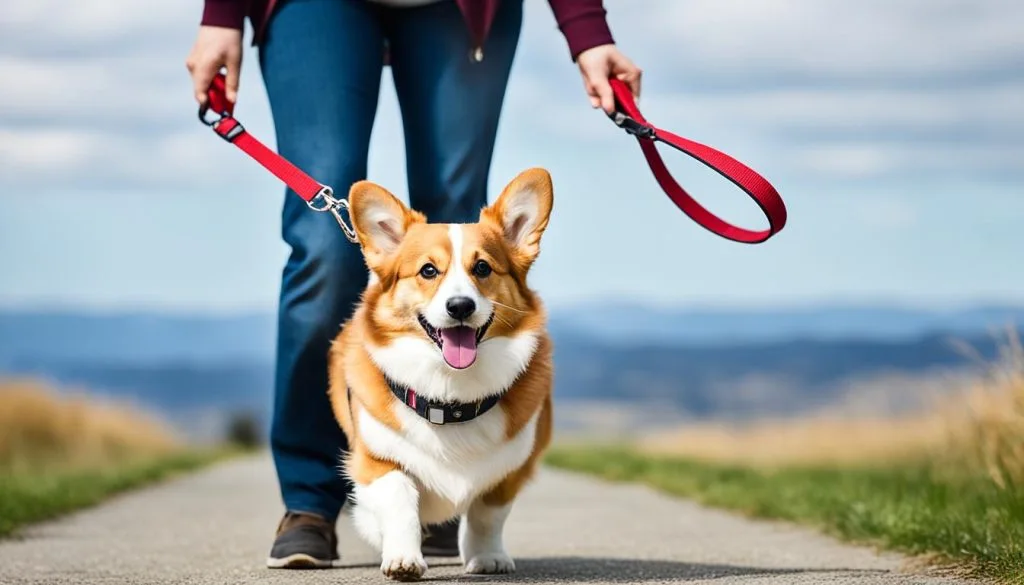
Leash training can be tough sometimes. It’s key to know how to deal with these issues for good leash training. Here are some issues you might face and how to beat them:
Distractions
Dogs can get distracted easily, especially outside. Start training in a quiet spot. Then, slowly move to places with more going on, like parks or crowded areas. Give your dog treats and praise for keeping attention on you. This teaches them to ignore distractions and focus on walking on a leash.
Fear or Anxiety
Some dogs get scared or nervous on a leash. To fix this, use happy things like treats or play to make the leash seem good. Keep training fun and short, adding more time as your dog gets used to it. Being patient and calm helps your dog feel safe.
Stubbornness
Stubborn dogs can make leash training hard. Stick with it and always be the boss. Reward good behavior like walking nicely and staying close. Stay away from being too strict, as it can scare them. With time and kindness, your dog will get better at it.
Consulting with a Professional
If leash training is really tough, getting help from a pro might be a good idea. A trainer can check what’s going on and make a plan that works. They offer advice and support to help you and your dog succeed.
Facing leash training challenges is part of the process. With the right approach, you can handle these challenges and train your dog well.
Conclusion
Leash training is crucial for Pembroke dogs to have safe and fun walks. Use positive reinforcement, stay consistent, and be patient. This way, your Pembroke will learn to walk nicely on a leash.
Addressing common challenges and troubleshooting issues is key to success. Make training sessions enjoyable and rewarding for you and your Pembroke. Enjoy the company of a well-trained, leash-savvy companion.
FAQ
When should I start leash training my Pembroke puppy?
How can I introduce my Pembroke puppy to a leash?
What should I do about nipping behavior during leash training?
Can I leash train an older Pembroke dog?
What is the most effective method for leash training?
Do you have any tips for successful leash training sessions?
What should I do if I encounter challenges during leash training?
Why is leash training important for Pembroke dogs?
Source Links
- http://www.goldengatecorgis.org/about-pwcs/pembroke-faqs/leash-training-and-obedience-for-puppies/
- https://www.abornpethospital.com/services/dogs/blog/dog-gone-it-how-master-leash-and-get-polite-walker
- https://akc.tv/topic-video?id=10215

Carlos is the passionate founder and primary author behind “CorgisCorner.com,” a website dedicated to all things related to the beloved Corgi breed. Born and raised in a small town known for its strong sense of community and love for animals, Carlos developed a deep affection for Corgis from a young age. This love was sparked by his childhood companion, a spirited and loyal Corgi named Toby, who was a constant source of joy and friendship.