

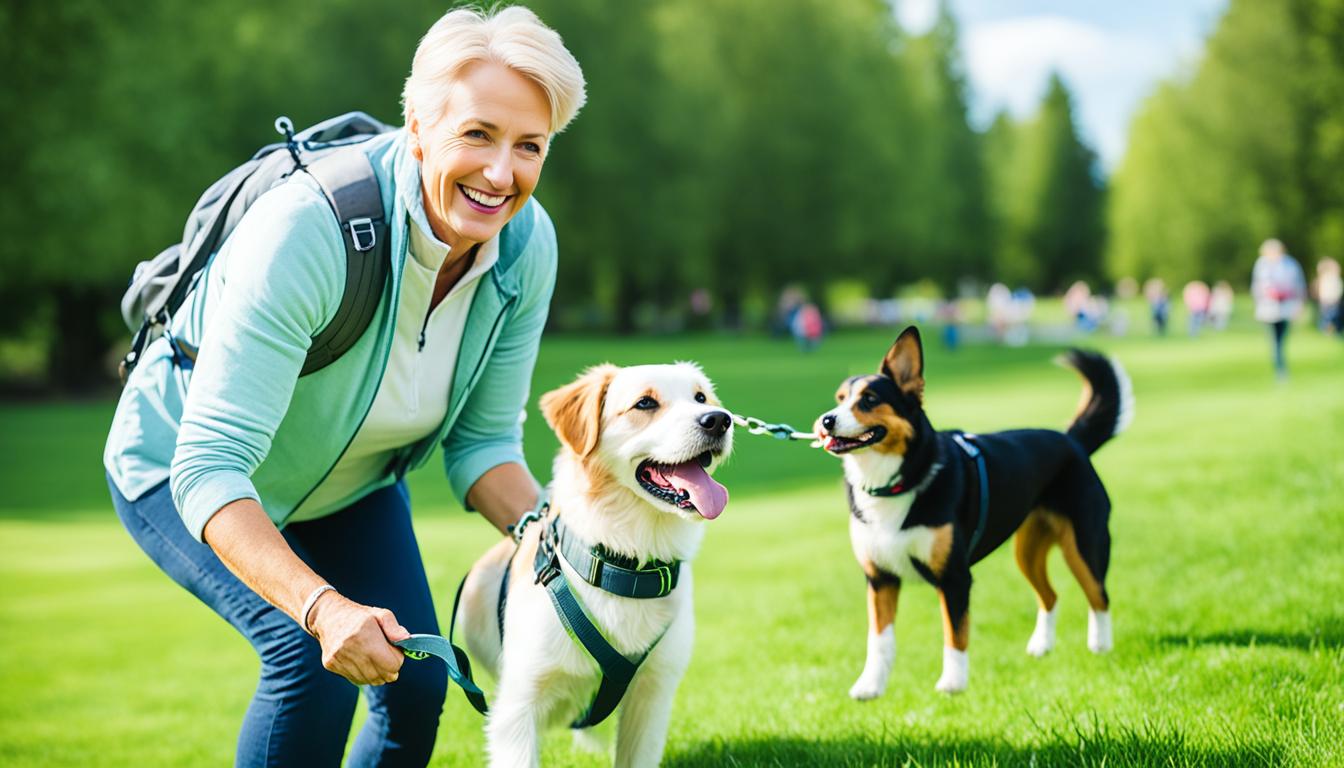

Walking your dog shouldn’t be a battle. Yet, many owners fight as their dogs pull them in all directions. Leash training can change those messy walks into peaceful ones. It’s not easy, but it sure makes a big difference.
Sarah and her Labrador, Max, know this well. Max would pull on the leash whenever he saw other dogs. Wanting to fix this, Sarah sought help from dog expert Kathy Santo.
Kathy recommended positive reinforcement and step-by-step training. She advised Sarah to have short, fun sessions. Max would wear his leash and get treats and praise. This method helps Max link his leash to happy times.
Following Kathy’s advice, Sarah had Max wear his leash at home. They played and Max got lots of treats. Soon, Max saw his leash as a sign of good times.
Next, Sarah used a special cue that meant treats were coming. Whenever she used it, Max looked at her, expecting a treat. This taught Max to focus on Sarah during walks.
Kathy told Sarah to slowly up the training difficulty. They began walking a few steps inside with Max on the leash. He got treats for not pulling. They slowly moved outside where more things could distract Max.
After consistent training, Max improved. He no longer lunged at other dogs. He stayed calm, walking by Sarah, hoping for treats.
Now, walks are pleasant for Sarah and Max. Leash training made their outings better and brought them closer.
Struggling with leash training? Don’t worry! Up next, we’ll cover the perks of leash training, what you’ll need, how to train step by step, tips for when you run into trouble, and more. Get ready to change your walk times for the better!
Key Takeaways:
- Leash training is key for nice walks with your dog.
- Start by making the leash a fun thing for your dog.
- Treats and praise make your dog love their leash.
- First try walking inside, then slowly go to places with more going on.
- Stay consistent and positive, and your dog will get better at leash walking.
The Benefits of Leash Training
Leash training your dog is very beneficial. It makes walks enjoyable without your dog pulling on the leash. This reduces strain on your muscles and joints. Leash training also lets you explore new places safely and gives your dog mental and physical stimulation.
Going out regularly keeps your dog’s mind sharp. It breaks the daily routine. The outdoors stimulates their senses with new sights, scents, and sounds. Also, leash training benefits you by improving your health as you walk together.
Exploring New Places
With leash training, you can safely take your dog to various places. This includes hiking in the woods, going to the beach, or walking in your neighborhood. A well-trained dog on a leash means you can confidently explore different settings.
Leash training provides mental and physical stimulation for your dog.
Physical and Mental Stimulation
Regular walks are key for your dog’s mental and physical health. They get to sniff, explore, and meet new things. This keeps their minds busy and helps prevent boredom-related behavior problems.
Walking also boosts your dog’s cardiovascular health and keeps them fit. It helps manage their weight. Thus, leash training is great for their physical well-being.
Being outdoors together is a chance for fresh air and nature’s benefits. It strengthens your bond with your dog. It’s a special bonding experience that makes your relationship stronger.
For the best results, start leash training early and stay consistent. With patience, positive reinforcement, and lots of practice, you both will enjoy its many advantages. Remember, a well-trained dog makes a happy companion on walks.
Leash Training Supplies
Getting ready to train your dog to walk on a leash? You’ll need the right gear first. Having the correct supplies makes leash training easier and more enjoyable for both you and your dog.
The key items you’ll need are:
- Training treats: These small, yummy treats reward your dog for their good behavior. Pick ones that are easy for your dog to eat.
- A quality 6-foot leash: Choose a strong, comfy leash for control and safety. Steer clear of retractable leashes for better training.
- Dog poop bags: It’s important to clean up after your dog. Being responsible keeps places clean for everyone.
- A poop bag holder: A bag holder attaches to your leash or belt, so you always have bags handy for clean-ups.
- A well-fitted dog harness: Harnesses are safer and more comfy for your dog than collars. Make sure it fits well. If your dog pulls, consider a front-clip harness.
Having these supplies ready for leash training is crucial. They help ensure you and your dog have a smooth training journey. With the right tools, you’re all set to start leash training.
Step-by-Step Instructions for Leash Training
Leash training your dog is key for fun walks and staying in control. Positive reinforcement and consistency are important. Follow these steps to start leash training:
- Start Indoors: Train in a quiet space inside your home. It helps your dog focus with less distraction.
- Introduce the Harness and Leash: Let your dog get used to the harness or collar and the leash. Use treats and praise to make it a good experience.
- Take Small Steps: Begin with a few steps in any direction while holding the leash. Encourage your dog to walk beside you. Give them treats and praise when they do it right.
- Reward Follows: Keep rewarding your dog for following your lead. Give treats on the side you want your dog to walk on.
- Vary Treat Frequency: Change how often you give treats to keep your dog interested. Sometimes reward every few steps, other times wait longer. This keeps your dog paying attention to you.
- Practice in New Environments: After mastering indoor walks, slowly introduce new places. Start with hallways or larger rooms, then move outdoors.
Remember, leash training needs time and patience. Consistency helps reinforce good behavior and teaches polite leash walking. With practice and rewards, your dog will be a great walking partner.

Additional Tips:
Here are more tips for effective leash training:
- Use a verbal cue: Pick a cue like “heel” or “let’s go” to signal leash walk time.
- Stay calm and patient: Dogs feel your emotions. Being calm and patient makes training positive.
- Be consistent with expectations: Have clear rules for your dog’s behavior on walks to avoid confusion.
- Practice leash walking on both sides: It’s useful to have your dog walk comfortably on both your left and right.
Remember, each dog is unique. Some may take longer to learn leash walking. Stay patient, consistent, and celebrate your dog’s success.
Leash Training Troubleshooting
When you’re leash training your dog, you might run into a few common challenges. But don’t stress! There are tried-and-true methods to handle these issues. These can make leash training both easier and more fun.
If your dog pulls on the leash, don’t yank or jerk it. Just stop moving and wait until your dog comes back to you. This shows them that pulling won’t get them anywhere. You might also try using a front-hook harness or a head halter. These tools can give you more control and discourage pulling.
If your dog lunges or barks at other dogs while on the leash, try to distract them with a treat before they start. Keep some distance between your dog and whatever makes them react. This helps them stay calm. Giving your dog plenty of exercise and things to do can also make them bark less during walks.
As your dog gets better at walking on a leash, you can start giving them fewer treats. This will help them keep up the good behavior without always expecting a snack. If problems pop up during walks, address them right away. Always be consistent with training and positive reinforcement.
Leash training needs patience and you have to stick with it. By tackling the usual problems and guiding your dog well, they can become great at walking on a leash.

Troubleshooting Tips for Leash Training
| Common Issues | Troubleshooting Steps |
|---|---|
| Pulling on the leash | Stand still and refuse to move until your dog comes back to your side. Use front-hook harnesses or head halters for more control. |
| Lunging or barking at triggers | Redirect their attention with a treat before the behavior occurs. Create distance between your dog and the trigger. |
| Dependence on treats | Gradually reduce the number of treats used as rewards. Reinforce good behavior with praise and petting instead. |
Tips for Training Big, Powerful Dogs on a Leash
Training big, powerful dogs on a leash has unique challenges. They have lots of strength and energy. This means they need careful guidance for safe and fun walks. Here’s how to train your big dog on a leash successfully.
Start Early and Use Positive Reinforcement Techniques
Start leash training while your dog is young. This helps set good habits early on. It also stops bad behaviors from forming. Use treats and praise to encourage good behavior. This makes leash training a positive experience for you and your dog.
Begin in a Quiet, Confined Area
Begin training in a quiet, enclosed space like your backyard. This helps your dog concentrate on basic leash skills. As they get better, slowly move to places with more distractions. This builds their leash walking confidence.
Ensure Hunger and Increase Motivation
Train your dog when they’re a bit hungry. Hungry dogs are eager to earn treats. Food keeps them focused on learning. But, always feed them properly and don’t overfeed.
Wean Off Treats Gradually
Initially, treats are great for training. But, start to use them less over time. Instead, use more praise and petting. This teaches your dog that good behavior wins them verbal and physical love, not just treats.
Consistency, Patience, and Persistence
Be consistent with commands and training methods. Always reward positive behavior. Remember, learning takes time. Every dog learns at their pace. Keep at it, as repeated practice builds good habits and behaviors.

Training big dogs to walk nicely on a leash can take effort. But, with the right approach and dedication, you can do it. Always keep your dog’s safety and happiness in mind.
Introduction to Leash Breaking
Leash breaking teaches dogs to walk nicely on a leash. They learn not to pull or act up. This training can be hard, especially for new dog owners and those with big or energetic dogs. Yet, there are many ways to train them.
One easy method uses yummy treats. You start with treats in your closed hand. Wait for your dog to calm down from jumping and mouthing. Give treats and praise when they walk right. It’s key to slowly stop using treats so your dog doesn’t always expect them.
The Weaning Process
To get your dog used to walking without treats, there’s a process. It helps your dog keep walking well without just doing it for food. Here’s how you do it:
- Cut back on treats: Begin by giving fewer treats on walks. Instead of a treat every few steps, give one less often.
- Use praise and petting: Start using kind words and petting as rewards. Praise your dog excitedly and pet them when they walk calmly.
- Make treats unpredictable: Give treats randomly. This keeps your dog interested in walking nicely without needing treats all the time.
- Give treats now and then: Slowly use fewer treats until they’re just a sometimes thing. Treats now remind your dog that they’re doing a good job.
Being patient and consistent is key in the weaning process. By slowly cutting down on treats, your dog’s leash manners will last.

Using Food as Motivation for Leash Training
One of the best ways to motivate dogs during leash training is with food rewards. Give them treats they really like to keep them focused. Make sure your dog is hungry enough to be interested but not too hungry.
Treats are like money for dogs. They help dogs link good behavior with rewards. Start by holding a treat close to their nose when leash training. Then, slowly move the treat away as they follow your commands.
As your dog gets better at leash training, start giving fewer treats. Use more praise and petting to reward them. This shifts their focus from food to your approval.
Cheese, cooked chicken, hot dogs, and freeze-dried liver are great treats for making leash training more fun.
Gradually give treats less often, using them only after several successes. This stops the need for treats. It builds a stronger bond and trust with your dog during leash training.
Key Points:
- Choose treats your dog loves for leash training.
- Ensure your dog is hungry but not starving during training.
- Reward them for staying close to you and obeying commands.
- Slowly reduce treats and use more praises and petting.
- Change up the rewards to keep your dog interested.
Food is a great motivator for leash training, but don’t rely on it too much. Be patient and consistent. Use positive reinforcement for better walking habits. This makes walking your dog more enjoyable for both of you.
The Importance of Consistency in Leash Training
Consistency is key in leash training your dog. They love routine and repetition. This helps them learn. Keep your commands and techniques the same to talk to your dog well. This way, you can show them what behaviors you like.
Always praise good behaviors when training your dog with a leash. If they walk well or listen, give them treats and love. This makes them want to keep doing good.
If your dog pulls on the leash or acts out, fix it right away. Say “no” firmly or use a special command. Then, show them what they should do instead. Fixing bad behaviors fast teaches your dog what’s not okay.
Consistency with Your Own Actions
Your actions matter too, not just your words. Dogs watch and learn from you during walks. Be sure to send clear signals to your dog.
Stay calm and confident when you’re out with your dog. They can feel if you’re worried or upset. A calm you makes for calm dog walks.
Keep your walking speed and body language steady. This tells your dog you’re leading the way. A clear leader makes walks better for both of you.
In short, being consistent is the secret to good leash training. Stick to your plan, encourage the good, correct the bad, and stay calm. Consistency helps both you and your dog succeed.
Training Tips for Dogs with Leash Reactivity
Leash reactivity is when dogs overreact to things while on a leash. They may bark, lunge, or act aggressively towards others. But, you can manage this with proper training.
Begin training by slowly exposing your dog to things that upset them. Start with easy situations and move to harder ones. This helps your dog get used to tough spots calmly.
Counterconditioning is key for dogs that react on leashes. This means making good things happen when they’re near triggers. For instance, give treats when they stay calm near other dogs. Doing this can change how they feel about triggers.
In addition, slowly getting your dog used to their triggers is important. Reward them for staying calm when they see a trigger from far away. Move at your dog’s pace to keep them comfortable.
If training gets tough, consider help from a pro. Dog trainers or behaviorists know lots of methods. They can offer training that fits your dog’s unique issues.
Conclusion
Teaching your dog to walk nicely on a leash is crucial. Start by rewarding your dog with treats for good behavior. Slowly, make the tasks harder by adding distractions and going to new places.
Being consistent and patient is vital. Always use the same commands and quickly correct bad behaviors. If your dog pulls or lunges, know how to fix it using the right methods.
At first, treats help motivate your dog. But, you should also use praise and petting as rewards over time. With effort, leash walking will be enjoyable for both of you.
FAQ
What is leash training for dogs?
Why is leash training important?
What supplies do I need for leash training?
How do I leash train my dog?
What are some common issues during leash training?
How do I train big, powerful dogs on a leash?
What is leash breaking?
How can I use food as motivation for leash training?
Why is consistency important in leash training?
How do I train a dog with leash reactivity?
How can leash training benefit both me and my dog?
Source Links
- https://www.akc.org/expert-advice/training/teach-puppy-walk-leash/
- https://be.chewy.com/leash-train-dog-2/
- https://canineminded.com/train-dog-walk-on-leash/

Carlos is the passionate founder and primary author behind “CorgisCorner.com,” a website dedicated to all things related to the beloved Corgi breed. Born and raised in a small town known for its strong sense of community and love for animals, Carlos developed a deep affection for Corgis from a young age. This love was sparked by his childhood companion, a spirited and loyal Corgi named Toby, who was a constant source of joy and friendship.