

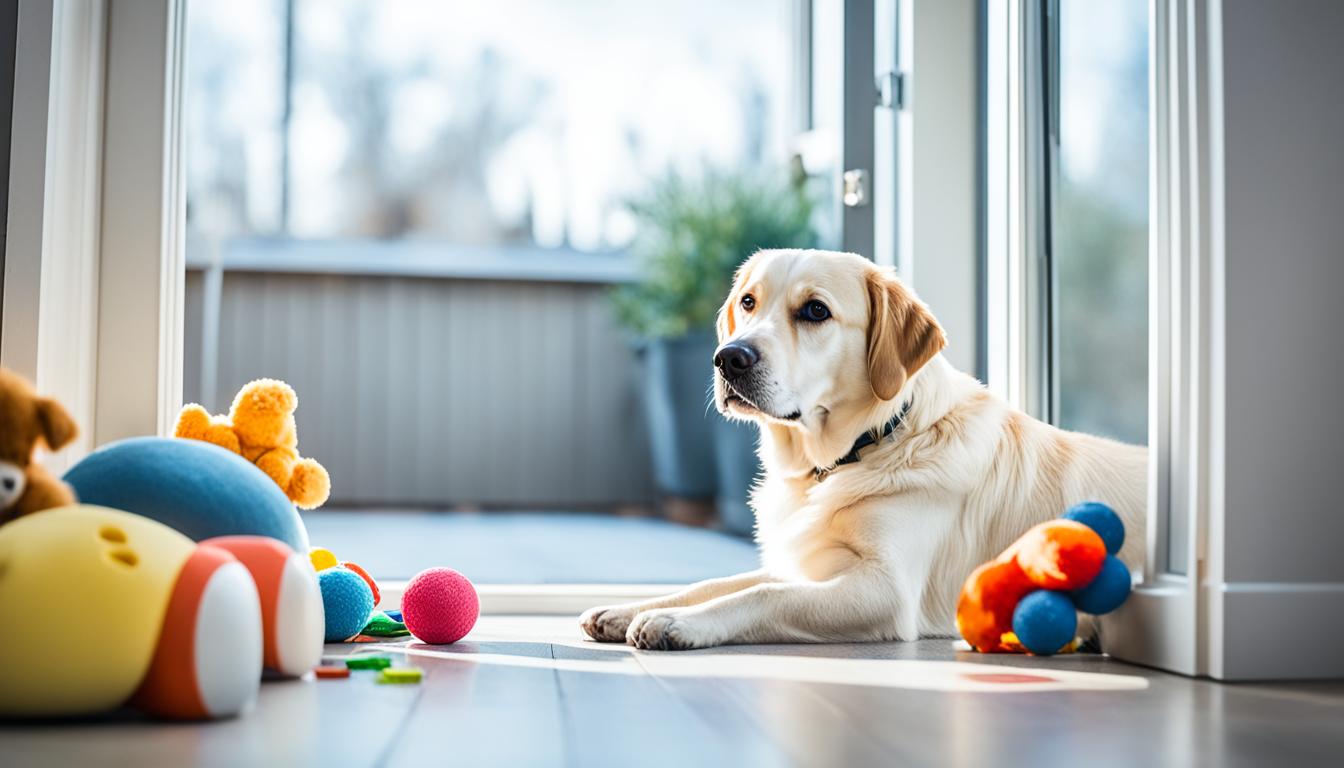

Is your dog suffering from separation anxiety? Do they exhibit destructive behavior, excessive vocalization, or elimination problems when you’re away? Don’t worry, you’re not alone. Many dogs experience stress and fear when separated from their beloved humans. But what if there was a way to ease your dog’s separation anxiety and create a more peaceful environment for both of you?
In this article, we will provide practical steps to help your dog overcome separation anxiety and find relief. Whether it’s recognizing the symptoms, implementing behavior modification techniques, or creating a calm environment, these strategies can make a significant difference in your dog’s well-being.
Key Takeaways:
- Separation anxiety is a distressing condition for dogs that can lead to destructive behavior and other symptoms.
- Recognize the signs of separation anxiety to determine if your dog is suffering from this condition.
- Behavior modification, gradual departures and returns, and creating a calm environment are effective ways to help your dog cope with separation anxiety.
- Regular exercise and mental stimulation can reduce your dog’s anxiety and redirect their focus.
- Seeking professional help from a certified separation anxiety trainer or veterinary behaviorist may be necessary for severe cases.
What Is Dog Separation Anxiety?
Dog separation anxiety is a condition that affects many dogs, causing them to experience extreme fear and stress when left alone. Similar to a panic attack in humans, separation anxiety can manifest in various ways and can be triggered by traumatic events, changes in routine or environment, or even genetic predisposition. It is important for dog owners to be aware of the symptoms of separation anxiety in dogs, as early recognition is crucial for proper diagnosis and treatment.
Recognizing the Symptoms of Separation Anxiety in Dogs
When dogs suffer from separation anxiety, they often exhibit a range of distressing symptoms. These symptoms can include:
- Pacing back and forth anxiously
- Vocalizing excessively, such as barking or howling
- Loss of appetite or refusal to eat when left alone
- Destructive behavior, often directed towards doors, windows, or objects associated with the owner
- Elimination problems, such as urinating or defecating in the house
- Excessive drooling
- Attempts to escape from the confinement area
These symptoms can vary from mild to severe, and their intensity may change depending on the individual dog. It is important to note that not all dogs exhibit every symptom, and some dogs may display additional signs of distress when experiencing separation anxiety.
By recognizing these symptoms, owners can better understand if their dog is suffering from separation anxiety, and take appropriate steps to address the issue. It is important to remember that dogs with separation anxiety are not misbehaving out of spite or disobedience, but rather, they are experiencing extreme fear and distress.
Next, we will explore how to determine if your dog has separation anxiety and the steps you can take to help them overcome this condition.
Does My Dog Have Separation Anxiety?
When your dog displays certain distressing behaviors, it’s important to determine whether they are experiencing separation anxiety or if there may be other underlying causes. While symptoms such as excessive drooling, accidents, and barking can be indicative of separation anxiety, they may also stem from medical conditions or incomplete house training. To accurately diagnose separation anxiety and provide appropriate treatment, it is advisable to schedule a veterinary exam.
An examination by a veterinarian can help rule out any medical conditions that may be contributing to your dog’s distress. This is crucial in ensuring that separation anxiety is accurately identified and addressed. In some cases, behavioral issues or training inconsistencies may also be mistaken for separation anxiety. A comprehensive evaluation by a veterinary professional can help determine the root cause of your dog’s symptoms.
During the veterinary exam, it may be helpful to provide detailed information about your dog’s behavior patterns, including the specific situations and triggers that prompt the distressing behaviors. This will aid the veterinarian in making an accurate diagnosis and providing appropriate advice and treatment recommendations.
By seeking veterinary guidance, you can gain a clearer understanding of whether your dog is indeed suffering from separation anxiety. This will enable you to develop an effective plan to alleviate their distress and provide them with the support they need to feel more secure when you are not present.
Behavior Modification for Separation Anxiety
Behavior modification is a highly effective approach for addressing separation anxiety in dogs. It involves gradually desensitizing your furry friend to being alone and building their confidence. By changing their perception of solitude, you can help alleviate their anxiety and create a more balanced state of mind.
Working with a certified separation anxiety trainer or a veterinary behaviorist is essential for implementing a successful behavior modification program tailored to your dog’s specific needs. These professionals possess the expertise and experience to guide you through the process, ensuring the best possible outcome for your canine companion.
The behavior modification process typically involves leaving the room for short periods and gradually increasing the duration of separation. The key is to ensure that your dog remains calm and sub-threshold during the training. This means keeping them in a relaxed state, below the threshold where anxiety is triggered.
During the training, it is important to provide positive reinforcement for calm behavior. This can be done through treats, praise, or other rewards that motivate and encourage your dog. By associating being alone with positive experiences, you can help reshape their perception and reduce their anxiety.
Tip: Remember, behavior modification takes time and patience. Consistency is key, so stick to the training plan and celebrate even small progress. Your dedication will pay off in helping your dog overcome separation anxiety.

By focusing on behavior modification, you can empower your dog to feel more secure and confident when left alone. With the guidance of a professional and your unwavering support, your furry friend can learn to cope with separation anxiety and thrive in your absence.
Managing Absences
When it comes to coping with dog separation anxiety, managing absences is a critical aspect of the treatment process. It is essential to ensure that your dog is never left alone for prolonged periods once you start the training process. Consistency is key in building trust and preventing setbacks in your dog’s progress.
During the training period, it’s highly recommended to enlist the help of others to ensure your dog is never left alone. Reach out to your neighbor, a close friend, or a family member who can spend time with your dog when you’re away. Hiring a dog walker or considering doggy daycare are also excellent options to ensure your dog is never left alone and to protect the progress made during the training.
By enlisting the support of others, you provide your dog with companionship and security while ensuring their emotional wellbeing during your absence. This collaborative effort greatly contributes to your dog’s overall success in overcoming separation anxiety.
Remember, every dog is unique, and their response to treatment may vary. Be patient and dedicated as you work through the training process. With consistent management of absences and a supportive network of caregivers, you can help your dog cope with separation anxiety and create a happier and more balanced life for both of you.
Check out the table below for a summary of tips on managing absences:
| Tips for Managing Absences |
|---|
| Never leave your dog alone for long periods |
| Enlist the help of a neighbor, friend, or family member |
| Consider hiring a dog walker |
| Explore the option of doggy daycare |

Exercise and Mental Stimulation
Regular exercise and mental stimulation play a significant role in reducing separation anxiety in dogs. Engaging in physical activities like walks, playtime, and trick training can help tire out your dog and release excess energy. Mental stimulation through interactive toys, puzzles, and scenting games can also keep your dog’s mind occupied and redirect their focus away from separation anxiety.
Physical exercise is not only beneficial for your dog’s physical health but also for their mental well-being. An active dog is a happier and more contented dog. When your dog engages in physical activities, they burn off energy that could otherwise contribute to their anxiety when left alone. Aim for at least 30 minutes to one hour of exercise every day, depending on your dog’s breed, age, and health condition.
Interactive Toys
Interactive toys are an excellent way to keep your dog mentally stimulated and entertained. These toys are specially designed to challenge your dog’s problem-solving abilities and satisfy their natural instincts. Look for toys that require your dog to work for treats or toys that emit sounds or movements.
“Interactive toys not only provide mental stimulation but also help redirect your dog’s focus away from separation anxiety.”
Food puzzles and treat-dispensing toys are particularly effective in keeping your dog engaged and distracted during your absence. These toys can be filled with kibble or treats, encouraging your dog to engage in problem-solving to access the rewards. The challenge of the toy and the satisfaction of receiving treats can help alleviate your dog’s anxiety and keep them occupied while you’re away.
Scenting Games
Scenting games can also provide mental stimulation and help reduce separation anxiety. Dogs have a keen sense of smell, and engaging their olfactory senses can be highly beneficial. Hide treats or toys around your home and encourage your dog to find them using their nose.
“Scenting games tap into your dog’s natural abilities and provide an outlet for their energy and anxiety.”
Creating a scavenger hunt for your dog not only keeps them mentally engaged but also provides a positive association with being alone. The excitement of searching for hidden treasures can help divert their attention and reduce any anxiety they may feel in your absence.
Remember to introduce new interactive toys and scenting games gradually to avoid overwhelming your dog. Start with simpler toys and gradually increase the complexity as your dog becomes more comfortable and skilled. Rotate the toys and games regularly to keep them fresh and exciting.
By incorporating regular exercise and mental stimulation into your dog’s routine, you can help reduce their separation anxiety and promote their overall well-being. These activities not only tire out your dog physically but also engage their mind, redirecting their focus away from their anxiety. Remember to choose toys and games that are safe and suitable for your dog’s size, breed, and preferences. A mentally and physically stimulated dog is a happier and more balanced dog, better equipped to cope with your temporary absence.
Interactive Toys and Treats
When it comes to helping your dog with separation anxiety, interactive toys and treats can make a significant difference. These specially designed toys can provide mental stimulation and distraction for dogs experiencing mild separation anxiety. By engaging your dog’s mind and providing a delicious challenge, they can help alleviate their anxiety during your absence.
One popular option is treat-stuffed toys, which can keep your dog occupied and focused on retrieving the hidden treats inside. These toys encourage problem-solving and keep your dog entertained for extended periods. Additionally, food puzzles are another effective choice. These puzzles require your dog to figure out how to manipulate the puzzle to access their treats, effectively redirecting their attention away from their anxiety.
However, it’s crucial to exercise caution when using these toys for dogs with severe separation anxiety. In some cases, interactive toys and treats can serve as cues for impending departure, which may trigger panic and worsen their anxiety. To determine their effectiveness and suitability for your dog, closely monitor their reaction and behavior during and after playtime.

“Interactive toys and treat puzzles are a fantastic way to keep dogs mentally stimulated and entertained, especially when they’re feeling anxious or stressed. These toys can help distract them from their worry during your absence and provide a positive and engaging outlet for their energy.”
– Dr. Emily Scott, Certified Veterinary Behaviorist
The Benefits of Interactive Toys and Treats:
- Offers mental stimulation to keep dogs engaged and focused.
- Treat-stuffed toys provide a delicious challenge that keeps dogs occupied.
- Food puzzles redirect your dog’s attention away from separation anxiety.
- Helps alleviate mild separation anxiety by providing an enjoyable distraction.
Interactive toys and treats can be a valuable tool in your efforts to help your dog overcome separation anxiety. However, it’s important to note that they are most effective when used in conjunction with other strategies, such as behavior modification and gradual departures and returns. Every dog is unique, so be sure to tailor your approach based on your dog’s individual needs and comfort level.
| Recommended Interactive Toys | Recommended Interactive Treats |
|---|---|
| Kong Classic Dog Toy | Greenies Dental Dog Treats |
| Outward Hound Hide-A-Squirrel Puzzle Toy | Blue Buffalo Stuffed Dog Bones |
| Nina Ottosson Dog Brick Interactive Puzzle Toy | Merrick Power Bites Dog Treats |
Pet Prescription Medication
In severe cases of separation anxiety where a dog’s quality of life or safety is compromised, medication prescribed by a veterinarian may be necessary. Anti-anxiety medications can help lower the threshold of anxiety and make training more effective. There are two types of medications: anxiolytic drugs for long-term use and event-specific medications for known triggers. Consult with a veterinarian to determine if medication is appropriate for your dog and to ensure proper dosage and monitoring.
If your dog’s separation anxiety is severe and impacting their well-being, pet prescription medication can be a valuable tool in their treatment plan. These medications work by reducing the overall anxiety levels and calming your dog’s nervous system, allowing them to cope better with stressful situations.
It’s important to remember that medication should always be used in conjunction with behavior modification techniques and training to address the root cause of separation anxiety.
When considering medication for your dog’s separation anxiety, consult with a veterinarian who specializes in canine behavior or a veterinary behaviorist. They will assess your dog’s specific needs and determine the most appropriate medication and dosage. Additionally, they can monitor your dog’s progress and make any necessary adjustments to the treatment plan.

Note: The image above is a visual representation and does not depict a specific medication. Always consult with a veterinarian before starting any medication for your dog.
It’s important to approach pet prescription medication for separation anxiety as a short-term solution while focused on implementing behavior modification techniques. These techniques help address the underlying triggers and behavior responses associated with separation anxiety. Medication can provide temporary relief and make the training process more effective.
Tips for Using Pet Prescription Medication:
- Follow your veterinarian’s instructions strictly and administer the medication as prescribed.
- Monitor your dog’s behavior and report any changes or concerns to your veterinarian.
- Be aware of potential side effects and discuss them with your veterinarian.
- Combine medication with behavior modification techniques to maximize effectiveness.
- Regularly evaluate the progress and adjust the treatment plan as needed.
Remember, each dog is unique, and the response to medication may vary. It’s crucial to work closely with your veterinarian to ensure the best approach for your dog’s specific needs.
Gradual Departures and Returns
In order to reduce separation anxiety in dogs and help them feel more comfortable and secure when left alone, it is crucial to gradually build up the time you spend apart from them. This process involves practicing departures and returns without making them a big event, and rewarding your dog’s calm behavior rather than their excitement upon your return.
Start by leaving your dog alone for short periods, such as a few minutes, and gradually increase the duration over time. This gradual desensitization allows your dog to become accustomed to your comings and goings, reducing their anxiety.
When you leave and come back home, try to remain calm and avoid making a fuss. This helps prevent reinforcing your dog’s anxiety and teaches them that departures and returns are normal and nothing to be worried about. Instead of giving attention to an excited or anxious dog, wait until they are calm before acknowledging them.
By implementing gradual departures and returns, you can help your dog develop a sense of security and reduce their separation anxiety over time.
Key Strategies for Gradual Departures and Returns:
- Start with short periods of alone time and gradually increase the duration.
- Practice departures and returns without making them a big event.
- Reward your dog’s calm behavior upon your return.
- Remain calm and avoid reinforcing your dog’s anxiety.
Benefits of Gradual Departures and Returns:
- Reduces separation anxiety in dogs.
- Helps dogs feel more comfortable and secure when left alone.
- Allows gradual desensitization to comings and goings.
- Promotes a sense of security and calmness in dogs.
Expert Tip:
“Consistency is key when implementing gradual departures and returns. Stick to a routine and gradually increase the time you spend apart from your dog. Remember to reward their calm behavior and remain calm yourself to create a positive association with being alone. If you need additional guidance, consult with a certified separation anxiety trainer or veterinary behaviorist.”
| Strategy | Benefits |
|---|---|
| Gradually increasing time apart from your dog | Reduces separation anxiety |
| Practicing departures and returns without making them a big event | Helps dogs feel more secure |
| Rewarding your dog’s calm behavior upon return | Promotes positive association with being alone |
| Remaining calm and avoid reinforcing anxiety | Teaches dogs that departures and returns are normal |
Creating a Calm Environment
When it comes to coping with dog separation anxiety, creating a calm environment is vital. By taking certain measures, you can help your furry friend feel more at ease during your absence. Here are some strategies you can implement:
- Use soothing music or white noise: Playing calming music or white noise can help reduce external stimuli that may trigger anxiety in your dog. The gentle sounds can create a peaceful atmosphere and alleviate their stress.
- Leave familiar scents: Dogs find comfort in familiar scents, so leaving behind recently worn clothes or blankets with your scent can provide a sense of security and reassurance.
- Avoid making a fuss: When leaving or returning home, it’s essential to remain calm and avoid making a big fuss. Your dog can pick up on your emotions, so maintaining a relaxed demeanor can prevent reinforcing their anxiety.
By implementing these strategies and creating a peaceful atmosphere, you can help your dog feel more at ease during your absence. Remember, each dog is unique, so it may take time to find the most effective combination of techniques that works for your furry friend.
Expert Insight:
“Creating a calm environment plays a crucial role in managing dog separation anxiety. By providing familiar scents and minimizing external stimuli, you can help your dog feel more secure and comfortable during your absence.”
Seeking Professional Help
If your efforts to help your dog with separation anxiety are not yielding significant improvement, seeking professional help from a certified separation anxiety trainer or veterinary behaviorist is recommended. These professionals have the expertise and experience to develop a tailored treatment plan for your dog, which may include behavior modification techniques, medication, or a combination of both.
Working with a certified separation anxiety trainer or veterinary behaviorist can provide valuable insights into your dog’s specific needs and offer guidance on the most effective approach to managing their separation anxiety.
Why Seek Professional Help?
Separation anxiety training for dogs can be a complex process that requires an understanding of canine behavior and psychology. A professional trainer or behaviorist can offer the necessary expertise to identify the root causes of your dog’s anxiety and develop a comprehensive treatment plan.
- Behavior Modification Techniques: Professionals can guide you in implementing behavior modification techniques that are specifically tailored to your dog’s separation anxiety. This may include desensitization exercises, counterconditioning, and positive reinforcement training to help your dog develop healthier coping mechanisms.
- Medication Options: In some cases, medication may be recommended to assist in reducing your dog’s anxiety levels. A professional can assess your dog’s specific needs and prescribe appropriate medications that can be used in conjunction with behavior modification techniques, if necessary.
- Structured Training Programs: Certified trainers and behaviorists can provide structured training programs that gradually expose your dog to the triggers of their separation anxiety and help them build confidence and resilience over time.
Remember, every dog is unique, and what works for one dog may not work for another. Seeking professional help ensures that your dog’s separation anxiety is properly addressed and managed, increasing the likelihood of successful outcomes.
So, if you feel overwhelmed or your current strategies aren’t making a significant difference in your dog’s separation anxiety, don’t hesitate to reach out to a professional. They can provide the guidance and support needed to help your furry friend overcome their separation anxiety and lead a happier, more balanced life.
Conclusion
Separation anxiety in dogs can be a distressing condition for both dogs and their owners. However, by implementing these steps with patience and consistency, you can ease your dog’s separation anxiety and improve their overall well-being.
Behavior modification techniques, such as gradual departures and returns, can help desensitize your dog to being alone. Creating a calm environment with soothing music and familiar scents can also provide comfort.
Remember that every dog is unique, so tailor these strategies to your dog’s specific needs. And if needed, don’t hesitate to seek professional help from a certified separation anxiety trainer or veterinary behaviorist. With time and dedication, you can help your furry friend feel more secure and comfortable when left alone.
FAQ
What is dog separation anxiety?
How do I know if my dog has separation anxiety?
How can behavior modification help with separation anxiety?
How can I manage absences when dealing with separation anxiety?
How does exercise and mental stimulation help with separation anxiety?
Can interactive toys and treats help with separation anxiety?
Can pet prescription medication help with separation anxiety?
How do I go about gradually departing and returning to reduce separation anxiety?
What can I do to create a calm environment for my dog with separation anxiety?
When should I seek professional help for my dog’s separation anxiety?
Source Links
- https://www.petmd.com/dog/training/how-help-dog-separation-anxiety
- https://www.webmd.com/pets/dogs-separation-anxiety
- https://www.24petwatch.com/blog/8-ways-to-help-with-dog-separation-anxiety

Carlos is the passionate founder and primary author behind “CorgisCorner.com,” a website dedicated to all things related to the beloved Corgi breed. Born and raised in a small town known for its strong sense of community and love for animals, Carlos developed a deep affection for Corgis from a young age. This love was sparked by his childhood companion, a spirited and loyal Corgi named Toby, who was a constant source of joy and friendship.