

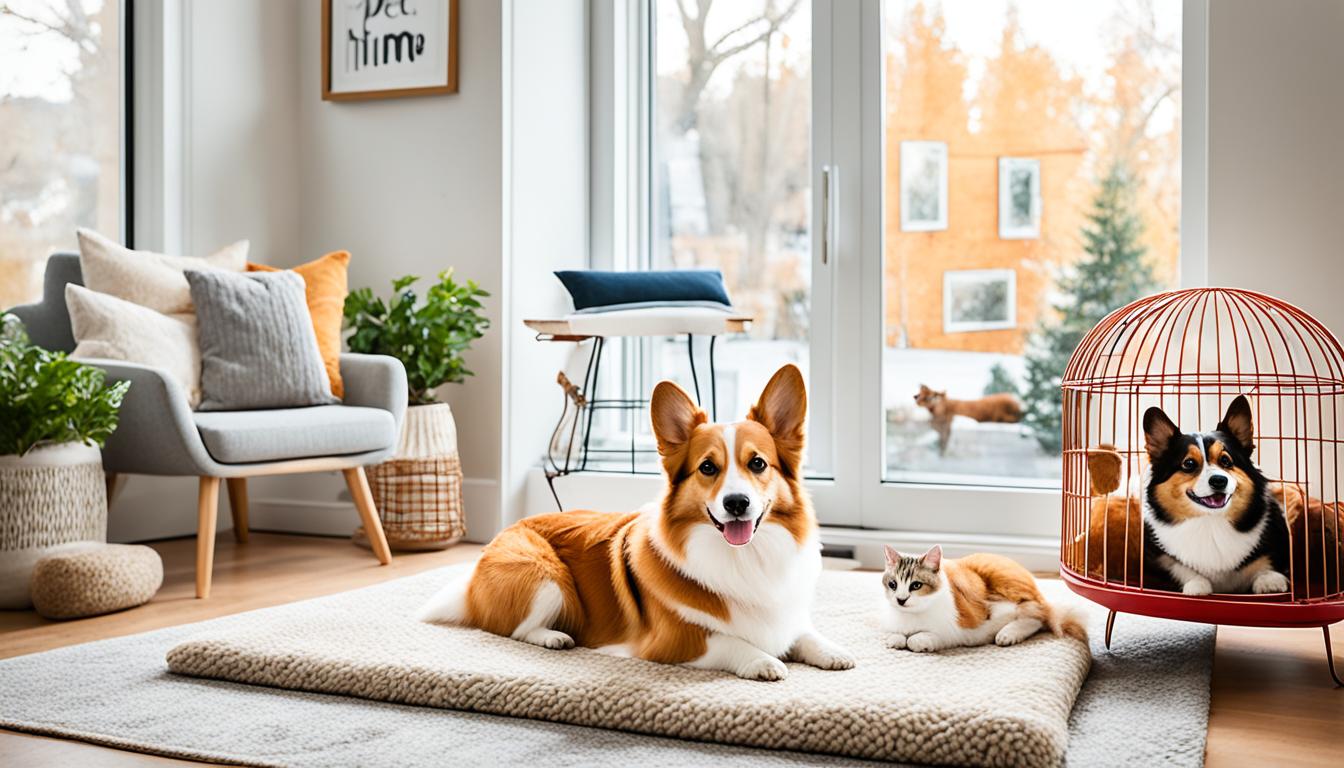

Are you considering bringing a new Corgi into your home, but worried about how they will fit in with your existing pets? Integrating a new pet into a multi-pet household can be a challenge, but with the right strategies, you can create a harmonious environment where all your furry companions can thrive. From introducing your Corgi to other pets to managing the dynamics of a multi-pet household, we’ll explore the tips and techniques that can help you achieve multi-pet harmony.
Introducing a new pet, like a Corgi, to your existing furry friends is a unique process that requires careful management. By understanding pet integration strategies and implementing effective corgi pet introduction tips, you can foster harmonious pet relationships and ensure a peaceful living space for all.
In this article, we’ll guide you through the 5 stages of togetherness for introducing a new dog into your multi-pet household. We’ll also provide you with essential do’s and don’ts to ensure a successful integration and highlight the importance of establishing a stable routine and setting aside time for each pet’s individual needs. So, are you ready to create a harmonious environment where your new Corgi can thrive alongside your other beloved pets? Let’s dive in!
Key Takeaways:
- Integrating a new Corgi into a multi-pet household requires careful planning and management.
- Implementing pet integration strategies and corgi pet introduction tips can help foster harmonious relationships.
- The 5 stages of togetherness are scent introduction, visual introduction, controlled interactions, supervised interactions, and unsupervised interactions.
- Do’s include setting a stable routine, providing one-on-one play and bonding time, and training pets separately. Don’ts include forcing interactions and leaving pets unattended.
- Establishing a stable routine and setting aside time for each pet’s individual needs are crucial for maintaining multi-pet harmony.
The Advantages of Having One Dog
While living with multiple dogs can be rewarding, there are several advantages to having just one dog. With one dog, you can give them undivided attention, focus on their specific needs, and minimize potential conflicts that may arise in multi-pet households.
Having one dog allows you to establish a deep and meaningful bond with your canine companion. With undivided attention, you can devote quality time to training, socializing, and nurturing your dog’s emotional well-being. This focused interaction promotes a stronger bond between you and your furry friend.
“Owning a single dog allows for a stronger connection and better understanding of their unique personality and individual quirks.” – Dr. Lisa Johnson, Animal Behaviorist
Additionally, having only one dog simplifies daily routines and reduces the stress of managing multiple pets. You can provide consistent care, exercise, and feeding schedules without the complexities of coordinating the needs and preferences of multiple animals.
Another advantage of having a single dog is the ease of travel and mobility. Whether you’re heading out for a weekend getaway or planning a vacation, having just one dog simplifies logistics, making traveling with your four-legged companion more convenient and enjoyable.
Benefits of Single Pet Households
In addition to the advantages mentioned above, owning one dog also offers benefits specific to single pet households. These include:
- Enhanced Focus: With a single dog, you can focus on their specific training and behavior needs, allowing for quicker progress and a well-behaved canine companion.
- Easier Budgeting: Owning one dog tends to be more cost-effective than multiple pets, as you can allocate your financial resources to meet all their needs without spreading yourself thin.
- Increased Quality Time: When you have just one dog, you can spend more quality time engaging in activities they love, such as walks, playtime, and cuddling, enhancing the overall bond and happiness between you.
- Reduced Risk of Pack Dynamics: By having only one dog, you minimize the potential for pack dynamics and the associated challenges, such as dominance issues, resource guarding, and territorial behaviors.
Ultimately, owning one dog allows you to provide focused attention, personalized care, and a stress-free living environment for both you and your furry companion.
Understanding the Needs of Multi-Dog Homes
When your household becomes multi-dog, it’s important to consider the specific needs of each pet to create a harmonious environment. Managing multiple dogs requires careful adjustments and considerations to ensure the well-being and happiness of all furry family members.
Considerations for Multi-Pet Households
Introducing a new dog to an existing pack or managing the dynamics between multiple dogs may pose challenges. It’s essential to understand the unique needs of multi-dog homes to foster positive interactions and maintain a peaceful living space.
- Create a structured routine: Dogs thrive on routine, so establish consistent schedules for feeding, playtime, walks, and training. A predictable routine helps alleviate stress, promotes relaxation, and reduces behavioral issues.
- Provide individual attention: Each dog deserves individual attention and quality time with their human companion. Set aside dedicated one-on-one play and bonding sessions to strengthen the unique bond with each pet.
- Respect personal space: Dogs, like humans, value their personal space. Ensure that each dog has their designated area where they can retreat and relax. This can be a cozy corner, a comfy bed, or a crate that serves as their safe haven.
- Avoid favoritism: Treat each dog equally, avoiding favoritism. Balancing attention and meeting the individual needs of each pet helps prevent jealousy and conflicts.
- Monitor resource allocation: Multiple dogs may compete for resources such as toys, treats, and attention. Ensure each dog has their fair share by supervising and managing resource allocation to avoid potential conflicts.
The Needs of Multi-Dog Homes
Multi-dog households require certain considerations to ensure a harmonious environment for all pets.
- Socialization: Dogs are social animals and require regular socialization opportunities. Provide ample opportunities for your furry friends to interact with other dogs in controlled settings, such as dog parks or playdates with trusted canine buddies.
- Exercise and mental stimulation: Dogs thrive when they receive adequate physical exercise and mental stimulation. Incorporate daily walks, interactive toys, puzzle feeders, and training sessions to keep them physically and mentally engaged.
- Nutrition and health: Each dog has unique dietary and health needs. Ensure that each pet receives balanced nutrition, regular veterinary check-ups, and appropriate preventive care to keep them healthy and thriving.
- Training and obedience: Providing consistent training and obedience sessions for each dog helps establish clear boundaries and expectations. This not only promotes good behavior but also prevents conflicts between dogs.
- Individual attention: Despite living in a multi-dog home, each pet needs individual attention and quality time with their human. Set aside private moments for cuddles, belly rubs, and bonding activities with each dog.
Understanding the needs of multi-dog homes is vital for managing multiple dogs and creating a harmonious environment. By considering these needs and implementing appropriate strategies, you can ensure the well-being and happiness of all your furry companions.

The 5 Stages of Togetherness
Introducing a new dog to your existing pets should be a gradual process, involving the 5 stages of togetherness. These stages include:
- Scent introduction
- Visual introduction
- Controlled interactions
- Supervised interactions
- Unsupervised interactions
Each stage allows your pets to become familiar with one another and gradually build positive relationships.
Scent Introduction
The first stage of introducing a new dog to your existing pets is scent introduction. This involves exchanging scents between the new dog and the resident pets. You can do this by swapping bedding or using a soft cloth to rub on one pet and then allowing the other pets to sniff it. This helps them become accustomed to each other’s scent before any physical interactions occur.
Visual Introduction
After establishing familiarity through scent, the next stage is visual introduction. This involves allowing the pets to see each other without direct physical contact. You can use baby gates or transparent barriers to separate them initially. Gradually, you can increase their exposure to each other by supervised visual interactions.
Controlled Interactions
Once the pets are comfortable with each other’s scent and visual presence, you can proceed to controlled interactions. This stage involves introducing them in a controlled and neutral environment, such as a park or a large, enclosed space. Keep them on leashes and closely monitor their behavior. Reward positive interactions and intervene if any signs of aggression or discomfort arise.
Supervised Interactions
As the pets become more comfortable with each other, you can move on to supervised interactions in a more familiar environment, such as your home. Allow them to spend supervised time together, maintaining a calm and positive atmosphere. Keep an eye on their behavior and be ready to intervene if necessary. Gradually increase the duration and frequency of these supervised interactions.
Unsupervised Interactions
Finally, the last stage is unsupervised interactions. This stage should only be reached when you are confident in the pets’ ability to coexist peacefully. Start by leaving them alone together for short periods and gradually increase the duration as their bond strengthens. Always provide separate safe spaces and resources for each pet, ensuring they have their own areas to retreat to if needed.
“Introducing a new dog to your existing pets is a delicate process that requires patience and careful monitoring. By following the 5 stages of togetherness, you can help your pets form positive relationships and create a harmonious multi-pet household.” – Dr. Samantha Jones, Animal Behavior Specialist
Summary of the 5 Stages of Togetherness
| Stage | Description |
|---|---|
| Scent Introduction | Exchanging scents to establish familiarity |
| Visual Introduction | Allowing pets to see each other without direct contact |
| Controlled Interactions | Introducing pets in a controlled environment |
| Supervised Interactions | Allowing pets to spend supervised time together |
| Unsupervised Interactions | Gradually leaving pets alone together |
By following these stages and giving your pets time to adjust, you can foster positive relationships and ensure a smooth integration of your new dog into your existing pet family.

Do’s and Don’ts of Bringing in a New Dog
Introducing a new dog to your household can be an exciting but delicate process. To ensure a smooth transition and successful pet integration, it’s important to follow a few key do’s and don’ts. By implementing these tips, you can foster positive relationships between your new dog and existing pets, creating a harmonious environment for everyone.
Do’s
- Provide a stable routine: Establishing a consistent daily routine helps new dogs feel secure and provides a sense of predictability. Regular feeding times, exercise, and play sessions should be incorporated into their schedule.
- Set aside time for each pet: Ensure that each pet receives individual attention and quality time with you. This helps prevent feelings of jealousy or neglect and ensures all pets feel valued and loved.
- Provide one-on-one play and bonding time: Engage in specific activities with each pet to strengthen your bond and establish trust. Dedicate time to play their favorite games or engage in activities that they enjoy.
- Train pets separately: While group training sessions can be beneficial, it’s important to train each pet individually as well. This allows you to address their specific needs and focus on their unique training requirements.
- Feed pets separately: Providing separate feeding areas for each pet helps eliminate competition and minimize the risk of food aggression. Feeding pets separately also allows you to manage their nutritional intake more effectively.
- Provide private areas for each pet: Allowing each pet to have their designated private space provides them with a safe retreat when they need alone time or want to relax. This helps reduce stress levels and fosters a sense of security.
- Make the crate a happy place: Introduce crate training to your new dog and make it a positive experience. A crate can serve as a safe haven and a designated space for your dog to retreat to when they need time alone.
- Supervise interactions between pets: When your pets are interacting, ensure that the interactions are monitored and supervised. This allows you to intervene if any signs of discomfort or aggression arise and ensures the safety of all pets involved.
- Separate pets during times of high activity: If there are moments of high activity or excitement, such as mealtimes or when guests are visiting, it’s best to separate the pets to avoid potential conflicts or overstimulation.
- Limit high-arousal play and competitive activities: While playtime is important, it’s essential to avoid excessive rough play or activities that encourage competition between pets. This helps maintain a peaceful and enjoyable environment.
Don’ts
- Don’t force interactions: It’s crucial to let the pets gradually acclimate to each other. Avoid rushing the process and respect their individual comfort levels.
- Don’t leave new pets unattended: During the initial period of integration, it’s important to supervise all interactions between pets. Leaving them unattended can lead to unwanted behaviors or potential conflicts.
- Don’t disregard signs of discomfort or aggression: Be attentive to any signs of discomfort or aggression between pets. Address any issues that arise promptly and seek professional guidance if necessary.
By following these do’s and don’ts, you can help create a smooth and successful introduction for your new dog and ensure a harmonious living environment for all pets involved.

| Do’s | Don’ts |
|---|---|
| Provide a stable routine | Don’t force interactions |
| Set aside time for each pet | Don’t leave new pets unattended |
| Provide one-on-one play and bonding time | Don’t disregard signs of discomfort or aggression |
| Train pets separately | |
| Feed pets separately | |
| Provide private areas for each pet | |
| Make the crate a happy place | |
| Supervise interactions between pets | |
| Separate pets during times of high activity | |
| Limit high-arousal play and competitive activities |
Establishing a Stable Routine
Establishing a stable routine is crucial for ensuring harmony in multi-pet homes. By implementing consistent schedules for your pets, you can create a sense of security and alleviate anxiety within your household. A routine provides structure and a predictable environment for your furry companions, promoting their overall well-being.
One of the key aspects of establishing a routine is setting consistent times for exercise, playtime, meals, and alone time for young dogs. This helps your pets understand what to expect and allows them to anticipate and look forward to these activities. Regular exercise keeps your pets physically fit and mentally stimulated, reducing the likelihood of behavioral issues.

Benefits of a Routine in Pet Households
A routine offers several benefits in a multi-pet household. Firstly, it ensures each pet receives the necessary attention and care they deserve. By dedicating specific time slots for each pet, you can focus on their individual needs, reinforcing the bond between you and your furry friends.
Moreover, a routine helps minimize conflicts that may arise from competition for resources, such as food or attention. When pets have a clear understanding of when and how they will receive these resources, they are less likely to engage in aggressive or undesirable behaviors.
Additionally, a stable routine can be especially beneficial for young dogs and those with separation anxiety. It provides them with a sense of security and predictability, reducing stress and promoting a calm and balanced state of mind.
Consistency is Key
To establish a stable routine, it is essential to maintain consistency. Try to adhere to the same schedule for feeding, exercise, and playtime each day. Set reminders or use alarms to ensure you don’t miss important activities. Remember, your pets rely on you for structure and dependability.
Consistency in routine helps pets feel secure and provides a sense of stability in their daily lives.” – Dr. Sarah Thompson, Veterinarian
By establishing a stable routine in your multi-pet home, you can create an environment that promotes harmony and well-being for all your furry companions. Consistent schedules for exercise, playtime, meals, and alone time provide structure, reduce anxiety, and strengthen the bond between you and your pets. So start implementing a routine today and watch as your pets thrive in their predictable and joyful lives.
Setting Aside Time for Each Pet
In a multi-pet household, it’s essential to spend individual time with each pet to ensure their happiness and well-being. By balancing attention among multiple pets, you can avoid favoritism and create a harmonious environment. Spending quality time with each pet helps prevent jealousy and behavior problems, promoting healthy relationships within your pet household.
To achieve this, allocate specific times throughout the day for one-on-one interaction with each pet. During this dedicated time, engage in activities that cater to their individual needs and preferences. This can include going for a walk with your dog, playing interactive games, grooming your cat, or simply cuddling and giving them undivided attention.
Additionally, incorporating enrichment activities for each pet can provide mental stimulation and prevent boredom. For example, you can offer puzzle toys, treat-dispensing devices, or engage in training sessions to keep them engaged and fulfilled.
The Benefits of Spending Individual Time with Pets
Spending individual time with each pet has numerous benefits, both for the pets and for you as their caregiver. Here are some key advantages:
- Promotes bonding: Spending quality time with a pet helps strengthen the bond between you and them, deepening your connection and trust.
- Addresses individual needs: Each pet has unique needs and preferences. By setting aside time for each pet, you can ensure that their specific requirements are met, enhancing their overall well-being.
- Avoids favoritism and jealousy: Treating each pet equally and providing them with individual attention helps prevent jealousy, rivalry, and feelings of favoritism among your pets.
- Identifies and addresses problems: When you spend focused time with each pet, you have the opportunity to observe their behavior closely. This allows you to identify any potential health or behavioral issues early on and take necessary action.
- Reduces stress and anxiety: Individual attention and quality time can help alleviate stress and anxiety in pets, promoting a sense of security and contentment.
By setting aside time for each pet, you can ensure a balanced and harmonious living environment for all your furry companions. Remember, every pet deserves individual attention and care to thrive and lead fulfilling lives.
| Potential Challenges | Effective Strategies |
|---|---|
| Time management: Balancing the needs of multiple pets while also juggling other responsibilities can be challenging. | Use a schedule or routine to allocate specific time slots for each pet so that their needs are met consistently. Prioritize quality over quantity, focusing on meaningful interactions. |
| Conflicting schedules: Pets may have different routines or specific preferences for activities. | Modify your schedule or seek help from a family member or professional pet caregiver to ensure that each pet receives individual attention at convenient times. Tailor activities to suit each pet’s preferences and needs. |
| Managing multiple pets: Preventing jealously or conflicts among pets is essential. | Rotate your attention and playtime, ensuring each pet has equal opportunities for interaction and engagement. Pay attention to body language and intervene when necessary to maintain a peaceful environment. |
Remember, dedicating individual time to each pet is crucial for their overall happiness and well-being. By avoiding favoritism and providing balanced attention, you can foster a harmonious and loving environment for all your pets.
Providing One-on-One Play and Bonding Time
In addition to general care and interaction, it’s important to provide one-on-one play and bonding time with each pet. Taking the time to engage in activities that your pets love can strengthen your bond with them and foster harmonious relationships within your multi-pet household.
During one-on-one playtime, focus on each pet individually, indulging in activities that cater to their unique preferences. Whether it’s a game of fetch with your dog or interactive play with a feather toy for your cat, tailoring the experience to their interests will create a sense of enjoyment and connection.
By dedicating specific time for bonding activities, you ensure that each pet feels valued and cherished. This focused attention helps prevent feelings of jealousy or neglect that can arise in multi-pet households. Remember, quality time spent with your pets not only strengthens your relationship with them but also enhances their overall well-being.
Consider incorporating these activities into your daily routine:
- Indoor play sessions with interactive toys
- Enjoying a peaceful walk in nature with your dog
- Engaging in training sessions to stimulate their minds
- Snuggle and cuddle time on the couch or bed
- Playing hide-and-seek with treats for mental stimulation
These activities provide an opportunity for you to connect with each pet individually, creating moments of joy, relaxation, and affection. As you engage in these bonding activities, observe their reactions and positive behaviors, reinforcing their trust and love.
Remember to maintain a consistent and balanced approach, ensuring each pet receives their fair share of one-on-one time. This promotes equitable treatment and prevents potential conflicts or animosity in your multi-pet household.
| Bonding Activity | Description |
|---|---|
| Indoor Play Sessions | Engage your pets with interactive toys or play hide-and-seek to keep them mentally and physically stimulated. |
| Nature Walks | Take your dogs on peaceful walks in nature, allowing them to explore and bond with you in a calming environment. |
| Training Sessions | Participate in individual training sessions to reinforce obedience, increase mental stimulation, and enhance the bond between you and your pets. |
| Snuggle Time | Set aside moments for cozy snuggles on the couch or bed, providing comfort and affection for your pets. |
| Hide-and-Seek | Hide treats or toys around the house and encourage your pets to find them, fostering mental stimulation and a playful bond. |
Providing one-on-one play and bonding time with your pets is an integral part of building a harmonious multi-pet household. These moments of connection and joy contribute to the overall happiness and well-being of both you and your furry companions.
Training Pets Separately
When it comes to training pets in a multi-pet household, separate training sessions are essential for optimal results. By providing individual training sessions, you can ensure that each pet receives the focused attention they need to learn and follow commands effectively. This approach also helps avoid distractions during training, creating a conducive environment for learning.
Training pets separately allows you to address the unique needs and abilities of each pet. It eliminates the potential for competition or interference from other pets, enabling you to concentrate on one pet at a time. This focused training approach fosters better concentration and comprehension, enhancing the learning experience for both you and your pet.
“When you train pets separately, you can tailor the training sessions to the specific needs and strengths of each pet. It allows you to account for individual differences in learning styles and adjust the pace of training accordingly.”
During separate training sessions, you can create a controlled environment that promotes better learning outcomes. Without the distractions of other pets, your pet can better focus on the training exercises and commands you introduce. This undivided attention helps establish clear communication and strengthen the bond between you and your pet.
To effectively train pets separately, it’s important to establish a regular training routine. Set aside dedicated time for each pet to ensure consistency and progress. Whether you use positive reinforcement, clicker training, or other training methods, consistency and repetition are key to achieving desired behaviors.
Benefits of Separate Training for Pets
Training pets separately offers various benefits, including:
- Targeted Focus: By training one pet at a time, you can provide personalized attention and address specific training needs.
- Reduced Distractions: Eliminating distractions from other pets allows for better concentration and focus during training sessions.
- Enhanced Learning Experience: Individual training sessions provide a conducive environment for effective communication, leading to improved learning outcomes.
- Personalized Pace: Each pet learns at their own pace, and separate training sessions accommodate individual differences in learning styles and abilities.
- Bond Strengthening: Dedicated one-on-one training time fosters a stronger bond between you and your pet, building trust and understanding.
Remember, training is an ongoing process, and consistency is key. Continue to reinforce positive behaviors and practice regularly with each pet. By training pets separately with undivided attention, you lay the groundwork for a well-behaved and happy furry family member.
Feeding Pets Separately
Mealtime can be a potential source of competition during mealtime and resource guarding among pets. To prevent conflicts and promote a peaceful feeding environment, it is important to provide separate feeding areas for pets.
By separating pets during mealtimes, you can ensure that each pet has their own space to eat without feeling threatened or rushed. This helps to avoid competition during mealtime and reduces the likelihood of food aggression or resource guarding behaviors.
Consider setting up designated feeding stations for each pet, whether it’s separate feeding bowls or different locations in your home. This prevents resource guarding by allowing each pet to eat without feeling the need to protect their food from others.
In addition to separate feeding areas, you can also utilize high-value treats and food-stuffed toys. These special treats and toys can be given to each pet in their designated feeding area to keep them engaged and focused on their own meal.
Separating pets during mealtimes also has the added benefit of better weight and nutrition management. Each pet can be fed according to their specific dietary needs without the risk of one pet eating the other’s food or overeating due to competition.
Expert Tip:
“Feeding pets separately is crucial for maintaining a peaceful mealtime environment. This not only prevents competition and resource guarding but also allows you to monitor each pet’s eating habits and ensure they are receiving the proper nutrition.” – Dr. Emily Thompson, Veterinarian
| Benefits of Separate Feeding Areas | Prevention of Resource Guarding | Weight and Nutrition Management |
|---|---|---|
| Reduces conflicts during mealtime | Each pet can eat without feeling threatened | Each pet can be fed according to their specific dietary needs |
| Allows each pet to eat at their own pace | Reduces the risk of food aggression | Prevents overeating and weight gain |
| Helps establish a calm mealtime routine | Encourages positive associations with food | Facilitates portion control for each pet |
Separating pets during mealtimes not only promotes a peaceful feeding environment but also helps to establish a sense of fairness and prevents any potential conflicts or negative behaviors. By providing separate feeding areas for pets, you can ensure that each pet enjoys their meals without the stress of competition or resource guarding.
Providing Private Areas for Each Pet
Allowing each pet to have a private space for rest and alone time is crucial in multi-pet households. Cats can use elevated areas like cat trees, while dogs can have their crates or quiet corners. Providing these private areas helps alleviate stress and promotes peaceful coexistence among pets.
Creating retreat areas for pets gives them a sense of security and a place to retreat when they need some alone time. Cats, in particular, enjoy having elevated spaces where they can observe their surroundings from a safe distance. A sturdy and well-placed cat tree can serve as the perfect private space for your feline friend. Make sure it is stable and offers different levels for climbing, perching, and resting.
Dogs, on the other hand, benefit from having their own crates or designated quiet corners. These spaces should be comfortable, quiet, and free from distractions. Choose a crate that is appropriately sized for your dog, allowing them to stand up, turn around, and lie down comfortably. Make it a cozy and inviting space by lining it with a soft bed or blanket.
When providing private areas for each pet, it’s essential to consider their individual needs and preferences. Some cats prefer enclosed spaces, like covered beds or igloos, while others prefer open spaces with a view. Observe your cat’s behavior and provide them with the type of space they feel most comfortable in.
Similarly, dogs have different preferences when it comes to their private areas. Some dogs may prefer a secluded corner in the living room, away from high traffic areas, while others may prefer a crate in a quieter part of the house. It’s important to respect their preferences and provide them with a space where they feel safe and secure.
By allowing each pet to have their own private area, you are giving them the opportunity to recharge and have some quiet time away from the hustle and bustle of a multi-pet household. This helps prevent potential conflicts and allows each pet to have their own space to relax and unwind.
| Pet | Ideal Private Area |
|---|---|
| Cat | Elevated area like a cat tree |
| Dog | Crate or designated quiet corner |
Conclusion
Harmonizing multi-pet homes and integrating new pets into households can be a rewarding experience when approached with careful planning and consideration. Creating a peaceful pet environment requires patience, adaptability, and attentiveness to the individual needs of each pet.
By following the tips and strategies outlined in this article, you can successfully introduce your new Corgi to your existing pet household. Remember to gradually introduce them using the 5 stages of togetherness, provide separate training and feeding areas, and establish a stable routine that includes one-on-one play and bonding time with each pet.
Building harmonious relationships in a multi-pet household takes time, but with dedication and love, you can create a joyful living space for all your furry companions. Take the time to understand their needs, address any conflicts that may arise, and provide private areas for each pet to retreat to when needed.
Now that you have the knowledge and tools to create a peaceful pet environment, it’s time to embark on this wonderful journey of multi-pet harmony. Enjoy the love, laughter, and companionship that a harmonious pet household brings!
FAQ
How can I introduce my new Corgi to my other pets?
What should I do to ensure a smooth transition when bringing in a new dog?
Why is establishing a stable routine important for multi-pet households?
How can I ensure that each of my pets receives individual attention in a multi-pet household?
Why is one-on-one play and bonding time important for pets in a multi-pet household?
Should I train my pets together or separately in a multi-pet household?
How can I prevent conflicts during mealtime in a multi-pet household?
Why should each pet have a private space in a multi-pet household?
How can I harmonize a multi-pet household when introducing a new Corgi?
Source Links
- https://dogsthat.com/podcast/14/
- https://www.akc.org/expert-advice/training/multiple-pet-issues/
- https://www.luckydoganimalrescue.org/articles/tips-introducing-new-dog-your-household-pack

Carlos is the passionate founder and primary author behind “CorgisCorner.com,” a website dedicated to all things related to the beloved Corgi breed. Born and raised in a small town known for its strong sense of community and love for animals, Carlos developed a deep affection for Corgis from a young age. This love was sparked by his childhood companion, a spirited and loyal Corgi named Toby, who was a constant source of joy and friendship.